 Blaine Siding
 Why Birch Bay Roofs Wear Differently Than Roofs Inland
Birch Bay sits right on the water, and that changes what an asphalt shingle roof has to deal with year after year. A roof on the same house ten miles inland in Whatcom County ages differently than one facing Birch Bay's open shoreline. The materials are often the same. The exposure isn't. Salt-laden air, wind-driven rain off the bay, and a long, damp shade season that favors moss growth all put extra load on a roofing system that was never designed with any one climate in mind — it's designed to be adapted correctly to the one it's actually installed in.
None of this means asphalt shingles are a poor choice for Birch Bay. They're still one of the most practical, cost-effective roofing materials for this part of Washington. It means the installation details — underlayment, flashing, fastening, ventilation — matter more here than they would in a drier, more sheltered location. A roof that's "good enough" somewhere else can fail early in Birch Bay if those details get rushed.
Salt Air and Metal Components
Asphalt shingles themselves tolerate salt air reasonably well, but the metal that goes with them — nails, flashing, drip edge, vent stacks — does not always fare as well if the wrong grade is used. Standard electro-galvanized fasteners can start showing corrosion years before they should in a coastal setting like Birch Bay. Streaking, rust bleed at nail heads, and premature flashing failure are usually the first visible signs that lower-grade materials were used somewhere they shouldn't have been.
Wind-Driven Rain
Rain that falls straight down is easy on a roof. Rain that's pushed sideways by wind off the water is not — it works its way under shingle tabs, around vents, and along flashing edges that would stay dry in calmer conditions. This is why underlayment choice and lap direction matter more in Birch Bay than they do in a lot of other parts of Whatcom County. A roof built to a minimal code standard can still leak in a wind-driven storm even though it would hold up fine in ordinary rain.
Moss and the Long Shade Season
Birch Bay's mild, wet winters and the tree cover common on many lots create ideal conditions for moss to establish on north-facing slopes and shaded valleys. Moss isn't just cosmetic. As it grows, it lifts shingle edges, holds moisture against the roof deck, and accelerates granule loss. A roof that's shaded most of the day will almost always show moss activity sooner than one with more direct sun exposure, and that needs to factor into both the initial install and the ongoing maintenance plan.
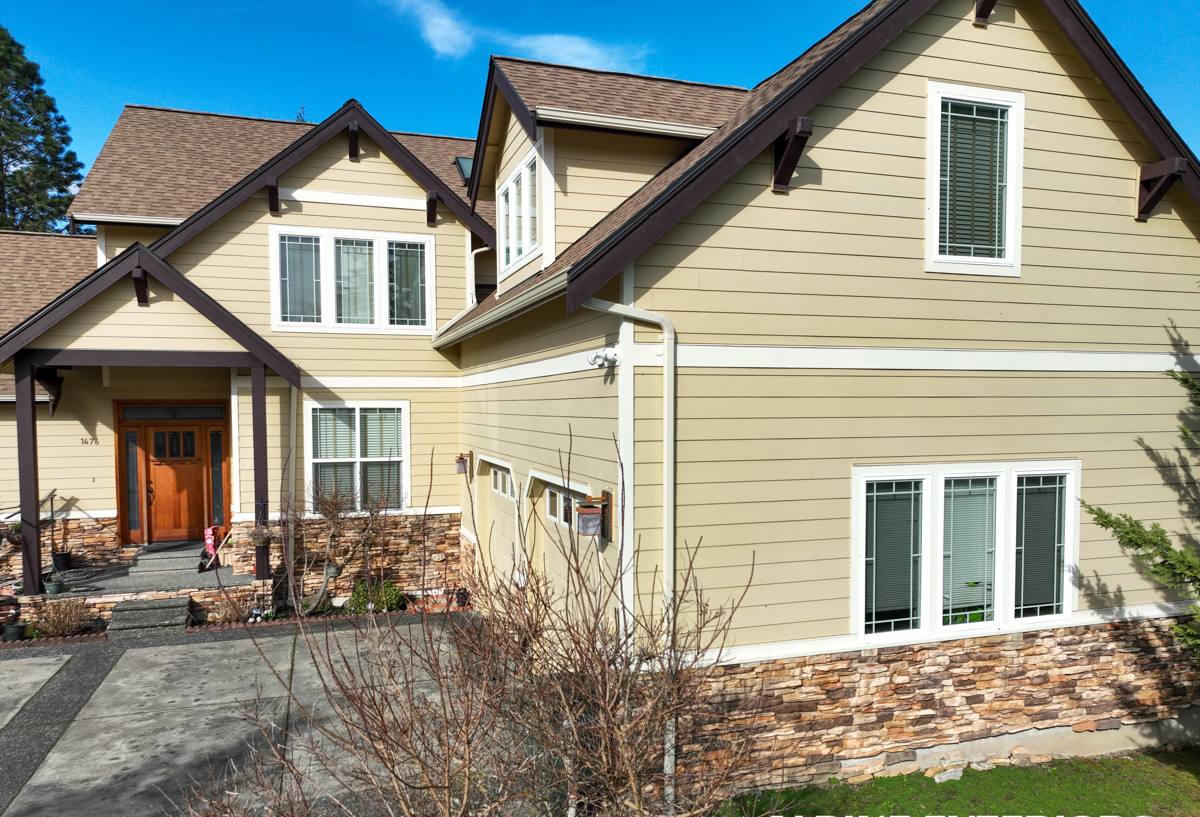
What a Correct Asphalt Shingle Installation Includes
A shingle roof is really a system of layers working together, not just the visible shingles. In a coastal environment like Birch Bay, skipping or shortcutting any one layer shows up faster than it would elsewhere.
Underlayment and Ice-and-Water Barrier
We use synthetic underlayment rated for the exposure the roof will actually see, with self-adhered ice-and-water barrier at eaves, valleys, and around every roof penetration — chimneys, vent stacks, skylights. These are the spots where wind-driven rain finds its way in first, and they're the cheapest place to over-build relative to the cost of a future leak.
Flashing Details
Step flashing at wall intersections, proper counter-flashing, and corrosion-resistant materials at valleys and penetrations are non-negotiable this close to the water. We don't rely on roofing cement as a substitute for correctly formed and lapped flashing — cement dries out and cracks; properly installed metal flashing doesn't.
Fastening
Shingles are fastened according to the manufacturer's high-wind pattern where the site calls for it, using corrosion-resistant nails driven correctly — not overdriven, not underdriven, and in the nailing zone the manufacturer specifies. Overdriven nails are one of the most common causes of early shingle failure and blow-off, and it's a detail that's easy to get wrong on a rushed crew.
Ventilation
Balanced intake and exhaust ventilation keeps the attic space dry and temperature-stable, which protects the roof deck from the underside and helps prevent the kind of trapped moisture that speeds up moss and algae growth from below as well as above.
Choosing a Shingle for a Marine Environment
Not every asphalt shingle product is a good fit for a shoreline property. The table below is a general comparison — not a recommendation of one brand over another — meant to show the trade-offs homeowners are actually weighing.
| Shingle Type | Typical Lifespan | Coastal Suitability | Notes |
|---|---|---|---|
| 3-tab | Shorter end of the range | Lower wind rating | Lowest upfront cost; less margin against wind-driven rain and gusts off the bay |
| Architectural / laminate | Mid-to-long range | Good with proper fastening | Thicker profile sheds wind-driven rain better; the common choice for Birch Bay homes |
| Impact-resistant (Class 4) | Long range | Good, added durability | Higher upfront cost; some insurers offer premium credits — worth checking your policy |
| Algae-resistant (AR) granules | Varies by base shingle | Helps with shaded, damp slopes | Slows algae staining; doesn't eliminate the need for periodic moss removal |
For most Birch Bay homes, an architectural shingle with algae-resistant granules and a wind rating matched to the site's actual exposure is the practical middle ground — durable enough for the conditions without paying for more roof than the house needs.
Our Process for Birch Bay Roofing Jobs
- Roof assessment. We inspect the existing roof deck, flashing, ventilation, and any moss or moisture damage before quoting anything — you get an honest read on repair versus replacement.
- Written scope and estimate. You see exactly what materials, underlayment, and flashing details are included, with no vague line items.
- Deck inspection during tear-off. Any soft, rotted, or delaminated decking is identified and replaced before new material goes down — this gets confirmed with you, not assumed and billed after the fact.
- System installation. Underlayment, ice-and-water barrier, flashing, shingles, and ventilation components installed to manufacturer specification and matched to the site's wind and rain exposure.
- Final walkthrough. We review the completed roof with you, including cleanup, before calling the job done.
Repair or Replace? How to Tell
Not every roofing problem in Birch Bay means a full replacement. The right call depends on the roof's age, how widespread the damage is, and what's underneath the shingles.
Repair usually makes sense when:
The roof is under roughly 15 years old, the damage is localized (a section of missing shingles, a single flashing leak, isolated moss on one slope), and the deck underneath is sound.
Replacement usually makes sense when:
Granule loss is widespread, multiple leaks have shown up in different areas, the roof deck has soft spots from long-term moisture, or the shingles are past their expected service life and are becoming brittle. A roof nearing the end of its life that's patched repeatedly often ends up costing more over time than a planned replacement.
Maintenance That Actually Extends Roof Life in Birch Bay
Coastal roofs benefit from more attention than inland roofs, but it doesn't need to be complicated. A short annual routine catches most problems while they're still cheap to fix.
- Clear gutters and downspouts before the fall storm season so wind-driven rain has somewhere to drain
- Check shaded, north-facing slopes for early moss growth and remove it with a soft-wash method rather than pressure washing, which can strip granules
- Look at flashing around chimneys, vents, and skylights for gaps or rust after any major windstorm
- Trim back tree limbs that keep sections of the roof shaded and damp longer than the rest
- Have a professional inspection every couple of years, or after any storm with sustained high winds off the water
What Affects Roofing Costs in This Area
| Factor | Why It Matters Locally |
|---|---|
| Roof pitch and access | Steeper roofs and limited access near the shoreline take longer and require more safety setup |
| Deck condition | Moisture-damaged decking found during tear-off adds material and labor not visible in an initial estimate |
| Shingle class chosen | Impact-resistant and higher wind-rated products cost more upfront but reduce long-term exposure |
| Flashing and penetration count | Chimneys, skylights, and multiple vents each add flashing labor that a simple roof plan doesn't have |
| Ventilation upgrades | Adding proper intake/exhaust venting during a replacement is far cheaper than doing it as a separate project later |
We give a written, itemized estimate before any work starts, so you know what you're paying for and why — not just a single bottom-line number.
Why It Matters to Hire a Crew That Already Works Birch Bay
A roofing crew that works Whatcom County's coastal properties regularly already knows which flashing details fail first in this environment, which slopes on a given lot orientation tend to hold moss, and how to fasten for wind exposure that's different from a sheltered inland lot. That's not something you can fully capture in a generic estimate template built for a different climate. It shows up in the small decisions — nail pattern, underlayment lap direction, where ice-and-water barrier gets extended beyond the minimum code requirement — that determine whether a roof holds up through its first few real coastal storms or starts showing problems early.
It also matters for warranty follow-through. A local crew that's still working in Birch Bay next year and the year after is a lot easier to reach if something needs attention than an out-of-area contractor who's moved on to other regions.
Get a Straightforward Estimate
If your Birch Bay home needs a roof inspection, a repair, or a full asphalt shingle replacement, we're happy to take a look and give you a clear, honest assessment — no pressure, no inflated urgency. Use the form below to request a free estimate and we'll go from there.