 Blaine Siding
 Lynden's Climate Is Harder on Siding Than It Looks
Lynden sits in the heart of Whatcom County's farmland, a few miles inland from Blaine and the water, but "inland" doesn't mean dry. This is still the Pacific Northwest's wet belt — long stretches of drizzle, low fog that sits in the fields well into the morning, and a rainy season that can run from October through April with barely a break. Add in the marine-influenced air that moves through the whole county from the nearby coast, and you get siding conditions that punish anything not built for sustained moisture exposure.
That combination — driving rain, high ambient humidity, and a moss season that stretches most of the year on north-facing and shaded walls — is exactly why siding on Lynden homes tends to fail from the outside in. Paint chalks and peels early. Caulk joints open up. Moss and algae take hold on siding faces and never fully dry out between rain events. On the wrong material, that moisture finds its way behind the cladding, and by the time it shows up as a visible problem, the sheathing underneath may already be compromised.
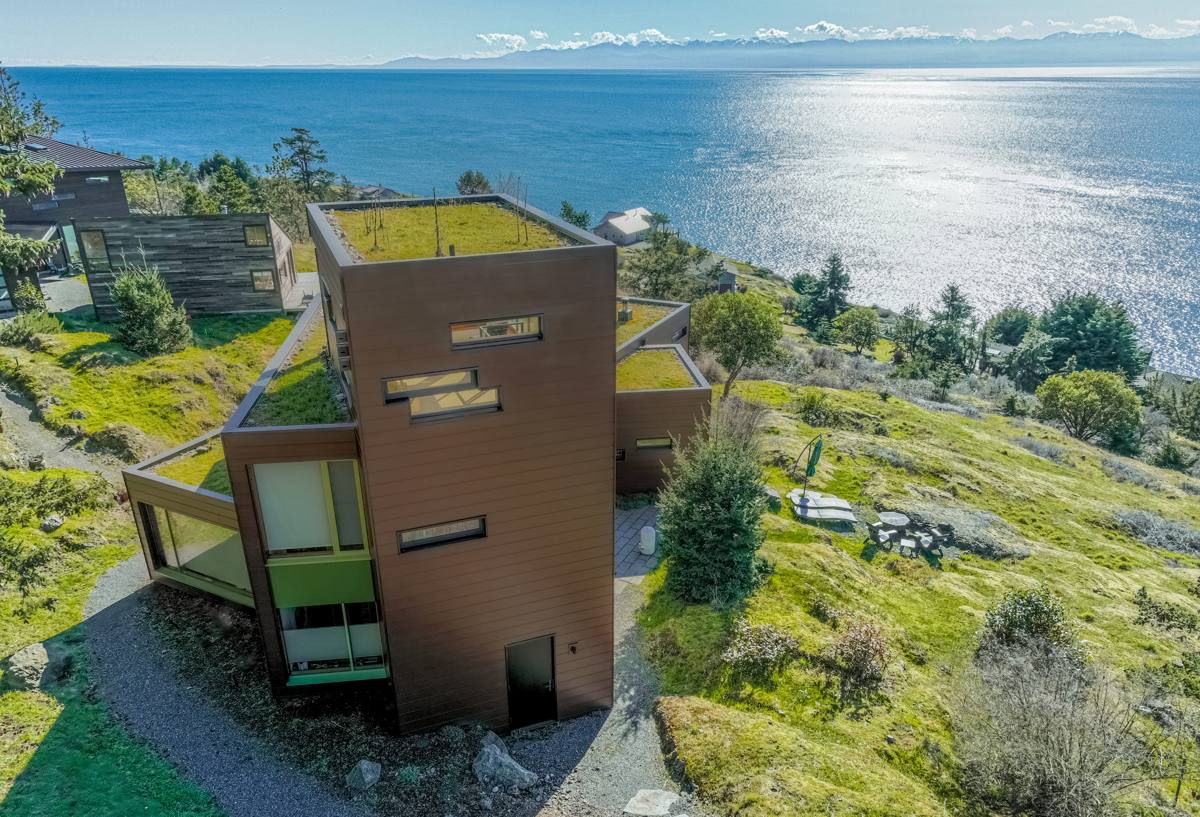
Repair, Recoat, or Replace? Getting the Diagnosis Right
Not every tired-looking wall needs full replacement, and we won't tell you it does just to sell a bigger job. But there's a real difference between siding that's cosmetically worn and siding that's structurally failing, and on older Lynden homes — especially those with wood, hardboard, or early-generation composite siding — the two get confused often.
Signs You're Looking at a Repair
- Isolated caulk failure at trim joints, with sound material behind it
- Surface mildew or algae that scrubs off without leaving soft, spongy board
- A handful of damaged boards from an isolated impact, with the rest of the wall intact
- Fading or chalking paint on siding that's otherwise straight, solid, and well-fastened
Signs You're Looking at Replacement
- Boards that flex, crumble, or feel soft when pressed at seams and bottom edges
- Persistent bubbling or peeling paint that returns within a year or two of repainting
- Visible delamination or swelling on hardboard or old composite panels
- Moisture staining, soft trim, or a musty smell on interior walls that back up to exterior siding
- Siding that's been patched more than once in the same area over the years
If you're not sure which category your home falls into, that's a fair reason to call for a look. A straight answer — repair or replace — should be the first thing you get out of an estimate, not the last.
Why We Only Install James Hardie Fiber Cement
We don't install vinyl, LP SmartSide, primed wood, or cedar on Lynden homes, and it's worth being upfront about why. Vinyl expands and contracts with temperature swings and can crack in a hard freeze; it also traps moisture behind it if house wrap and flashing aren't done correctly, which is a common corner cut on lower-bid jobs. Engineered wood products like LP SmartSide perform reasonably well when installed and maintained exactly to spec, but they still rely on an outer coating and edge-sealing that has to be re-treated over time — miss that maintenance window in a climate this wet, and moisture gets into the substrate fast. Primed wood and cedar are honest, attractive materials, but they demand a repainting and caulking cycle that most homeowners underestimate, and in Lynden's rain-heavy stretches that cycle comes around faster than it would somewhere dry.
James Hardie fiber cement is non-combustible, doesn't rot, doesn't feed insects, and holds a factory-applied ColorPlus finish that's baked on rather than field-painted — that finish is what actually stands up to years of damp weather without chalking or peeling on the timeline vinyl or wood-based products do. Hardie also engineers specific product lines by climate zone (HZ5 for our wet, moderate-freeze region), which matters more here than most homeowners realize. We standardized on it because it's the one product system where, installed correctly, we're comfortable putting our name behind the result for decades, not years.
What a Correct Siding Replacement Job Actually Involves
Fiber cement siding is only as good as what's behind it. In a climate like Lynden's, the parts nobody sees are what determine whether the job lasts 5 years or 40.
Tear-Off and Sheathing Check
Old siding comes off completely — we don't panel over existing material, which just buries whatever moisture or rot is already there. Once the wall is open, we inspect sheathing for soft spots, staining, or rot, especially around window and door openings and at the base of walls where splash-back and standing water do the most damage over time.
Weather-Resistive Barrier and Flashing
A correctly lapped house wrap or weather-resistive barrier, with properly integrated flashing at every window, door, and penetration, is what actually keeps driving rain out of the wall assembly. This is the step most commonly rushed on lower-bid jobs, and it's the one that matters most in a region where wind-driven rain hits siding at an angle, not just straight down.
Fastening and Clearances
Hardie board has specific fastening patterns, nailing zones, and required gaps at the bottom of the wall, around trim, and at butt joints — all designed to let the material move slightly with temperature and let any incidental moisture drain and dry rather than wick upward into the board. Skipping these clearances is one of the most common ways fiber cement installs fail early, and it's purely a workmanship issue, not a product issue.
Caulking and Trim Details
ColorPlus-finished Hardie board is designed to need less field caulking than raw fiber cement, but the joints that do get sealed need the right product and the right prep. Done sloppily, caulk failure becomes the entry point for exactly the moisture problems the siding itself is designed to resist.
Our Process, Start to Finish
- On-site assessment — we walk the exterior, check problem areas you've flagged, and give you a straight read on repair vs. replacement
- Written estimate — scope, product line, color, and a clear cost breakdown, no vague allowances
- Scheduling around weather — we sequence tear-off and wrap installation to minimize how long your walls sit open in wet conditions
- Tear-off and sheathing repair — including replacement of any compromised sheathing before new material goes up
- Weather barrier, flashing, and Hardie installation — installed to manufacturer spec and local code
- Final walkthrough — trim, caulking, and paint lines checked before we call the job done
What Lynden Siding Replacement Typically Costs
Every home is different, but these are the factors that actually move the number on a Lynden job — general ranges, not a quote.
| Cost Factor | Why It Matters Here |
|---|---|
| Sheathing condition | Hidden rot found at tear-off adds material and labor before new siding can go up |
| Home size and wall complexity | Dormers, gables, and multiple stories increase both labor time and staging needs |
| Siding profile and accessories | Lap width, trim boards, and soffit work all add to material cost beyond flat panel pricing |
| Existing material removal | Vinyl strips off quickly; old wood or hardboard with layered paint takes longer to remove and dispose of |
| Access and site conditions | Rural lots, fencing, landscaping, and driveway access all affect equipment staging |
What to Ask Before You Hire Anyone for This Job
- Will you remove the old siding completely, or panel over it?
- What weather-resistive barrier do you use, and how do you flash windows and doors?
- What are your fastening and clearance details for the specific product being installed?
- Is your crew certified or specifically trained on the siding system you're proposing?
- What does the manufacturer warranty cover, and what does it require of the installer to stay valid?
- Can you walk me through how you'll sequence the job around wet-season weather?
Why a Crew That Already Works Lynden Matters
Siding installation isn't one-size-fits-all across the county. A crew that regularly works Whatcom County knows how long walls can safely sit open before wrap and flashing need to go on, how to sequence a job around a wet forecast instead of gambling on a dry window, and where moss and moisture tend to concentrate on a given lot orientation. That local pattern recognition is the difference between a crew that's installing Hardie board correctly and one that's just following a generic install sheet in a climate it wasn't written for.
It also means less back-and-forth. A local crew isn't guessing at permitting expectations, isn't unfamiliar with how homes in this area are typically framed and wrapped, and isn't showing up to a callback three counties away if something needs attention after the job is done.
After the Install: Keeping Hardie Siding Looking Right in This Climate
Fiber cement is low-maintenance, not no-maintenance. A simple annual routine keeps it performing the way it's designed to in a wet, moss-prone region:
- Rinse siding once or twice a year to clear pollen, dust, and early moss growth before it takes hold
- Keep gutters clear so overflow doesn't run down and pool against siding at roof lines
- Trim back shrubs and trees so shaded, damp wall sections get airflow and can dry out between rains
- Recaulk trim joints if you ever see a gap open up — small maintenance now prevents bigger repairs later
If you're weighing a siding project on a Lynden home and want a straight assessment of what your walls actually need, we're happy to take a look. The estimate is free, there's no pressure, and you'll get a clear answer on repair versus replacement either way.