 Blaine Siding
 Siding Repair in Lynden Isn't the Same Job as Siding Repair Anywhere Else
Lynden sits inland from the Salish Sea but close enough to Blaine and the Whatcom County coastline that homes here still deal with salt-laden air, long stretches of wind-driven rain, and a moss season that can run from October well into spring. Siding that would hold up fine in a dry inland climate takes a different kind of beating out here — and a repair that doesn't account for that will fail again within a year or two. We've spent years working on homes throughout Whatcom County, and Lynden's mix of farmland openness, tree-lined lots, and marine-influenced weather creates a specific pattern of damage we see over and over.
This page is about siding repair specifically — not full replacement, not general siding education. If your siding is cracked, delaminating, stained, buckling, or letting water in around trim and corners, this is what we look at, how we diagnose it, and what a correct repair actually involves.
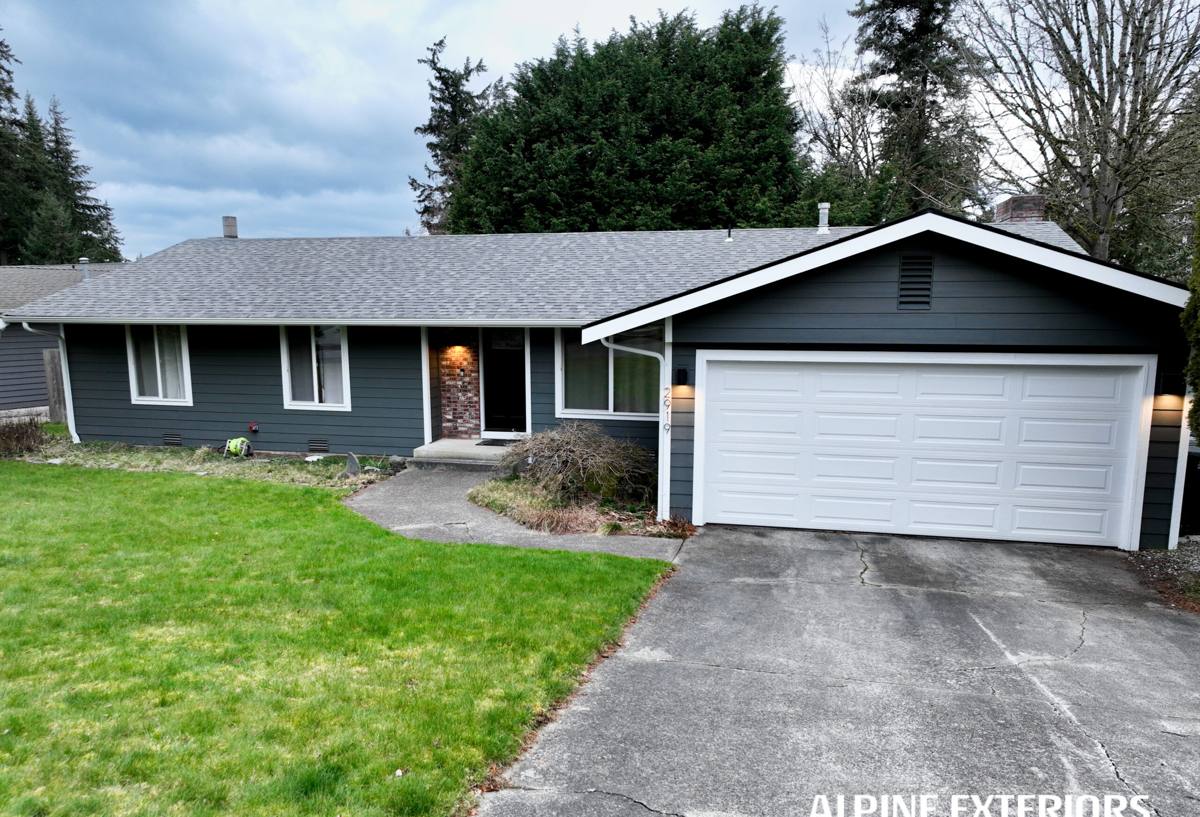
What Lynden's Climate Does to Siding Over Time
Salt Air
Even well inland from open water, the marine air that moves through Whatcom County carries fine salt content. Over years, that salt accelerates corrosion on exposed fasteners, staples, and metal flashing behind and around siding panels. When fasteners corrode, they lose their grip, panels loosen, and water finds a path behind the cladding — often long before any damage is visible from the ground.
Driving Rain
Lynden gets more than its share of wind-driven rain, especially during fall and winter storm systems. Rain that comes in at an angle doesn't just run down a wall — it gets pushed sideways and upward into laps, seams, and butt joints that were only designed to shed water moving straight down. Repeated wind-driven rain exposure is one of the most common reasons we find soft, water-damaged sheathing behind siding that looked fine on the surface.
A Long Moss Season
Between tree cover, cool temperatures, and consistent moisture, Lynden has a moss and algae season that runs much longer than drier parts of the state. Moss doesn't just look bad — it holds moisture directly against the siding surface for weeks at a time, which is especially damaging to wood-based products and can degrade caulking and sealant joints faster than expected. North-facing walls and areas shaded by mature trees are almost always the first places we find moss-related deterioration.
Common Siding Repair Issues We See in Lynden Homes
Not every problem needs the same fix, and not every problem is as urgent as it looks. Here's how we typically categorize what we find during a repair assessment:
| What You Notice | Likely Cause | Urgency |
|---|---|---|
| Green or black staining, especially on shaded walls | Moss/algae growth holding moisture against the surface | Moderate — treat before it degrades the substrate |
| Soft or spongy spots when pressed | Water intrusion, often from failed caulking or flashing | High — indicates sheathing damage may already be occurring |
| Cracked or split panels near corners and trim | Impact damage, material fatigue, or moisture-driven swelling | Moderate to high depending on how far it's spread |
| Panels pulling away from the wall or visibly loose | Corroded or failed fasteners | High — active water entry point |
| Peeling paint or chalky, faded finish | UV and moisture breakdown of the surface coating | Low to moderate — cosmetic, but worth watching |
| Warping or bowing sections | Moisture absorption into wood-based or composite siding | High — usually points to ongoing water exposure |
Cosmetic Damage vs. Structural Damage — Why the Distinction Matters
The single most important thing a repair estimate should tell you is whether you're looking at a surface problem or a problem that's already reached the wall assembly behind the siding. This is where a lot of repair work goes wrong — patching the visible symptom without checking what's happening underneath.
- Cosmetic issues: fading, chalking, minor surface staining, small cracks that haven't let moisture through
- Early-stage issues: loose fasteners, gapped caulking, minor moss buildup — fixable now before they become bigger problems
- Structural issues: soft sheathing, active water staining on interior walls, panels that flex or crumble when pressed, visible rot at panel edges
We check moisture readings, look for staining patterns that suggest water is tracking behind the siding rather than running off it, and inspect vulnerable transition points — window and door trim, corners, and anywhere siding meets a roofline or deck — before recommending a repair scope.
What a Correct Siding Repair Actually Involves
1. Diagnosis Before Anything Gets Touched
We start by identifying not just where the damage is, but why it happened. Repairing a cracked panel without fixing the flashing or caulking failure that caused it just buys you a year or two before the same spot fails again.
2. Matching Existing Material Where Possible
If your home has siding that's still in reasonably good shape overall, a spot repair means removing the damaged section and replacing it with matching material, matched reveal lines, and color that blends as closely as possible. This is more involved with some materials than others — factory-finished fiber cement, for example, holds its color consistently over time in a way that makes matching a repaired section to older, sun-faded panels more predictable than with field-painted materials.
3. Flashing and Water Management, Not Just the Panel
Most of the repairs we do involve at least some work on flashing, house wrap, or sealant joints — not just the visible siding. Given how much wind-driven rain Lynden sees, skipping this step is the most common reason repairs fail early.
4. Fastener and Substrate Check
Any area we open up gets checked for fastener condition and sheathing integrity before new material goes back on. If we find rot or soft sheathing, that gets addressed — patching over damaged substrate just hides a problem that will keep spreading.
Repair vs. Replacement: When Patching No Longer Makes Sense
Not every damaged section is worth repairing in isolation. Sometimes a full-wall or full-home replacement is the more honest recommendation — both for cost-per-year and for peace of mind. Here's how we think through that decision:
| Factor | Favors Repair | Favors Replacement |
|---|---|---|
| Extent of damage | Isolated to one or two areas | Recurring across multiple walls |
| Age of existing siding | Relatively young, otherwise sound | Near or past expected service life |
| Cause of damage | One-time event (impact, isolated flashing failure) | Systemic moisture exposure or material breakdown |
| Material match availability | Matching material and finish still obtainable | Discontinued color/profile, poor match likely |
| Underlying substrate condition | Sheathing sound where opened up | Rot or moisture damage found in multiple spots |
We'll tell you plainly which category your home falls into. If a repair is the right call, that's what we'll recommend and price — we don't upsell full replacements on homes that don't need them.
Our Siding Repair Process
- On-site assessment: We inspect the damaged area and surrounding sections, checking for moisture, fastener condition, and root cause — not just the visible symptom.
- Honest scope and estimate: You get a clear explanation of what needs to happen, why, and what it costs — including whether repair or replacement is the better long-term move.
- Removal of damaged material: Affected panels and any compromised flashing or sealant are removed carefully to avoid damaging surrounding sound material.
- Substrate check and correction: Any sheathing or framing issues found underneath are addressed before new material goes on.
- Proper water management detailing: Flashing, house wrap integration, and sealant joints are corrected — not just cosmetically patched.
- Material installation and finishing: New siding is installed to manufacturer spec, with attention to matching existing reveal lines and finish where a full replacement isn't needed.
- Final walkthrough: We review the completed work with you and explain any maintenance steps specific to your home's exposure.
Where James Hardie Fits Into a Repair Job
We install James Hardie fiber cement siding exclusively — we don't install vinyl, LP SmartSide, Cemplank, Allura, or unprimed wood siding. On a small spot repair where matching existing material is realistic, we'll do exactly that. But when damage points to a broader material or moisture problem — the kind Lynden's climate tends to expose over time in wood-based or lower-grade siding — replacing the affected section (or the whole wall) with James Hardie is what we recommend and what we install.
The reasons come down to how the material performs in exactly the conditions Lynden deals with: fiber cement doesn't absorb moisture the way wood-based products do, it isn't a food source for moss and algae the way wood is, and Hardie's ColorPlus factory finish holds color more consistently over time than field-applied paint — which matters a lot if you're ever trying to match a repaired section to the rest of your home down the road. It's also backed by a strong transferable warranty, which is worth something if you sell the home before the siding's service life is up.
Why Hiring a Crew That Already Works in Lynden Matters
Siding repair done wrong doesn't usually fail immediately — it fails a year or two later, after the first serious storm season, when water finds the same weak spot again. A contractor who already works throughout Whatcom County understands how salt air, wind-driven rain, and long moss seasons actually behave against a wall assembly here, not in a climate manual written for a different region.
- Ask whether they check flashing and sealant, not just the visible panel
- Ask how they determine repair vs. replacement, and get that reasoning in writing
- Ask what happens if they find sheathing damage once the wall is opened up
- Ask about material matching — color, profile, and reveal — for spot repairs
- Confirm they're licensed and insured to work in Washington
- Ask directly what siding material they'd recommend if repair isn't the right call, and why
A contractor who gives straight answers to those questions — before any work starts — is a good sign you're dealing with someone who'll fix the actual problem instead of just covering it up.
Get a Straight Answer on Your Siding
If you're seeing staining, soft spots, loose panels, or moss buildup on your Lynden home, it's worth getting an honest look before the next wind-driven rain season makes it worse. We'll tell you plainly whether it's a repair or something bigger — no pressure, no upsell. Request a free estimate below and we'll take a look.