 Blaine Siding
 Why Bellingham Siding Has to Work Harder Than Siding Inland
Bellingham sits close enough to Bellingham Bay and the Salish Sea that salt-laden air is a real factor in how exterior materials age, not just a coastal-town cliché. Add in Whatcom County's long, wet winters and the shaded, damp conditions that let moss and algae take hold on north-facing walls, and you have a climate that is genuinely tougher on siding than what a home fifty miles inland deals with. Homes here need a siding system that resists moisture intrusion, holds its finish against salt air, and doesn't give moss a foothold in the seams and laps.
This page focuses specifically on fiber cement siding for homes in and around Bellingham. It's not a general overview of siding materials — it's what we've learned about installing fiber cement correctly in this specific stretch of coastline, and why the details matter more here than they would somewhere drier.
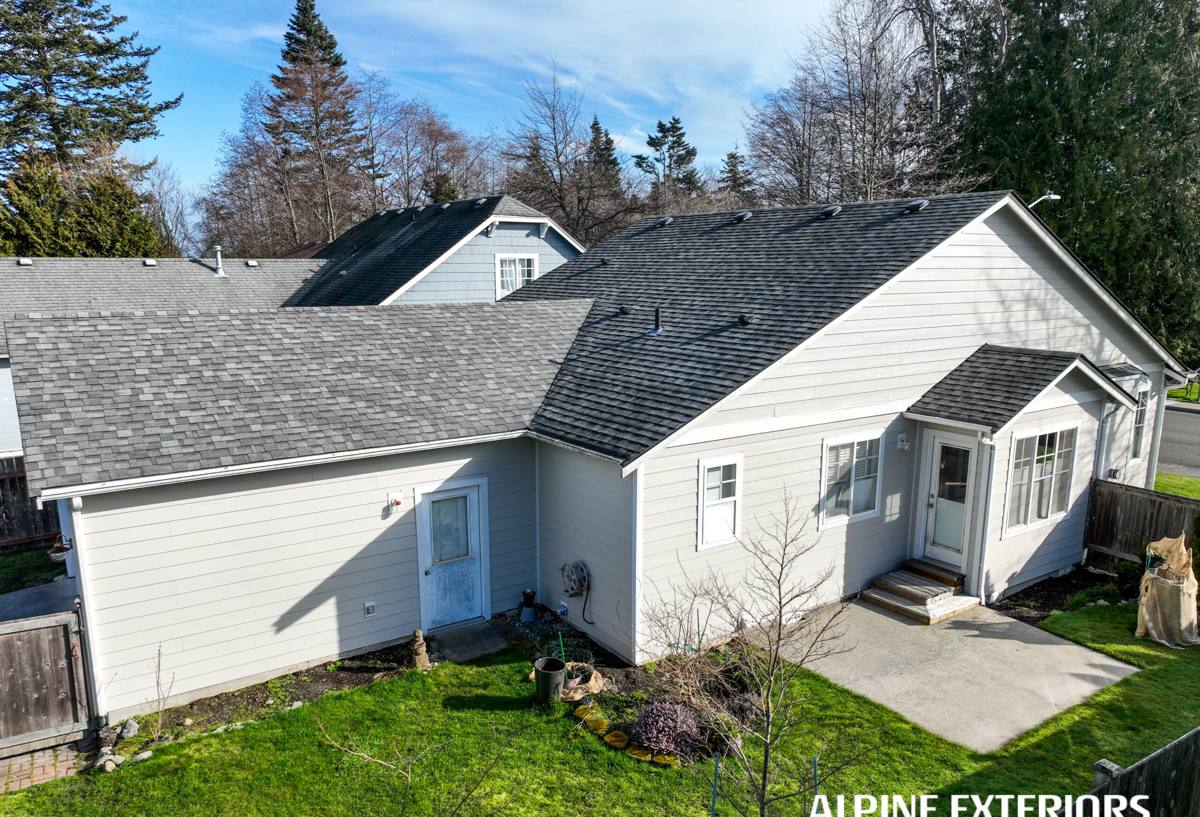
What Fiber Cement Siding Actually Is
Fiber cement is a composite of Portland cement, sand, and cellulose fibers, cured into rigid boards and panels that are then factory-primed or factory-finished. It's not a coating over wood, and it's not a plastic extrusion like vinyl. That composition is what makes it relevant to a marine climate: it doesn't rot, it doesn't absorb moisture the way wood does, and it doesn't warp or expand the way vinyl can in temperature swings.
How It Compares to the Alternatives Homeowners Consider
Wood siding — cedar in particular — is a traditional choice in the Pacific Northwest, but it demands ongoing refinishing to keep moisture out, and once it starts absorbing water in a shaded, damp yard, rot and moss growth follow. Vinyl siding is low-maintenance in the sense that it doesn't rot, but it can crack in cold snaps, fade in UV exposure over time, and its seams and J-channels give wind-driven rain more opportunities to get behind the cladding during a hard coastal storm. Engineered wood products (like LP SmartSide) are wood-based composites, which means they still rely on their outer coating to keep moisture out of the wood fiber core — a coating that has to be maintained and that can fail at cut edges if they aren't properly sealed. Fiber cement doesn't have that vulnerability, because the material itself is not moisture-reactive the way wood fiber is.
The James Hardie System We Install
We install James Hardie fiber cement siding exclusively. We don't install LP SmartSide, vinyl, Cemplank, Allura, primed spruce, or cedar — not because those products have no merit, but because after years of doing exterior work on homes in this climate, we standardized on one system we trust completely and can warranty with confidence. For a marine climate like Bellingham's, that consistency matters: we know exactly how this product performs, how it should be flashed and fastened, and what its long-term behavior looks like in salt air and heavy rain.
HardiePlank Lap Siding
HardiePlank is the horizontal lap siding most homeowners picture when they think of fiber cement. It comes in a range of textures and exposures, factory-finished with James Hardie's ColorPlus coating, which is baked on at the factory rather than field-applied — a real advantage in a climate where paint has to fight salt air and prolonged dampness to hold its finish.
HardiePanel and Trim
For accent walls, gable ends, or a more modern vertical look, HardiePanel gives the same fiber cement performance in a different profile. Paired with Hardie trim boards at corners, window and door casings, and fascia, the whole exterior envelope uses one integrated system rather than mixing materials with different expansion rates and moisture behavior.
Climate-Engineered Product Lines
James Hardie manufactures different formulations of its siding for different climate zones (marketed as HZ product lines) specifically because a home in a hot, dry climate and a home in the wet Pacific Northwest need siding engineered for different moisture and temperature conditions. Installing the version engineered for our region, rather than a generic product, is part of what "correct installation" means here.
What Correct Installation Actually Involves in This Climate
Fiber cement siding is only as good as its installation. The material itself resists moisture well, but the assembly behind it — the water-resistive barrier, flashing, gaps, and fastening — is what actually keeps a Bellingham home dry through a wet winter. Get these details wrong and even the best siding material will trap moisture instead of shedding it.
- Correct panel and lap fastening per manufacturer spec, not "close enough" nailing patterns that can cause splitting or loosen over time
- Proper minimum clearance between the bottom of the siding and grade, decks, or roof lines, so splashback and standing water don't sit against the material
- Rainscreen gap or drainage plane behind the siding, giving incidental moisture a path to escape instead of getting trapped against the sheathing
- Correctly lapped and sealed flashing at every window, door, and roof-to-wall intersection — the most common failure point on any siding job, regardless of material
- Factory-cut edges sealed and field cuts properly primed before installation, so no raw edge is left exposed to weather
- Caulking used only where specified, with the right sealant for a fiber cement joint — not as a substitute for correct flashing
None of this is unique to Bellingham, but the consequences of skipping it are more immediate here. A flashing detail that might survive a decade in a dry climate can start failing within a season or two under sustained coastal rain.
How Salt Air, Rain, and Moss Actually Affect Siding
These three conditions don't affect every siding material the same way, which is a big part of why material choice matters as much as installation quality.
| Condition | Effect on Wood or Engineered Wood | Effect on Correctly Installed Fiber Cement |
|---|---|---|
| Salt-laden air | Accelerates coating breakdown, drives more frequent repainting | ColorPlus factory finish is engineered to resist fading and coating failure longer |
| Driving, wind-blown rain | Water finds gaps at butt joints and coating breaks, wicks into fiber | Rigid, non-absorbent material paired with rainscreen and flashing sheds water without wicking |
| Extended moss and algae season | Damp wood surfaces give organic growth a foothold, especially north-facing walls | Cement-based surface is far less hospitable to organic growth than wood fiber |
The takeaway isn't that fiber cement is immune to these conditions — nothing is completely maintenance-free outdoors in Whatcom County. It's that fiber cement, installed correctly, gives you a much longer runway before any of these three stressors becomes a real problem.
Our Process for Bellingham-Area Projects
- On-site assessment: We look at your home's exposure — how much direct salt air and wind-driven rain it takes, where shaded and damp areas are prone to moss, and the condition of the existing wall assembly underneath the current siding.
- Removal and sheathing inspection: Old siding comes off and we inspect the sheathing for any hidden moisture damage before anything new goes up. This step catches problems that are invisible from the outside.
- Water-resistive barrier and drainage plane: We install or verify the weather barrier and drainage gap that lets any incidental moisture drain and dry instead of getting trapped.
- Flashing at every penetration: Windows, doors, vents, and roof-to-wall transitions get flashed and lapped correctly before siding installation begins.
- Hardie siding installation: Panels and planks are installed to manufacturer spec, with correct fastening, clearances, and joint treatment.
- Trim, caulk, and final detail work: Corners, casings, and joints are finished with the correct materials for a fiber cement assembly.
- Final walkthrough: We review the finished work with you, including what maintenance to expect and what's covered under warranty.
Cost Factors for a Bellingham Fiber Cement Project
Every home is different, and we won't quote a number without seeing the house, but these are the main variables that move the price on a fiber cement siding project in this area:
| Factor | Why It Matters |
|---|---|
| Home size and wall complexity | More corners, gables, and dormers mean more cutting, trim, and labor time |
| Condition of existing sheathing | Hidden moisture or rot found during tear-off can require repair before new siding goes on |
| Siding profile chosen | Lap width, texture, and panel vs. plank affect material and labor cost |
| Trim and accent work | Detailed trim packages and accent panels add material and installation time |
| Access and site conditions | Steep lots, limited access, or extensive landscaping protection can affect labor time |
We provide a written estimate after walking the property, broken down so you can see what's driving the cost — not a single number with no explanation behind it.
Why a Crew That Already Works This Area Matters
Installing fiber cement siding correctly requires the same core skills anywhere, but a crew that regularly works Bellingham and the broader Whatcom County coastline has already seen how local conditions play out over time — which walls take the worst of the driving rain, where moss tends to establish first, and how salt air affects finish and fasteners over the years. That experience shapes decisions on the job: where to be extra careful with flashing, which details to double-check, and what to flag for a homeowner before it becomes a bigger issue. It's the difference between a crew that installs siding and a crew that installs siding for this specific climate.
Maintenance After Installation
One of the appeals of fiber cement is that it asks for less than wood, but "less maintenance" isn't "no maintenance," especially this close to the water.
- Periodic rinsing to clear salt residue and organic buildup from shaded or low-airflow areas
- Visual checks after major storms for any damaged panels, loose trim, or compromised caulk joints
- Keeping gutters and downspouts clear so roof runoff isn't dumping extra water onto the siding
- Trimming back vegetation that keeps a wall section shaded and damp longer than it should be
Done right, this is a short seasonal checklist, not a recurring repaint or repair cycle.
If you're weighing siding options for a home in Bellingham or elsewhere in Whatcom County, we're happy to take a look and walk you through what we see — no pressure, no obligation. Use the form below to request a free estimate.