 Blaine Siding
 Siding Built for Lynden's Weather, Not Just Any Weather
Lynden sits inland from Blaine and the Strait of Georgia, but it still gets the full Whatcom County weather package: long stretches of driving rain off the Pacific, salt-tinged air that drifts in from the coast, and a moss season that can run from October clear into April. Siding that isn't built for that combination doesn't fail all at once — it fails slowly, in ways homeowners don't notice until the paint is chalking, the seams are swelling, or moss is climbing the north wall. When we install James Hardie fiber cement siding in Lynden, we're not installing a generic product and hoping it holds up. We're installing a system engineered for exactly this climate zone, put on the way Hardie's own specifications call for.
This page is about one thing: what a correct James Hardie install looks like on a Lynden home, why the local climate changes how that job should be done, and why it matters that the crew on your roofline already knows this area.
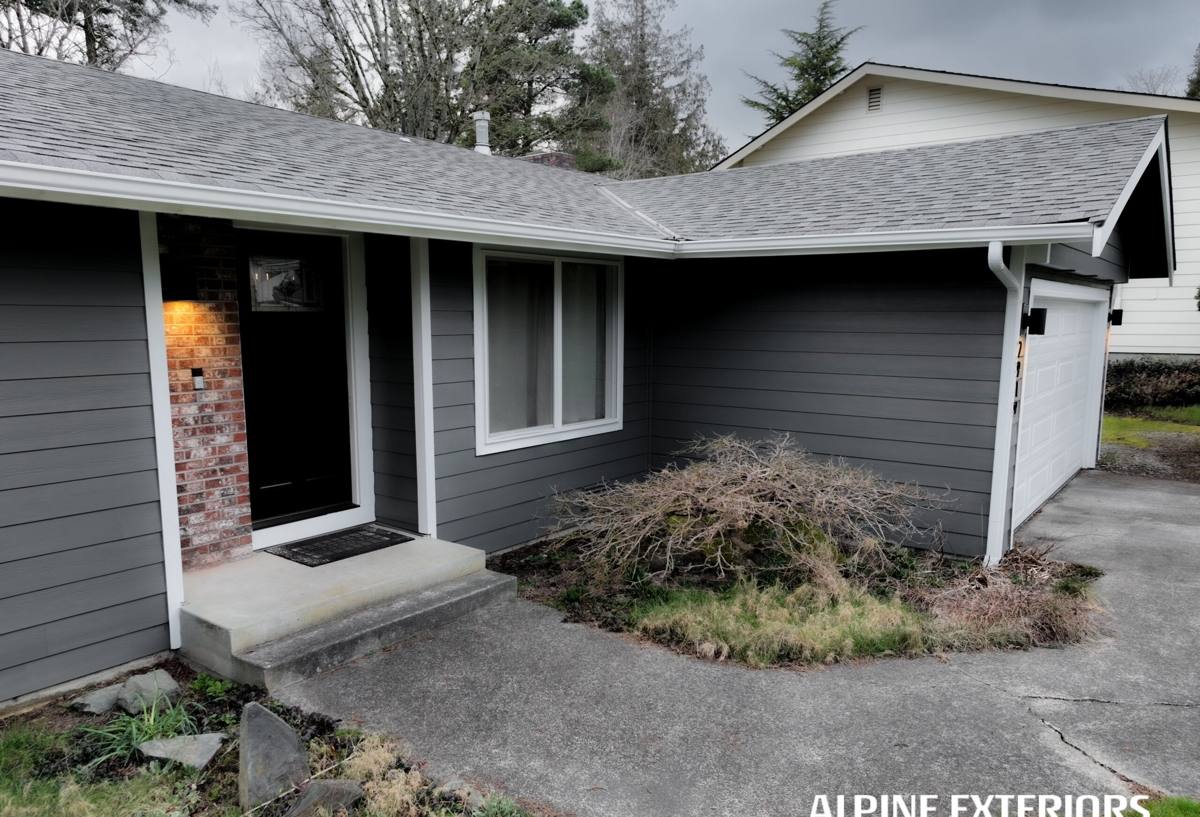
What Lynden's Climate Actually Does to Siding
It's worth being specific about the stresses at play, because they're not identical to what a siding contractor deals with in a dry inland climate.
Moisture load and rain volume
Whatcom County gets a lot of rain, and much of it arrives as long, low-intensity systems rather than short downpours. That means siding spends more cumulative hours wet than in most parts of the country. Any weak point in a siding system — a poorly lapped joint, a caulked seam where there should be a rainscreen gap, an unsealed cut end — becomes an entry point for moisture that then has very little chance to dry out between storms.
Salt air, even inland
Lynden is far enough from saltwater that people assume salt exposure isn't a factor. It's a smaller factor than in Blaine or Birch Bay, but prevailing weather still carries marine air across Whatcom County, and it accelerates corrosion on fasteners, flashing, and any metal trim that isn't properly rated. Products and hardware chosen without this in mind age faster than they should.
Moss, algae, and shade
Between tree cover, cloud cover, and the sheer number of damp months, north- and east-facing walls in this area are prone to moss and algae growth. This isn't just cosmetic — sustained moss growth holds moisture against the siding surface and can degrade paint and substrate over years if it's never addressed.
Temperature swings and freeze-thaw
Lynden's winters aren't brutal, but they do dip below freezing regularly while staying damp. Materials that absorb water and then freeze are prone to cracking, splitting, and delamination over repeated cycles. This is one of the core reasons fiber cement outperforms wood-based and some engineered wood products in this specific climate.
Why James Hardie Specifically
We install James Hardie fiber cement exclusively — not vinyl, not LP SmartSide, not Cemplank or Allura, not primed spruce or cedar. That's a deliberate standard, not a default. Fiber cement's core advantage in a climate like Lynden's is that it isn't wood-based: it doesn't swell, rot, or feed fungal growth the way engineered wood products can when moisture gets past the paint film. It's also non-combustible, which matters given Whatcom County's dry-summer wildfire smoke seasons and general fire-risk awareness in the Pacific Northwest.
Hardie's ColorPlus factory-applied finish is baked on and cured under controlled conditions, which gives it better resistance to fading and moisture intrusion than field-applied paint — an important detail in an area where a lot of the year is spent under cloud cover and drizzle rather than dry paint-curing weather. Hardie also builds region-specific product lines (their HZ5 line is engineered for colder, wetter climates like the Pacific Northwest), so the material itself is matched to what Lynden actually experiences rather than a national average.
What a Correct Installation Involves
The material is only half the equation. Most siding failures we get called out to inspect aren't material failures — they're installation failures. A correct James Hardie install in this climate includes:
- A drainable rainscreen gap behind the siding so any moisture that does get behind the panels has somewhere to go and can dry out
- Proper flashing at every window, door, and roofline intersection — the most common failure point on older Lynden homes we inspect
- Correct fastener type, spacing, and depth per Hardie's published fastening schedule, using corrosion-resistant hardware appropriate for coastal-influenced air
- Factory-cut and factory-primed edges wherever possible, with any field cuts properly sealed before installation
- Correct minimum clearance from grade, decks, patios, and roof lines to keep the bottom edge of the siding out of standing moisture and splashback
- Manufacturer-specified caulking only at approved joints — not as a substitute for proper flashing and lap technique
Skipping any one of these doesn't usually cause an immediate problem. It shows up two, five, or eight years later as a callback nobody wants to make.
Our Process for a Lynden Job
1. On-site assessment
We walk the home and look specifically at north- and east-facing walls for moss and moisture staining, check existing flashing and trim condition, and note any areas with heavy shade or poor airflow — these get extra attention in the plan.
2. Tear-off and substrate check
Once old siding is off, we inspect the sheathing and framing underneath for hidden water damage. This is often the first time a homeowner learns whether prior siding was actually doing its job.
3. Weather barrier and rainscreen
We install a proper water-resistive barrier and rainscreen gap before any Hardie board goes up — this is the step that most affects how the siding performs over the next 20-plus years of Lynden rain.
4. Flashing and trim
Every penetration — windows, doors, hose bibs, light fixtures, vents — gets flashed correctly before siding closes around it.
5. Hardie installation to spec
Panels or lap siding go up per Hardie's fastening and clearance requirements, with attention to consistent reveal lines and tight, properly lapped joints.
6. Final inspection and walkthrough
We walk the finished job with the homeowner, point out what was addressed, and explain basic care going forward.
Comparing Siding Options for a Home Like Yours
| Factor | James Hardie Fiber Cement | Vinyl | Engineered Wood (e.g. LP SmartSide) |
|---|---|---|---|
| Moisture resistance | Excellent — cement-based, doesn't rot | Good on its own, but seams can trap moisture behind panels | Moderate — wood-based core is moisture-sensitive if the finish is compromised |
| Performance in salt-influenced air | Strong with correct fasteners/flashing | Can become brittle over time in coastal exposure | Finish can degrade faster near marine air |
| Fire resistance | Non-combustible | Combustible, can warp near heat sources | Combustible |
| Finish durability | Factory-baked ColorPlus finish, long fade resistance | Color is through-body but can chalk/fade | Field or factory paint, depends on maintenance |
| Typical lifespan when installed to spec | Decades, often outlasting the original owner's tenure | Long, but more prone to cracking/warping over time | Shorter if moisture management isn't perfect |
What Lynden Homeowners Should Watch For
Whether your current siding is nearing the end of its life or you're just trying to gauge where you stand, these are the signs worth acting on before they become bigger repairs:
- Moss or algae buildup that returns quickly after cleaning, especially on shaded walls
- Soft spots, bubbling, or visible swelling near seams and bottom edges
- Paint that's chalking, peeling, or fading unevenly wall to wall
- Gaps opening up at trim, corners, or window and door casings
- Any musty smell or interior staining near exterior walls, which can point to moisture already behind the siding
- Visible warping or cupping on lap boards, especially after a wet winter
Why It Matters That We Already Work in This Area
A crew that only occasionally works in Whatcom County will size up a Lynden job the same way they'd size up a job in a drier, milder climate. A crew that works this area regularly already knows which walls tend to hold moss, which older homes in the region were built with flashing details that don't hold up anymore, and how much rainscreen ventilation actually matters here versus on paper. That local pattern recognition is part of what you're paying for when you hire a contractor who already knows Lynden and the surrounding Blaine area — not just a manufacturer's install manual.
Maintenance After Installation
Correctly installed James Hardie siding is low-maintenance, not no-maintenance. In Lynden's climate, that means:
- Rinsing the exterior annually, with extra attention to shaded, moss-prone walls
- Keeping gutters clear so overflow doesn't run down and pool against siding
- Trimming back vegetation and tree cover that keeps walls damp and shaded longer than necessary
- Re-caulking approved joints if you notice gaps opening up, rather than waiting for a leak
- Having flashing and trim checked periodically, since that's the first place a hidden leak tends to start
Get a Straight Answer on Your Lynden Home
If you're weighing a siding replacement or just want an honest read on what condition your current siding is really in, we're happy to come take a look. No pressure, no upsell script — just a clear assessment and a straightforward quote for James Hardie siding done right for this climate. Use the form below to request a free estimate.