 Blaine Siding
 Building Decks for Lynden's Climate, Not a Catalog Photo
Lynden sits inland from the coast but still gets the full weight of Whatcom County's marine weather — long stretches of low cloud, steady rain through fall and winter, and enough humidity most of the year to keep anything organic damp for days at a time. Add in the salt-tinged air that rolls in off Puget Sound and Semiahmoo Bay, and you've got a climate that's genuinely hard on outdoor wood structures. A deck built here the same way it might be built in a dry inland state will show problems within a few seasons: soft spots, moss carpeting the boards, corroded fasteners, and a substructure that's rotting quietly underneath a deck that still looks fine from the top.
We build decks for homes in and around Lynden with that reality in mind from the first footing to the last board. That means material choices, drainage design, and fastening details that are specific to this region — not generic best practices pulled from a national framing guide.
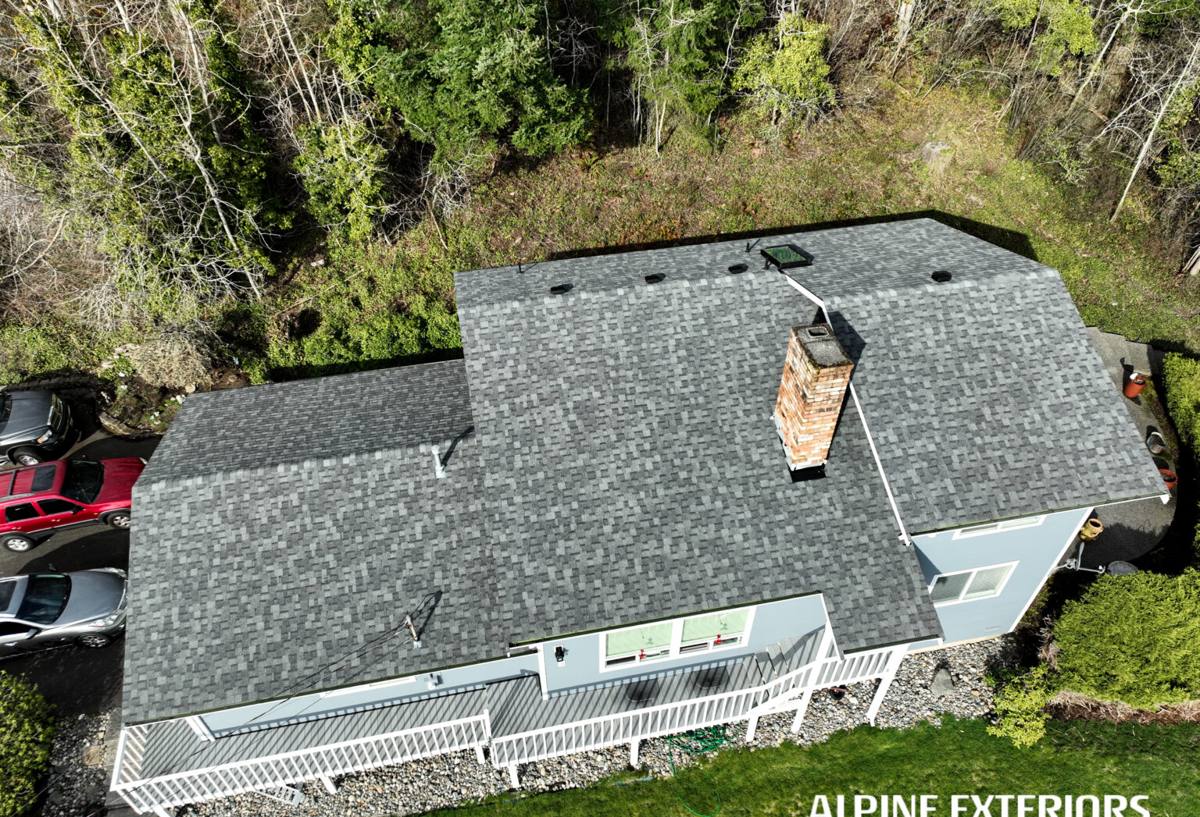
What Driving Rain, Salt Air, and Moss Actually Do to a Deck
It helps to understand the specific failure modes we're designing against, because they're not always obvious until a deck is several years old.
Moisture cycling
Whatcom County doesn't get one big soaking and then dry out — it gets repeated cycles of rain, damp fog, brief sun, and rain again. Wood and even composite decking expand and contract with that cycling. Over time, this works fasteners loose, opens gaps at butt joints, and stresses any finish or sealant applied to the surface.
Moss and algae growth
Moss needs shade, moisture, and time — Lynden's long wet season provides all three. Moss doesn't just look bad; it holds water against the decking surface far longer than open air would, which accelerates rot in wood and can make composite surfaces slick and slippery underfoot.
Salt-air corrosion
Homes closer to the water see accelerated corrosion on any exposed metal — nails, screws, joist hangers, railing hardware. Standard galvanized fasteners can start showing rust streaks and pitting well before their expected lifespan in a coastal-influenced climate.
Hidden substructure rot
The most expensive failures aren't in the decking boards — they're in the ledger board, joists, and posts underneath, where poor flashing or trapped moisture rots structural wood out of sight until a board flexes or a railing feels loose.
Choosing Decking Material for a Lynden Property
There's no single "best" decking material — it depends on your budget, how much upkeep you want to do, and how exposed your site is to shade, moss, and moisture. Here's how the common options actually perform in this climate.
| Material | How it handles our climate | Maintenance burden | Typical lifespan here |
|---|---|---|---|
| Pressure-treated fir/pine | Affordable, but absorbs moisture readily and needs consistent sealing to resist rot and moss | High — annual cleaning and re-sealing | 15–20 years with upkeep, less without |
| Cedar | Naturally rot- and insect-resistant, ages gracefully, but still needs periodic finish maintenance in wet shade | Moderate to high | 20–25 years with care |
| Composite decking | Resists rot and moisture absorption well; can still grow surface moss/algae in shaded, damp spots without cleaning | Low — occasional washing | 25–30+ years |
| PVC/capped polymer | Best moisture resistance of the group; sheds water and resists staining in persistent damp conditions | Low | 25–30+ years |
For shaded lots or yards backing onto trees or greenbelt — common around Lynden's more rural and residential edges — we lean toward composite or capped polymer decking when budget allows, simply because they hold up better against the moss and moisture that shade traps. For open, sunnier lots, quality cedar remains a solid, better-looking option that ages well if it's finished and maintained on a reasonable schedule.
What a Properly Built Substructure Looks Like
The decking surface is what you see, but the substructure is what determines whether the deck is safe and long-lived. In this climate, a few details matter more than they would in a drier region.
Footings sized for local soil and frost conditions
Footings need to be poured to the correct depth and diameter for the load and local frost line, set on undisturbed soil, and positioned so standing water doesn't pool against the post base.
Ledger board flashing
Where a deck attaches to the house, the ledger board is one of the most common points of hidden rot if it's not properly flashed to shed water away from the house sheathing. This is a spot where a rushed job causes damage you won't see until it's expensive.
Joist protection
Joist tops and cut ends absorb water fastest. Capping or sealing exposed joist surfaces, and using joist tape or flashing at hardware connections, meaningfully extends the life of the frame underneath a deck that will spend most of the year wet.
Corrosion-rated fasteners and hardware
Given the coastal-influenced air quality in this area, we use fasteners and structural hardware rated for the moisture and corrosion exposure the deck will actually see — not just the minimum code-compliant option.
Drainage and Airflow: The Difference Between a Deck That Lasts and One That Doesn't
Most deck problems trace back to water that had nowhere to go. Good drainage design isn't an afterthought — it's planned into the deck from the start.
- Decking boards spaced and installed to allow water to drain through rather than pool on the surface
- Grading and any under-deck surface sloped away from the house foundation
- Clearance under the deck framing to allow airflow, which reduces the shaded, stagnant-moisture conditions moss needs to establish
- Gutters or drip edges positioned so roof runoff isn't dumping directly onto the deck or its footings
- Vegetation and landscaping kept clear enough of the deck's edges to avoid trapping moisture and shade against the structure
None of these are complicated on their own, but skipping any one of them is exactly how a deck that looks fine at year two has a soft, mossy corner by year five.
Our Deck Building Process
We approach every deck project the same structured way, whether it's a full rebuild or new construction.
- On-site assessment. We look at the site's sun and shade exposure, drainage path, soil, and how close the property is to salt-air influence, then walk through material and design options that fit both your budget and the site conditions.
- Design and material selection. You get a clear plan covering layout, decking material, railing style, and any built-in features, along with a straightforward explanation of the trade-offs between options.
- Permitting. Deck projects in Whatcom County jurisdictions typically require a building permit depending on size and height — we handle that process so it's done correctly rather than skipped.
- Footings and framing. Footings are set to proper depth, framing is built with corrosion-rated hardware, and ledger flashing is installed correctly at the house connection.
- Decking, railing, and finish work. Boards are installed with proper spacing for drainage and expansion, railing is set to code, and any finish or sealant is applied per manufacturer spec.
- Final walkthrough. We go over the finished deck with you, including what maintenance it needs and on what schedule, before we consider the job done.
Maintenance That Actually Matters in This Climate
A well-built deck still needs some upkeep in a climate this wet — but the right maintenance, done on a reasonable schedule, is far less work than dealing with rot or a slippery moss-covered surface later.
- Sweep leaves and debris off the deck regularly, especially in fall — trapped organic material holds moisture against the boards
- Wash the surface at least once or twice a year to remove algae and moss buildup before it takes hold
- Check railings, stair connections, and any visible hardware annually for looseness or corrosion
- Re-seal or re-stain wood decking on the schedule recommended for the specific product — don't wait until it looks obviously weathered
- Keep gutters clear so roof runoff isn't draining onto the deck surface or framing
- Look underneath the deck occasionally for soft wood, standing water, or signs of pest activity near the framing
Why Hiring a Crew That Already Works in Lynden Matters
Deck-building advice that works in a dry climate can be the wrong advice here. A crew that regularly builds and repairs decks around Lynden and the wider Whatcom County area already knows which fastener grades hold up, which decking products actually resist moss in shaded yards, and how to flash a ledger board so it doesn't become next year's rot problem. That local pattern recognition is the difference between a deck that needs real attention in year three and one that's still solid fifteen years in.
If you're planning a new deck or need an honest look at whether an existing one is holding up the way it should, we're glad to come take a look. We offer free, no-pressure estimates — use the form below to get started.