 Blaine Siding
 Ferndale's Climate Is Harder on Siding Than It Looks
Ferndale sits close enough to the water and the marine air moving in off Bellingham Bay and the Strait of Georgia that homes here take on a steady, low-grade beating most homeowners never fully see. It's not one dramatic storm that wears out a wall — it's the combination of salt-laden air, wind-driven rain that gets pushed sideways under eaves and around corners, and a wet season that stretches long enough for moss and algae to get a real foothold on north-facing walls and anything shaded by trees. Whatcom County's siding doesn't fail from a single event. It fails slowly, from moisture that never fully dries between rain events, and from surfaces that hold grime and biological growth because they never get enough sun to bake dry.
That's the backdrop for every siding decision on a Ferndale home. A product that performs fine in a dry inland climate can struggle here, and a product that's marketed as "low maintenance" everywhere else may need real attention on a lot that backs up to trees or sits low and shaded. We install James Hardie fiber cement siding exclusively, and on Ferndale homes specifically, the reasons come down to how the product actually behaves under salt air, sustained rain, and moss pressure — not just how it looks on a spec sheet.
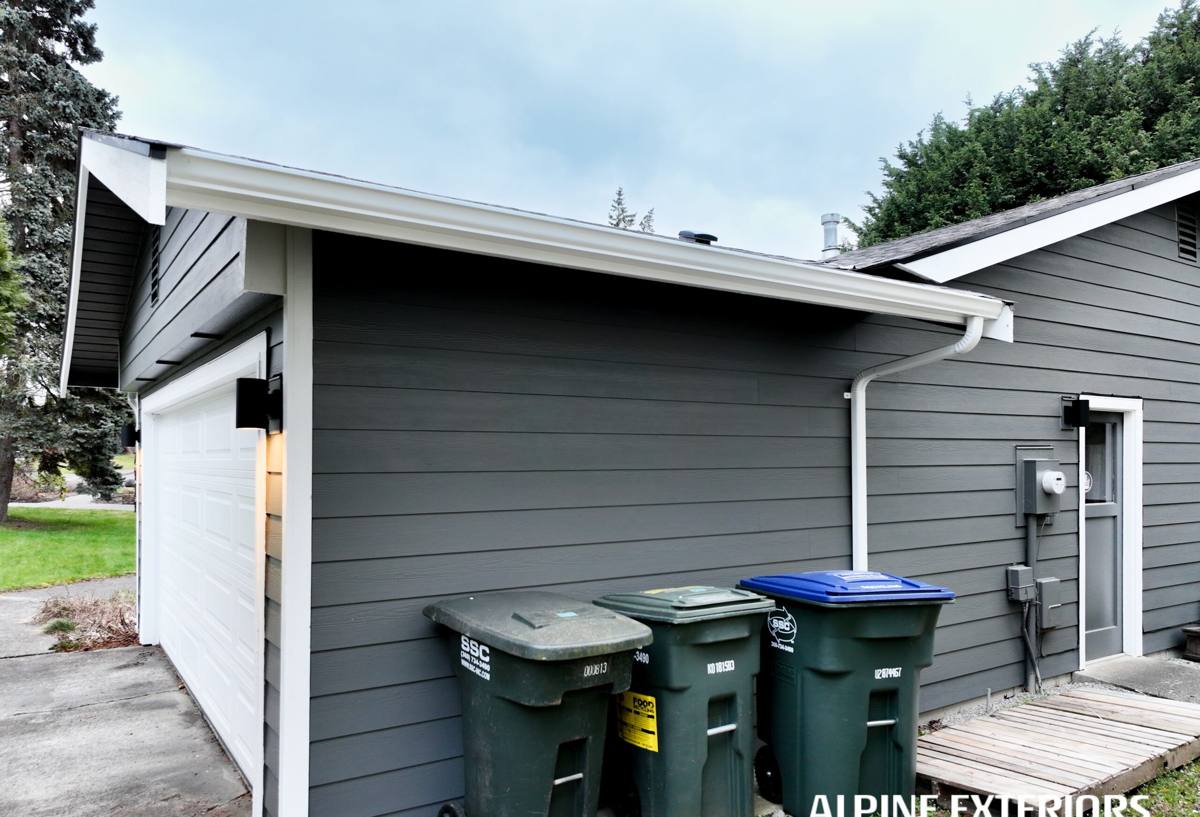
What Salt Air, Driving Rain, and Moss Actually Do to a Wall
Salt Air
Airborne salt is corrosive to metal components — fasteners, flashing, trim edges — and it also accelerates the breakdown of some paint and coating systems over time, leading to earlier chalking, fading, and finish failure than the same product would see further inland.
Driving Rain
Wind-driven rain doesn't just hit a wall — it gets pushed into laps, seams, and any gap around windows, doors, and trim. Siding systems live or die on how well they shed that water and how quickly whatever gets behind the surface can dry out again.
Moss and Algae
Shaded, north-facing, and tree-adjacent walls in this part of Whatcom County stay damp for extended stretches. Moss and algae aren't just cosmetic — a wall that stays wet longer because organic growth is holding moisture against the surface is a wall that's more likely to see rot, coating failure, or substrate damage over time, especially where the material underneath isn't built to handle sustained moisture contact.
Why We Only Install James Hardie Here
James Hardie fiber cement is engineered specifically for climate zones, and the HZ5 product line used in the Pacific Northwest is built with this kind of weather in mind — moisture, temperature swings, and sustained damp conditions. A few things matter specifically for a Ferndale property:
- Fiber cement doesn't rot. Unlike wood-based products, it won't decay from sustained moisture contact the way untreated or under-maintained wood siding can.
- It's non-combustible. Not a Ferndale-specific climate factor, but a real, permanent advantage over vinyl and wood-based products regardless of location.
- ColorPlus factory finish resists fading and chalking better than field-applied paint, which matters more here because salt air is already working against any coating.
- It holds paint and caulk properly at seams and trim, which is where driving rain finds its way in on a poorly detailed wall.
- It cleans up. Moss and algae can be washed off fiber cement without damaging the substrate the way they can degrade wood siding left untreated too long.
We don't install LP SmartSide, vinyl, Cemplank, Allura, primed spruce, or cedar. Some of those products perform reasonably well in the right conditions — this isn't a claim that they're broken. But for the specific combination of salt exposure, sustained rain, and moss pressure that Ferndale sees, we've standardized on Hardie because it's the product we're confident holding up over decades here without surprises.
James Hardie Product Lines That Make Sense for This Area
Not every Hardie product is the right fit for every house. Here's how the main options break down for Ferndale properties:
| Product | Best Fit | Why It Works Here |
|---|---|---|
| HardiePlank Lap Siding | Most homes, traditional or modern | Proven lap profile sheds driving rain well; widest color and texture selection |
| HardieShingle | Craftsman and cottage-style homes | Shingle look without the moisture vulnerability of real cedar shingles in a wet climate |
| HardiePanel | Modern builds, accent walls, gable ends | Clean vertical lines; works well with board-and-batten detailing |
| HardieTrim | Corners, window and door surrounds | Matched material at high-exposure edges reduces mixed-material failure points |
For most Ferndale homes, HardiePlank in a ColorPlus finish is the practical default — it has the longest track record in this climate and the broadest range of exposures and textures. Homes with more architectural detail, or a mix of siding styles, often use HardieShingle or HardiePanel as accents alongside plank.
What a Correct Installation Actually Involves
The product only performs as well as the install. In a climate that pushes rain sideways and keeps things damp for weeks at a time, the details behind the siding matter as much as the siding itself.
Water Management Comes First
Before any siding goes up, the wall needs a proper weather-resistive barrier, correctly lapped and sealed, with flashing at every window, door, and horizontal transition. This is the layer that actually protects the structure — the siding is the second line of defense, not the first.
Fastening and Clearances
James Hardie specifies exact nailing patterns, fastener types, and minimum clearances from grade, roofing, and decks. Skipping these — over-driving nails, using the wrong fastener, or setting siding too close to grade or a roofline — is where a lot of premature siding problems start, and it's not something you can see from the ground once the job is finished.
Joints and Caulking
Butt joints and trim transitions are where driving rain finds gaps. Correctly detailed joints — whether caulked per Hardie's specification or built with proper flashing behind them — are what keep water from tracking behind the panel over time.
Painting and Touch-Up
Field-cut edges need to be primed and painted per manufacturer spec before installation, not after. This is a step that's easy to rush and hard to fix later without it showing.
Cost Factors on a Ferndale Job
Every home is different, but the same handful of factors drive most of the cost variation we see on siding jobs in this area:
| Factor | Why It Matters |
|---|---|
| Existing siding removal | Tear-off and disposal of old wood, vinyl, or damaged siding adds labor before new material goes up |
| Wall condition underneath | Rot or water damage found once old siding is off may need sheathing repair before install continues |
| House complexity | Dormers, multiple gables, and cut-up wall lines take more labor per square foot than a simple rectangular elevation |
| Product selection | Plank vs. shingle vs. panel, plus ColorPlus finish tier, affect material cost |
| Trim and detail work | Corner boards, window/door surrounds, and accent details add labor and material |
| Site access | Tree cover, tight lot lines, or difficult staging areas — common on wooded Ferndale lots — can affect scheduling and labor |
We give a firm, itemized quote after walking the actual property — broad national averages don't mean much once your home's specific wall condition and layout are factored in.
Signs a Ferndale Home Might Need New Siding
- Visible moss or algae buildup that comes back quickly after cleaning
- Paint that's chalking, peeling, or fading unevenly, especially on shaded or salt-exposed sides
- Soft spots, warping, or visible rot at panel edges or seams
- Gaps opening up at trim, corners, or window and door surrounds
- Siding that stays visibly damp long after rain has stopped
- Rising energy bills that may point to a compromised weather barrier behind the siding
None of these mean full replacement is automatically necessary — sometimes it's a repair or a maintenance issue. But any of them are worth having looked at before they turn into structural repair costs.
Living With Fiber Cement Siding in This Climate
James Hardie siding is genuinely low-maintenance compared to wood, but "low-maintenance" isn't "no-maintenance" in a place with a moss season this long. A periodic soft wash to clear algae and moss buildup, especially on shaded elevations, keeps the ColorPlus finish looking right and prevents organic growth from holding moisture against the surface longer than it should. Keeping gutters clear and trimming back vegetation that shades and dampens walls also goes a long way. None of this is heavy work — it's the kind of upkeep that takes an afternoon a year or two and protects the investment.
Why a Crew That Already Works Ferndale Matters
Correct installation in this climate isn't generic — it's shaped by what actually happens to walls here. A crew that regularly works Whatcom County homes has already seen where driving rain finds gaps on this style of house, which elevations take the worst of the moss pressure, and how salt air affects fastener and trim choices over the long run. That's not something a crew from a dry inland market picks up on the first job. Familiarity with the area also means straightforward scheduling and a realistic understanding of what a given lot's tree cover and drainage will mean for both the install and the years of maintenance after it.
If your Ferndale home's siding is showing its age, or you're planning a build and want it done right the first time, we'd be glad to take a look and walk you through the options. Reach out for a free, no-pressure estimate — we'll assess your home's specific exposure and give you a straight answer on what it needs.