 Blaine Siding
 Building a Deck That Belongs in Grandview
Grandview sits close enough to the water and open enough to the weather that a deck here works harder than a deck built twenty miles inland. Homeowners in this part of Blaine deal with a specific combination: salt-laden air moving off the water, long stretches of driving rain through fall and winter, and a moss season that can run six months or more if a deck doesn't get sun or airflow. A deck that isn't built with those three things in mind will show problems within a few seasons — soft spots, black staining, loose fasteners, slick footing. A deck built for them will still look and perform well a decade in.
This page covers what we actually do when we build a deck in Grandview: the materials that hold up, the structural details that matter more here than elsewhere, and the process we follow from first look to final walk-through.
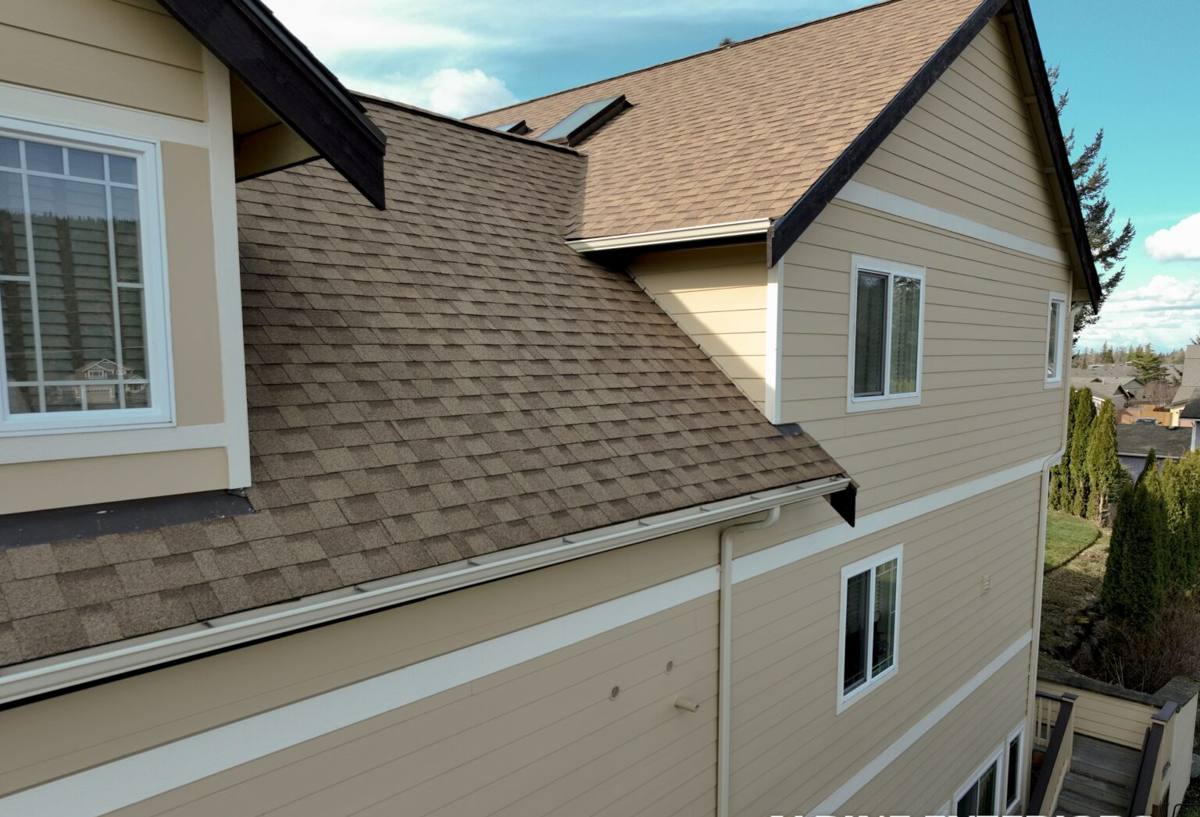
What Whatcom County Weather Does to a Deck
Whatcom County's marine climate is mild compared to a lot of the country, but "mild" doesn't mean easy on wood and metal. Three things drive most of the deck failures we see when we're called out to repair or replace an old one:
Salt Air
Proximity to Semiahmoo Bay and the greater Salish Sea means airborne salt reaches further inland than most homeowners assume. Salt accelerates corrosion in fasteners, joist hangers, and any exposed metal hardware. A deck built with standard interior-grade screws or under-spec'd hangers will start bleeding rust stains into the decking within a couple of years, and corroding hardware is a structural problem, not a cosmetic one.
Driving Rain
Rain here doesn't just fall straight down — wind-driven rain gets pushed sideways into ledger connections, stair stringers, and any spot where two pieces of framing meet. Those joints are where rot starts. It's also why flashing details at the house connection matter as much as the decking material itself.
Moss Season
Shaded decks, north-facing decks, and decks tucked under tree cover in Grandview can stay damp for months at a time. Moss and algae aren't just slippery and unattractive — they hold moisture against the surface of the boards, which is exactly the environment that breaks down wood fiber and, over time, even lower-grade composite capping.
None of this means a deck can't hold up here. It means the details that get skipped on a quick, cheap build are the details that actually determine whether the deck lasts.
Decking Material Choices for a Grandview Property
There's no single "right" decking material for every house — it depends on budget, how much maintenance the owner wants to do, and how exposed the deck is to sun, shade, and salt air. Here's how the common options actually perform in this climate.
| Material | Moss/Moisture Resistance | Maintenance | Typical Lifespan Here |
|---|---|---|---|
| Pressure-treated pine | Fair — needs sealing to perform well | Annual cleaning and re-sealing recommended | 10–15 years with upkeep |
| Cedar | Good natural resistance, but still needs care | Periodic cleaning and oil/sealer | 15–20 years with upkeep |
| Composite (capped) | Very good — doesn't absorb moisture | Occasional washing to clear moss buildup | 25+ years |
| PVC decking | Excellent — fully synthetic, doesn't rot | Low — periodic washing | 25–30+ years |
For shaded lots or anything tucked near tree lines — which describes a fair number of properties around Grandview — we lean toward capped composite or PVC unless the homeowner specifically wants the look and feel of real wood and is willing to keep up with it. Wood decks aren't a bad choice; they just need an owner who's going to reseal on schedule.
Why We're Careful About Uncapped or Budget Composite
Not all composite is built the same. Older or uncapped composite boards can absorb moisture at cut ends and fastener holes, which in a wet, mossy environment like this one can lead to swelling and surface breakdown faster than a fully capped product. Our standard is to spec fully-capped boards from manufacturers with a track record in wet Pacific Northwest climates, and to seal every cut end during install — it's a small extra step that matters a lot here.
Structural Details That Matter More in This Climate
The decking surface is what people see, but the framing underneath is what determines whether the deck is safe and long-lived. In a climate with this much moisture exposure, a few details get extra attention on every job:
- Ledger flashing: Where the deck attaches to the house is the single most common failure point on older decks. Proper flashing keeps water from tracking behind the ledger board and rotting the rim joist.
- Stainless or coated hardware: Given the salt air, we use hardware rated for corrosive/coastal exposure rather than standard interior-grade fasteners and hangers.
- Joist tape: A self-adhering membrane on top of each joist keeps standing water off bare wood, which matters most under composite decking where moisture can sit longer than it would under gapped wood boards.
- Airflow underneath: Proper deck height and skirting design allow air to move under the structure, which shortens how long the framing stays wet after a storm — a real factor during Whatcom County's wetter months.
- Footing depth and drainage: Post footings need to be set below frost depth and clear of standing water, especially on lots with poor natural drainage.
Design Choices That Reduce Moss and Slip Risk
A deck's layout and orientation affect how much moss trouble it gives you down the road, and it's worth thinking through before construction starts, not after.
Board Spacing and Gapping
Proper gap width between boards lets water drain through instead of sitting on the surface. Too tight, and the deck holds water and grows moss faster; too wide, and you get a different set of problems. We set gapping to the material manufacturer's spec, adjusted slightly for our wetter-than-average conditions.
Sun Exposure and Tree Cover
We can't move the sun, but layout decisions — deck footprint, railing style, whether to trim back overhanging branches — all affect how much shade the surface gets. A deck that gets even partial afternoon sun dries out faster and grows far less moss than one in permanent shade.
Surface Texture
Smooth-faced boards look clean but get slick fast once moss or algae films over them. A lightly textured or grooved board surface holds traction noticeably better through the wet months, which matters for stairs especially.
Our Deck Building Process
Every deck we build in Grandview follows the same sequence, adjusted for the specific site:
- On-site assessment: We walk the site, check drainage, sun exposure, tree cover, and how the deck will tie into the house.
- Design and material selection: We talk through decking material, railing style, and layout based on budget and how much maintenance the homeowner wants to take on.
- Permitting: Most deck builds in Whatcom County require a building permit, especially for decks above a certain height or attached to the house. We handle that process.
- Framing: Footings, posts, beams, and joists go in first, with corrosion-resistant hardware and proper ledger flashing throughout.
- Decking and railing install: Boards are laid with correct gapping, cut ends sealed, and railing installed to code.
- Final walk-through: We go over the finished deck with the homeowner, including basic care and cleaning guidance for our climate specifically.
Maintenance That Actually Matters Here
A well-built deck still needs some upkeep in this climate — but it's less than most homeowners expect if the build was done right.
- Sweep off leaves and debris regularly, especially in fall — trapped organic matter is what feeds moss growth.
- Rinse the surface a couple of times a year to clear early moss and algae before it gets established.
- Check railings and stair connections annually for any looseness — salt air can work on exposed hardware over time even when it's rated for it.
- For wood decks, keep to a resealing schedule rather than waiting until the wood looks dry or gray.
- Keep gutters and downspouts near the deck clear so runoff isn't dumping extra water onto or under the structure.
Repair, Rebuild, or New Build?
Not every deck problem means starting over. If you've got an existing deck in Grandview that's showing its age, here's roughly how we sort it out:
| Condition | Typical Fix |
|---|---|
| Surface staining, moss, minor board wear | Cleaning, board replacement, or resurfacing |
| Loose railings or stairs, minor rot at isolated spots | Targeted structural repair |
| Soft or spongy framing, rot at ledger connection, corroded hardware throughout | Full rebuild — patching won't fix a compromised structure |
If you're not sure which category your deck falls into, that's a normal reason to have us come take a look — we'll tell you honestly if repair makes sense or if a rebuild is the better long-term investment.
Why Local Experience in Grandview Matters
Building a deck that holds up in this specific stretch of Whatcom County isn't the same as building one somewhere drier or further from the water. Knowing how far salt air actually travels inland here, which lots tend to hold moisture longest, and how to detail a ledger connection against sideways-driving rain comes from having done the work in this area repeatedly — not from a generic build spec. A crew that already works around Blaine knows which corners not to cut before the first board goes down.
If you're planning a new deck or need an honest read on one that's showing wear, we're happy to come out, take a look, and walk you through your options. Reach out for a free, no-pressure estimate using the form below.