 Blaine Siding
 Why Ferndale Roofs Wear Differently Than Roofs Inland
Ferndale sits close enough to Bellingham Bay and the Salish Sea that salt-laden air is a real factor in how a roof ages here, not just a talking point. Salt-bearing moisture works into exposed metal — nail heads, flashing, vent caps — and speeds up corrosion in ways a roof forty miles inland never has to deal with. Combine that with the driving rain that comes off the Strait of Georgia in most winter storms, and you get water that doesn't just fall straight down, it gets pushed sideways under shingle tabs and around flashing laps that would hold up fine in a calmer climate.
Then there's moss. Whatcom County's damp, mild winters and long shoulder seasons give moss and algae months at a time to establish themselves, especially on north-facing slopes and roofs shaded by fir and cedar trees. Once moss gets a foothold, it holds moisture against the shingle surface almost permanently, which is a different kind of stress than simple rain exposure. A roof replacement done for a Ferndale home needs to account for all three of these things together — salt air, wind-driven rain, and a moss season that can run eight or nine months — not just meet a generic building code minimum.
Signs a Ferndale Roof Needs Replacement, Not Another Patch
Patching has its place, but there's a point where repeated repairs stop making financial sense and start masking a bigger problem. Here's what we look for when we're deciding whether a Ferndale roof is a repair candidate or a replacement candidate:
- Heavy granule loss showing up in gutters and downspouts, which means the shingles are losing their UV and weather protection
- Shingles that are curling, cupping, or cracking, especially on south and west-facing slopes
- Moss mats or dark streaking that return within a season or two of cleaning
- Soft or spongy spots underfoot, or sagging between rafters when viewed from the attic
- Daylight visible through the roof deck, or damp insulation in the attic after a storm
- Recurring leaks around the same chimney, skylight, or valley despite prior flashing repairs
- A roof at or past 20–25 years old with asphalt composition shingles, or one that already has two layers on it
Any one of these on its own might still be a repair. Several of them together, on an older roof, usually means the underlying materials — decking, underlayment, flashing — have been absorbing damage for a while, and a replacement is the more honest recommendation.
What a Correct Roof Replacement Actually Involves
A roof replacement is more than swapping old shingles for new ones on top of what's already there. Done right, it's a full rebuild of the roof's water-management system, and in a climate like Whatcom County's, skipping steps shows up fast.
Tear-off and deck inspection
Every layer comes off down to the plywood or board decking. This is the only point in the project where anyone can actually see the condition of the wood underneath — rot, delamination, or soft spots from years of slow moisture intrusion. Any damaged decking gets cut out and replaced before anything new goes down, because new shingles over a compromised deck just hides the problem again.
Ice-and-water shield and underlayment
Eaves, valleys, and any area prone to wind-driven rain get a self-adhering waterproof membrane, with synthetic underlayment covering the rest of the roof. This is the layer that actually stops water that gets past the shingles — and given how much sideways rain this area sees, it's not an area to cut corners on.
Flashing and penetrations
Chimneys, skylights, sidewalls, and vent pipes are where most roof leaks actually originate, not the open field of shingles. New step flashing, counter-flashing, and pipe boots are installed as part of the job — reusing old, corroded flashing to save time is one of the most common shortcuts that leads to a callback a year or two later.
Ventilation
Balanced intake and exhaust ventilation keeps the attic and roof deck at a stable temperature and moisture level. It matters everywhere, but it matters more here because a roof deck that stays cool and damp is exactly what moss needs to take hold again.
Choosing a Roofing Material for Whatcom County Weather
There's no single "best" roofing material — the right choice depends on the home, the budget, and how much long-term maintenance a homeowner wants to take on. Here's how the common options compare for a climate with heavy moisture and moss pressure:
| Material | Handling salt air & driving rain | Moss resistance | Maintenance |
|---|---|---|---|
| Architectural asphalt shingle | Good, with quality flashing and underlayment | Moderate — benefits from occasional cleaning and zinc/copper strips | Low to moderate |
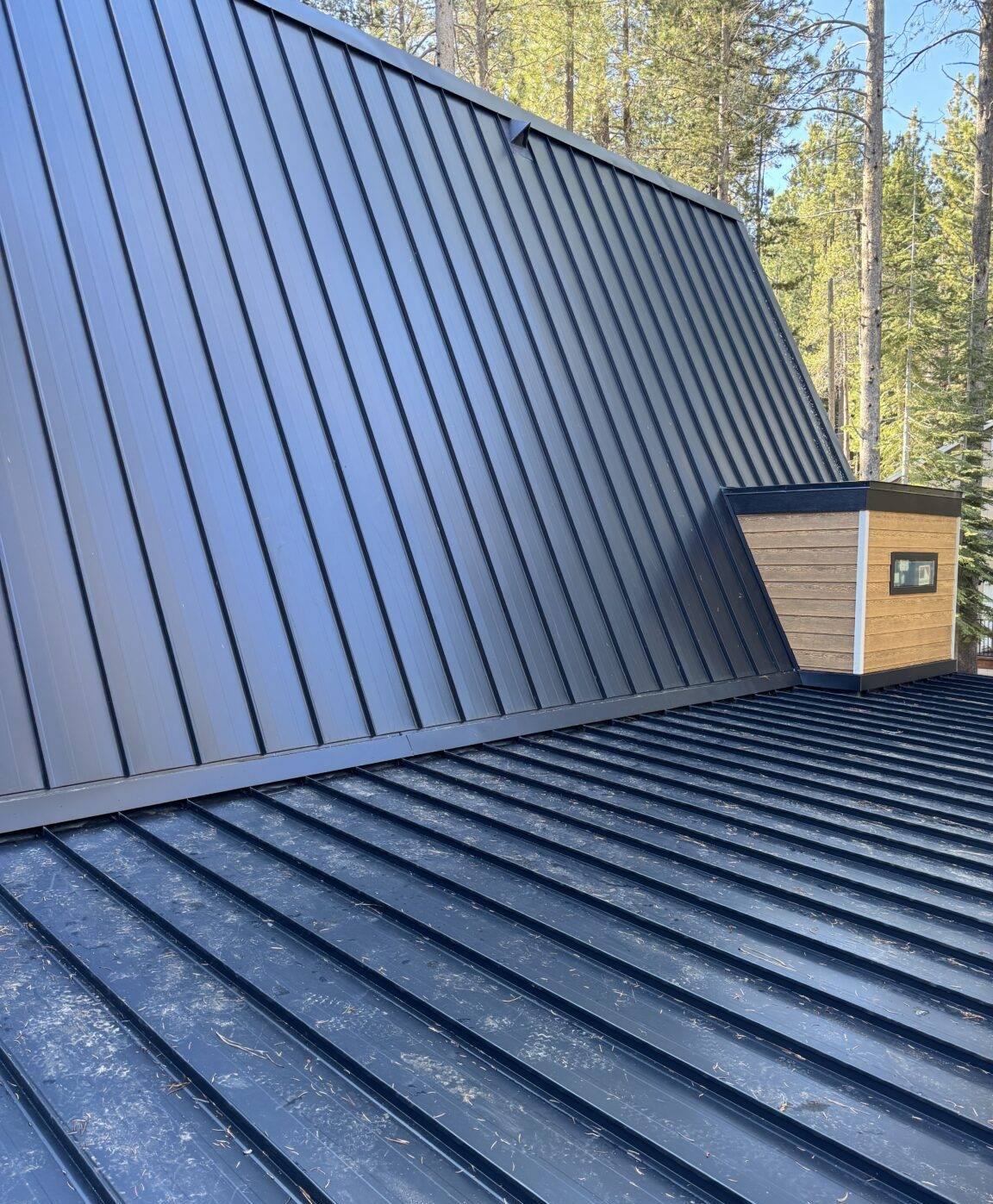
| Standing seam metal | Very good; sheds water and debris quickly | High — moss struggles to grip a smooth metal surface | Low |
| Cedar shake | Traditional PNW look, but more sensitive to sustained moisture | Low — needs regular treatment and cleaning in shaded, damp areas | High |
We install asphalt composition shingle and metal roofing as our primary systems. We're upfront that cedar shake, while it has a real regional history and a look some homeowners love, carries a heavier maintenance burden in a climate this wet and shaded — the moisture-retention and upkeep demands are a genuine trade-off, not a knock on the product itself. For most Ferndale homes, a quality architectural shingle or a metal roof gives the best balance of appearance, durability, and manageable upkeep.
Ventilation and Moisture: The Step That Gets Skipped
If there's one part of a roof replacement that gets shortchanged more than any other, it's ventilation. It doesn't show up in a photo and it's easy for a homeowner to not ask about — but it directly affects how long the new roof lasts and how fast moss comes back.
A roof needs a balanced amount of intake ventilation (usually at the soffits) and exhaust ventilation (usually at the ridge) so air actually moves through the attic space instead of sitting still. Without that airflow, moisture from the living space below and from the outside climate gets trapped against the underside of the deck. A damp, poorly ventilated deck is exactly the environment moss and algae thrive on from the top side too. Getting the ventilation math right — enough intake to match the exhaust, unobstructed baffles at the eaves, and a ridge vent sized correctly for the roof — is part of what separates a roof that stays clean for years from one that's growing moss again within a couple seasons.
Our Replacement Process, Start to Finish
- Inspection and assessment — we get on the roof, check the decking, flashing, and ventilation, and give an honest read on repair versus replacement.
- Material selection — we walk through the options above based on your budget, the home's exposure, and how much upkeep you want going forward.
- Scheduling and permitting — we handle the permit process and plan the job around a realistic weather window rather than rushing it into a wet stretch.
- Tear-off and deck repair — old roofing comes off, the deck gets inspected, and any damaged sheathing is replaced.
- Waterproofing, flashing, and ventilation — ice-and-water shield, underlayment, new flashing, and a properly balanced ventilation system go in before a single shingle or panel is installed.
- Installation — new roofing goes on to manufacturer spec, including nailing pattern and exposure, which affects both wind rating and warranty coverage.
- Cleanup and walkthrough — a magnetic sweep for stray fasteners, a final walkthrough with you, and warranty paperwork handed over.
Timing, Weather Windows, and Permits Around Ferndale
Roofing in Whatcom County means working around real weather, not ideal weather. Asphalt shingle installation and most flashing work need dry conditions to seal and set correctly, so we watch forecasts closely and plan tear-off days for stretches without driving rain in the mix. We also make sure any roof left temporarily open overnight is properly dried in and protected — that's not optional in a climate where an unexpected shower is always a possibility, even in a "dry" season.
Permitting requirements apply to most roof replacements in this area, and we handle that process as part of the job rather than leaving it for the homeowner to sort out. Getting the permit and inspection steps right the first time keeps the project on schedule and avoids issues later if the home is sold and the roof work comes up in a disclosure or inspection.
What Affects the Cost of a Ferndale Roof Replacement
Every roof is priced based on its own specifics, but the same handful of factors drive most of the variation between a straightforward job and a more involved one:
| Factor | Why it matters |
|---|---|
| Roof size and pitch | More square footage and steeper slopes mean more material, more labor time, and more safety setup |
| Layers to remove | A single-layer tear-off is faster than removing two or more old layers |
| Decking condition | Rotted or delaminated sheathing found during tear-off has to be replaced before installation continues |
| Material choice | Standard architectural shingle, premium shingle, and standing seam metal all sit at different price points |
| Site access and complexity | Steep lots, mature trees close to the roofline, or multiple roof planes add time |
| Ventilation upgrades | Adding or correcting intake/exhaust ventilation is a smaller add-on cost with a real payoff in roof longevity |
We'd rather walk your specific roof and give you real numbers than quote a range that doesn't mean much until we've actually seen the deck condition and the scope involved.
Why a Crew That Already Works Ferndale Matters
A roofing crew that already works in and around Ferndale isn't guessing at how this climate treats a roof — they've seen what salt air does to flashing over a few years, what a shaded, moss-prone slope looks like after a mild wet winter, and how driving rain finds the weak points in a job that wasn't sealed up correctly. That experience shows up in the small decisions: where to add extra ice-and-water shield, how to detail flashing around a chimney facing the prevailing wind, and how to size ventilation for a roof that's going to spend most of the year in damp conditions.
It also matters for the practical side of the job — knowing the local permitting process, being able to respond quickly if weather changes mid-project, and being available afterward if a question comes up rather than being a crew that did one job in the area and moved on.
If your roof in Ferndale is showing its age or you just want a straight answer on repair versus replacement, we're happy to take a look and walk you through what we find. Reach out for a free, no-pressure estimate using the form below.