 Blaine Siding
 Ferndale's Climate Is Hard on Siding
Ferndale sits close enough to the Salish Sea and the Nooksack lowlands that homes here deal with a specific combination of punishment: salt-laden air moving in off the water, long stretches of driving horizontal rain in the fall and winter, and a moss and algae season that can run most of the year in shaded, north-facing spots. Any one of these on its own is manageable. Together, they shorten the life of siding materials that aren't built for the Pacific Northwest.
Salt air accelerates corrosion on fasteners and metal trim, and it works into porous or poorly sealed materials faster than plain rain does. Driving rain doesn't just wet the surface of a wall — wind-driven moisture finds gaps, laps, and butt joints that would stay dry in a calmer climate. And moss doesn't just look bad; where it holds moisture against a wall for weeks at a time, it creates the conditions for rot, paint failure, and swelling in materials that can't handle sustained dampness.
Whatcom County homeowners who've dealt with siding failure firsthand usually describe the same pattern: things looked fine for several years, then problems showed up all at once — soft spots near the bottom courses, paint peeling in sheets, or panels that started to sag or separate at the seams. That's the nature of moisture damage. It's slow and invisible until it isn't.
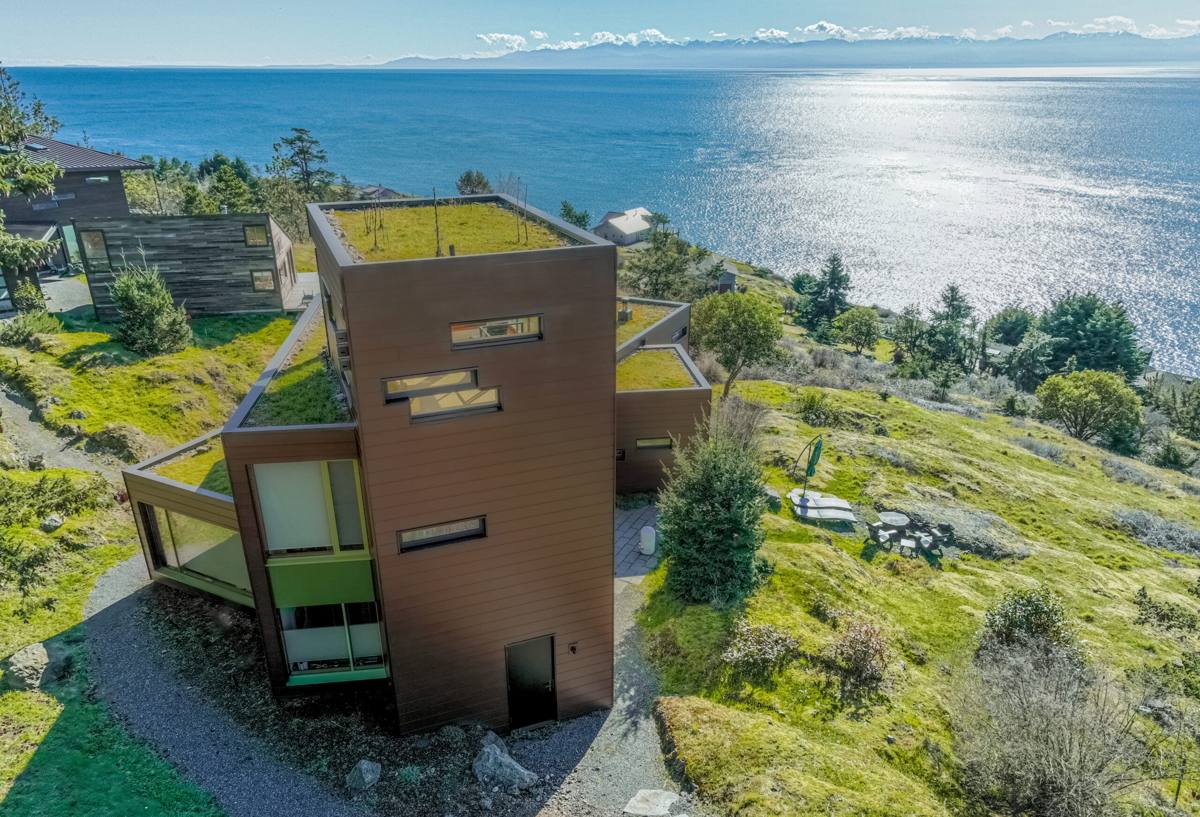
Why Fiber Cement Is the Right Call for Ferndale
Fiber cement siding is made from cement, sand, and cellulose fiber, cured into a dense, stable board. It doesn't absorb water the way wood-based products do, it won't rot, and it's not a food source for the mold and moss spores that thrive in this climate. It's also non-combustible, which matters more each year as wildfire smoke seasons stretch further north.
We install James Hardie fiber cement exclusively, and Ferndale's climate is a big part of why. Hardie engineers its siding in climate-specific formulations — the HZ5 product line is built for regions with damp, moisture-heavy weather patterns like the Pacific Northwest, with a formulation designed to resist moisture-related warping and cracking better than a one-size-fits-all board. That's a meaningful difference from generic fiber cement or engineered wood siding, which isn't tuned to any particular climate.
We don't install LP SmartSide, vinyl, Cemplank, Allura, or primed wood siding. Each of those has a place in the market, but we've made a professional decision to standardize on one product system so we can guarantee the installation quality and warranty coverage behind every job we do — rather than being generalists across five different materials with five different failure modes.
What Sets ColorPlus Finish Apart Here
Standard field-painted siding is only as good as the paint job and the repaint schedule that follows it. In a climate with this much rain and salt exposure, paint on traditional siding tends to fail at the edges and seams first — exactly where moisture gets in. James Hardie's ColorPlus finish is baked on in a factory-controlled process, which gives it better fade resistance and adhesion than field-applied paint, and it comes with a dedicated finish warranty separate from the product warranty. For a home exposed to salt air and constant damp, that's a real practical advantage, not just a marketing point.
Signs a Ferndale Home Needs New Siding
- Paint that's peeling, bubbling, or chalking heavily, especially on north- and west-facing walls
- Soft or spongy spots when you press on the siding near the bottom courses or below windows
- Persistent moss or algae staining that comes back within weeks of cleaning
- Visible gaps, warping, or cupping in panels or lap boards
- Rising energy bills that suggest air and moisture are getting past the wall assembly
- Siding that's original to a home built more than 20-25 years ago, especially wood-based products
Any one of these is worth a look. Several together usually mean the siding has been failing quietly for a while and a proper inspection is overdue.
What a Correct Installation Actually Involves
Fiber cement siding is only as good as the install behind it. In a climate like Ferndale's, the difference between a correct install and a rushed one shows up within a few wet seasons, not decades.
Water Management Comes First
Before a single piece of siding goes up, the wall needs a functioning drainage plane — a weather-resistant barrier, properly lapped and taped, with flashing at every window, door, and horizontal transition. In a region with this much wind-driven rain, this layer is what actually keeps water out of the wall cavity. Siding is the second line of defense, not the first.
Clearances and Gaps
Hardie specifies minimum clearances from grade, roof lines, decks, and other horizontal surfaces, along with specific gaps at butt joints and around penetrations. These aren't arbitrary numbers — they're there to let the material handle normal expansion and to keep standing water off the board. Skipping them is one of the most common ways an otherwise good product fails early.
Fastening and Caulking
In a salt-air environment, fastener choice matters more than it would further inland. Corrosion-resistant fasteners installed at the correct depth and spacing prevent the kind of early rust streaking and loosening that lets water track behind the boards. Caulking should be used at specified joints only, with a product rated for the exposure — over-caulking every seam can trap moisture rather than shed it.
Finishing Details
Corner trim, J-channel, and butt joint flashing all need to be installed to manufacturer spec, not shortcut. These are the spots where a rushed crew saves an hour and a homeowner loses five years of siding life.
Our Process for Ferndale Homes
- On-site assessment — we look at the existing siding, the wall assembly where accessible, problem areas like north-facing walls or spots with heavy moss history, and any moisture damage already present.
- Removal and wall inspection — tear-off gives us a direct look at the sheathing and framing. Any rot or water damage found underneath gets addressed before new siding goes up, not covered over.
- Weather barrier and flashing — a new or repaired drainage plane goes on with proper lapping and flashing at every opening, sized for the amount of wind-driven rain this area sees.
- Hardie installation to spec — correct clearances, fastening, and joint treatment, using the HZ5 product line suited to this climate.
- Final detailing and cleanup — trim, caulking where specified, and a full site cleanup before we walk the job with the homeowner.
Cost Factors for Ferndale Fiber Cement Siding Jobs
| Factor | Why It Affects Cost |
|---|---|
| Home size and wall complexity | More corners, gables, and dormers mean more cutting, trim work, and labor time |
| Condition of existing wall assembly | Rot or moisture damage found during tear-off requires repair before new siding goes on |
| Siding profile and texture | Lap siding, shingle-style panels, and board-and-batten each carry different material and labor costs |
| Color and finish selection | Standard ColorPlus colors versus custom field-painted finishes affect material pricing |
| Trim and accessory scope | Corner boards, window trim, and fascia work add to the overall job |
| Access and site conditions | Multi-story walls, tight lot lines, or landscaping obstacles affect labor time |
Every home is different, which is why we walk the property before giving a number rather than quoting off a phone call.
Why a Crew That Already Works Ferndale Matters
A contractor who works this part of Whatcom County regularly already knows which orientations take the worst weather, where moss tends to build up fastest, and how much clearance a given lot's drainage patterns really call for. That's not something you get from a manufacturer's install manual alone — it comes from seeing how homes in this specific area actually hold up over time. It also means a crew that's easy to reach for warranty questions or a follow-up visit, rather than a company that did one job in the area and moved on.
Maintaining Fiber Cement Siding in a Damp Climate
- Rinse siding annually to keep moss and algae from taking hold, especially on shaded walls
- Keep gutters clear so overflow doesn't run down the siding face repeatedly
- Trim back landscaping that keeps siding shaded and damp
- Inspect caulking at trim and penetrations every couple of years and touch up as needed
- Address any impact damage or chips promptly so moisture can't get behind the board
Fiber cement asks for far less maintenance than wood siding, but "low maintenance" isn't "no maintenance" — a little attention each year goes a long way in this climate.
If your Ferndale home's siding is showing its age or you're planning ahead of the next wet season, we're happy to take a look and walk you through what correct James Hardie installation would involve for your specific home. Fill out the form below for a free, no-pressure estimate.