 Blaine Siding
 Cherry Point's Climate Is Hard on Decks
Cherry Point sits close enough to the Strait of Georgia that salt-laden air is part of daily life for the homes out there. That air doesn't just smell like the water — it carries fine salt particles that settle on wood, metal fasteners, and finishes, speeding up corrosion and breaking down protective coatings faster than you'd see further inland. Add Whatcom County's long wet season, with driving rain that comes in sideways off the water, and you've got moisture finding its way into every gap, seam, and fastener hole a deck has.
Then there's moss. Blaine's mild, damp winters give moss and algae a long window to establish themselves on any shaded or north-facing deck surface. Once moss takes hold, it holds water against the wood like a sponge, and that's when rot starts — often in spots you can't see until you're actually down on your knees checking joists and ledger boards.
None of this means a deck in Cherry Point is doomed. It means the repair work has to account for all three factors — salt exposure, wind-driven rain, and moss — instead of treating the deck like it's sitting in a dry inland yard. That's the difference between a repair that lasts a few seasons and one that lasts the life of the deck.
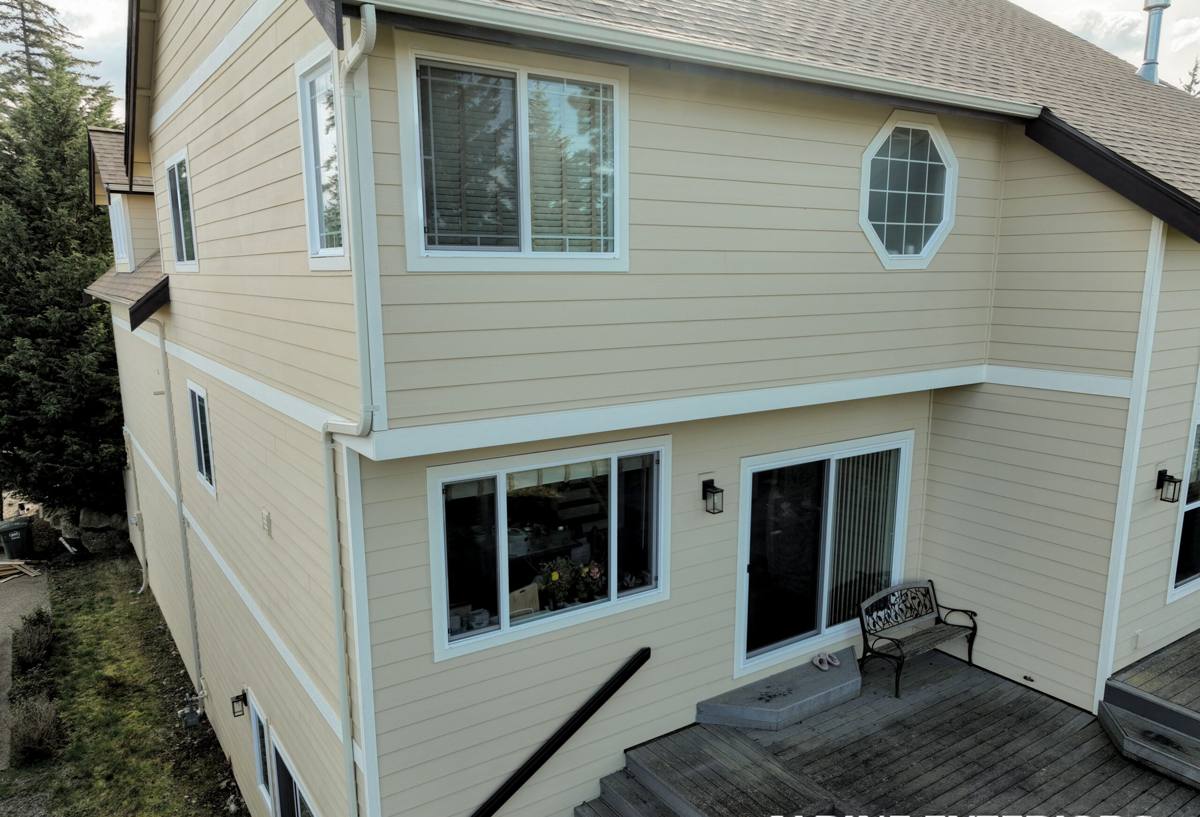
Common Deck Problems We See in This Area
Fastener and Hardware Corrosion
Nails, screws, and joist hangers that aren't rated for coastal exposure start rusting from the inside out. You'll often see surface staining on the deck boards — a rust bleed around each fastener head — before you see any structural issue. By the time staining shows, the fastener has usually already lost some of its holding strength.
Ledger Board and Rim Joist Rot
The ledger board, where the deck attaches to the house, is the single most important structural connection on most decks — and it's also the spot most exposed to trapped moisture if flashing was installed poorly or is missing entirely. Wind-driven rain pushes water behind poorly flashed ledgers, and it can sit there for months without a visible sign from the outside.
Moss-Related Surface Decay
Shaded decking boards, especially on the north or east side of a house, hold moss longer through the wet months. Moss retains moisture against the board surface, and over a few seasons that constant dampness softens the wood fiber, opens the door to fungal decay, and makes the surface slick and unsafe underfoot.
Loose or Failing Railings
Railing posts see constant wind load off the water, and if the post-to-frame connection wasn't built with lag bolts and proper blocking, that connection loosens over time. A wobbly railing is one of the most common repair calls we get, and it's also one of the more serious safety issues if left alone.
Repair or Replace? What Actually Determines the Answer
Not every deck problem means a full rebuild, but not every deck is worth patching either. The honest answer depends on how far the damage has spread and what's underneath the surface. Here's how we break it down for homeowners:
| Factor | Favors Repair | Favors Replacement |
|---|---|---|
| Structural framing (joists, beams, posts) | Sound, no soft spots when probed | Widespread soft or spongy wood, especially near the ledger |
| Age of the deck | Under 15 years, built to a decent standard | Original construction is decades old or was built without permits/proper flashing |
| Extent of moss/rot damage | Isolated to a few boards or one section | Spread across multiple structural members |
| Fastener condition | Localized corrosion, hardware still holding | Widespread rust bleed and loosening hardware |
| Budget goals | Want to extend life a few more years affordably | Ready to invest in a long-term, low-maintenance solution |
A straightforward answer only comes after someone gets underneath the deck and actually probes the wood with a screwdriver or awl — not just a visual walk-around. That's why we start every job with a real inspection, not a guess from the surface.
What a Correct Deck Repair Actually Involves
A repair that's done right in a coastal, wet climate like this one isn't just swapping out a rotten board and calling it done. It means addressing the conditions that caused the failure in the first place, so the same spot doesn't fail again in two years.
- Removing damaged material back to solid wood, not just the visibly rotten section
- Checking and correcting flashing at the ledger board connection, since this is the most common source of hidden water intrusion
- Replacing corroded fasteners and hardware with stainless steel or hot-dip galvanized rated for coastal exposure
- Inspecting joist hangers and structural connectors, not just the decking boards themselves
- Addressing drainage and airflow underneath the deck so moisture doesn't pool and re-start the rot cycle
- Treating or sealing any new and adjacent wood to match the protection level of the rest of the structure
Skipping any of these steps is how a "quick fix" turns into a repeat service call a year or two later. We'd rather explain upfront what a job actually needs than sell a patch that won't hold.
Our Deck Repair Process
1. On-Site Inspection
We walk the full deck, check the ledger connection, probe suspect boards and framing, and look at drainage and moss buildup underneath. We'll show you what we find, in plain terms.
2. Honest Scope and Estimate
You get a written estimate that separates what's necessary now from what can reasonably wait. No pressure to replace a deck that only needs targeted repair, and no minimizing a problem that genuinely needs more than a patch.
3. Repair Work
We remove and replace damaged material, correct flashing and fastener issues, and rebuild any compromised structural connections to current framing standards.
4. Final Check and Cleanup
Before we consider a job finished, we recheck the repaired area under load, clean up the site, and walk you through basic care so the repair holds up through the next wet season.
Materials That Hold Up in This Climate
Not every decking or fastener product performs the same way against salt air and constant moisture. Some materials require more upkeep than a busy homeowner realistically wants to commit to; others trade a higher upfront cost for far less maintenance over the years. Our job is to lay out the honest trade-offs, not push whatever's easiest to install.
| Material | Maintenance Burden | Moisture/Salt Resistance |
|---|---|---|
| Pressure-treated lumber | Regular sealing/staining needed, roughly every 1-2 years | Good if properly sealed and maintained; vulnerable if upkeep lapses |
| Cedar | Moderate — needs periodic sealing to keep natural rot resistance | Naturally decent, but still needs protection near the coast |
| Composite decking | Low — occasional washing, no staining | Very good; doesn't absorb moisture like wood, resists moss staining better |
| Standard steel hardware | N/A | Poor near salt air — corrodes faster, our standard is to avoid it here |
| Stainless/coated marine-grade hardware | N/A | Our standard for this area — built for the exposure |
We won't tell you composite is the only right answer — plenty of homeowners prefer the look and feel of real wood and are happy to keep up with sealing on a schedule. What matters is matching the material to how much maintenance you're actually willing to do, and using hardware that's rated for salt exposure regardless of which decking you choose.
Keeping a Repaired Deck in Good Shape
A repair is only as good as the care that follows it. A little seasonal attention goes a long way toward making sure the work lasts:
- Sweep debris and standing leaves off the deck surface regularly, especially in fall
- Scrub moss and algae off shaded boards before it has a chance to establish and hold moisture
- Check the ledger flashing and any visible fasteners once a year for early rust staining
- Keep gutters and downspouts clear so runoff isn't dumping extra water onto or under the deck
- Reseal wood decking on the schedule appropriate to the product — don't let coatings lapse
- Confirm underneath airflow isn't blocked by stored items or overgrown landscaping
These are small habits, but skipping them is exactly how a well-done repair ends up needing attention again sooner than it should.
Why a Crew That Already Works Cherry Point Makes a Difference
A contractor who works this stretch of Whatcom County regularly already knows which framing details tend to fail first in this exposure, which fastener grades actually hold up, and how aggressive the moss season gets on shaded, water-facing decks. That's knowledge that doesn't come from a general contracting background alone — it comes from repeatedly seeing how Cherry Point's specific mix of salt air and rainfall plays out on real decks, year after year.
It also means a faster, more accurate diagnosis. Instead of guessing at what might be wrong, a crew familiar with the area knows where to look first — the ledger, the north-facing boards, the hardware closest to the water side of the house — and can usually spot the real issue on the first visit rather than after multiple return trips.
Ready for an Honest Look at Your Deck?
If your deck in or near Cherry Point has soft spots, rusting hardware, persistent moss, or a railing that's started to feel less solid than it should, it's worth having someone take a real look before the next wet season sets in. We offer free, no-pressure estimates — we'll tell you honestly whether you're looking at a targeted repair or something more, and what it would take either way. Fill out the form below to get started.