 Blaine Siding
 Why Nooksack Decks Take a Different Kind of Beating
Nooksack sits close enough to Blaine and the Strait of Georgia that homes here deal with a specific combination of weather most deck-building guides don't address: salt-laden air drifting inland, long stretches of driving rain off the water, and a moss season that can run from October well into spring. None of these alone is unusual for western Washington. Together, on a structure that's outdoors year-round and often built low to the ground, they add up faster than most homeowners expect.
Salt air accelerates corrosion on any exposed metal — fasteners, joist hangers, railing hardware — long before the wood itself shows real wear. Driving rain, especially when it comes in at an angle during a Whatcom County windstorm, gets pushed under railings and against ledger boards in ways that straight-down rain never would. And moss doesn't just make a deck slippery; given enough weeks of damp shade, it holds moisture against the decking surface and starts working into seams, screw holes, and any spot where two boards meet. A deck built to a generic national spec, without accounting for this combination, will show problems in years, not decades.
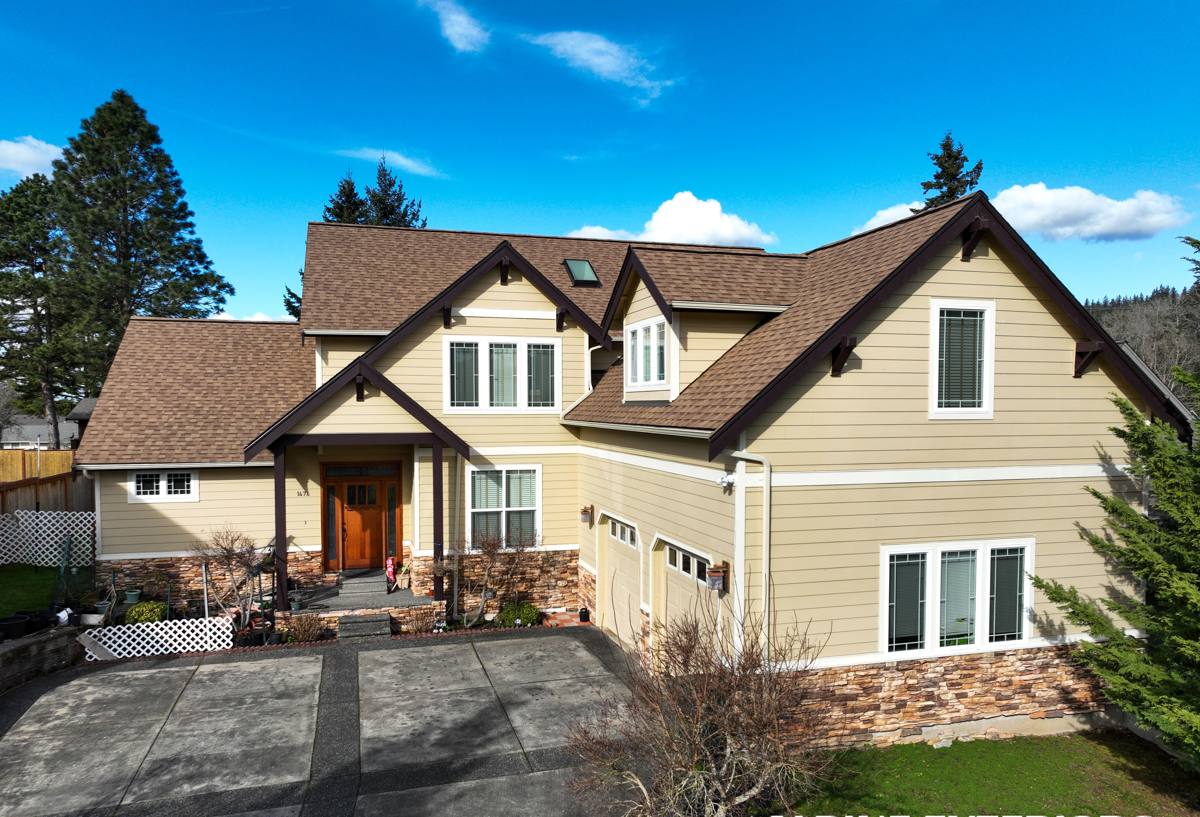
What a Correctly Built Deck Looks Like Here
"Correct" for a Nooksack-area deck isn't about upgrading everything to the most expensive option. It's about matching each component to the actual conditions it will face. A few areas matter more here than in drier parts of the state:
Ledger Attachment and Flashing
The ledger board — where the deck attaches to the house — is the single most common failure point on any deck, and it's worse in a wet climate. Water that gets behind an improperly flashed ledger doesn't just rot the ledger; it can work into the house's rim joist and wall framing. A proper ledger installation uses flashing that sheds water outward and away from the house, sealed and lapped correctly with the home's existing weather-resistive barrier, not just caulked and hoped for.
Footings and Frost Considerations
Whatcom County footing depth requirements exist for a reason — ground freeze and moisture-driven soil movement can both shift an undersized or shallow footing over time. We size and depth footings to local code, not to whatever gets a deck built fastest.
Fastener and Hardware Selection
Given the salt air that reaches this area, we don't treat hardware as a place to save money. Stainless steel or high-quality coated fasteners rated for coastal exposure cost more up front than standard galvanized hardware, but the difference shows up as rust streaks and failing joist hangers within a few years if the wrong grade is used. This is a case where the cheaper option isn't actually cheaper — it's a warranty and safety issue waiting to happen.
Choosing the Right Decking Material
There's no single "best" decking material — there's the right material for how a given homeowner wants to use and maintain their deck. Here's how the common options actually compare for a Nooksack-area home:
| Material | Upfront Cost | Maintenance | How It Handles Moisture & Moss |
|---|---|---|---|
| Pressure-treated wood | Lowest | Annual cleaning, periodic staining/sealing | Prone to moss and algae growth in shaded, damp spots without regular cleaning; can cup or check if left unsealed |
| Cedar | Moderate | Regular sealing to hold color and resist moisture | Naturally more rot-resistant than treated wood but still needs upkeep in a wet, mossy climate |
| Composite decking | Higher | Occasional washing, no staining/sealing | Doesn't rot, but moss and algae can still grow on the surface film in shaded areas and need washing off |
| PVC/capped composite | Highest | Lowest — soap and water | Best moisture resistance of the group; still benefits from periodic cleaning to keep moss from taking hold |
We're honest with homeowners that composite and PVC products carry a real cost premium, and we don't push them as the only "correct" answer. A well-built, well-maintained wood deck can last decades in this climate. The decision comes down to how much ongoing maintenance a homeowner wants to take on versus how much they want to pay up front — we'll walk through that trade-off plainly rather than steering toward whatever has the highest margin.
Substructure and Moisture Management
The parts of a deck nobody sees are usually the parts that determine how long it lasts. In a climate with this much sustained rainfall, we pay particular attention to:
- Joist protection: Flashing tape over the tops of joists keeps standing water from sitting in deck screw holes and slowly rotting the joist from the inside out.
- Airflow underneath: Decks built low to the ground need enough clearance and, where possible, ventilation to let the substructure dry out between rain events rather than staying damp for weeks.
- Proper drainage slope: A very slight pitch away from the house keeps water moving off the deck surface instead of pooling near the ledger.
- Post-to-footing connections: Post bases that hold the post above standing water, rather than embedding wood directly in or against concrete, cut down on rot at the base — often the first place a deck fails structurally.
Railings and Hardware in Salt Air
Railings take the most direct exposure to wind-driven rain and salt air of any part of the deck, since they're the tallest, most exposed component. Whatever railing system a homeowner chooses — wood, composite, metal, or cable — the hardware holding it together needs to be rated for coastal or marine-grade exposure. We've seen railings that looked fine cosmetically but had bolts and brackets rusting from the inside, which is exactly the kind of failure that isn't visible until it's a safety problem. Where a homeowner wants a metal or cable railing system, we discuss finish and hardware grade specifically because of the salt air this close to the water.
Moss, Algae, and Long-Term Maintenance
Moss season here isn't a minor cosmetic issue — a moss-covered deck surface is a slip hazard and, over time, holds enough moisture against the board to accelerate wear regardless of material. A few practical habits keep it in check without much effort:
- Sweep debris (leaves, needles, dirt) off the deck regularly through fall, since organic debris is what moss and algae actually feed on
- Rinse or lightly scrub shaded areas of the deck a couple of times during the wet season, especially spots that don't get much direct sun or wind
- Keep gutters and downspouts clear so runoff isn't dumping extra water directly onto or near the deck
- For wood decks, reseal on the manufacturer's recommended schedule rather than waiting until the finish is visibly failing
- Trim back overhanging branches or shrubs that keep sections of the deck shaded and damp longer than the rest
None of this is complicated, but it's the difference between a deck that looks good for 20 years and one that needs board replacement in five.
Permitting and Code in Whatcom County
Most deck projects of any real size require a permit, and inspections check things like footing depth, ledger attachment, guard rail height, and baluster spacing. Skipping this step, or hiring a crew that doesn't handle it correctly, can turn into a real problem at resale — an unpermitted deck can hold up a home sale or trigger a costly retrofit. We handle the permitting and inspection process as a standard part of the job, not an upcharge or afterthought.
Our Process for a Nooksack Deck Project
Every deck build follows the same basic sequence, but the details get tailored to the specific lot and how it sits relative to sun, wind, and water exposure:
- Site visit and assessment: We look at the ground, existing structure (for attached decks), drainage patterns, and sun/shade exposure before recommending materials.
- Design and material selection: We walk through the honest trade-offs between wood, composite, and PVC decking, along with railing and hardware options suited to salt air exposure.
- Permitting: We handle the permit application and coordinate required inspections with Whatcom County.
- Build: Footings, framing, ledger flashing, decking, and railing installed in sequence, with attention to the moisture-management details covered above at every stage.
- Final walkthrough: We go over care and maintenance specific to the material chosen, so the homeowner knows what upkeep actually matters versus what's optional.
Why a Crew That Already Works Nooksack Matters
A deck built by a crew unfamiliar with this specific stretch of Whatcom County climate can still look good on installation day — the problems show up two, five, or ten years later, once salt-air corrosion or moss-trapped moisture has had time to work. A crew that already builds decks in and around Blaine and Nooksack has already seen which fastener grades hold up, which ledger flashing details actually keep water out in a driving coastal rain, and which shaded yard layouts turn into moss traps. That's not something you get from a spec sheet — it's something you get from building here repeatedly and seeing how the choices actually hold up.
Cost Factors to Expect
Deck project costs vary widely based on size, material, height off the ground, and site access, so we don't publish blanket pricing — every property is different. Broadly, the biggest cost drivers are decking material choice (treated wood at the low end, PVC/capped composite at the high end), the complexity of footings and framing on sloped or uneven ground, and railing style. We provide a clear, itemized estimate after the site visit so there are no surprises once the project starts.
If you're planning a new deck or replacing an aging one in Nooksack or elsewhere around Blaine, we're happy to take a look and put together a free, no-pressure estimate. There's a form below — reach out and we'll set up a time to walk the site with you.