 Blaine Siding
 Why Dakota Creek Decks Wear Out Faster Than the Owner's Manual Says
Every deck comes with a rough life expectancy printed somewhere in a manufacturer's brochure, and almost none of those numbers were calculated with Whatcom County weather in mind. Dakota Creek sits close enough to the water that salt-laden air is a constant, not an occasional visitor. Add Blaine's long stretch of driving rain in fall and winter, plus a moss season that can run from October well into spring, and you have three separate forces working on a deck at the same time: corrosion, moisture intrusion, and organic growth that holds water against wood and composite surfaces far longer than most homeowners realize.
None of that means a deck in this neighborhood is doomed. It means the repair work has to account for what's actually attacking the structure, not just patch the symptom that's visible from the back door. A cracked board is rarely the whole story — it's usually the first thing you notice about a problem that's been developing underneath for a while.
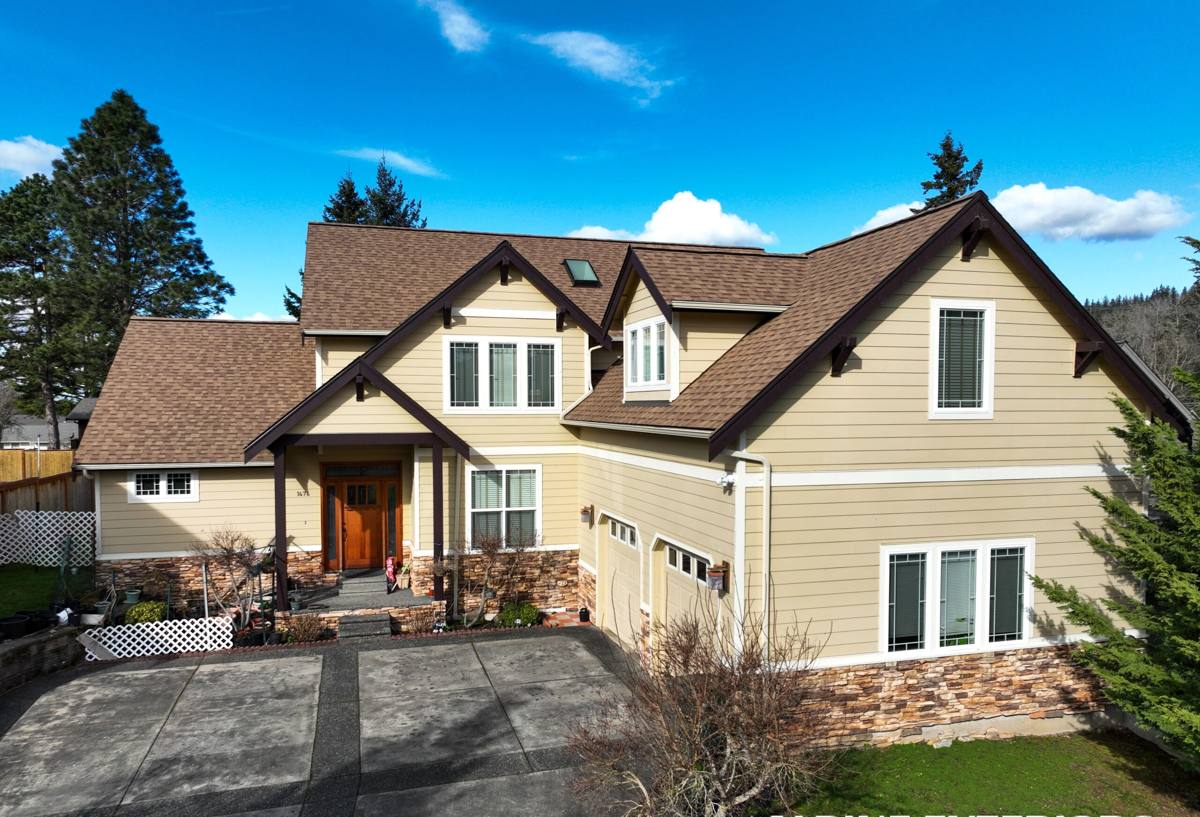
The Local Damage Pattern We See Most Often
Salt air accelerates corrosion on anything metal — nails, screws, joist hangers, bolts, and railing hardware. Once a fastener starts to rust, it loses grip strength long before it looks obviously bad, which is why a board can feel "a little bouncy" for months before anyone treats it as a real problem. Driving rain, meanwhile, doesn't just fall on a deck — Blaine's storms come in sideways often enough that water finds its way under flashing, into end grain, and behind ledger boards where it has no easy way to dry out.
Then there's moss. It doesn't just look bad — it's a moisture trap. Moss and the fine algae that grows alongside it hold water against the deck surface long after a sunny day would otherwise have dried things out, and that constant dampness is exactly what rot and mildew need to take hold, especially in shaded corners, under railings, and anywhere leaves and needles collect against a board edge.
Where we typically find the worst of it
- Ledger board connection to the house, especially where flashing has failed or was never installed correctly
- Joist hangers and fasteners showing rust bloom or staining on the wood around them
- Board ends and butt joints, where end grain soaks up moisture fastest
- Stair stringers and the base of support posts, where splashback and standing water are common
- Railing posts, particularly where they attach to the rim joist
- Shaded, north-facing sections of decking where moss and algae get a head start every year
Signs It's Time to Call for a Repair
Most deck problems give warning signs well before anything fails outright. The trouble is that a lot of those signs look minor in isolation, so they get ignored until several show up together.
- Boards that feel spongy, bounce, or flex more than they used to
- Visible gaps opening up between boards, or boards cupping and warping
- Rust streaks running down from screws, nails, or hardware
- Green or black film that comes back within weeks of cleaning
- Railings that wiggle or feel less solid than they should when you lean on them
- A musty smell near the ledger board or underneath the deck
- Visible daylight or gaps where the deck meets the house
If you're seeing two or more of these, it's worth having someone look underneath the deck, not just at the walking surface. Surface repairs on top of a compromised structure are a short-term fix at best.
What a Correct Repair Actually Involves
Inspection first, quote second
We start below the deck, not on top of it. That means checking the ledger connection, the condition of joists and hangers, post bases, and any spot where water has an obvious path to collect. A repair quote that's based only on what's visible from the surface is a guess. We'd rather take the extra time up front and give you an accurate scope than come back later with a change order because something was missed.
Fixing the cause, not just the symptom
If a section of decking is rotted because water was pooling behind failed flashing, replacing the boards without fixing the flashing just buys you a few more seasons before the same repair is needed again. Our process addresses the water path first — flashing, drainage, gaps that need to be opened up for airflow — and then replaces the damaged material on top of a structure that's actually sound.
Matching materials the right way
For wood decks, that means selecting lumber that matches the existing structure's dimension and treatment level, not just whatever's closest in the yard. For composite decking, it means sourcing boards that are a genuine color and profile match where possible, and being upfront with you when an exact match isn't realistic due to discontinued colors or fading on the existing boards — that's a conversation we'd rather have honestly than paper over.
Hardware built for salt air
Standard galvanized fasteners are often not enough this close to the water. We use stainless steel or heavy-duty coated fasteners and hardware rated for coastal exposure on repair work, because replacing a board with the same fastener that failed the first time just restarts the clock.
Repair, Restore, or Rebuild? Sorting Out the Real Cost Factors
Not every deck problem needs a full rebuild, and not every deck problem should be patched over. The honest answer depends on how much of the structure is affected, not just how old the deck is.
| Factor | Leans toward repair | Leans toward rebuild |
|---|---|---|
| Structural framing (joists, ledger, posts) | Isolated soft spots, otherwise solid | Widespread rot or hanger corrosion |
| Decking boards | A handful of damaged or warped boards | Majority of boards cupping, splitting, or rotted |
| Railings and stairs | Loose posts, minor wobble | Failing connections, code-noncompliant spacing |
| Age of structure | Under 15-20 years, built to a reasonable standard | Original construction quality or codes are outdated |
| Moss/moisture history | First real sign of an issue | Recurring damage in the same spots year after year |
When the framing is genuinely sound, targeted repair is almost always the right call — it costs less and gets you back to a safe, usable deck faster. When the damage keeps recurring in the same areas despite repairs, that's usually a sign the underlying structure or drainage needs a more complete fix, and we'll tell you that directly rather than keep billing you for the same patch.
Our Process for Dakota Creek Deck Repairs
- On-site inspection — we look at the deck from underneath as well as on top, checking framing, fasteners, flashing, and drainage.
- Written scope and estimate — you get a clear breakdown of what needs to be repaired, what materials we're using, and why, with no surprise add-ons for anything we could see during the inspection.
- Permit check — structural repairs, especially to framing, ledger connections, or railings, may require a permit through the City of Blaine or Whatcom County depending on scope. We'll flag this before work starts.
- Repair work — addressing the root cause (flashing, drainage, fastener corrosion) before replacing damaged boards or hardware.
- Final check — we test the repaired sections under load and walk you through what was done and what to watch going forward.
Maintenance That Actually Extends a Repair's Life
A repair done right will hold up far longer if it's paired with basic seasonal upkeep, especially in a moss-heavy climate like this one. None of this needs to be complicated or expensive.
- Sweep leaves and debris off the deck regularly through fall, especially in shaded corners
- Rinse off moss and algae buildup before it gets a chance to establish, rather than waiting for a deep clean once a year
- Keep gutters and downspouts clear so runoff isn't dumping extra water onto or under the deck
- Check railing posts for movement once or twice a year, particularly after a hard storm
- Reseal or refinish wood decking on the schedule the product actually calls for, not just when it looks faded
- Look underneath the deck once a year for early rust staining or soft spots, before they show up on the surface
Why Local Experience Matters for This Kind of Work
A deck repair crew that mostly works inland doesn't run into salt-air corrosion or a five-month moss season as a matter of course, so it's easy for that kind of damage to get under-scoped or treated like a one-time cosmetic issue. Working regularly in Blaine and around Dakota Creek means we already know which fastener grades hold up here, where flashing tends to fail first on this coastline, and which shaded, low-airflow spots are going to grow moss again within a season no matter how well they're cleaned once. That local pattern recognition is the difference between a repair that lasts and one that's back on the schedule next year.
Get a Straight Answer About Your Deck
If your deck in Dakota Creek is showing soft spots, rust stains, recurring moss, or just doesn't feel as solid as it used to, we're happy to take a look and give you an honest read on whether it needs a repair or something more. There's no pressure and no obligation — just a clear assessment and a straightforward estimate using the form below.