 Blaine Siding
 Building Decks for the Dakota Creek Stretch of Blaine
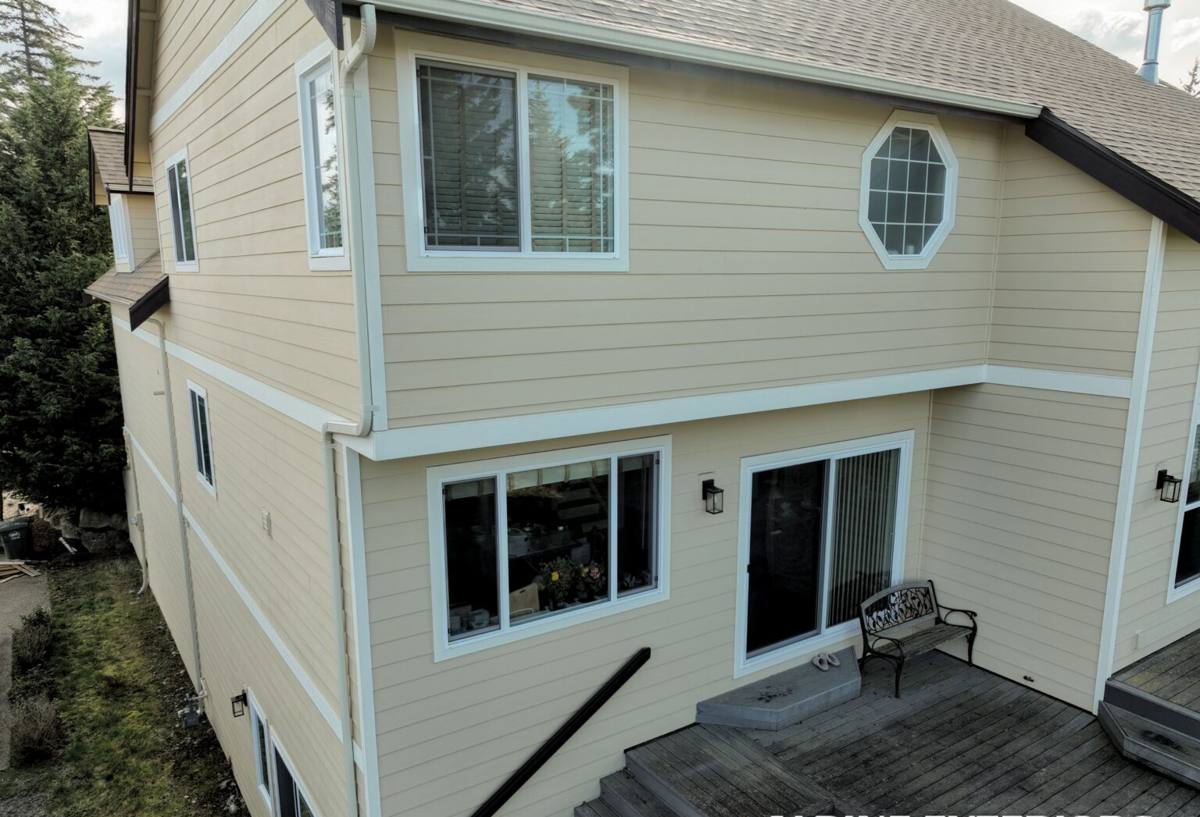
The homes along Dakota Creek and the surrounding waterfront edge of Blaine sit in one of the more demanding pockets of Whatcom County for outdoor wood structures. You're close enough to Semiahmoo Bay and the Strait of Georgia that salt-laden air is a daily fact of life, and the low-lying, creek-adjacent terrain holds moisture longer than higher ground further inland. A deck built here isn't just a place to put a grill and some chairs — it's a structure that has to shed water fast, resist corrosion, and stand up to a moss season that can run from late fall through early spring. We've built and repaired decks throughout this area long enough to know which shortcuts show up as callbacks two winters later.
Why This Stretch of Blaine Is Harder on a Deck
Three things work against a deck near Dakota Creek at the same time, and most generic deck-building advice only accounts for one of them.
Salt Air
Airborne salt from the Strait doesn't need a direct ocean view to do damage — it travels on the wind and settles on any exposed metal, wood grain, or coated surface. Over time it accelerates corrosion in fasteners and hardware, and it can dull or streak certain finishes faster than the manufacturer's stated timeline assumes.
Driving Rain
Blaine gets steady, wind-driven rain for a good chunk of the year, and on an open or elevated deck that rain doesn't fall straight down — it drives sideways into ledger boards, railing posts, and the gaps between decking boards. A deck that isn't detailed for driving rain will trap water in exactly the spots where rot and fastener failure start.
Moss Season
Shade, moisture, and mild winter temperatures are a near-perfect recipe for moss and algae growth on horizontal wood and composite surfaces. Once established, moss holds moisture against the deck surface even longer, which compounds the rot risk and turns boards slick and dangerous underfoot.
What a Correctly Built Deck Needs Here
None of this means a deck near Dakota Creek needs to be over-engineered — it means a handful of details have to be right from the start, because they're expensive and disruptive to fix later.
- Footings sized and set below frost depth, with attention to how wet the surrounding soil stays through winter
- Proper drainage grading beneath and around the deck so water doesn't pool against posts or footings
- Ledger board flashing that actually sheds water away from the house rim joist, not just a bead of caulk
- Joist tape or an equivalent moisture barrier on top of framing lumber, since driving rain reaches horizontal framing members more than people expect
- Board spacing and airflow underneath the deck that lets the structure dry out between rain events instead of staying damp
- Fastener and hardware selection rated for coastal or salt-air exposure, not standard interior-grade hardware
Choosing a Decking Material for Salt Air and Moss Season
There's no single "correct" decking material for this area — the right choice depends on how much maintenance a homeowner wants to take on versus what they're willing to pay upfront. Here's how the common options compare specifically for the conditions around Dakota Creek.
| Material | Upfront Cost | Maintenance Needed | Salt-Air & Moss Behavior |
|---|---|---|---|
| Pressure-treated wood | Lowest | Regular cleaning, re-sealing every 1-2 years | Prone to moss growth without upkeep; needs stainless or coated fasteners to avoid corrosion staining |
| Cedar | Moderate | Periodic cleaning and finish maintenance | Naturally moisture- and insect-resistant, but still needs airflow and cleaning to stay ahead of moss |
| Composite decking | Higher | Occasional washing, no sealing or staining | Doesn't rot, but surface texture and shaded areas can still grow moss/algae film if not rinsed periodically |
| PVC/capped polymer | Highest | Low — mostly rinsing | Best moisture and salt-air resistance of the group; least prone to holding moss growth long-term |
We're honest with homeowners about the trade-offs rather than pushing whatever has the best margin. Pressure-treated wood is a perfectly reasonable choice for a lot of budgets, as long as the maintenance expectation is set correctly up front. Composite and PVC products cost more but shift the long-term burden away from yearly upkeep — that's a real trade-off, not an upsell.
A Note on Product Selection
We standardize on decking and fastener systems with documented warranty coverage and installation specs, rather than picking whatever's cheapest at the moment. That matters more here than in drier parts of the state, because a product that isn't rated for coastal exposure can void its own warranty when used in an environment like Dakota Creek's — the manufacturer's fine print usually accounts for salt air even if the marketing doesn't mention it.
Fasteners, Framing, and Hardware — Where Corrosion Actually Starts
Most deck failures we see in this area don't start with the decking boards — they start with the hardware. Standard galvanized fasteners can hold up fine inland, but closer to the water, salt air accelerates corrosion at joist hangers, structural screws, and post bases faster than the same hardware would wear a few miles east. We use stainless steel or coated fasteners rated for coastal/high-corrosion environments on structural connections, and we match fastener chemistry to the decking material — some composite and treated-lumber combinations require specific coatings to avoid a chemical reaction that eats through standard coatings over time.
Framing itself also gets more attention here than a textbook deck build would call for. We favor treated or naturally resistant framing lumber, joist tape on horizontal surfaces, and post bases that keep wood off standing water rather than resting directly on grade.
How We Build a Deck Near Dakota Creek
1. Site and Drainage Assessment
Before any layout happens, we look at how water actually moves across the site — where it pools, how close the water table sits to the surface, and how the existing grade drains relative to the house and any nearby low ground. This determines footing depth, post placement, and whether additional drainage work is needed before framing starts.
2. Permitting
Most deck projects in Whatcom County require a building permit, and elevated or attached decks almost always do. We handle the permit process as part of the job so the structure is inspected and documented correctly — this also protects the homeowner if the deck is ever a factor in a future home sale or insurance claim.
3. Footings and Framing
Footings are set to the required depth for this area's frost line and soil conditions, and framing goes in with corrosion-resistant hardware and moisture barriers on horizontal members from the start — not added as an afterthought.
4. Ledger Attachment and Flashing
Where a deck attaches to the house, the ledger board connection and flashing detail get particular attention, since this is the single most common source of hidden rot on attached decks in wet climates. Done correctly, water is directed away from the rim joist rather than behind the flashing.
5. Decking Installation
Board spacing is set to allow drainage and airflow rather than a tight, "clean" look that traps water. Fastening pattern and spacing follow the manufacturer's specification for the chosen material, since deviating from spec is one of the fastest ways to void a decking warranty.
6. Railings and Finish Work
Railing posts and connections get the same corrosion-resistant hardware treatment as the rest of the structure, since railings take direct driving rain and are often the first place visible weathering shows up.
Keeping Moss and Algae From Taking Over
Even a well-built deck near Dakota Creek needs some seasonal attention to stay ahead of moss — this is a maintenance reality of the local climate, not a sign of a bad build. A short seasonal routine goes a long way:
- Sweep debris and organic buildup off the deck surface regularly through fall, when falling leaves and needles feed moss growth
- Rinse or wash the deck surface periodically through the wet months, especially in shaded areas that don't dry out on their own
- Check that gaps between boards stay clear so water and debris can pass through instead of collecting
- Inspect fastener heads and hardware once a year for early rust or staining, which shows up before structural issues do
- Re-seal or re-stain wood decking on the schedule the product calls for — skipping a cycle in this climate shows up faster than it would inland
- Trim back overhanging vegetation that keeps sections of the deck shaded and damp longer than the rest
Why a Local Crew Matters for This Job
A deck-building crew that only works drier, inland parts of Washington will often default to standard hardware, standard flashing details, and standard maintenance advice — because that's what works where they usually build. None of that is wrong in general, but it's not matched to what a deck near Dakota Creek actually faces year-round. Working this stretch of Blaine repeatedly means knowing which fastener grades hold up, which flashing details actually stop driving rain, and which decking products handle a long moss season without an unreasonable maintenance burden. That local pattern recognition is the difference between a deck that needs attention in year three and one that's still solid well past year ten.
Get a Straightforward Estimate
If you're planning a new deck or replacing one near Dakota Creek, we're happy to walk the site, talk through material options honestly, and put together a free, no-pressure estimate. Use the form below to get started.