 Blaine Siding
 Siding Built for a Peninsula, Not Just a Zip Code
Point Roberts sits on its own peninsula at the southern tip of a larger landmass shared with Canada, surrounded on three sides by water and exposed to weather that doesn't behave like a typical inland Whatcom County lot. Homes here take on wind-driven rain from the Strait of Georgia, salt-laden air off the water, and a wet season that stretches long enough to keep north-facing walls damp for weeks at a time. Siding that performs fine twenty minutes inland can fail early out here, and siding installed without the right details fails faster than the product itself would suggest.
We install siding specifically for this kind of exposure. That means understanding what salt air does to fasteners and trim, how driving rain finds its way behind poorly lapped panels, and why moss and algae get a longer head start on shaded, moisture-retaining walls in this part of Washington. This page is about one job, done right, in one place: full siding installation for Point Roberts homes.
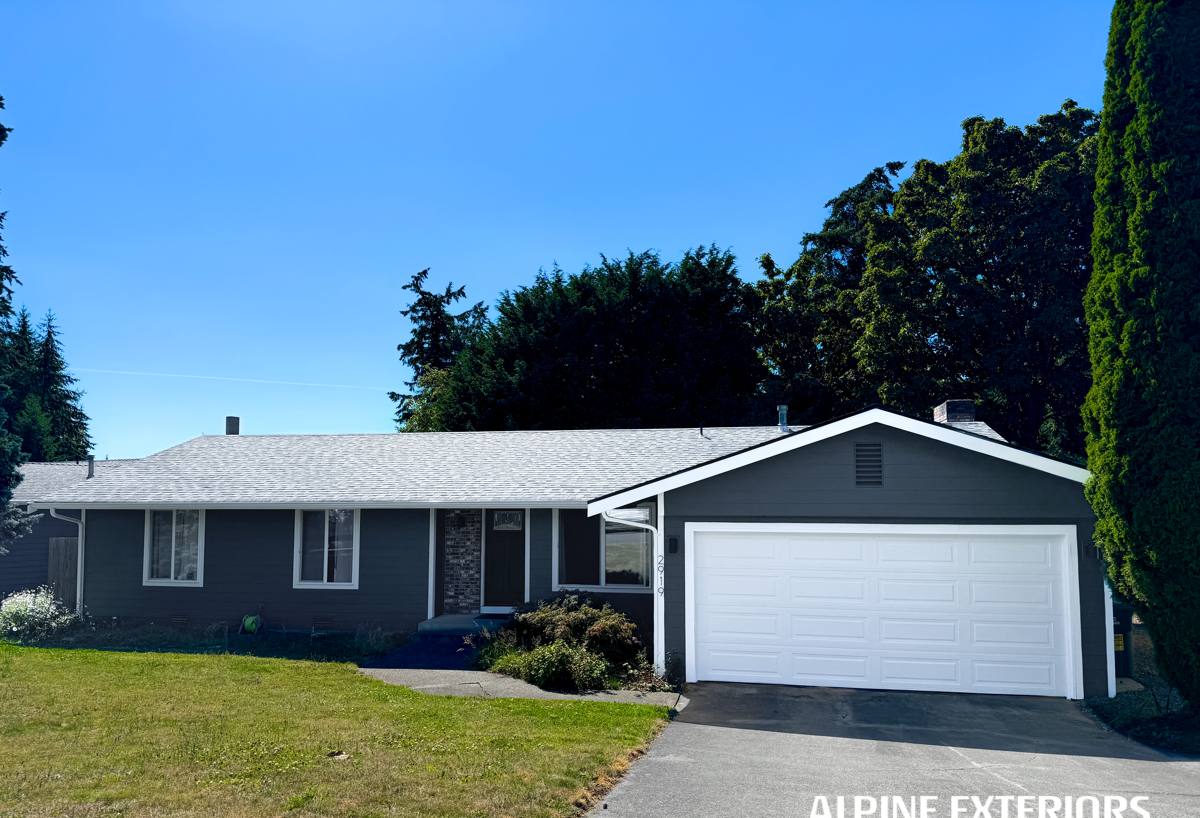
What Salt Air and Marine Exposure Actually Do to Siding
Salt air isn't just a coastal cliché — it's an ongoing chemical process. Airborne salt settles on exterior surfaces and accelerates corrosion of anything metal: nail heads, flashing, screws, and trim fasteners. Over years, corroding fasteners can streak paint finishes, loosen panels, and create small gaps where water intrudes. Wood and wood-composite sidings are especially vulnerable because salt-laden moisture keeps the surface damp longer between dry spells, which speeds up rot at seams, butt joints, and cut edges.
Why This Matters for Material Choice
Any siding installed on a Point Roberts home needs fasteners and flashing rated for coastal exposure, and a base material that doesn't absorb and hold moisture the way wood-based products do. This is one of the core reasons we standardized on fiber cement rather than wood, wood-composite, or vinyl products — the material itself needs to tolerate salt exposure over decades, not just survive the first few winters looking fine.
Driving Rain and the Details That Actually Keep Water Out
Wind-driven rain doesn't fall straight down — it gets pushed sideways and upward under eaves, around window trim, and behind loosely lapped siding courses. On an exposed peninsula lot, that means the water-management details behind the siding matter as much as the siding itself. A correct installation is really a system: a weather-resistant barrier, properly lapped and taped seams, correct flashing at every penetration, and a drainage gap where the wall assembly calls for one.
Where Shortcuts Show Up First
- Missing or reversed head flashing above windows and doors, where wind-driven rain gets pushed upward under trim
- Butt joints not properly flashed or caulked, becoming entry points during sustained storms
- Panels face-nailed too tight, restricting the material's ability to expand and contract with moisture cycles
- Corner trim installed without a gap for drainage, trapping water against the sheathing
- Bottom starter courses set too close to grade or hardscape, wicking splash-back moisture
None of these mistakes are visible on install day. They show up two, five, or ten years later as staining, soft trim, or interior moisture problems — which is exactly why the installation process matters more than the brand name on the panel.
Moss, Algae, and Whatcom County's Long Wet Season
Whatcom County's wet season runs long, and Point Roberts — shaded by tree cover on many lots and cooled by constant marine air — stays damp on north and west-facing walls well after storms pass. That combination is exactly what moss and algae need to establish. Once moss gets a foothold in a seam or behind a piece of trim, it holds moisture against the wall surface almost permanently, which is worse for the siding than the moss itself.
What Actually Slows Moss Down
Correct installation reduces moss risk more than any surface treatment does. Proper clearances between siding and grade, decks, and roof lines; caulking and flashing that don't leave standing-water ledges; and a factory finish that doesn't provide moss the same grip as a porous painted surface all reduce how fast growth takes hold. Site conditions — shade, gutter overflow, and sprinkler overspray — still matter, but they're easier to manage when the siding itself isn't giving moss a place to start.
Why We Install Only James Hardie Fiber Cement
We made a standing decision not to install vinyl, LP SmartSide, primed wood, cedar, or other fiber cement brands. That's not a marketing position — it's a reflection of what holds up on exposed, marine-influenced properties like the ones we work on around Point Roberts and Blaine.
Where Other Products Fall Short Here
| Material | Common Trade-Off in This Climate |
|---|---|
| Vinyl siding | Can warp or distort in sustained wind exposure and direct sun reflection; seams and J-channels give wind-driven rain more entry points |
| Wood-based composites (LP SmartSide, primed spruce) | Wood core is moisture-sensitive; cut edges and seams need diligent re-caulking and painting to keep salt-laden moisture out over time |
| Cedar | Handsome, but requires ongoing sealing/staining and is more susceptible to moss and rot in shaded, damp conditions without regular upkeep |
| Other fiber cement brands (Cemplank, Allura) | Similar core material, but we've standardized tools, crews, and warranty backing on one manufacturer we know inside and out |
| James Hardie fiber cement | Non-combustible, engineered moisture resistance, factory-baked ColorPlus finish resists fading and holds up to salt air and UV without repainting on the usual cycle |
HZ Products: Engineered by Climate Zone
Hardie manufactures its siding in HZ5 and HZ10 formulations matched to regional climate zones — moisture exposure, freeze-thaw cycling, and humidity patterns all factor into the product engineering. For a Point Roberts property dealing with constant marine moisture, that climate-specific engineering is a meaningful difference from a one-size-fits-all siding product, and it's backed by a transferable manufacturer warranty that follows the house, not just the original owner.
What a Correct Siding Installation Involves, Start to Finish
A siding job is judged by what's underneath it, not just how it looks on install day. Our process on Point Roberts homes follows the same sequence every time, adjusted for the specific exposure of each wall:
- Tear-off and sheathing inspection — removing old siding and checking for rot, soft spots, or prior water damage before anything new goes up
- Repair of damaged sheathing or framing — no siding gets installed over a compromised wall assembly
- Weather-resistant barrier installation — correctly lapped, sealed at penetrations, and integrated with window and door flashing
- Flashing at every penetration — windows, doors, hose bibs, vents, and any fixture that breaks the plane of the wall
- Hardie panel or lap siding installation — fastened per manufacturer spec, with correct nail placement, spacing, and clearances from grade, roof lines, and decks
- Trim, corners, and caulking — sized and sealed to shed water rather than trap it
- Final inspection walk-through — checking every seam, joint, and clearance before calling the job complete
A Homeowner's Quick-Check Punch List
- Is there a visible gap between the siding and any concrete, deck, or soil below it?
- Are butt joints and corners caulked cleanly, without gaps or excess smear?
- Does flashing appear above every window and door, not just decorative trim?
- Are nail heads set flush, not overdriven or leaving dimples in the panel?
- Is there a consistent reveal line across each course, indicating level, careful installation?
Why a Crew That Already Works Point Roberts Matters
Point Roberts is a peninsula reached by land only by crossing into and back out of Canada, which makes logistics genuinely different from a typical Whatcom County job site — material delivery, crew scheduling, and border timing all need to be planned rather than assumed. A crew that's already done siding work in the area knows how to sequence material drops, how weather windows off the water behave, and what wall assemblies on local homes typically need before they ever pull up to the property. That experience shows up in fewer surprises and a smoother job, not just a lower price.
Maintenance and Longevity: What to Expect After Installation
| Factor | What It Means for a Point Roberts Home |
|---|---|
| Repainting cycle | ColorPlus factory finish is engineered to resist fading and chipping far longer than field-applied paint, reducing repaint frequency compared to wood or primed products |
| Fastener inspection | Worth a periodic visual check given salt air exposure, even though correctly installed fasteners are chosen for coastal durability |
| Moss and algae monitoring | Shaded, north-facing walls should be checked each wet season; gentle cleaning is far easier on a factory finish than on painted wood |
| Caulking review | Caulked joints should be inspected every few years and refreshed as needed — this is standard for any siding system, including Hardie |
| Warranty | Manufacturer warranty is transferable to future owners, which matters for resale on a market like Point Roberts where buyers ask pointed questions about exterior condition |
Getting Started
Every Point Roberts property carries its own mix of sun exposure, tree cover, wind direction, and wall history, and that shapes exactly how we sequence the tear-off, flashing, and installation on your home. If your siding is showing its age, or you're planning ahead before moss and moisture do more damage, we're glad to walk the property with you and lay out what correct installation looks like for your specific walls. Use the form below to request a free, no-pressure estimate.