 Blaine Siding
 Building Decks for Dakota Creek's Conditions
Dakota Creek sits close enough to the water and to Semiahmoo Bay's weather patterns that a deck built here has to answer to different conditions than one going up 20 miles inland. Salt-laden air, long stretches of driving rain off the Strait, and a moss season that can run from October through May all work on wood, fasteners, and framing in ways that shorten the life of a deck built to a generic spec. We build decks in this part of Whatcom County regularly, and the difference between a deck that looks good for three years and one that holds up for twenty almost always comes down to decisions made before the first board goes down.
This page covers what a custom deck build for a Dakota Creek property actually involves — material choices, framing details, hardware, our process, and the maintenance a deck like this needs to earn its keep.
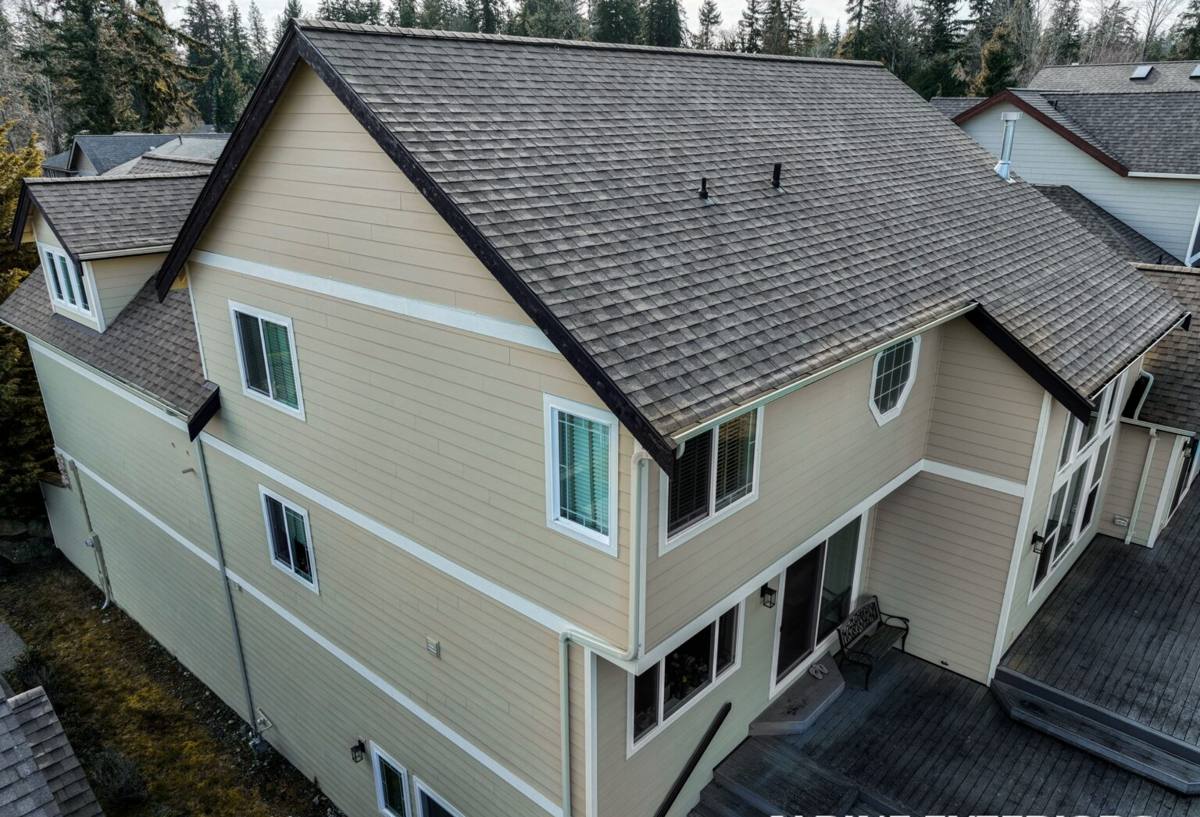
What Blaine's Climate Does to a Deck Over Time
Three things drive most of the deterioration we see on decks in this area:
Salt Air
Airborne salt accelerates corrosion on any exposed metal — screws, joist hangers, bolts, railing brackets. Standard hardware that would last decades in a dry inland climate can start showing rust streaks and pitting within a few years this close to the water. This is a material selection issue as much as anything, and it's one of the most overlooked details on decks that fail early.
Driving Rain
Rain here doesn't just fall straight down — wind-driven rain gets pushed sideways into ledger connections, under railing posts, and into any gap where end grain is exposed. Water that gets into a joint and can't dry out is what causes rot, not rain that hits a properly sloped, sealed surface and runs off.
Moss and Sustained Dampness
Long stretches of overcast, damp weather let moss and algae establish on any decking surface that doesn't drain and dry quickly. Beyond being a slip hazard, moss holds moisture against the deck boards and framing underneath, which is exactly the condition that leads to fungal decay in untreated or poorly ventilated wood.
None of this means a deck can't be built to last in Dakota Creek — it means the build has to account for these three things from the framing up, not just at the surface.
Choosing the Right Decking Material for This Neighborhood
There's no single "best" decking material — the right choice depends on budget, how much upkeep the homeowner actually wants to do, and how exposed the deck is to weather. Here's how the common options hold up specifically against salt air, rain, and moss:
| Material | Moisture & Salt Air Behavior | Moss Resistance | Maintenance |
|---|---|---|---|
| Pressure-treated lumber | Good if properly sealed and re-sealed; end cuts need field treatment | Needs regular cleaning; moss takes hold without upkeep | Annual cleaning, re-sealing every 2-3 years |
| Cedar | Naturally moisture-resistant but still needs sealing near salt air | Better natural resistance than pine, still needs cleaning | Periodic cleaning and oil/sealer application |
| Composite decking | Excellent — doesn't absorb moisture or rot | Surface texture matters; some boards resist algae better than others | Occasional washing, no sealing or staining |
| PVC/capped polymer decking | Excellent — fully sealed, no wood fiber to hold moisture | Smooth cap surfaces generally shed moss growth better than wood-grain composites | Occasional washing, lowest overall upkeep |
For a Dakota Creek property, we generally steer homeowners who want the lowest-maintenance option toward composite or PVC decking, since they're not feeding a moisture-related failure the way wood can. That said, plenty of homeowners prefer the look and feel of real wood and are willing to keep up with sealing — that's a legitimate choice too, as long as the maintenance actually happens. Where we're cautious is with wood species or treatments that require more upkeep than a homeowner is realistically going to commit to; a deck that's supposed to be sealed every year but isn't will fail faster near salt air than one built from a lower-maintenance material to begin with.
Framing and Substructure: Where Decks Actually Fail First
The decking surface is what people see, but the framing underneath is what determines how long the deck actually lasts. Most deck failures we get called out to inspect start below the boards, not on top of them.
Ledger Attachment
The ledger board — where the deck attaches to the house — is the single most critical connection on the entire structure, and it's also the spot most exposed to wind-driven rain working its way behind the board. Proper flashing, correct fastener spacing, and a small air gap or drainage detail behind the ledger keep water from getting trapped against the house rim joist.
Joist Protection
Joist tops and cut ends are where treated lumber is most vulnerable, because pressure treatment doesn't always penetrate fully to a fresh cut. We treat field-cut ends and cap joist tops with protective tape on framing that's going to see this much sustained moisture — a detail that costs little up front and prevents the slow rot that shows up as soft spots years later.
Ventilation Underneath
A deck built low to the ground or over poorly draining soil traps damp air underneath, which speeds up decay in the framing even if the visible decking looks fine. Proper clearance and grading under the deck matter as much as anything above it.
Railings, Fasteners, and Hardware
This is where salt air does its most visible damage, and it's an area where cutting corners on hardware shows up fast. We spec stainless steel or coated corrosion-resistant fasteners and structural hardware for decks in this area rather than standard galvanized products, which can start showing rust streaking on the deck surface within a couple of seasons this close to the water. Hidden fastener systems — where boards clip into place from underneath or the side rather than being face-screwed — also tend to hold up better here, since there are fewer exposed screw heads for moisture and salt to work on, and no screw holes on the walking surface to collect standing water.
Railing posts and connections get the same attention. A railing post base that traps water against the deck surface is a common spot for early rot, so proper post mounting hardware with drainage built in matters more here than it would on a covered porch in a drier part of the state.
Our Process for a Dakota Creek Custom Deck
- On-site assessment — we look at sun and wind exposure, drainage, grade, and how the deck ties into the house before talking materials.
- Material and layout consultation — we walk through the material comparison above based on your budget and how much maintenance you want to take on.
- Design and permitting — we draw up the layout and handle the Whatcom County permit application and inspection scheduling.
- Framing with climate-appropriate details — ledger flashing, treated end cuts, joist protection, and corrosion-resistant hardware throughout the substructure.
- Decking and railing installation — proper board spacing for drainage and expansion, correct fastening method for the material chosen.
- Final walkthrough — we go over the finished deck and what maintenance schedule fits the material you chose.
Permits and Whatcom County Considerations
Most new decks and significant deck rebuilds in unincorporated Whatcom County and within Blaine city limits require a building permit, particularly when the deck is attached to the house, elevated above a certain height, or involves structural framing changes. Requirements can vary depending on exact location, deck height, and scope of work, so we handle permit submission and inspection coordination as part of the build rather than leaving homeowners to sort out county requirements on their own. If your property is close to a shoreline setback or environmentally sensitive area, that can also affect what's allowed — something worth flagging early rather than discovering mid-project.
Maintenance Checklist for Coastal Decks
Whatever material you choose, a little seasonal attention goes a long way toward getting the full lifespan out of the deck. Here's what we recommend for decks in this area:
- Sweep or blow off debris regularly, especially in fall when leaves and moisture combine to feed moss growth
- Wash the deck surface at least once a year with a deck-safe cleaner to remove algae and moss before it establishes
- Inspect railing posts and fastener heads annually for early rust or corrosion, especially on wood decks with exposed hardware
- Check the ledger flashing and area where the deck meets the house for any signs of water staining or trapped moisture
- For wood decks, re-seal or re-stain on the schedule the product calls for — don't stretch it out near salt air
- Keep gutters and downspouts near the deck clear so runoff isn't dumping extra water onto or under the structure
- Trim back vegetation that shades the deck surface and keeps it from drying out between rains
Why a Crew That Already Works This Area Matters
A deck built to a generic spec sheet can look identical to one built for local conditions — until a few winters of salt air and driving rain start telling the difference. Knowing which hardware corrodes fast this close to the water, how to detail a ledger for wind-driven rain, and which materials actually hold up through a Whatcom County moss season isn't something you get from a manual — it's something you learn from building and maintaining decks in this specific climate. That local experience is what keeps a deck out of the repair conversation for years longer than it otherwise would be.
If you're planning a new deck or replacing one that hasn't held up to Blaine's weather, we're happy to walk your property, talk through material options, and put together a straightforward estimate — no pressure, no obligation. Use the form below to get started.