 Blaine Siding
 What Whatcom County Weather Does to a Custer Roof
Custer sits close enough to the water that salt air is a real factor in how a roof ages, not just a talking point. Combine that with the driving rain that rolls in off the Strait for months at a time, and a long moss season that never really gives a north-facing slope a chance to dry out, and you have a climate that is genuinely harder on a roof than most of the country deals with. None of this means a roof in Custer is doomed to fail early. It means the repair work has to account for conditions that a warmer, drier region's roofing crew simply doesn't think about.
Salt-laden air speeds up corrosion on exposed metal — nail heads, flashing, gutter fasteners, and drip edge all take the hit over time. Driving rain doesn't just fall straight down here; wind pushes it sideways and up under laps and flashing that would stay dry in a calmer climate. And moss doesn't just sit on the surface looking bad — its root structure lifts shingle edges, holds moisture against the roof deck, and quietly works water into places it was never supposed to reach. A repair that doesn't account for all three of these is a repair that comes back.
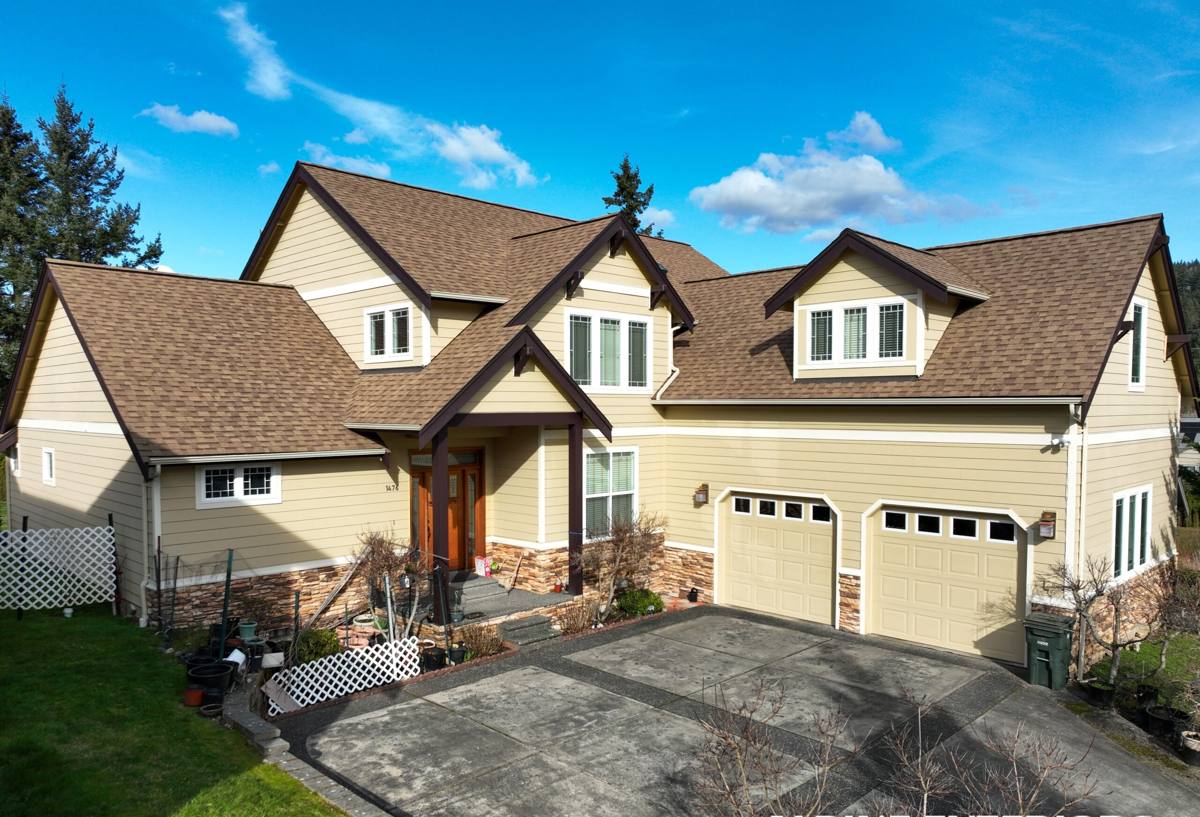
Signs a Custer Roof Needs Repair, Not a Full Replacement
Most roofs don't need to be torn off and replaced — they need targeted, correctly done repair work. Knowing which situation you're in starts with a few honest checks.
Inside the house
Ceiling stains that only appear during or after a heavy rain, a musty smell in an upstairs closet, or visible daylight in the attic around a chimney or vent pipe are all signals worth acting on quickly. Caught early, these are almost always repair-scale problems.
Outside the house
Look for missing or curling shingles, moss buildup thick enough to hold visible moisture, rusted or lifted flashing around chimneys and skylights, and sagging in valleys where water volume is highest. A roof with isolated damage in one or two of these areas is a good repair candidate. A roof with widespread granule loss, soft decking in multiple spots, or shingles well past their expected service life is a different conversation, and an honest inspection will tell you which one you're actually facing.
The Repair Issues We See Most Often in Custer
Every region has its own pattern of roof failure. In and around Custer and Blaine, the same handful of issues show up again and again:
- Moss colonization along ridge lines and shaded, north-facing slopes that hold moisture longest
- Flashing failure at chimneys, skylights, and roof-to-wall transitions, often worsened by salt air corrosion
- Valley wear from the sheer volume of water Whatcom County rainfall pushes through a single channel
- Condensation damage from poor attic ventilation, which mimics a roof leak but is really a moisture-management problem
- Nail pops and wind-lifted shingle tabs from repeated gusts off open, exposed lots
Recognizing which of these is actually driving a leak matters more than most homeowners expect, because two problems with similar symptoms can have completely different fixes.
What a Correct Roof Repair Actually Involves
Diagnosing the real leak path
Water rarely drips straight down from where it enters. It can travel along rafters or sheathing before showing up as a stain several feet away. A correct repair starts with tracing the actual entry point — usually from the attic side first, then confirmed on the roof — rather than patching wherever the ceiling stain happens to be.
Matching materials, not improvising
A patch that doesn't match the existing shingle profile, granule color, or flashing metal will fail faster and stand out. Good repair work uses materials compatible with what's already on the roof, or explains clearly when a full section needs to be replaced instead of patched.
Flashing and underlayment come first
Most roof leaks in this climate trace back to flashing and underlayment, not the shingles themselves. Replacing shingles over failed flashing just hides the problem for a season. Correct repair means pulling back the shingle course, replacing or resealing the flashing itself, and confirming the underlayment underneath is intact before anything goes back down.
Testing the fix
A repair isn't done when the new material is nailed down. It's done when the area has been checked for proper lap, sealed edges, and — where access allows — a water test to confirm the fix actually stops the path water was taking.
Repair Materials and Methods
| Situation | Typical fix | What it addresses |
|---|---|---|
| Isolated missing or damaged shingles | Shingle replacement matched to existing material | Localized wind or age damage |
| Corroded or lifted flashing | Flashing removal and replacement, new sealant bed | Salt-air corrosion, thermal movement, leaks at transitions |
| Moss-damaged shingle edges | Moss removal, soft wash treatment, shingle repair or replacement | Lifted shingle tabs, trapped moisture, early granule loss |
| Valley wear or splitting | Valley metal or membrane replacement | High-volume water channeling in heavy rain |
| Soft or stained decking | Localized decking replacement before re-covering | Long-term moisture intrusion that has reached the wood |
Our Roof Repair Process for Custer Homes
Inspection first, always
We walk the roof and the attic, photograph what we find, and identify the actual cause — not just the visible symptom. If moss or debris is obscuring the problem area, we clear enough to see what's really there before making any recommendation.
A written estimate before anything starts
You get a clear explanation of what's damaged, what we're proposing to fix, and what it will cost — with no work beginning until you've approved it. If we find something during the estimate that changes the scope, we tell you before proceeding, not after.
The repair itself
We work the affected area properly rather than rushing a surface patch — flashing and underlayment addressed first, shingle or material matching handled carefully, and debris cleared as we go.
Cleanup and a final walk-through
Job site cleaned of old material and fasteners, and a final check with you so you know exactly what was done and what to watch for going forward.
What Roof Repair Typically Costs in Custer
Costs vary enough by scope that a number without context isn't useful, but the factors below are the ones that actually move the price:
| Cost factor | Why it matters |
|---|---|
| Type of repair | A single flashing reseal costs far less than a valley or section replacement |
| Roof pitch and access | Steeper or harder-to-reach roofs take longer and require more safety setup |
| Extent of moss or rot | Surface moss removal is quick; moss that has caused decking damage adds carpentry work |
| Material match | Matching an older or discontinued shingle line can take more sourcing time than a common product |
| Number of repair areas | Bundling several smaller fixes into one visit is more efficient than repeat trips |
As a broad range, a straightforward flashing or small shingle repair often lands in the low hundreds of dollars, while more involved work — valley replacement, moss remediation with shingle repair, or decking repair — can run into the low thousands. An honest estimate after inspection is the only way to know where a specific roof falls.
Keeping a Repaired Roof From Needing Repair Again
A good repair should last. A few habits from the homeowner's side help it last longer:
- Keep gutters clear so water isn't backing up under the roof edge, especially during heavy fall and winter rain
- Have moss treated before it spreads across a full slope, not after it's visibly lifting shingles
- Trim back branches that shade a roof section and keep it from drying between rain events
- Check the attic once or twice a year for daylight, moisture, or musty odor between scheduled inspections
- Have flashing and roof penetrations checked every few years, since these fail well before shingles typically do
Why Hire a Crew That Already Works in Custer
Roof repair done by someone unfamiliar with this specific stretch of Whatcom County often misses the real cause. A crew that regularly works Custer and the surrounding Blaine area already knows how salt air corrodes flashing here, which slopes hold moss longest, and how much water a valley actually needs to handle during a heavy winter storm. That local pattern recognition is the difference between a repair that solves the problem and one that just buys a season or two before the same leak comes back.
If you're seeing signs of roof trouble on a Custer property — a stain on the ceiling, moss you're not sure how serious it is, or flashing that looks tired — we're happy to take a look and give you a straight answer. Reach out for a free, no-pressure estimate using the form below.