 Blaine Siding
 Why Custer Roofs Take More Punishment Than Roofs Inland
Custer sits close enough to the water that homes here deal with a different set of stresses than a roof twenty miles inland. Salt-laden air off the Strait of Georgia and the bays around Blaine settles on every exposed surface, wind-driven rain finds its way under poorly lapped materials instead of just running off the field of the roof, and heavy tree cover combined with our long gray stretch of fall through spring keeps roofs damp for months at a time. None of this is dramatic on its own. It's cumulative. A roof that would coast along fine in a dry inland climate can start showing corrosion, staining, or moss intrusion here years earlier if it wasn't built or maintained with this specific environment in mind.
Salt Air and Metal Corrosion
Salt in the air isn't just a coastal curiosity — it's an electrolyte that accelerates corrosion on any exposed metal, especially at cut edges, fasteners, and places where dissimilar metals touch. Bare or poorly coated steel, galvanized fasteners that don't match the panel material, and thin factory finishes all corrode faster in a salt-air zone than they would fifty miles inland. This is one of the most common corners cut on lower-bid metal roofing jobs, and it's usually invisible until rust starts bleeding through the finish.
Driving Rain and Wind
Blaine and the surrounding Whatcom County coastline get their share of storms pushing rain sideways off the water. A roof that only has to shed water straight down can still leak under wind-driven rain if laps, seams, and flashing details weren't built for it. Metal roofing done right handles this well — but only if the panel laps, seam type, and flashing are matched to how exposed the specific roof plane is to prevailing wind.
Moss, Shade, and a Long Wet Season
Between the tree cover common on Custer lots and our extended wet season, roofs here spend a lot of time damp. Moss and algae don't just sit on the surface — given enough time, moss establishes in seams, around fasteners, and at low-slope transitions, holding moisture against the roof surface and, on the wrong materials, accelerating deterioration underneath. Metal handles this far better than most other roofing materials, but it isn't immune, and a roof that's shaded most of the day needs to be thought about differently than one that gets full sun.
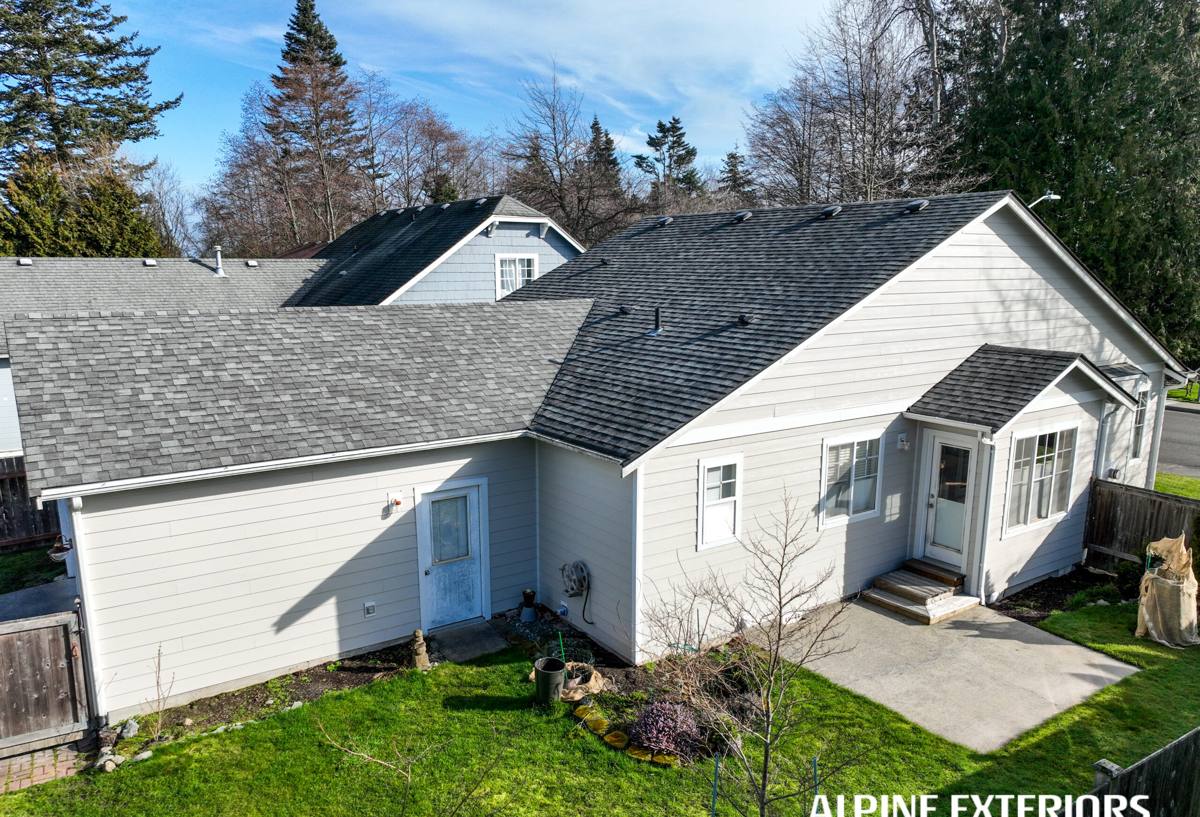
Why Metal Roofing Is a Strong Fit for This Climate
We recommend metal roofing to a lot of Custer and Blaine homeowners specifically because of what this climate demands. Metal sheds water fast off a hard, low-friction surface, which gives moss and algae far less to grip onto than asphalt shingles do. It handles wind-driven rain well when the seams and laps are built correctly. And a quality finish on the right substrate holds up to salt air for decades rather than years. It isn't the right choice for every budget or every roofline, and it isn't maintenance-free — nothing in this climate is — but for homeowners willing to pay more upfront for a roof that fights this environment instead of fighting it, metal earns its reputation.
What a Correct Metal Roof Installation Actually Involves
Metal roofing is unforgiving of shortcuts in a way that's harder to spot from the ground than a shingle job. A metal roof that looks fine from the driveway can still be set up to fail early if the details underneath were rushed.
Substrate and Underlayment
The deck needs to be sound, and the underlayment matters more on metal than people expect — a high-temperature, self-adhered underlayment at eaves, valleys, and penetrations gives the roof a second line of defense if wind-driven rain ever gets past the panel laps. In a driving-rain climate, we don't treat underlayment as an afterthought.
Fasteners and Panel Attachment
Fastener choice is one of the biggest hidden failure points in salt-air environments. Fasteners need to be compatible with the panel material to avoid galvanic corrosion — mixing incompatible metals is one of the fastest ways to get streaking rust stains and premature fastener failure. On exposed-fastener panels, the neoprene washers under each screw head are a wear item; on concealed-fastener standing seam systems, the clips and fasteners are hidden under the seam and protected from weather entirely, which is one reason standing seam tends to outlast exposed-fastener panels in coastal exposure.
Flashing, Valleys, and Penetrations
Almost every metal roof leak we're called out to diagnose traces back to flashing, not the panels themselves — valleys, chimney and vent penetrations, wall-to-roof transitions, and low-slope sections. These details need to be built to shed wind-driven rain, not just gravity-fed runoff, and that's a matter of technique and experience more than material cost.
Panel Types and Cost Factors
There isn't one "metal roofing" product — the panel style you choose changes cost, appearance, and how the roof performs long-term in this climate.
| Panel Type | Fastening | Typical Fit for Custer/Blaine | Relative Cost |
|---|---|---|---|
| Standing seam | Concealed clips, no exposed screws | Best long-term performance in salt air and driving rain; fasteners fully protected | Highest |
| Exposed-fastener panel | Screws through the panel face | Solid option on a budget; washers and fasteners need periodic inspection | Moderate |
| Metal shingle/shake profile | Interlocking, often concealed | Good where a traditional look is wanted with metal's durability | Moderate to High |
| Asphalt shingle (for comparison) | Nailed | Lower upfront cost, but more moss-prone and shorter service life in this climate | Lowest |
Metal roofing generally costs more upfront than an asphalt reroof, sometimes significantly more depending on panel type and roof complexity. The trade-off is fewer callbacks for moss treatment, fewer full tear-offs over the life of the home, and a finish that's built to handle salt air rather than just tolerate it. We'll walk through the real cost difference for your specific roof during an estimate rather than quote a number that doesn't account for your roofline.
How Our Process Works on a Custer Job
We start with an on-site look at the roof, not just measurements off a satellite photo — slope, shade exposure, proximity to the water, existing moss or corrosion, and the condition of the deck underneath all change what we recommend. From there we walk you through panel and finish options that fit your budget and your roof's actual exposure, not just whatever's easiest to sell. On install day, tear-off, deck inspection and repair, underlayment, panel installation, and flashing all get done in sequence with attention to the details that matter most in this climate — laps, fastener compatibility, and flashing at every transition. We clean up thoroughly and walk the finished roof with you before we call the job done.
Maintaining a Metal Roof in a Salt-Air, Moss-Prone Climate
Metal roofing needs less maintenance than most materials in this climate, but "less" isn't "none." A little attention once or twice a year keeps a good metal roof performing the way it's supposed to for decades.
- Clear debris and needles from valleys and low-slope areas where moisture and organic matter can collect
- Check gutters and downspouts are flowing freely — water backing up against panel edges is a common source of early wear
- Look for any streaking or rust staining near fasteners, which can signal a fastener or coating issue worth catching early
- Keep overhanging branches trimmed back to reduce shade, debris, and abrasion against the panel surface
- After major windstorms, a visual check for lifted flashing or loose fasteners is worth the ten minutes it takes
Why Hiring a Crew That Already Works Custer Matters
A metal roof installed by a crew unfamiliar with coastal Whatcom County conditions can look identical to one built correctly — until the salt air and driving rain start finding the shortcuts. We work roofs in Blaine and the surrounding Custer area regularly, which means we're not guessing at fastener compatibility, underlayment choices, or flashing details for this specific exposure — we're applying what we already know holds up here. That local familiarity shows up less in the sales pitch and more in the parts of the job you never have to think about again: no early rust bleed, no moss creeping in at the seams, no leaks tracing back to a valley that wasn't built for wind-driven rain.
Signs It's Time to Have Your Roof Looked At
Whether you currently have metal, asphalt, or another material, a few warning signs are worth a professional look sooner rather than later, especially in this climate:
- Visible moss or algae buildup, particularly in shaded valleys or low-slope sections
- Rust streaking near fasteners, flashing, or panel edges
- Granule loss or curling on an existing asphalt roof that's approaching or past its expected service life
- Any staining on interior ceilings or attic sheathing after a heavy wind-driven rain event
- Loose, lifted, or missing flashing around chimneys, vents, or wall transitions
If your Custer or Blaine home is due for a new roof, or you're weighing whether metal makes sense for your situation, we're happy to walk the roof with you and give you a straight, no-pressure estimate — no obligation, just an honest look at what your roof actually needs.