 Blaine Siding
 Deck Replacement in Cherry Point: Built for What This Coastline Actually Does to Wood
Cherry Point sits close enough to the water that a deck out here lives a different life than one ten miles inland. Salt-laden air, wind-driven rain that gets under railings and flashing, and a moss season that can stretch for months all work on a deck's structure long before most homeowners notice a problem on the surface. By the time boards feel spongy or railings wobble, the damage underneath is usually further along than it looks.
We replace decks for homeowners in and around Cherry Point, and the approach we take here is shaped by this specific stretch of Whatcom County — not a generic template pulled from a drier part of the state. This page covers what actually goes into a correct deck replacement in this climate, what to expect from our process, and what to look for whether you hire us or someone else.
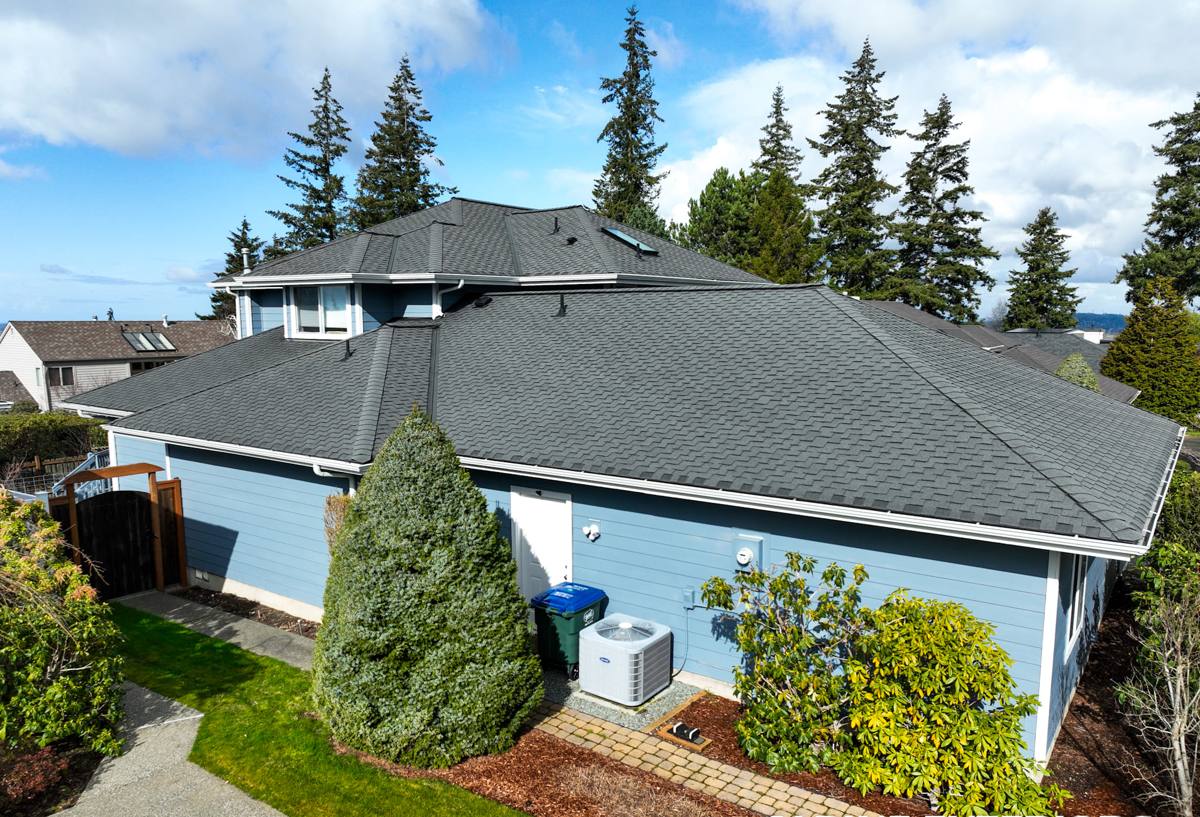
Why Decks Near Cherry Point Wear Out Faster Than the Manufacturer's Lifespan Chart Says
Most decking and fastener warranties are written for average conditions — not for a marine environment with persistent moisture and airborne salt. A few things stack up against decks out here:
- Salt air accelerates corrosion. Standard fasteners, brackets, and hardware corrode faster near the water. Once a fastener starts rusting, it loses grip strength long before it looks obviously bad.
- Driving rain finds gaps. Whatcom County's wind-driven rain doesn't just fall straight down — it pushes sideways into ledger boards, under railings, and around post bases. Any gap in flashing or sealant becomes an entry point.
- Moss season means sustained moisture, not just occasional wetting. When moss and algae hold onto a deck surface for months at a time, the wood underneath stays damp far longer than it would with simple rainfall and drying cycles. That constant dampness is what actually rots wood — not a single storm.
- Shade and tree cover compound the problem. Many Cherry Point lots have mature trees or sit close to the water, which slows drying time even further after the moss takes hold.
None of this means a deck out here can't last — it means it has to be built and maintained with this environment in mind from the start, which is where a lot of standard installations fall short.
Signs Your Deck Needs Replacement, Not Another Repair
Repairs make sense when the problem is isolated — a few bad boards, a loose railing, surface graying. Replacement becomes the honest recommendation when the underlying structure is compromised. Common signs we look for:
- Soft, spongy, or spring-back decking across multiple boards, not just one or two
- Rot or discoloration at the ledger board where the deck attaches to the house
- Rust staining or visibly corroded fasteners and brackets
- Persistent moss or algae growth that returns within weeks of cleaning
- Posts or railings that flex or feel loose when leaned on
- Gaps or separation where the deck meets the house siding or foundation
If the ledger connection or the framing underneath is compromised, patching the surface just hides the real problem and creates a safety risk. We'll tell you plainly if repair is a reasonable option — we don't push replacement when it isn't needed.
What a Correct Deck Replacement Actually Involves
The Ledger and Flashing — Where Most Failures Start
The ledger board is the connection point between the deck and the house, and it's the single most common failure point in this climate. A correct replacement means proper flashing that directs water away from the house wall, not just sealant over a gap. Sealant alone breaks down; flashing is a physical barrier that keeps working long after caulk has failed.
Framing and Substructure
Joists, beams, and posts need to be sized correctly for the deck's span and load, and fasteners and connectors should be rated for exterior, corrosion-prone environments — not general-purpose hardware. This matters more here than in drier parts of the state, because standard hardware corrodes faster under salt-air exposure.
Drainage and Airflow Underneath
A deck built tight to the ground or against a foundation without airflow traps moisture underneath, which speeds up rot in the joists and posts even if the surface looks fine. Proper spacing, grading, and ventilation underneath the deck are part of doing the job right — not optional extras.
Railings and Guards
Railings take direct wind-driven rain and need posts that are properly through-bolted into the framing, not just screwed to the rim joist. This is also where current code requirements around height and baluster spacing come into play, and we build to code as a matter of course.
Choosing Decking Material for a Salt-Air, High-Moisture Climate
There's no single "best" decking material — there's a best material for your budget, your maintenance tolerance, and how exposed your specific site is to salt air and shade. Here's how the common options actually compare in conditions like Cherry Point's:
| Material | Moisture & Salt Resistance | Maintenance | Typical Lifespan | Relative Cost |
|---|---|---|---|---|
| Pressure-treated wood | Good if properly sealed and re-sealed regularly | Annual cleaning and re-sealing/staining | 10–15 years | Lowest |
| Cedar | Naturally moisture-resistant, but surface needs upkeep | Regular cleaning; staining/sealing to prevent graying and moss | 15–20 years | Mid |
| Capped composite | Excellent — sealed outer layer resists moisture and staining | Occasional washing; no staining or sealing | 25–30+ years | Higher |
| Uncapped composite | Moderate — more prone to moisture absorption over time | Periodic cleaning; watch for surface wear at exposed edges | 15–25 years | Mid-high |
For most Cherry Point homes, we lean toward capped composite decking or well-detailed cedar, because both hold up better against sustained moisture and moss than uncapped products or unsealed wood. That said, budget and the look you want both matter, and we'll walk through honest trade-offs for your specific site rather than pushing one product across the board.
Our Deck Replacement Process
- On-site assessment. We check the ledger connection, framing, posts, and drainage — not just the surface boards — to see what's actually driving the deterioration.
- Honest scope and options. We explain what needs full replacement versus what could be repaired, and walk through material options suited to your site's sun, shade, and exposure.
- Removal and structural inspection. Once the old deck is off, we inspect the ledger area and any framing that was hidden from view, since that's often where hidden rot shows up.
- Rebuild with proper flashing and hardware. Correct ledger flashing, corrosion-resistant fasteners, and code-compliant framing and railings go in before decking material is installed.
- Final walkthrough. We go over maintenance expectations for your specific material choice so the deck actually reaches its expected lifespan.
Permits and Local Requirements
Deck replacement in Whatcom County typically involves a permit, particularly when the structure is being rebuilt rather than simply resurfaced, and requirements can vary depending on deck height, size, and proximity to property lines or shoreline areas. If your property is near the water, there can be additional considerations around shoreline setbacks. We handle the permitting conversation as part of the process so you're not left guessing about what's required before work starts.
Maintaining Your Deck After Replacement
A well-built deck still needs seasonal attention in this climate, especially through moss season. A simple annual routine goes a long way:
- Clear leaves, needles, and debris from between boards before fall rains set in
- Rinse or gently scrub away moss and algae as soon as it appears, rather than waiting until it's established
- Check railings and posts for movement or looseness once a year
- Inspect the ledger area where the deck meets the house for any signs of staining or gaps
- Re-seal or re-stain wood decking on the manufacturer's recommended schedule — don't wait until it looks obviously worn
- Confirm drainage underneath the deck isn't blocked by plantings, mulch, or debris buildup
Composite decking cuts a lot of this down to occasional washing, which is part of why it's a common choice for homeowners who want to spend less time on upkeep.
Why It Matters to Hire a Crew That Already Works Cherry Point
A deck built by a crew unfamiliar with this shoreline's conditions often looks fine for the first few years and then fails early — usually at the ledger connection or in hardware that wasn't rated for salt exposure. Working regularly in Cherry Point and the surrounding Blaine area means we've seen how decks here actually fail, not just how they're supposed to perform on paper. That shows up in the flashing details, the hardware we spec, and the material recommendations we make for your specific site.
If your deck is showing its age, or you're planning ahead before this winter's rain and moss season set in, we're happy to take a look and give you a straightforward assessment — no pressure, no upsell. Request a free estimate below and we'll walk your property with you.