 Blaine Siding
 Why Decks in the California Creek Area Wear Out Faster Than Homeowners Expect
If you live in the California Creek area of Blaine, you already know your deck takes more abuse than a deck in a drier, inland climate. Whatcom County sits right on the water, and that means salt-laden air moving in off the bay, long stretches of driving rain through fall and winter, and a moss season that can run six months or longer in shaded yards. None of that is dramatic on its own, but stacked together year after year, it's exactly the combination that ages a deck from the inside out.
Salt air accelerates corrosion on metal fasteners, joist hangers, and structural screws faster than most homeowners realize — especially on decks built before better-rated hardware was standard practice. Driving rain finds every gap in flashing and every spot where boards sit tight against a house wall, feeding rot into ledger boards and framing long before the surface decking shows any sign of trouble. And moss doesn't just look bad — it holds moisture against wood and composite surfaces, keeps boards from drying out between storms, and turns stair treads and low-traffic corners slick and dangerous.
By the time a deck in this area looks like it needs work, the structure underneath has usually needed it for a while. That's the mindset we bring to every deck replacement out here: the visible boards are the easy part, the framing and connections underneath are where the real decision-making happens.
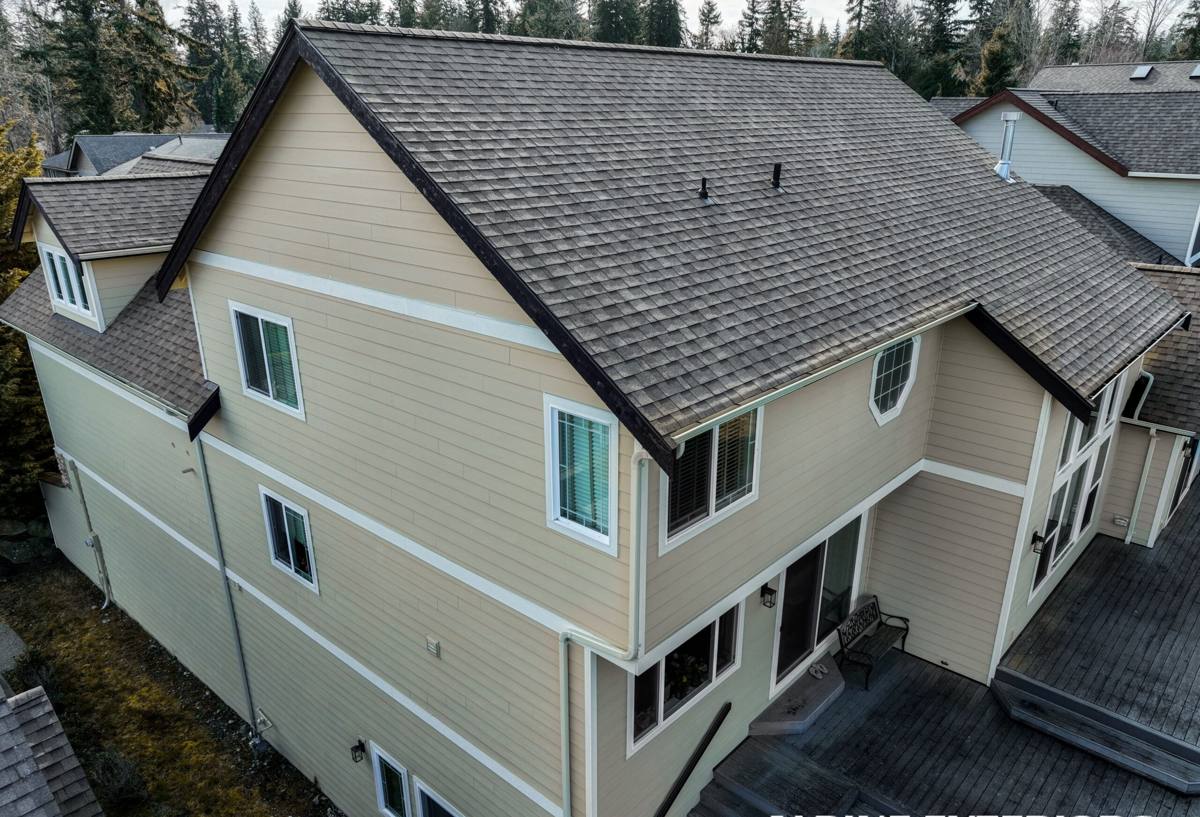
What a Correct Deck Replacement Actually Involves
A lot of "deck replacement" jobs are really just deck resurfacing — new boards laid over old framing. That can be fine in the right situation, but it's not a real replacement, and in a climate like this it can mean covering up problems instead of fixing them. A correct replacement means everything gets evaluated, not just the parts you can see.
What we check and address on every project
- Ledger board attachment and flashing where the deck meets the house — the single most common failure point in wet climates
- Footings and post bases, checking for movement, rot, or undersized original construction
- Joists, beams, and hardware — corrosion on fasteners is common on older decks near the water
- Proper drainage and airflow underneath the deck so moisture doesn't get trapped
- Guardrail and stair structure, since these carry real load and are a common place older decks fall short of current safety standards
- Decking material selection matched to sun exposure, shade, and how much upkeep the homeowner actually wants to do
Skipping any of these to save time or money just means the new decking gets attached to the same problems the old decking was hiding.
Choosing Decking Material for This Climate
There's no single "best" decking material — there's a best material for your specific deck, its sun and shade pattern, and how much maintenance you're willing to do. In a climate with this much rain and moss pressure, the honest trade-offs matter more than the marketing.
| Material | How it handles this climate | Maintenance burden | Typical lifespan |
|---|---|---|---|
| Pressure-treated wood | Affordable, but needs consistent sealing to resist moss and moisture staining | High — annual cleaning and periodic sealing | 10-15 years with upkeep |
| Cedar | Naturally rot-resistant, ages gracefully, but still needs care in shaded, damp spots | Moderate to high | 15-20 years with upkeep |
| Composite decking | Doesn't absorb moisture like wood, resists moss growth better, holds color longer | Low — occasional washing | 25-30 years, manufacturer-dependent |
| PVC/capped polymer | Fully sealed surface, best moisture and mildew resistance available | Lowest | 25-30+ years, manufacturer-dependent |
We'll walk you through what fits your budget and your yard's specific exposure rather than pushing one product across every job. A heavily shaded, tree-covered lot near a creek or drainage area needs a different answer than a deck that gets full afternoon sun.
Fasteners and hardware matter as much as the boards
We use fasteners and structural hardware rated for coastal and high-moisture exposure, not standard interior-grade hardware. This is a place where cutting corners doesn't show up for a few years — and then it shows up as rust streaks, loose boards, or worse. It's also why we don't cut corners on flashing tape and ledger flashing details, even though they add labor time that's invisible once the deck is finished.
Our Deck Replacement Process
- On-site evaluation. We inspect the existing deck structure, ledger attachment, footings, and framing — not just the surface — so you know what you're actually dealing with before we quote anything.
- Honest scope and estimate. You get a clear breakdown of what needs full replacement versus what's sound, and material options that fit your budget and how the deck gets used.
- Permitting. Deck work in Blaine and unincorporated Whatcom County generally requires a permit once you're past minor repair work, particularly for structural changes, height, or guardrail modifications. We handle that process as part of the job.
- Demolition and structural rebuild. Old decking, framing, and hardware come out; ledger flashing, footings, and framing get rebuilt or reinforced to current standards.
- Decking installation. Boards, fasteners, and finish details are installed to manufacturer specifications, which matters for both performance and any material warranty.
- Final walk-through. We go over the finished deck with you, including what maintenance (if any) your chosen material needs going forward.
Common Problems We Find on Deck Replacements in This Area
Every deck is different, but certain issues show up again and again on homes in this part of Whatcom County:
- Ledger rot behind the siding line — moisture works in where the deck meets the house, especially without proper flashing
- Corroded fasteners and hangers — older hardware wasn't always rated for salt-air exposure
- Moss and organic buildup between boards — traps moisture and accelerates decay from the top down
- Undersized or settled footings — common on decks built without full permitting years ago
- Guardrails and stairs that no longer meet current safety spacing — a frequent surprise during replacement
None of these are unusual or a sign anything was done maliciously — they're just what happens to a deck over 15-25 years in a wet, salty, moss-prone climate. The point of a replacement is catching all of it at once instead of patching symptoms one at a time.
Permits and Code Considerations
Deck work that involves structural changes, height above a certain threshold, or guardrail modification typically requires a permit through the applicable local jurisdiction, whether that's the City of Blaine or Whatcom County depending on your property's location. Permitted work also means a required inspection, which is a good thing — it's a second set of eyes confirming the footings, framing, and guardrails meet current safety standards, not just how the deck looks. We manage this process as part of the job rather than leaving it on the homeowner's plate.
Maintaining Your New Deck Through Blaine's Wet Season
Whatever material you choose, a few habits go a long way toward getting the full lifespan out of it in this climate:
- Sweep debris and leaves off the deck regularly in fall — trapped organic matter is what feeds moss growth
- Rinse the deck surface periodically through the wet months, especially in shaded areas that don't dry out on their own
- Check and clear gaps between boards so water can drain instead of pooling
- Inspect under the deck once a year for signs of moisture, corrosion, or pest activity
- Reseal wood decking on the manufacturer's recommended schedule — skipping a cycle in this climate catches up fast
Why a Local Crew Makes a Real Difference
A deck replacement isn't just a materials question — it's a judgment call about how much moisture exposure a specific structure has actually seen, and that judgment gets sharper with local experience. A crew that regularly works in the California Creek area and around Blaine already knows what salt air and moss season do to framing and hardware over time, what permitting looks like locally, and what a deck actually needs to hold up here versus what a generic national spec sheet assumes for a drier region. That local familiarity shows up in fewer surprises mid-project and a deck that's built for the climate it's actually standing in, not a average-case climate somewhere else.
If your deck in the California Creek area is showing its age — soft spots, rust stains, moss buildup, or a general sense that it's not as solid as it used to be — we're happy to take a look and give you a straight answer about what it needs. Reach out for a free, no-pressure estimate using the form below.