 Blaine Siding
 Decking Built for the California Creek Environment
California Creek sits close enough to Semiahmoo Bay and Drayton Harbor that salt-laden air is a daily fact of life, not an occasional weather event. Add in the creek corridor's tree cover, the shade that comes with it, and Whatcom County's long stretch of wet months, and you've got conditions that are hard on almost every decking material. Composite decking has become the go-to choice for a lot of homeowners out here for good reason: it doesn't rot, it doesn't need annual staining, and it holds up to repeated soaking-and-drying cycles far better than solid wood. But "composite" isn't a single product, and a composite deck is only as good as the framing, drainage, and fastening underneath it. This page walks through what actually matters for a California Creek installation, not just the marketing pitch on the board itself.
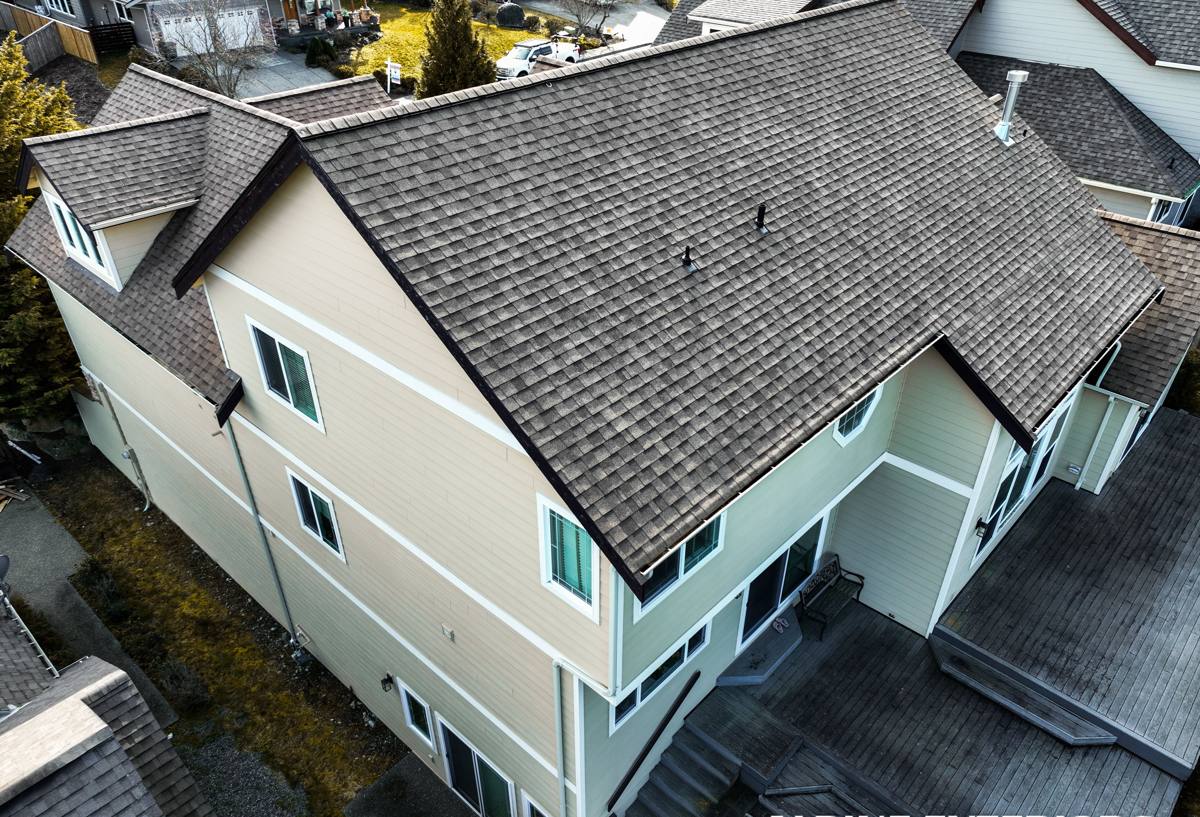
Why the Local Climate Changes the Job
Three things about this stretch of Blaine work against decks specifically: salt air, driving rain, and moss.
Salt Air
Airborne salt from the bay accelerates corrosion on anything metal — fasteners, joist hangers, post bases, railing hardware. On a wood deck this often shows up as rust streaks and loosened connections within a few seasons. Composite decking boards themselves are largely unaffected by salt, but the substructure and hardware underneath still need to be rated for coastal exposure or the deck will fail from the frame up, not the surface down.
Driving Rain
Wind-driven rain off the water pushes moisture sideways, not just straight down. That means water gets under railings, behind ledger boards, and into end-grain cuts that a lot of installers don't bother sealing. On a shaded lot near the creek, that moisture doesn't evaporate quickly — it sits.
Moss and Shade
Tree cover along the creek keeps a lot of yards shaded most of the day, which is great for keeping decks cool in summer and miserable for keeping them dry. Moss and algae growth on composite decking is almost always a drainage and airflow problem, not a defect in the board — flat, low, poorly ventilated decks in shaded spots grow moss noticeably faster than the same board on an open, sunnier lot.
What a Correctly Built Composite Deck Actually Requires
A lot of "composite deck failures" homeowners see aren't the boards failing — they're installation shortcuts catching up. For this area, we treat the following as non-negotiable:
- Ledger flashing done right. Where the deck attaches to the house, the ledger board needs proper flashing and a water-resistant barrier behind it — this is the single most common source of hidden rot on ledger-attached decks in wet climates.
- Corrosion-resistant hardware throughout. Stainless steel or coated fasteners and hangers rated for coastal/ground-contact exposure, not standard interior-grade hardware.
- Real airflow underneath. Adequate height and ventilation between the ground (or a low structure) and the joists so the frame can dry out between rain events instead of sitting damp.
- Correct board spacing. Composite boards expand and contract with temperature and moisture; gapping needs to match the manufacturer's spec for the specific board and the day's temperature at install, not a generic rule of thumb.
- Sealed or capped cut ends. Any board end that's field-cut (stair stringers, picture-framed borders) should be treated per manufacturer instructions so moisture can't wick into the exposed core.
- Hidden fastener systems installed evenly. Clip-based fastening looks better and avoids the small pooling spots that form around exposed screw heads — but only if the clips are set consistently and the substrate underneath is flat.
Choosing the Right Composite Board for a Shaded, Damp Lot
Not every composite product performs the same in a shaded, damp environment. This is the area where we spend the most time with California Creek homeowners, because the "best" board depends on how much sun and airflow a particular deck actually gets.
| Board Type | How It Handles Shade & Moisture | Maintenance Load |
|---|---|---|
| Capped composite (polymer shell over composite core) | Best resistance to moisture absorption and staining; shell sheds surface moisture so moss gets less to grip | Occasional wash-down; no sealing or staining |
| Uncapped/early-generation composite | More porous — absorbs moisture in shaded spots, more prone to surface mold and moss over time | Periodic cleaning with a composite-safe cleaner; more frequent in shade |
| PVC (cellular vinyl) decking | Fully moisture-resistant, performs well in shade and salt air, but shows scratches differently than composite | Low; occasional wash-down |
| Pressure-treated wood | Absorbs moisture readily; shaded, damp lots accelerate rot and moss growth significantly | Annual cleaning, sealing, and inspection for soft spots |
For lots along California Creek with heavier tree cover, we generally steer homeowners toward capped composite or PVC specifically because of how much better they resist the moss-and-mildew cycle in low-light conditions. Uncapped composite and wood aren't wrong choices, but they come with a real maintenance commitment that a lot of homeowners underestimate when they're picking a board off a sample rack in a showroom.
Our Process for a California Creek Deck
1. Site and Structure Assessment
We start by looking at the ledger attachment point, existing framing (if it's a rebuild), grade and drainage around the footprint, and how much direct sun versus shade the deck actually gets through the day. That last part drives board selection more than most homeowners expect.
2. Framing and Waterproofing
Ledger flashing, joist tape or protective barrier on top of the framing, and corrosion-rated hardware go in before a single deck board is placed. This is the part of the job that's invisible once it's done — and the part that determines whether the deck is still solid in fifteen years.
3. Board Installation
Boards go down with manufacturer-spec gapping and hidden fasteners where the product allows it, with attention to consistent, flat support underneath so boards don't develop the slight waves that trap water.
4. Rails, Stairs, and Finish Details
Railing hardware gets the same corrosion-resistant treatment as the framing. Cut ends on stairs and border boards get properly finished per the manufacturer's requirements, not left raw.
5. Walkthrough
We go over basic care for the specific board installed — cleaning cadence, what not to use on the surface, and what to watch for given the amount of shade the deck sits in.
Cost Factors Homeowners Should Actually Weigh
Composite decking costs vary widely based on a handful of concrete factors, not just square footage:
| Factor | Why It Moves the Price |
|---|---|
| Board tier (uncapped vs. capped vs. PVC) | Capped and PVC products cost more per board but need less upkeep long-term |
| Height off grade / substructure complexity | Taller decks or those needing extra footings and framing take more labor and material |
| Ledger condition (rebuilds) | Existing rot or improper old flashing found during demo adds repair scope before rebuilding starts |
| Railing style | Cable, glass, and composite rail systems each carry different material and install costs versus basic aluminum or composite baluster rail |
| Stairs and landings | Each additional stair run adds cut ends, stringers, and finish work |
We give straightforward, itemized estimates rather than a single lump number, so homeowners can see exactly where the cost is coming from and where there's room to adjust the scope.
Maintaining a Composite Deck in a Damp, Shaded Lot
Composite decking is genuinely low-maintenance compared to wood, but "low-maintenance" isn't "no-maintenance" — especially with tree cover and creek-side humidity in play. A simple seasonal routine goes a long way:
- Sweep off leaves, needles, and debris regularly — trapped organic matter is what feeds moss and mildew.
- Hose down or wash with a composite-safe cleaner a couple of times a year, more often in heavily shaded spots.
- Keep gutters and downspouts near the deck clear so runoff isn't dumping directly onto or under the deck surface.
- Check railing posts and stair connections annually for any looseness — an early sign of hardware corrosion in salt air.
- Trim back overhanging branches where practical to get a bit more light and airflow onto the deck surface.
- Address any standing water or slow-draining spots on the deck surface promptly — it's usually a sign of a leveling issue, not the board itself.
Why Local Experience on This Stretch of Blaine Matters
A deck built to a generic spec sheet can still fail early if it's not adapted to the specific conditions of a California Creek lot — the shade pattern, the salt exposure off the bay, the drainage path around the house. Crews that work this area regularly already know which lots need extra attention to airflow underneath the deck, which hardware actually holds up to the salt air here, and how to talk homeowners through board choices that match their yard's real sun exposure rather than a showroom sample. That local pattern-recognition is the difference between a deck that needs real attention in five years and one that's still solid in twenty.
If you're planning a new composite deck or replacing an aging one in California Creek, we're happy to take a look and give you a straightforward, no-pressure estimate — just fill out the form below and we'll get in touch.