 Blaine Siding
 Decking Built for Blaine Harbor's Marine Climate
Blaine Harbor sits right where the Strait of Georgia meets Semiahmoo Bay, and homes here deal with a combination that inland Whatcom County properties simply don't face: salt-laden air moving off the water, driving horizontal rain that gets under fascia and railings other neighborhoods never worry about, and a moss season that can stretch from October through May in a wet year. A deck built here isn't just a place to put a grill — it's an exterior structure that has to survive conditions closer to a coastal dock than a typical backyard patio.
This page covers what we actually see and do when we build composite decks for Blaine Harbor properties: what the salt air and moisture do to different materials, what a correctly built substructure looks like in this climate, and how our process is set up around the realities of this specific stretch of shoreline.
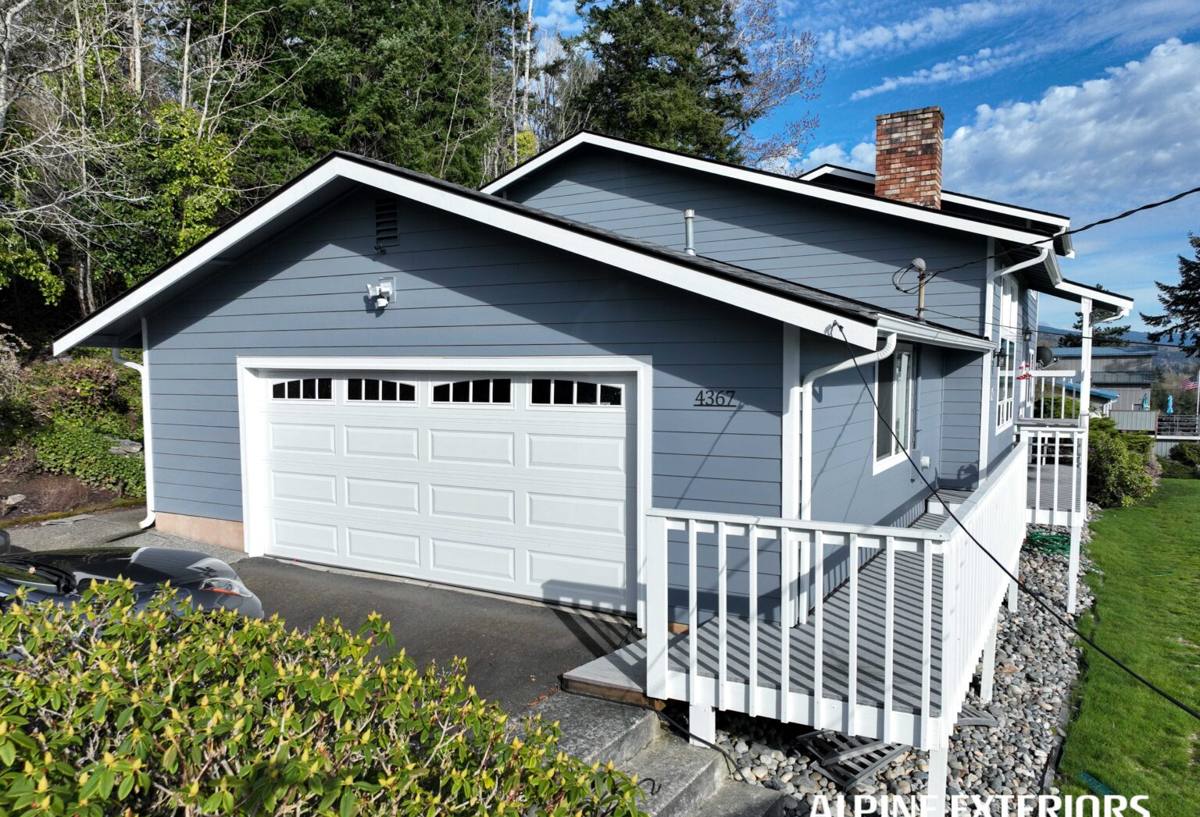
What Salt Air, Rain, and Moss Actually Do to a Deck
Every material on a deck is fighting a slightly different battle near the harbor:
- Salt air accelerates corrosion on any exposed metal — fasteners, brackets, railing hardware, and post bases — far faster than it would a few miles inland.
- Driving rain off the water tends to hit decks at an angle, which means it gets under rail caps, into end-grain cuts, and behind ledger boards more aggressively than straight-down rain.
- Moss and algae need moisture and shade to establish, and a deck that stays damp for long stretches through a Whatcom County winter gives them exactly that. Once moss takes hold on a walking surface it's also a slip hazard, not just a cosmetic issue.
None of this means a deck near the water is doomed — it means the material choice, the hardware, and the way the substructure drains all matter more here than they would on a dry, sheltered lot.
Why Composite Decking Fits This Location
It doesn't absorb moisture the way wood does
Traditional wood decking is porous. It swells when wet, shrinks when it dries, and repeats that cycle all winter, which loosens fasteners and opens up cracks that trap water and invite rot. Composite boards are engineered to resist moisture absorption, so they hold their shape through Blaine's wet season instead of cupping, splitting, or checking.
It doesn't feed moss and algae the way bare wood does
Untreated or aging wood decking has a rougher, more porous surface that gives moss spores something to grip and grow on. Composite's surface is denser and, on most quality boards, capped with a protective outer layer — it's not moss-proof (nothing outdoors in this climate truly is), but it doesn't hold onto organic growth the way weathered wood does, and it's easier to knock moss off before it establishes.
It holds up to salt exposure better than most people expect
The decking itself isn't the weak point in a salt environment — the hardware is. We treat composite decking the same way we'd treat any material this close to the water: it's only as good as the fasteners, flashing, and structural connectors underneath it, which is why we're specific about what goes into the substructure, not just what's visible on top.
What a Correct Installation Involves Here
A composite deck that's installed the way the manufacturer intends, with hardware suited to a marine environment, is a very different product than the same boards nailed onto a generic frame. The visible decking is maybe a third of what determines how long the deck actually lasts.
Substructure and framing
Joists and beams need to be sized and spaced correctly for the specific composite product being used — composite boards generally require tighter joist spacing than wood decking, and manufacturers publish minimums that voids warranties if ignored. We also grade the framing to shed water away from the house rather than letting it pool under the deck.
Fasteners and hardware rated for coastal exposure
This is where a lot of decks near the harbor fail early. Standard galvanized fasteners can corrode faster than expected in salt air. We use stainless steel or coated fasteners rated for coastal/marine exposure on hardware, brackets, and structural connectors, not just wherever it happens to be visible.
Drainage and ventilation underneath
A deck that traps moisture underneath it stays damp longer after every rain, which is exactly what moss and rot organisms want. Proper ventilation gaps, correct board spacing, and grading that lets water actually leave the area under the deck all matter more here than on a dry inland lot.
Flashing where the deck meets the house
The ledger board connection — where the deck attaches to the house — is one of the most common failure points on any deck, and it's a bigger deal in a driving-rain environment. Correct flashing keeps water from tracking behind the siding and into the wall structure, which is a repair nobody wants to deal with later.
Composite vs. Other Decking Materials for This Climate
| Material | Moisture Behavior | Maintenance | Typical Lifespan Here |
|---|---|---|---|
| Composite decking | Resists swelling/warping; capped boards shed water well | Periodic washing; no staining or sealing | Long-term, backed by manufacturer warranty |
| Pressure-treated wood | Absorbs and releases moisture seasonally; prone to cupping | Annual cleaning, periodic sealing/staining | Shorter without diligent upkeep |
| Cedar | Naturally moisture-resistant but still porous | Regular sealing to maintain resistance | Moderate, depends on maintenance |
| PVC decking | Fully moisture-resistant, no wood content | Low; similar to composite | Long-term, different look/feel underfoot |
We install composite because for most Blaine Harbor homeowners it hits the right balance: it handles the moisture and salt exposure well, it doesn't demand a yearly sealing schedule most people don't keep up with anyway, and it gives a more consistent, wood-like appearance than PVC while resisting the specific problems — moss, swelling, splintering — that show up fastest this close to the water.
Our Process From Estimate to Finished Deck
- On-site assessment — we look at sun/shade exposure, existing drainage, ledger board condition if replacing an old deck, and how exposed the site is to wind and rain off the water.
- Material and layout discussion — board color/style, railing options, and any structural considerations specific to the lot.
- Written estimate — clear scope, materials, and timeline before any work starts.
- Demo and structural prep — removing old decking if applicable, correcting framing or drainage issues before new material goes down.
- Installation — framing, flashing, board installation, and railing, using hardware suited to a coastal/marine environment.
- Final walkthrough — checking fastening, spacing, and drainage before we call it done.
Living With a Composite Deck Through Moss Season
Composite decking is low maintenance, not zero maintenance, and that distinction matters most during Whatcom County's wet months. A short list of what actually keeps a composite deck performing well near Blaine Harbor:
- Sweep off leaves and debris regularly through fall — trapped organic matter holds moisture against the boards and gives moss a foothold.
- Rinse or wash the deck surface a few times a year, more often in shaded or low-airflow areas where moss is more likely to start.
- Keep gutters and downspouts clear so runoff isn't dumping extra water onto or near the deck.
- Check railing hardware periodically for corrosion, especially on the harbor-facing side of the structure.
- Trim back vegetation that's shading the deck and keeping it damp longer after rain.
Cost Factors for a Blaine Harbor Composite Deck
Every deck is priced around the specifics of the job, but the factors that tend to move the number the most on Blaine Harbor properties are:
- Total square footage and deck shape (multi-level or angled decks cost more than a simple rectangle).
- Substructure condition — whether existing framing can be reused or needs to be rebuilt.
- Railing style and material, since coastal-rated hardware and certain railing systems cost more than basic options.
- Site access and how much demo/disposal of an old deck is involved.
- Height off grade, which affects framing, stairs, and code requirements for railings.
We give a written estimate after seeing the site — broad ranges without that context tend to be more misleading than useful.
Why Hire a Crew That Already Works Blaine Harbor
A deck built to a generic spec sheet, without accounting for salt exposure, driving rain, and a long moss season, tends to show problems within a few years near the water — corroding hardware, moss buildup in shaded corners, or moisture finding its way behind flashing that wasn't detailed for this kind of exposure. We work on homes throughout Blaine and Whatcom County, and Blaine Harbor's conditions inform the hardware, drainage, and framing decisions we make on every composite deck we build here, not as an upcharge, but as the standard we hold the work to.
If you're planning a new deck or replacing one that hasn't held up to the harbor conditions, we're happy to take a look and put together a free, no-pressure estimate — just fill out the form below.