 Blaine Siding
 Roofing in Birch Bay Is Its Own Kind of Job
Birch Bay sits right on the water at the top corner of Whatcom County, and that location shapes what a roof out here actually has to survive. Homes facing the bay take salt-laden air and wind-driven rain almost year-round, while houses tucked back under fir and cedar canopy deal with shade, needle litter, and moss that never fully dries out between fall and spring. A roof replacement in Birch Bay isn't just "install new shingles" — it's a system that has to shed water fast, resist salt corrosion on metal components, and stay ventilated enough that moisture doesn't sit and breed rot or moss underneath the surface.
We work this stretch of coastline regularly, from Birch Bay proper into Blaine and the surrounding unincorporated parts of Whatcom County. That matters more than it sounds like it should, because a roofer who mostly works inland jobs doesn't always build in the extra flashing, fastener, and ventilation margin that a marine-exposed roof needs to actually hold up.
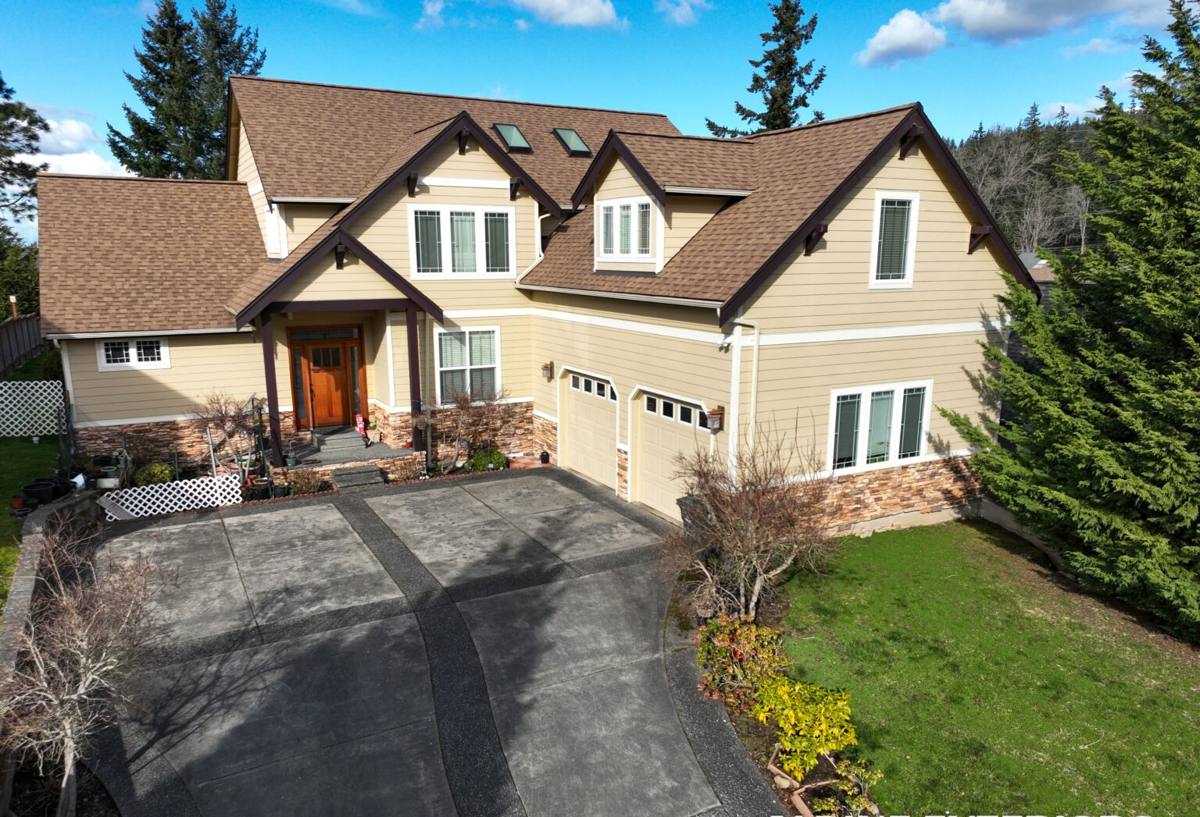
What This Coastline Does to a Roof
Salt Air and Corrosion
Homes within a mile or two of the water get a steady dose of salt-laden air, even on calm days. Over time that air accelerates corrosion on exposed metal — nail heads, flashing, roof vents, gutter fasteners — well before it would fail on a similar roof further inland. It's not dramatic; it's slow pitting and rust that eventually opens a path for water. Material choice and hardware grade matter more here than in a lot of other parts of the county.
Driving Rain
Storms coming off the water don't fall straight down — wind pushes rain sideways and up under laps, ridge caps, and flashing that would be fine in a calmer climate. That's why underlayment coverage, flashing detail, and fastener pattern carry more weight on a Birch Bay roof than on a similar house a few miles inland where rain falls more vertically.
Moss and Shade
A lot of Birch Bay properties have mature tree cover, which is part of the area's appeal but also means roofs stay damp longer after a storm than a roof out in the open. Moss and algae take hold fastest on north-facing slopes and shaded valleys, and once established they hold moisture against the roofing material, work under shingle edges, and shorten the life of the roof underneath them. Moss season here effectively runs most of the year, tapering only during the driest weeks of summer.
Signs a Birch Bay Roof Needs Replacing, Not Patching
Not every roof problem calls for a full replacement — sometimes a repair is the honest answer. But there's a point where patching becomes a losing game, especially on an older coastal roof. Signs worth taking seriously:
- Granule loss heavy enough that you're finding grit in gutters and downspouts every season
- Shingles curling, cupping, or cracking, especially on south and west-facing slopes that get the most sun and weather cycling
- Moss thick enough that it's lifting shingle edges rather than just sitting on the surface
- Rusted or failing flashing around chimneys, vents, and valleys — a common early failure point this close to salt air
- Soft or spongy spots when walked, which usually means the decking underneath is already wet or rotting
- Daylight visible through the attic sheathing, or consistent staining on interior ceilings
- Roof is past 20–25 years old (asphalt) and has never been fully re-roofed, only patched
If you're only seeing one or two of these and the roof is otherwise sound, a repair or a maintenance visit may buy you real time. If several are stacking up, replacement is usually the more honest recommendation — patching a roof in this condition tends to cost more over a few years than doing it right once.
Material Options for a Salt-Air, High-Moss Climate
There's no single "best" roofing material for Birch Bay — it depends on budget, how exposed the house is, and how much maintenance you want to do. Here's how the common options actually compare for this specific climate:
| Material | Typical Lifespan Here | Moss/Algae Resistance | Salt Air Performance | Maintenance |
|---|---|---|---|---|
| Architectural asphalt shingle | 20–30 years | Good with algae-resistant granules; still needs periodic moss removal | Solid if flashing and fasteners are corrosion-resistant grade | Low — occasional moss treatment and gutter clearing |
| 3-tab asphalt shingle | 15–20 years | Fair — thinner profile sheds moisture less effectively | Adequate but shorter overall service life near the water | Low, but shorter lifespan means more frequent replacement |
| Standing seam metal | 40–50+ years | Excellent — moss struggles to hold on a smooth, steep-shed surface | Very good with marine-grade coatings and stainless or coated fasteners | Very low; occasional fastener and sealant check |
| Cedar shake | 20–30 years with upkeep | Poor without active maintenance — moss and moisture are its main failure mode | Wood is naturally rot-resistant but needs consistent treatment near salt air and shade | High — regular cleaning, treatment, and inspection required |
We'll walk through these trade-offs honestly during your estimate. Metal costs more up front but performs the best against both moss and salt corrosion, which is a real consideration for shaded, water-facing lots. Architectural asphalt remains the most common choice because it balances cost and performance well when installed with the right underlayment and flashing package. Cedar shake can look great on the right house, but it's an ongoing maintenance commitment in this climate, not a set-it-and-forget-it roof — we'll say so plainly rather than sell it as low-maintenance.
What a Correct Roof Replacement Actually Involves
A roof replacement is only as good as what's underneath the visible surface. Here's what we build into every tear-off and re-roof, and why each step matters more in a coastal, high-moss climate:
Tear-Off and Deck Inspection
Full removal of the old roofing down to the decking, not an overlay. This is the only point where we can actually see the condition of the sheathing — soft, delaminated, or rotted decking gets replaced before anything new goes down. Skipping this step is how a new roof ends up failing from the inside out within a few years.
Ice and Water Shield at Vulnerable Points
Self-adhering waterproof membrane goes down at eaves, valleys, and around penetrations — the areas most likely to take driving rain and standing moisture. This is a place we don't cut corners, given how much sideways rain this stretch of coastline sees.
Synthetic Underlayment
A full synthetic underlayment layer across the whole roof deck, providing a secondary water barrier if wind-driven rain ever gets past the shingles themselves — a real possibility on exposed, water-facing roof slopes.
Corrosion-Resistant Flashing and Fasteners
Given the salt air, we use flashing and fastener grades that are built for coastal exposure rather than standard inland-spec hardware. This is one of the most common places we see older Birch Bay roofs fail early — cheap flashing or standard nails corroding well before the shingles themselves wear out.
Ventilation
Proper intake and exhaust ventilation keeps the attic space at a similar temperature and humidity to the outside air. That reduces condensation on the underside of the decking, which in turn reduces the moisture that feeds moss and rot from below — not just from above. A roof can look great and still fail early if the attic underneath it is trapping moisture.
Final Details
Ridge caps, drip edge, valley metal, and pipe boot flashing all get installed to manufacturer spec, followed by full cleanup — magnetic sweep for nails, haul-away of old materials, and a walkthrough so you understand exactly what was done and what the warranty covers.
How Our Process Works
- On-site inspection. We get on the roof, check the decking where accessible, look at flashing, ventilation, and moss/algae condition, and take photos to review with you.
- Honest recommendation. We tell you plainly whether you need a full replacement, a repair, or can reasonably wait — and explain why.
- Written estimate. Material options, scope, and price broken down clearly, with no pressure to decide on the spot.
- Scheduling around weather. Roofing in this climate means working around rain windows — we plan tear-off days for realistic dry stretches and protect the house if weather shifts mid-project.
- Installation. Tear-off, deck repair as needed, underlayment, flashing, new roofing material, and ventilation work, done in the sequence above.
- Cleanup and walkthrough. Full site cleanup, a walkthrough of the finished roof, and paperwork on materials and warranty coverage.
Permits and Local Requirements
Roof replacement in unincorporated Whatcom County, including Birch Bay, generally requires a building permit, and work needs to meet current wind and weather-exposure provisions of the applicable building code for a coastal zone. We handle the permitting process as part of the job rather than leaving it on the homeowner, and we build the roof to hold up to the wind exposure this location actually sees, not just the code minimum for a more sheltered inland site.
Why a Local Blaine Crew Matters Here
A roofing crew that works Birch Bay regularly has already seen how fast moss comes back on a shaded north slope here, which flashing details actually hold up to salt air over a decade, and how local wind patterns off the water stress a roof edge differently than an inland roof. That's not something you can fully substitute with a generic install — it shows up in the small decisions: fastener grade, ventilation balance, where extra ice-and-water membrane earns its cost. Being local also means we're a short drive away if something needs a follow-up look after a bad storm, not a company working from an hour or more out.
Protecting the Investment After Installation
A new roof still benefits from a bit of ongoing attention in this climate:
- Keep overhanging branches trimmed back to cut down on shade, needle litter, and moss growth
- Clean gutters at least twice a year so water actually drains instead of backing up under the roof edge
- Have moss treated at the first sign of regrowth rather than letting it establish for a season
- Schedule a quick visual check after any major windstorm, especially on water-facing slopes
None of this is heavy maintenance — it's the kind of upkeep that lets a well-installed roof actually reach its full expected lifespan instead of falling short of it because of moisture nobody addressed early.
If your Birch Bay roof is showing its age, or you just want an honest read on where it stands, we're happy to come take a look. The estimate is free, there's no pressure, and you'll get a straight answer about whether you need a full replacement or something less — just fill out the form below to get started.