 Blaine Siding
 Siding Repair in Bellingham: Built for a Wetter, Saltier Climate
Bellingham sits close enough to the water, and close enough to us here in Blaine, that its siding takes a specific kind of beating. Homes here deal with a long wet season, driving rain that comes in sideways off Bellingham Bay and the Strait, salt-laden air that speeds up corrosion on anything metal, and a moss and algae season that can stretch for most of the year in shaded, north-facing spots. None of that is unique to one street or one neighborhood — it's the whole area, including the pockets closer to Lake Whatcom, the hillside lots, and the low-lying areas near downtown. Siding repair here isn't just patching a hole. Done right, it's about restoring the water management system your siding is supposed to be, in a climate that never really stops testing it.
We work Whatcom County out of Blaine, which means we're not learning this climate from a manual — we're driving through it every day. That matters more for repair work than almost anything else we do, because a repair that ignores how water actually moves on a Bellingham house will fail again, usually within a season or two.
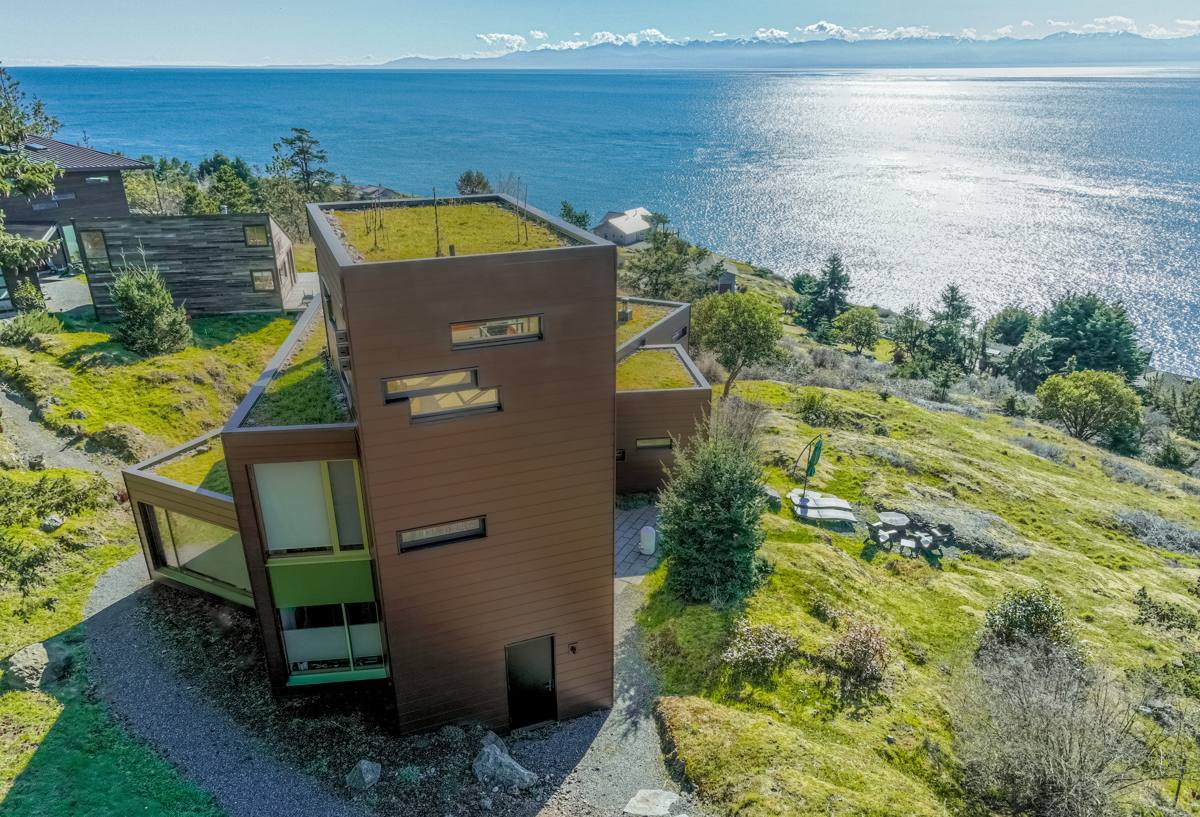
What Actually Damages Siding in This Area
Moisture Intrusion
Wind-driven rain doesn't just hit siding — it gets pushed up and under laps, into seams, and around poorly flashed penetrations like hose bibs, light fixtures, and vents. Once moisture gets behind the siding, it doesn't dry out quickly here, because the air itself stays damp for weeks at a stretch. That's how you get soft trim, delaminating panels, and rot in the sheathing behind siding that still looks fine from the driveway.
Moss, Algae, and Organic Growth
Shaded siding, siding under tree canopy, and north-facing walls in Bellingham can stay damp long enough to grow moss and algae for most of the year. This isn't just cosmetic — organic growth holds moisture against the surface, which accelerates paint failure, wood rot, and (on the wrong products) surface breakdown.
Salt Air and Fastener Corrosion
Being this close to salt water means fasteners, flashing, and any exposed metal components age faster than they would inland. We see nail heads bleeding rust through paint, corroded flashing at butt joints, and fastener failure that lets panels work loose over time — problems that show up years earlier here than they would in a drier, inland climate.
Freeze-Thaw and Wind Cycling
Whatcom County doesn't get brutal winters, but it does get enough freeze-thaw cycling combined with wind exposure to stress joints, caulk lines, and any siding that was installed with tight or missing expansion gaps.
Signs a Bellingham Home Needs Siding Repair
- Soft, spongy, or crumbling spots when you press on the siding or trim
- Visible cracking, especially at butt joints, corners, or around window and door trim
- Paint that's peeling, bubbling, or failing in patches rather than evenly
- Persistent moss or algae staining that comes back soon after cleaning
- Stains or dark streaking below seams, fasteners, or flashing
- Panels that have visibly bowed, warped, or pulled away from the wall
- Interior signs — musty smell, peeling interior paint, or soft drywall on an exterior wall
- Visible daylight or gaps at trim joints and corner boards
Any one of these can be a small fix. Several at once, especially clustered on one elevation, usually means water has been getting behind the siding for a while and the repair needs to address the cause, not just the symptom.
Repair or Replace? How We Actually Decide
Not every damaged section needs a full re-side, and we're not going to tell a Bellingham homeowner to replace siding that can be properly repaired. The decision comes down to how much of the wall is affected, what's happening behind the siding, and what the existing material is.
| Factor | Repair Usually Makes Sense | Replacement Usually Makes Sense |
|---|---|---|
| Extent of damage | Isolated to one or two sections or elevations | Spread across multiple walls or the whole exterior |
| Sheathing condition | Dry, solid sheathing behind the damaged area | Soft or rotted sheathing found once siding is opened up |
| Siding material | Material is sound and a matching or compatible patch is possible | Material is discontinued, degraded, or a poor performer in this climate |
| Age of siding | Well within expected service life | At or past the age where recurring repairs are the pattern, not the exception |
| Root cause | A fixable flashing, caulk, or fastener issue | A systemic moisture problem tied to the product or original installation |
We'll always tell you honestly which category your house falls into. If a targeted repair will hold up through another wet season, that's what we recommend — no reason to spend more than the problem calls for.
What a Correct Siding Repair Involves
A repair that's just cosmetic — cutting out a bad piece and slapping a patch over it — doesn't hold up in this climate. Here's what we actually check and do:
- Diagnose before cutting. We trace the damage back to its source: a flashing gap, a caulk failure, a missing kick-out, poor grading against the foundation, or a penetration that was never sealed correctly.
- Open it up and inspect. Once a section is removed, we check the house wrap or building paper and the sheathing underneath. If there's hidden rot, that gets addressed before anything new goes back on — covering rot with new siding just hides the problem for another few years.
- Repair the water management, not just the surface. That means correcting flashing, re-establishing proper laps and overlaps, and making sure water has a way out, not just a way in that got patched.
- Match the material and fastening. New sections get fastened correctly for the product and the climate, with corrosion-resistant fasteners given the salt air exposure this close to the water.
- Finish and seal. Caulk and paint (or factory finish touch-up) get done to match, using products rated for this climate rather than whatever's cheapest at the hardware store.
Repairing Different Siding Types
We show up to Bellingham homes with all kinds of existing siding, and repair work has to fit the material that's actually on the house.
James Hardie fiber cement repairs cleanly when it's cut, fastened, and caulked to spec, and ColorPlus finished panels can often be patched with a near-invisible color match since the factory finish is standardized. This is the material we install on every full re-side we do, because it holds up to the moisture and salt exposure here better than the alternatives we've worked with.
Vinyl siding can be patched or panel-replaced in many cases, but vinyl becomes brittle with age and UV exposure, and older runs are frequently discontinued, which makes exact color and profile matches difficult.
Wood siding (cedar or similar) can be repaired where rot is limited, but wood is the material most vulnerable to the wet, mossy conditions common here, and repeated rot in the same area is a sign the underlying moisture problem needs more than a patch.
LP SmartSide and similar engineered wood products can be repaired, but they're particularly sensitive to edge and cut-end exposure — if moisture gets into an unsealed edge, swelling and deterioration can spread from that point. Repairs on these products need extra attention to sealing every new cut edge.
We'll repair what's on your house honestly and correctly, regardless of brand. When it comes time for a full re-side, James Hardie fiber cement is the only product we install — it's non-combustible, engineered for climates like this one, and backed by a strong factory finish and warranty, which is why we've standardized on it rather than installing several different product lines.
Matching Existing Siding and Color
One of the trickiest parts of a good siding repair is making the patch disappear. On ColorPlus-finished Hardie siding, we can often match factory colors closely since the palette is standardized and well documented. On older siding — especially field-painted wood, aged vinyl, or discontinued profiles — an exact match isn't always possible, and we'll tell you that up front rather than promise a seamless result we can't deliver. In some cases, the honest answer is that a visible seam is unavoidable unless a full elevation is redone, and we'd rather you know that before we start than be surprised after.
Our Process for Bellingham Repair Calls
- Free on-site inspection where we look at the actual damage and probe suspect areas rather than guessing from the ground
- Honest repair-vs-replace assessment, explained in plain terms with our reasoning
- A written scope covering what's being repaired, what's being checked behind it, and what materials and fasteners will be used
- Repair work that corrects the underlying water management issue, not just the visible damage
- Color and material matching handled as closely as the existing product allows, with limitations explained ahead of time
Why a Blaine-Based Crew That Already Works Bellingham Matters
Siding repair is diagnostic work as much as it's construction work. A crew that already knows how Whatcom County's rain patterns, salt exposure, and moss season behave on real houses is going to catch the actual cause of a problem faster than one guessing from general training. Being based in Blaine means we're a short drive away, we're not stretched thin across a multi-state territory, and we're around for a callback if something needs a second look after the next storm season. That local presence is also why we can be direct with you about repair versus replacement — we're not trying to upsell a job to make a single visit worthwhile.
Maintenance Checklist to Protect the Repair
- Rinse siding annually to knock back moss and algae before it takes hold, especially on shaded or north-facing walls
- Keep gutters clear so overflow doesn't run down the siding face during heavy rain
- Trim back vegetation and tree canopy that keeps siding shaded and damp
- Re-caulk joints and penetrations as soon as gaps appear, before the next wet season
- Walk the exterior after major windstorms to catch loosened panels or trim early
- Watch previously repaired areas for a season or two to confirm the fix is holding
If you're dealing with damaged, aging, or failing siding on a Bellingham-area home, we're happy to come take a look. The estimate is free, there's no pressure to sign anything on the spot, and you'll get a straight answer about whether repair or replacement is the right call for your house.