 Blaine Siding
 Bellingham Siding, Installed by People Who Already Work This Coastline
Bellingham sits on Bellingham Bay in Whatcom County, close enough to the Salish Sea that salt air is part of daily life, and close enough to the Cascades' rain shadow edge that "driving rain" isn't a figure of speech — it's a fall-through-spring reality. Siding here has to do more than look good. It has to shed water sideways in a windstorm, resist salt-laden air without corroding its fasteners, and survive months of shade and dampness without turning green. We're based in Blaine and already work this stretch of Whatcom County regularly, so a Bellingham siding installation isn't a one-off trip for us — it's a job type we understand well before we ever show up with a truck.
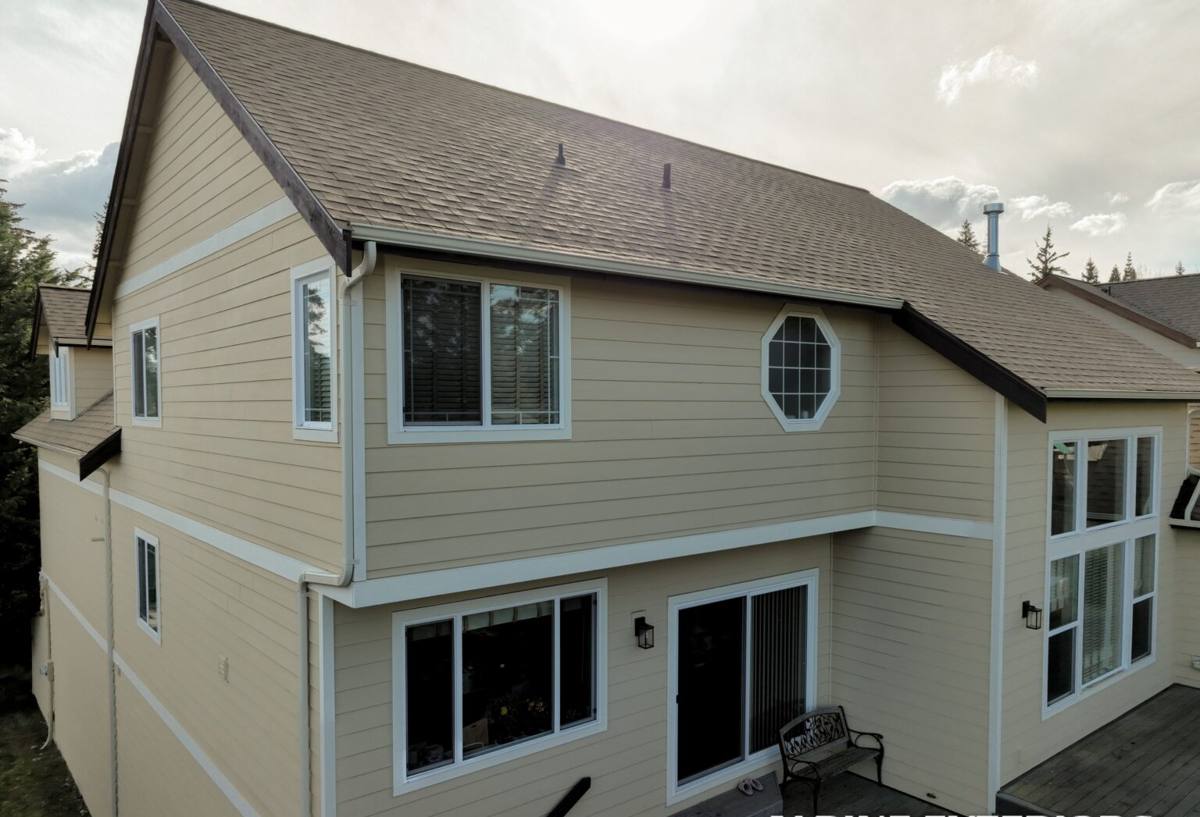
What Bellingham's Climate Actually Does to Siding
Three regional factors drive almost every siding failure we see in this part of the county:
Salt Air
Proximity to the bay means airborne salt settles on exterior surfaces year-round. Salt accelerates corrosion in exposed metal fasteners and trim, and it can degrade lower-grade paint finishes faster than manufacturers' inland warranties assume. Materials and fastener hardware need to be chosen with this in mind, not treated as an afterthought.
Driving Rain
Wind-driven rain off the water doesn't just fall straight down — it gets pushed sideways and upward under laps, around corners, and behind poorly sealed trim. A siding system that only handles vertical rain will eventually let water behind the cladding here. Correct lap spacing, flashing, and drainage gaps matter more in Bellingham than they would in a drier inland climate.
Long Moss Season
Shaded north- and west-facing walls stay damp for extended stretches between fall and spring. Moss and algae take hold on siding that can't dry out, and once organic growth establishes itself on a porous or absorbent surface, it holds moisture against the wall longer, compounding the problem. Siding that resists moisture absorption and dries quickly has a real, measurable advantage here.
Why We Only Install James Hardie Fiber Cement
We don't install vinyl, LP SmartSide, cedar, primed spruce, or fiber cement alternatives like Cemplank or Allura. That's a standard we hold company-wide, and it applies just as much in Bellingham as anywhere else we work. Here's the honest reasoning:
- Vinyl expands and contracts with temperature swings and can warp or crack in sustained wind exposure; it also isn't engineered as a moisture-resistant assembly the way fiber cement is.
- LP SmartSide is an engineered wood product — it performs reasonably well when detailing is perfect, but wood-based substrates are inherently more vulnerable to the kind of prolonged dampness Bellingham's shaded, moss-prone walls experience.
- Cedar and primed spruce require ongoing maintenance — refinishing, caulking, and moisture monitoring — that most homeowners underestimate, especially in a climate that doesn't give wood much time to dry out between rain events.
- Other fiber cement brands may be reasonable products, but we've standardized on James Hardie because of its factory-applied ColorPlus finish, its HZ5 climate-specific formulation for our Pacific Northwest moisture zone, and its long track record and transferable warranty when installed to spec.
James Hardie fiber cement is non-combustible, doesn't absorb water the way wood-based products do, and holds its factory finish for years without the repainting cycle that cedar or primed wood demands. That combination is why it's the only product we put on a Bellingham home.
What a Correct Installation Actually Involves
Fiber cement performs exactly as well as its installation. A rushed or undertrained crew can put Hardie board on a wall and still leave it vulnerable to the same moisture problems as a lesser product. A correct installation in this climate includes:
Water Management Behind the Cladding
A properly lapped weather-resistant barrier, correctly integrated flashing at every window, door, and roofline intersection, and a drainage gap or rainscreen where wall conditions call for it. This is the layer that actually keeps a home dry — the siding itself is the second line of defense, not the first.
Fastening and Lap Spec
Corrosion-resistant fasteners driven to Hardie's specified pattern and depth, proper minimum clearance at grade and roof lines, and lap and gap dimensions that match the manufacturer's installation instructions for our climate zone — not generic nationwide defaults.
Joint and Trim Detailing
Caulking only where Hardie's install guide calls for it (not everywhere, which can trap moisture), correctly primed and sealed cut edges, and trim details designed to shed water outward rather than channel it into seams.
Skipping any one of these doesn't show up as a problem on installation day — it shows up two, five, or ten years later as trapped moisture, rot at the sheathing, or premature paint failure. That's the whole reason installation quality matters as much as product choice.
Our Process, Start to Finish
- On-site assessment. We walk the exterior, check existing siding and sheathing condition, and identify problem areas specific to your home's exposure — shaded sides, water-collecting corners, salt-exposed elevations.
- Written estimate. You get a clear scope: product line, color, trim details, and what's included, before any work starts.
- Prep and moisture barrier install. Old siding removal (where applicable), sheathing inspection and repair as needed, and correct installation of the weather-resistant barrier and flashing system.
- Hardie installation. Panels or planks installed to manufacturer spec, with attention to fastening, lap spacing, and trim detailing suited to Bellingham's rain and salt exposure.
- Final walkthrough. We review the finished work with you, cover care basics, and make sure every question is answered before we call it done.
Cost Factors for a Bellingham Siding Installation
Every home is different, but these are the factors that most influence the scope and cost of a project in this area:
| Factor | Why It Matters Here |
|---|---|
| Existing siding removal | Homes with cedar, vinyl, or wood siding often need tear-off and sheathing inspection before new install can begin |
| Sheathing or framing repair | Moss-heavy, shaded walls sometimes hide moisture damage that needs to be fixed before siding goes on |
| Home size and wall complexity | More corners, dormers, and trim detail means more labor and flashing work |
| Product line selected | Hardie's HZ5 lap, panel, and shingle lines vary in material cost and installation time |
| Exposure severity | Water-facing or salt-exposed elevations may need extra flashing and drainage detailing |
Signs Your Bellingham Home May Need New Siding
A quick self-check before calling anyone:
- Persistent green or black staining that returns shortly after cleaning
- Soft, spongy, or bubbling spots when you press on the siding
- Paint that's peeling, chalking, or failing faster than a normal repaint cycle
- Visible warping, cupping, or gaps opening up at seams and corners
- Rising heating bills that suggest air or moisture is getting through the wall assembly
- Siding that's original to a home built more than 20-25 years ago and has never been replaced
Any one of these on its own might be minor. Two or three together, especially on a shaded or water-facing wall, usually means it's worth a professional look before small problems become structural ones.
Why a Crew That Already Works Bellingham Matters
We're a Blaine-based crew, which means Bellingham isn't out-of-territory work for us — it's part of the same coastal stretch of Whatcom County we work in regularly. That familiarity matters in a few concrete ways: we already know how local exposure conditions (shaded lots, water-facing elevations, salt drift) tend to affect a wall assembly here, we're not learning permitting requirements for the first time on your job, and we can respond quickly if a question comes up after installation rather than being a name from out of the area. Choosing a contractor who already understands the coastline you live on is worth more than it sounds like on paper — it shows up in fewer surprises during the job and a better outcome once it's done.
Caring for Hardie Siding After Installation
One advantage of switching to James Hardie fiber cement is how little ongoing maintenance it asks for compared to wood or vinyl. A periodic rinse to clear salt residue and organic buildup, prompt attention to any caulking that shows wear at trim joints, and keeping vegetation and sprinklers from holding moisture against the wall are really the extent of it. There's no repainting cycle to plan around and no annual refinishing the way cedar demands — which, in a climate that gives you a long wet season every year, is a meaningful difference over the life of the siding.
If your Bellingham home is due for new siding, or you're not sure whether what's on the walls now still has good years left, we're happy to take a look. Reach out for a free, no-pressure estimate — there's a short form below to get started.