 Blaine Siding
 Building Decks for Bellingham's Coastal Northwest Climate
Bellingham sits close enough to the water, and gets enough steady rainfall, that a deck built to a generic national spec will not hold up the way homeowners expect. Salt-tinged air off the Sound, long stretches of driving rain, and a moss season that can run from October through May all put specific demands on decking material, fasteners, and structural details. A deck that looks fine the first summer can start showing soft spots, corroded hardware, or slick green boards within a few years if it wasn't built with this climate in mind.
This page is about custom deck construction specifically for Bellingham properties in Whatcom County — what the regional weather does to a deck over time, what a correctly built one actually involves below the surface, and how we approach the work so it holds up rather than becoming a maintenance headache.
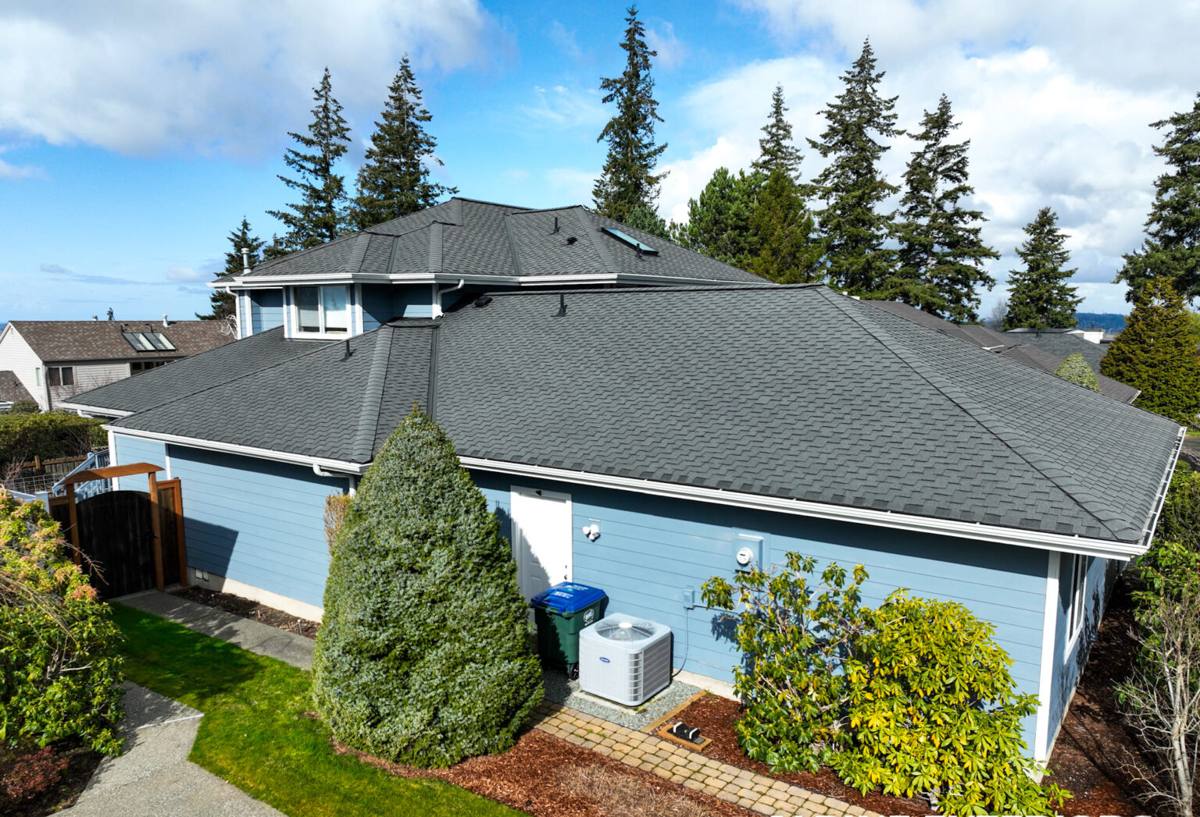
What Salt Air, Rain, and Moss Actually Do to a Deck
It's worth being specific about the failure modes we're designing against, because they're not the same ones a deck in a dry inland climate deals with.
Salt Air and Corrosion
Homes closer to the water pick up airborne salt that accelerates corrosion on anything metal — deck screws, joist hangers, post bases, and railing hardware. Standard zinc-coated fasteners can start rusting from the inside out within a few seasons in a coastal-influenced climate, long before the wood around them shows any obvious problem. The failure is often invisible until a hanger lets go or a screw head shears off during a repair.
Driving Rain and Moisture Intrusion
Rain here doesn't just fall straight down — wind-driven rain gets pushed sideways into ledger connections, under railing posts, and into any gap where flashing was skipped or done poorly. Moisture that gets trapped against the house framing or inside a post base doesn't dry out quickly in our humidity, which is exactly the condition rot needs.
Moss and Algae Growth
Extended damp, shaded conditions during the fall and winter months let moss and algae take hold on decking surfaces, especially on the north side of a house or under overhangs where sun never reaches. Beyond looking bad, moss holds moisture against the board surface and turns a deck into a slip hazard, particularly on stairs.
Choosing Decking Material for a Bellingham Property
There's no single "right" material for every deck — it depends on how much upkeep the homeowner wants to do, how exposed the deck is to weather, and budget. Here's how the common options actually compare in this climate, not just on paper.
| Material | Moisture Behavior | Moss/Algae Resistance | Maintenance | Typical Lifespan Here |
|---|---|---|---|---|
| Pressure-treated wood | Absorbs and releases moisture; prone to cupping if not sealed | Low — needs regular cleaning and sealing | Annual cleaning, re-sealing every 1-2 years | 15-20 years with upkeep |
| Cedar | Naturally moisture-resistant, but surface still needs protection | Moderate — still grows moss if shaded and damp | Cleaning and oil/stain every 1-2 years | 15-25 years with upkeep |
| Composite decking | Doesn't absorb water into the board core | Moderate to good depending on brand/texture | Periodic washing, no staining or sealing | 25-30+ years |
| PVC/capped composite | Fully moisture-sealed surface | Good — smoother caps shed moss more easily | Occasional washing only | 25-30+ years |
Composite and capped-PVC boards tend to make the most sense for decks that stay shaded or damp much of the year, since homeowners aren't stuck re-sealing a deck they can barely get sun on to dry. Real wood still has its place — it's often the right call for a covered deck, a smaller budget, or homeowners who like the natural look and don't mind the maintenance rhythm. Our job is to walk through the actual site conditions with you before recommending one over the other, not to push whatever has the best margin.
The Structural Work Nobody Sees
The decking boards are the part everyone notices, but the details underneath are what determine whether a deck lasts one decade or three in this climate.
Ledger Board Flashing
Where a deck attaches to the house is the single most common failure point we see on older decks. If the ledger board isn't properly flashed with a water-resistant barrier and metal or high-quality flashing tape, wind-driven rain works its way behind it and rots the house framing from the inside — often invisible until siding or interior work exposes it. This connection gets built correctly the first time, every time.
Footings and Post Bases
Frost depth and soil drainage both factor into footing design. Post bases should sit up off the concrete, not embedded directly in it, so water doesn't wick up into the post end grain and sit there. Standing water at the base of a post is one of the fastest ways to rot a structural member that's supposed to last decades.
Joist Protection and Fasteners
Joist tape or an equivalent moisture barrier over the top of each joist keeps water from soaking into the cut edges where deck screws penetrate — those penetration points are where rot typically starts on an otherwise sound joist. Combined with stainless or high-grade coated fasteners and hangers rated for exterior/coastal exposure, this is the difference between hardware that lasts the life of the deck and hardware that needs replacing in year six.
Ventilation and Drainage Below the Deck
Low-clearance and ground-level decks need enough airflow underneath to let framing dry out between rain events. Grading that directs water away from posts and footings, rather than pooling underneath the deck, matters more here than in a drier climate because there just isn't enough dry weather between storms to let mistakes evaporate.
Design Considerations for Local Properties
Beyond the structural basics, a few design choices tend to matter more for homes in and around Bellingham than they would elsewhere.
- Sun exposure and layout: Where possible, orienting a deck or trimming back overhanging vegetation to let in more afternoon sun cuts down significantly on moss growth compared to a deck kept in permanent shade.
- Board spacing and drainage gaps: Slightly wider gapping and correct board spacing help water shed faster and reduce the standing moisture that feeds moss and mildew.
- Railing hardware: Exposed railing posts and connectors take direct weather and salt exposure, so hardware grade matters more here than on a covered porch.
- Stair surfaces: Stairs are the first place moss becomes a safety issue rather than just a cosmetic one — grooved or textured board profiles help here.
- Covered vs. open decks: A partial roof or pergola can meaningfully extend the life of a wood deck and cut down on moss, at the cost of reduced open-sky feel.
Our Custom Deck Process
Every deck we build starts with an honest look at the site, not a sales pitch.
1. On-Site Consultation
We walk the property, look at sun/shade patterns, drainage, existing structure (if it's a rebuild), and talk through how the family actually plans to use the space — entertaining, grilling, a quiet spot off a bedroom, hot tub support, and so on.
2. Design and Material Selection
We lay out size, shape, railing style, and material options based on that site walk, with honest trade-offs explained rather than upsold. If a homeowner wants wood knowing the maintenance commitment, we build it right for that; if low-maintenance is the priority, we steer toward composite or capped-PVC.
3. Permitting
We handle the permit application and inspection scheduling with Whatcom County or the applicable local jurisdiction, so the homeowner isn't stuck navigating that process alone.
4. Construction
Footings, framing, flashing, joist protection, decking, and railing go in, in that order, with the structural details covered above built in from the start rather than treated as optional add-ons.
5. Final Walkthrough
We walk the finished deck with the homeowner, confirm everything meets code and the agreed design, and go over basic care — what to clean, how often, and what to watch for as the seasons change.
Permits and Whatcom County Basics
Most new deck construction and many significant deck rebuilds require a building permit in Whatcom County and within Bellingham city limits, particularly once a deck is attached to the house or exceeds a certain height or size. Requirements can vary based on exact location, lot conditions, and whether the deck is attached or freestanding, so we confirm the specifics for your property rather than assuming. Skipping a required permit can create real problems later — at resale, at insurance claim time, or if the work needs to be inspected for an unrelated issue. We build the permit process into the project from the start so it's never a surprise.
Keeping a Bellingham Deck Ahead of Moss and Rot
A well-built deck still needs some seasonal attention in this climate — the goal is to make that upkeep light and predictable rather than a constant battle.
- Sweep debris and standing leaves off the deck surface regularly through fall, since trapped organic matter is what moss and rot both feed on.
- Rinse or lightly scrub decking at least once or twice a year, more often on shaded sections, to knock back algae and moss before it establishes.
- Check railing posts, stair connections, and ledger areas annually for any soft wood, rust staining, or loose hardware.
- Keep gutters and downspouts near the deck clear so roof runoff isn't dumping extra water directly onto or under the deck.
- Re-seal or re-stain wood decking on the schedule appropriate to the product — waiting too long lets moisture get past a failing finish.
- Trim back vegetation that's keeping sections of the deck in permanent shade, if moss keeps coming back in the same spot.
Why Local Experience in Bellingham Matters
A contractor who mostly builds decks in drier climates may not think twice about ledger flashing detail, fastener grade, or joist protection — because in their normal working conditions, cutting those corners doesn't show up as a failure for years, if ever. In Whatcom County's combination of salt-influenced air, sustained rainfall, and a genuine moss season, those same shortcuts show up fast, usually as a warranty call or a rot repair a few years down the line. Building decks specifically for this area means those details aren't an afterthought — they're the baseline for every project, whether it's a small platform deck or a large multi-level outdoor living space.
If you're planning a new deck or replacing one that's showing its age, we're happy to take a look and talk through what makes sense for your property. Reach out for a free, no-pressure estimate using the form below.