 Blaine Siding
 Window Replacement Built for Sumas Weather
Sumas sits in a part of Whatcom County where windows work harder than they do in most of the country. You get long stretches of driving rain off the water, salt-laden air that finds its way into every gap and seam, and a moss season that stretches from fall clear into spring. None of that is dramatic on any single day. It's the accumulation, year after year, that wears out seals, swells wood sash, and lets moisture creep behind trim where you can't see it. A window that was installed correctly and sealed properly can shrug all of that off for decades. One that wasn't will show it early, usually as fog between panes, soft trim, or a draft that gets worse every winter.
We install and replace windows for homeowners around Sumas and the rest of our Whatcom County service area, and we size up every job with that climate in mind first, before we ever talk about style or trim color. The right window for a home here isn't necessarily the most expensive one in the showroom — it's the one whose materials, glass package, and flashing detail match what this specific stretch of weather actually does to a house.
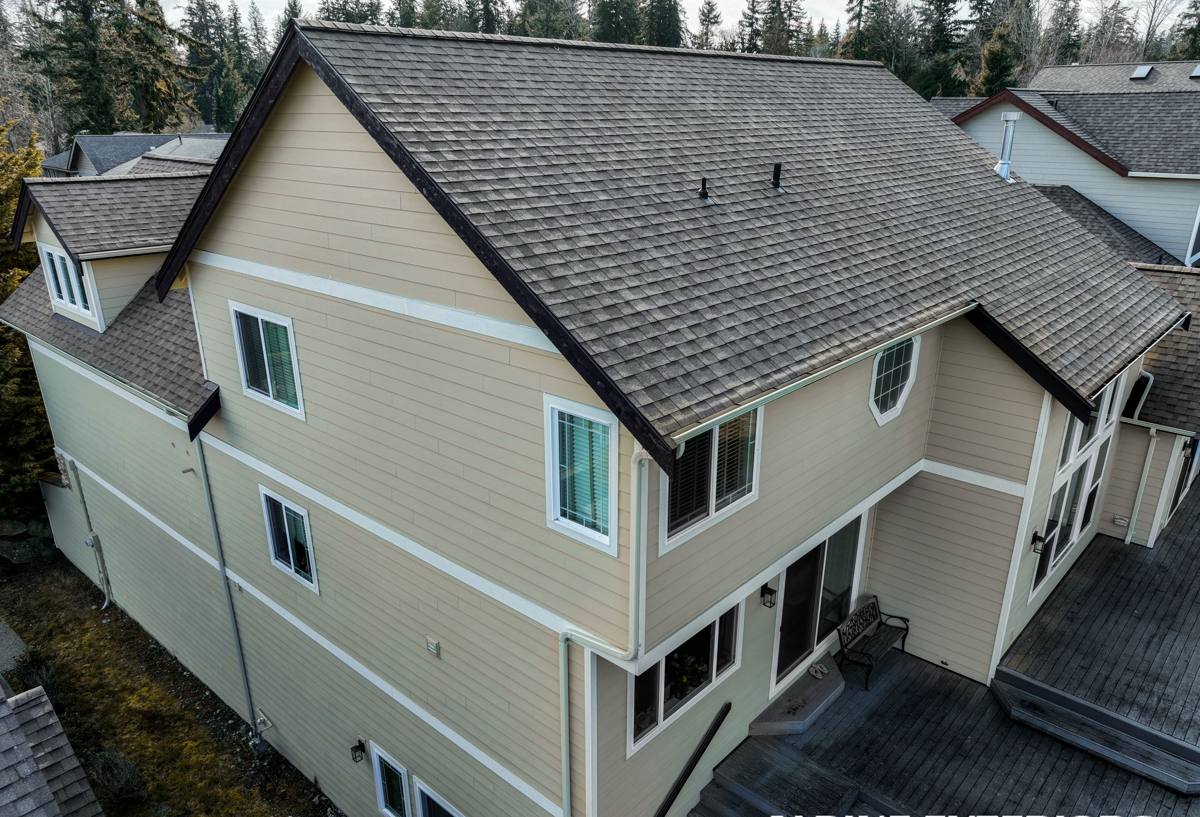
Signs a Sumas Home Needs New Windows
Most window failures don't announce themselves. They show up as small annoyances that quietly get worse. Here's what we're usually called out for locally:
- Fogging or a milky haze between the panes of double-pane glass — the seal has failed and the gas fill is gone
- Windows that are noticeably harder to open, close, or lock than they used to be
- Visible gaps, cracked caulk, or daylight showing around the frame from outside
- Soft, spongy, or discolored wood trim or sill, especially on north- and west-facing walls
- A cold draft near the window even with it fully closed and locked
- Moss or dark streaking building up on the sill or exterior casing faster than the rest of the siding
- Condensation forming on the inside of the glass regularly through fall and winter
Any one of these on its own might just mean a window needs caulking or a new sweep. Several of them together, especially on an older single-pane or early double-pane window, usually means the unit itself has reached the end of its useful life.
What a Correct Window Replacement Actually Involves
Swapping the glass unit is the easy part. What separates a window that lasts from one that fails again in five years is everything around the window — the flashing, the sealant, and how the new unit ties into the existing wall assembly.
Full-Frame vs. Insert Replacement
There are two basic approaches. An insert replacement fits a new window into the existing frame, leaving the old frame, sill, and exterior trim in place. It's faster and less invasive, and it's a reasonable choice when the existing frame is still solid, square, and dry. A full-frame replacement pulls everything out down to the rough opening, including the old frame, so we can inspect and, if needed, repair the framing and sheathing underneath before the new window goes in. Given how much moisture this area sees, we lean toward full-frame more often here than a crew working a drier climate would — it's the only way to actually confirm what's happening behind the trim, not just guess at it.
Flashing and Moisture Management
This is the part that determines whether a window lasts twenty years or five. Every new window opening gets properly flashed — sill pan, jamb flashing, and head flashing installed in the correct shingle-lap order so water is directed out and down, never trapped behind the siding. We use quality sealants at the right joints, not caulk as a substitute for real flashing. Skipping or rushing this step is the single most common reason a "new" window ends up with rot behind it a few years later, and it's invisible from the outside until the damage is already done.
Air Sealing and Insulation
Around the perimeter of the new frame, we seal and insulate the gap correctly — not overpacked with rigid foam that can bow the frame, and not left loose enough to draft. Done right, this is what actually stops the draft you feel standing next to an old window, more than the glass package alone.
Window Materials for This Climate
We install several window materials, and each has real trade-offs worth understanding before you choose, rather than after.
| Material | How It Handles Local Weather | Maintenance | Typical Lifespan |
|---|---|---|---|
| Vinyl | Won't rot or corrode from salt air; performs well against driving rain when installed with proper flashing | Low — occasional cleaning, no painting or sealing | 20–30+ years |
| Fiberglass | Very stable in temperature swings and moisture; strong resistance to warping | Low | 30+ years |
| Wood (clad exterior) | Good insulating properties; exterior cladding protects the wood from rain and salt exposure if seals hold | Higher — interior wood may need periodic finishing; cladding seams need monitoring | 20–30 years, dependent on maintenance |
| Aluminum | Durable but conducts cold and can corrode faster in salt-air exposure over time | Moderate | 15–25 years in coastal-influenced air |
For most Sumas homes, we steer people toward vinyl or fiberglass for the exterior-facing material specifically because they don't give salt air or standing moisture anything to work on. That's not a knock on wood-clad windows — they look great and perform well — but they ask more of the homeowner over time, and we say that up front rather than let someone find out later.
Glass Packages Worth the Extra Cost Here
Double-pane, low-E glass with argon fill is the practical standard for this area now — it cuts heat loss and helps control condensation, which matters when humidity sits high for months at a time. Triple-pane glass is available and does add performance, but for most homes here the jump in cost isn't matched by a proportional jump in comfort compared to a good double-pane low-E unit. We'll walk through the actual difference for your specific walls and orientation rather than upsell a package that doesn't fit the house.
Our Process, Start to Finish
We keep the process straightforward and try not to make you guess what's happening at any point:
- On-site assessment. We look at your current windows, check for moisture or rot at the frames, and talk through what you actually need versus what's optional.
- Written estimate. You get a clear breakdown of materials, scope, and price — no vague allowances.
- Scheduling. We plan around weather where we can, since flashing and sealant work needs a reasonably dry window to install correctly.
- Removal and inspection. Old windows come out, and we check the rough opening and sheathing before anything new goes in.
- Installation. New window set, shimmed level and square, flashed correctly, and sealed.
- Interior and exterior finish work. Trim, caulking, and cleanup so the job looks finished inside and out, not just functional.
- Final walkthrough. We check operation on every window with you before we call the job done.
Why Hire a Crew That Already Works in Sumas
Window replacement done wrong doesn't fail on day one — it fails in year three or four, quietly, behind the trim. A crew that doesn't work this specific climate regularly can get the window itself right and still get the flashing detail wrong, because it's a detail that matters more here than in a dry inland climate. We work homes throughout Whatcom County, including Sumas, and we've seen firsthand what driving rain and a long moss season do to a poorly flashed opening over a few winters. That's not a sales pitch — it's the reason we treat flashing and moisture management as the part of the job that actually matters most, even though it's the part that's invisible once the trim goes back on.
We're also local enough to actually show up if something needs a look after the job is done, rather than being a name from a lead-generation site with no real presence in the area.
What Affects the Cost
We won't quote a number without seeing the job, but these are the factors that actually move the price up or down:
| Factor | Why It Matters |
|---|---|
| Insert vs. full-frame replacement | Full-frame costs more but is often necessary where there's existing moisture damage or an out-of-square opening |
| Window material | Vinyl is typically the most budget-friendly; fiberglass and wood-clad run higher |
| Glass package | Standard double-pane low-E vs. upgraded coatings or triple-pane changes cost per unit |
| Number and size of openings | Larger units and specialty shapes (bay, picture, custom) cost more than standard double-hung sizes |
| Existing damage | Rot or soft framing found during removal adds repair scope before the new window can go in |
| Trim and finish work | Matching existing exterior trim profiles or repainting affects labor and material cost |
Caring for New Windows After Install
A correctly installed window in this climate still benefits from a little regular attention. It's a short list:
- Rinse exterior frames and glass a couple times a year to clear salt residue and grime before it builds up
- Check and clear moss or debris from sills and tracks, especially after the wet months
- Inspect exterior caulking annually and touch up any spots that have cracked or pulled away
- Make sure gutters and downspouts near window openings are clear so water isn't sheeting across the glass and frame
- Operate locks and hardware periodically so mechanisms don't seize from disuse
None of this takes much time, and it goes a long way toward getting the full lifespan out of the investment.
Get a Straight Answer for Your Home
Every house in Sumas sits a little differently — sun exposure, wind direction, age of the existing windows, and how the last installer handled flashing all factor in. We'd rather look at your specific windows and give you an honest read than guess over the phone. If you're seeing drafts, fogged glass, or trim that's starting to look rough, reach out for a free, no-pressure estimate. We'll walk the house with you, point out what actually needs attention, and lay out your options in plain terms.