 Blaine Siding
 Birch Bay Roofs Deal With a Different Kind of Wear
Birch Bay sits right on the water in Whatcom County, and that location shapes everything about how a roof ages here. Salt-laden air off the bay works on exposed metal — nail heads, flashing, gutter fasteners — faster than it would a few miles inland. Add in the long stretch of wet months typical of this part of Washington, where roofs can stay damp for days at a time, and you get ideal conditions for moss and moisture to find every weak point in a roof system. None of this means Birch Bay roofs fail early. It means they need repairs that actually account for the environment, not a generic patch job that was designed for a drier climate.
We work on roofs in this area regularly, and the repair calls we get tend to cluster around a handful of causes: wind-driven rain finding its way past aging flashing, moss holding moisture against shingles longer than it should sit there, and corrosion quietly weakening fasteners and metal edges. Understanding those patterns is what separates a repair that lasts from one that gets you through the next storm and not much further.
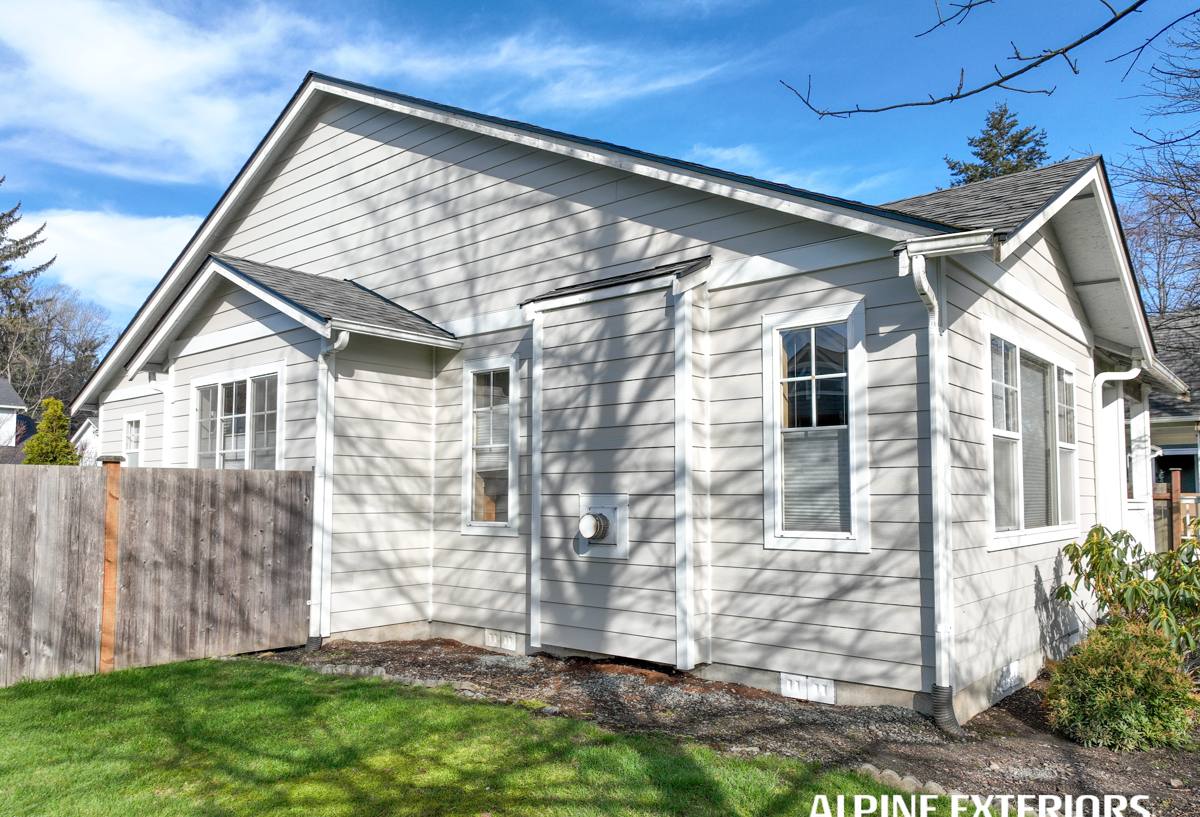
Signs Your Roof Needs Attention
Most roof problems in Birch Bay don't show up as a dramatic leak on day one. They start small and get worse through a wet season. Homeowners who catch these signs early usually end up with a simple repair instead of interior water damage.
- Dark streaking or thickening moss growth, especially on north-facing slopes that stay shaded and damp
- Granules collecting in gutters or at downspout outlets, which signals shingle wear
- Soft or discolored ceiling patches, particularly near chimneys, skylights, or where two roof planes meet
- Curling, cracked, or lifted shingle edges after a windy winter
- Rust staining running down from metal flashing or vent boots
- Visible gaps or lifted seams where flashing meets a wall, chimney, or dormer
- Sagging or spongy spots when walking the roof or attic decking
If you notice more than one of these at once, it's worth having someone look before the next round of storms rolls through.
The Repairs We Make Most Often in Birch Bay
Moss and Debris Removal Done Without Damage
Moss is more than a cosmetic issue on a coastal roof. It holds water against the shingle surface, breaks down the granule layer, and works its way under tabs and shingle edges over time. The fix isn't a pressure washer — that strips granules and can drive water under shingles. We remove moss by hand or with low-pressure methods, treat the area to slow regrowth, and check what's underneath for damage the moss was hiding.
Flashing Repair and Replacement
Flashing around chimneys, skylights, vent pipes, and roof-to-wall transitions is where most leaks actually start, not in the open field of shingles. Salt air accelerates corrosion on lower-grade metal and fasteners, so flashing that looks fine from the ground can have pinholes or lifted seams up close. We re-seat, re-seal, or replace flashing depending on its condition, matching the material to what holds up in this environment.
Shingle and Shake Repair
Wind events off the bay can lift or crack individual shingles without taking out a whole section. We replace damaged shingles individually where possible, matching color and profile as closely as the existing roof allows, rather than defaulting to a larger tear-off when it isn't needed.
Valley and Penetration Sealing
Valleys carry a heavy volume of water during Whatcom County's wetter months, and any weak seam there shows up fast as a leak. We check valley metal and underlayment for wear and reseal or rebuild sections that are letting water through, along with resealing pipe boots and vent penetrations that have dried out or cracked in the sun and salt exposure.
Quick Patch vs. a Correct Repair
Not every repair is created equal, and on a coastal roof the difference shows up within a season or two, not years.
| Approach | What It Actually Does | Typical Result in Birch Bay's Climate |
|---|---|---|
| Surface caulk or tar patch | Covers a visible gap without addressing what's underneath | Breaks down quickly under UV and salt air; leak often returns within one to two wet seasons |
| Spot shingle swap only | Replaces the damaged piece but ignores surrounding flashing or underlayment | Looks fixed, but water can still enter around the edges it didn't check |
| Diagnosed, full-scope repair | Traces the leak to its source, replaces flashing/underlayment as needed, matches materials properly | Holds up through storm seasons and doesn't require repeat visits for the same issue |
We always aim for the third option. A repair that only addresses what's visible from the ground tends to cost more in the long run once you count the return trips.
Repair or Replacement? How We Help You Decide
Not every roof problem in Birch Bay calls for a full replacement, and we won't tell you it does when a targeted repair will genuinely hold. At the same time, there's a point where repeated repairs cost more than addressing the roof as a whole. A few factors that go into that call:
| Factor | Leans Toward Repair | Leans Toward Replacement |
|---|---|---|
| Roof age | Well within its expected lifespan for the material | Near or past the material's typical service life |
| Extent of damage | Isolated to one area — a flashing detail, a section of shingles | Spread across multiple slopes or recurring in the same spots |
| Underlying decking | Solid, no soft spots found during inspection | Soft, rotted, or showing water staining across a wide area |
| Repair history | First or second repair call in several years | Same leak location repaired more than once already |
We'll walk you through what we actually find on your roof and give you a straight answer, including when repair is the right and more affordable call.
Our Roof Repair Process
- Inspection first. We get on the roof, not just the ladder, and check flashing, valleys, penetrations, and the general shingle field — not only the spot you called about.
- Diagnosis, explained plainly. We tell you what's actually causing the issue and show you what we found before any work starts.
- Written scope and estimate. You know what's being repaired, with what materials, before we begin.
- The repair itself. Old sealant, damaged shingles, or failed flashing is removed rather than covered over, and replaced with materials suited to a coastal climate.
- Final check. We confirm surrounding areas — gutters, adjacent flashing, nearby shingles — are also sound before we call the job done.
Materials That Hold Up Near the Bay
Material choice matters more here than it does in drier, inland parts of the state. We favor corrosion-resistant flashing and fasteners over lower-grade options, since standard materials can pit and rust noticeably faster this close to salt water. For sealants, we use products rated for sustained moisture exposure and UV, not general-purpose caulk that hardens and cracks within a year or two of coastal weather. When matching shingles or shakes to an existing roof, we account for sun and salt fading on the older material so a repaired section doesn't stand out more than it needs to.
We're upfront when a cheaper material would save money short-term but cost more in return visits — that's a trade-off we'd rather explain than let you discover the hard way.
Why It Matters That We Already Work in Birch Bay
A roofing crew unfamiliar with this stretch of coastline will treat your roof the same way they'd treat one in a dry inland neighborhood. That's how you end up with sealants that fail early, flashing that wasn't rated for the salt exposure, or moss treatment that misses how quickly it comes back here. Working Birch Bay and the surrounding Blaine area regularly means we already know which details fail first in this climate, what materials actually hold up, and how tree cover and shaded lots affect how long moss and moisture sit on a given roof.
It also means we're not guessing at access — narrow lots, private roads, and tree-lined driveways common in this area are things we plan for ahead of time rather than figuring out on arrival.
Keeping a Repaired Roof in Good Shape
A good repair buys you years, but a little upkeep between visits stretches that further, especially in a climate that never really dries out for long.
- Clean gutters and downspouts at least twice a year so water isn't backing up under roof edges
- Trim overhanging branches that keep shaded roof sections damp and feed moss growth
- Have moss addressed while it's light growth, not once it's thick and established
- Walk the yard after major windstorms and look for shingle debris or lifted flashing from the ground
- Schedule a roof check-up every couple of years even without an obvious problem, since flashing and sealant wear before shingles usually show visible damage
If you're seeing moss buildup, a stain on a ceiling, or just want a straight assessment of where your roof stands, we're happy to take a look. Reach out for a free, no-pressure estimate using the form below.