 Blaine Siding
 Windows Built for Life Near the Water
Blaine Harbor sits right where wind off the water meets whatever weather the Pacific throws at Whatcom County that week. Homes here take a different kind of beating than houses even a few miles inland: salt-laden air off the bay works into hardware and finishes, wind-driven rain gets pushed sideways into gaps that would stay dry elsewhere, and the long wet season keeps moss and algae established on north- and west-facing surfaces for most of the year. Windows are usually the first place all of that shows up, because a window is really just a controlled hole in the wall, and every seam, seal, and fastener around it is a place water and salt air can find a way in.
A window that was installed correctly for a drier, more sheltered site can still fail early in a spot like Blaine Harbor. That's not usually a sign of a bad window — it's a sign the installation wasn't matched to the exposure. Getting it right here means paying closer attention to flashing, drainage, and material choice than you would on a typical inland job.
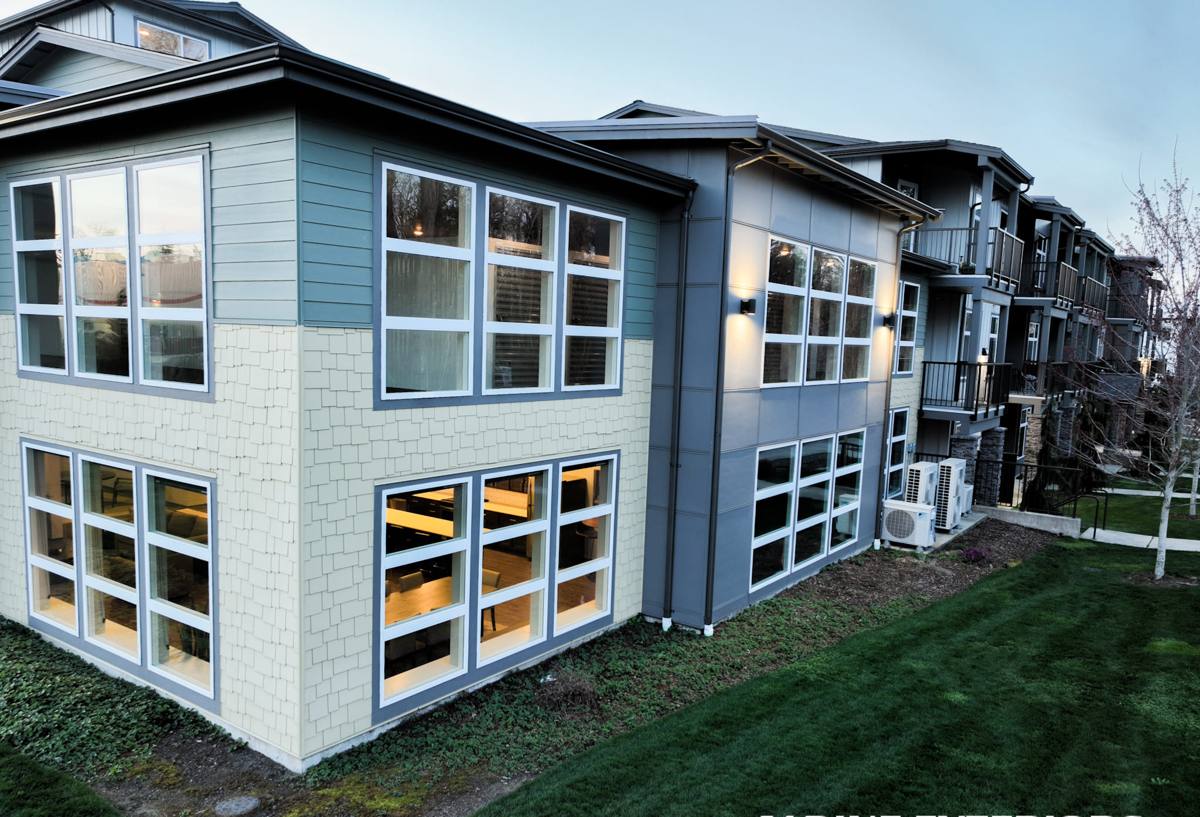
What Blaine Harbor's Climate Actually Does to a Window
Salt Air and Corrosion
Even a few blocks back from the water, airborne salt settles on window hardware, screens, and exposed fasteners. Over years, that accelerates corrosion on lower-grade hinges, cranks, and cladding fasteners, and it can dull or pit finishes that would otherwise last decades. This is a material selection issue as much as an installation one — some hardware and cladding metals simply hold up better in a marine-influenced environment than others.
Driving Rain
Storms off the Salish Sea don't just fall — they push. Wind-driven rain hits window assemblies at an angle, forcing water into any gap in the flashing or sealant that a calmer climate might never test. This is why flashing detail and drainage planes matter more here than the brand name on the window itself. A window can be excellent and still leak if the water management around it wasn't built for sideways rain.
Moss and Prolonged Moisture
Whatcom County's wet season runs long, and shaded or north-facing walls near the harbor often stay damp for weeks at a stretch. That kind of sustained moisture is what lets moss and algae take hold on sills, trim, and siding around a window opening. Once organic growth is established, it holds moisture against wood and paint even longer, which is exactly the wrong thing to have happening at a window's weakest points — the sill and the bottom corners of the frame.
Signs a Blaine Harbor Home's Windows Need Attention
- Fogging or a hazy film between the panes of a double-pane window (a failed seal, not a cleaning issue)
- Soft or discolored wood at the sill or bottom corners of the frame
- Visible moss, algae, or black staining collecting on the sill or exterior trim
- A noticeable draft or whistle during windy, wet weather
- Hardware — cranks, locks, hinges — that's stiff, pitted, or corroded
- Paint or finish that's bubbling, peeling, or chalky right around the window opening
- Interior condensation on the glass or frame that wasn't there a few years ago
Any one of these on its own might be minor. Several showing up on the same window, or on multiple windows on the same exposure, usually points to a water management problem at the opening rather than just an aging window.
What a Correct Installation Involves
Flashing and Water Management
This is the part of a window installation nobody sees once the trim goes back on, and it's the part that matters most in a driving-rain climate. Proper installation means flashing tape and a drainage path that shed water back out of the wall assembly rather than trapping it behind the window, plus a sill pan that gives any water that does get past the frame somewhere to go besides into the framing.
Fastening and Shimming
A window has to be plumb, level, and square, and shimmed so it isn't relying on the fasteners alone to hold its shape. An out-of-square frame stresses the sash and hardware over time, which is exactly what shortens the life of cranks and locks that are already fighting salt air.
Interior and Exterior Sealing
Sealant belongs on both the interior and exterior, and it needs to be the right type for the surface — not just whatever caulk is on the truck. Interior air sealing controls condensation and drafts; exterior sealant is the last line of defense against wind-driven rain, and it has to be paired with, not used instead of, proper flashing.
Choosing a Window for a Marine-Influenced Site
There's no single "best" window material — the right choice depends on exposure, budget, and how much upkeep a homeowner wants to take on. Here's how the common options generally hold up in a salt air, high-rain environment like Blaine Harbor:
| Material | Coastal/Marine Performance | Maintenance | Notes |
|---|---|---|---|
| Vinyl | Good corrosion resistance; won't rust or rot | Low | Budget-friendly; quality varies widely by manufacturer and hardware grade |
| Fiberglass | Very good; stable in wet, salty conditions | Low | Higher upfront cost; holds paint and finish well over time |
| Wood, clad exterior | Fair to good, dependent entirely on the cladding and joinery | Moderate to high | Attractive interior wood; exterior cladding must be fully sealed at every joint |
| Aluminum | Fair; conducts cold and can corrode without a marine-grade finish | Moderate | We recommend it selectively here and only with the right coating |
Hardware matters as much as frame material. We favor stainless or corrosion-resistant hardware packages on harbor-area jobs, because standard-grade cranks and hinges are usually the first thing to fail in salt air, regardless of how good the window itself is.
Our Process for a Blaine Harbor Window Installation
- On-site assessment. We look at each window's exposure — which walls take direct wind-driven rain, which stay shaded and damp longer — before recommending materials or a scope of work.
- Removal and opening prep. We check the framing and sill for hidden rot or past water damage once the old window is out, since this is often the only chance to catch a problem before it's sealed back up for another decade.
- Flashing and sill pan installation. This step is done to the same standard regardless of window price point, because it's what actually keeps the wall dry.
- Window setting, shimming, and fastening. Set plumb, level, and square, and fastened per the manufacturer's instructions so the warranty stays intact.
- Interior and exterior sealing, trim, and cleanup. Final sealant pass, trim reinstalled or replaced as needed, and the site cleaned up before we walk it with the homeowner.
Cost Factors Specific to Harbor-Area Homes
Every estimate is specific to the house, but a few factors come up more often on Blaine Harbor jobs than elsewhere in the county:
| Factor | Why It Affects the Job |
|---|---|
| Hidden sill or framing rot | Not knowable until the old window is out; adds carpentry time if found |
| Wind exposure of the wall | Windward walls warrant more careful flashing detail and sometimes upgraded sealants |
| Hardware grade | Corrosion-resistant hardware costs more up front but avoids early hardware failure |
| Full-frame vs. insert replacement | Full-frame allows a fresh flashing job; insert reuses the existing frame and is faster but depends on that frame being sound |
| Number and size of openings | Straightforward, but larger or custom-sized windows take more lead time to order |
Why a Crew That Knows Blaine Harbor Matters
A contractor who mostly works drier, inland neighborhoods can still do a technically correct window installation and have it underperform here, simply because they didn't plan for wind-driven rain hitting the wall at an angle or for how long a shaded sill stays wet in a Whatcom County winter. A crew that already works this waterfront area knows which walls on a typical harbor-area house take the worst of it, checks framing in those spots more carefully, and doesn't treat flashing as an afterthought.
That local pattern-recognition doesn't show up on a spec sheet, but it's a big part of why some window installations last twenty-plus years in this climate and others start showing seal failures or soft sills within five.
Maintaining New Windows Through Moss Season
A correct installation gets a window off to a good start, but a little seasonal upkeep protects that investment, especially through the wetter months:
- Clear moss, algae, or debris off sills and tracks before it holds moisture against the frame
- Check that weep holes on the exterior of the frame are clear so water can drain out as designed
- Rinse salt residue off exterior hardware and glass periodically, especially on the sides facing the water
- Re-caulk any exterior sealant joints that look cracked or pulled away, rather than waiting for a leak
- Operate cranks and locks a few times each season so hardware doesn't seize up between uses
If you're weighing whether it's time to replace a window or two, or you'd like a straight answer on what's driving the wear on your current ones, we're happy to take a look. Reach out for a free, no-pressure estimate using the form below.