 Blaine Siding
 What Custer's Climate Does to Siding
Custer sits in the part of Whatcom County where three weather patterns overlap: salt-laden air drifting in off Birch Bay and the Strait of Georgia, heavy driving rain off the Pacific storm track, and long stretches of shaded, moisture-trapping conditions under the fir and cedar cover that surrounds a lot of the area's rural properties. Any one of those is manageable for a siding system. All three together, for months at a time, is what actually wears a house down.
Salt air accelerates corrosion on anything metal — fasteners, flashing, trim edges — and it also breaks down cheaper paint films faster than inland exposure would. Driving rain, the kind that comes in sideways during a winter frontal system, doesn't just wet the siding face; it tests every seam, joint, and penetration for whether water was actually kept out or just slowed down. And the long moss season here — realistically September through May on north- and west-facing walls that don't get much sun — means siding spends most of the year damp, not just rained on.
That combination is exactly why we tell Custer homeowners that siding choice isn't cosmetic. It's a decision about what's going to be holding water, salt, and organic growth against your wall sheathing for the next twenty or thirty years.
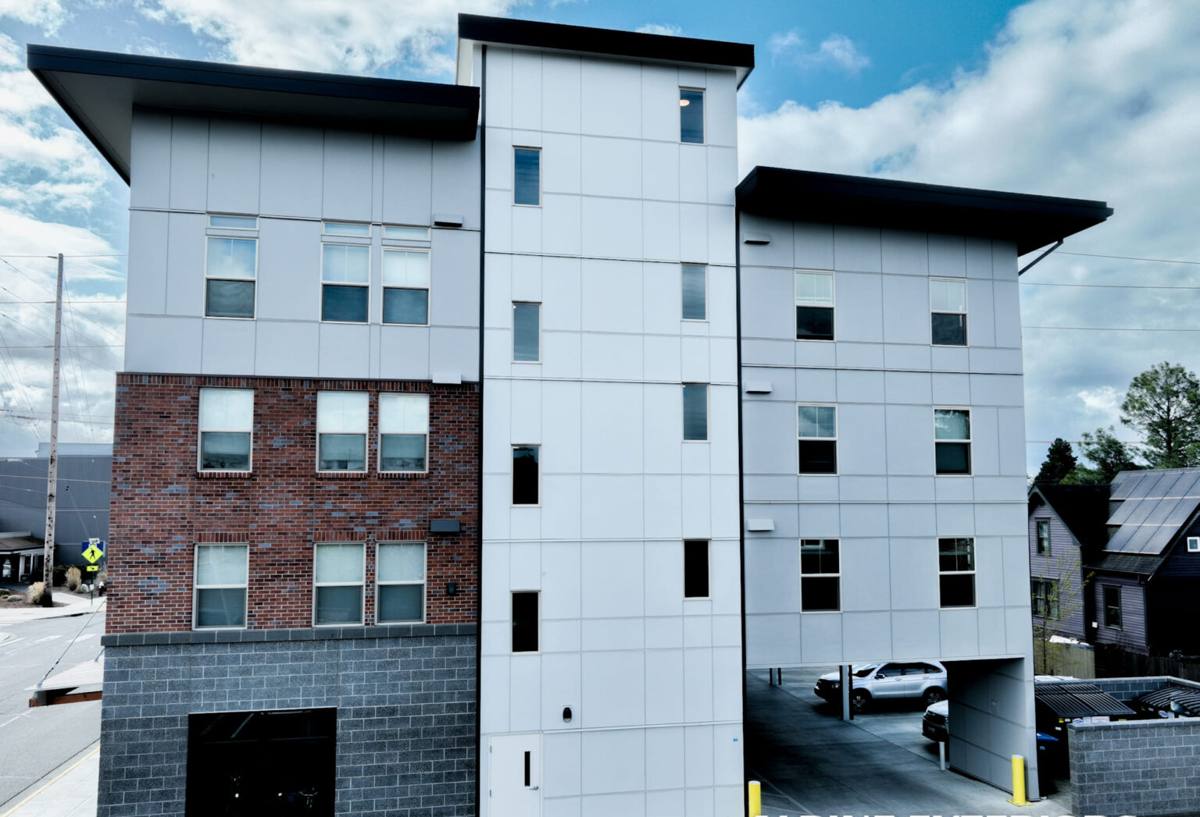
Why This Company Installs Only James Hardie
We don't install LP SmartSide, vinyl, Cemplank, Allura, primed spruce, or cedar. That's not a marketing position — it's a standard we set because of what we've seen these products do, or fail to do, in exactly this kind of climate.
Wood-based and OSB-based sidings have to be sealed on every cut edge, every time, or moisture finds a way in and the substrate softens from the inside out — a slow failure that's often invisible until the siding is already compromised. Vinyl expands and contracts more than fiber cement in temperature swings, can warp or crack in wind-driven debris, and its color is baked into a thin surface layer that fades unevenly over time. Cedar is a beautiful, honest material, but it demands a maintenance schedule — restaining, resealing, checking for rot at grade — that most homeowners don't sign up to actually keep.
James Hardie fiber cement doesn't have those weaknesses. It's non-combustible, it doesn't rot or delaminate from moisture the way wood-based products can, and its ColorPlus factory finish is baked on through multiple coats rather than applied on site, which matters enormously in a climate where a lot of the year is spent wet. That's the whole reason we standardized on it, and it's why every Custer job we do starts with Hardie product on the truck and nothing else.
What a Correct James Hardie Install Actually Involves
Fiber cement siding is only as good as the assembly behind it. The board itself resists moisture and rot; the water management system built underneath it is what keeps your walls dry. On a Custer property, given the rain and moss exposure, we treat these details as non-negotiable, not optional upgrades.
Weather-Resistive Barrier and Rain Screen
Every install starts with a continuous weather-resistive barrier over the sheathing, lapped correctly at seams so water sheds down and out rather than into the wall. On homes with heavier moss and shade exposure, we use a drainage gap (a rain screen) behind the siding so that any moisture that does get past the outer layer has somewhere to drain and dry, instead of sitting against the back of the board.
Flashing and Penetrations
Windows, doors, hose bibs, vents, light fixtures — every penetration through the siding is a place water can travel. Correct flashing detail at each one, installed before the siding goes on (not caulked over afterward as a substitute), is what actually keeps driving rain out during a real winter storm.
Fastening and Clearances
James Hardie specifies fastener type, spacing, and placement for a reason — get it wrong and you either void the warranty or create stress points where the board can crack. We also hold the manufacturer's minimum clearance between siding and grade, decks, and roof lines, which matters more here than in drier climates because splash-back and standing moisture at those transitions are what feed moss and mildew growth first.
Caulking and Joints
Where caulk is used, it's a sealant rated for exterior fiber cement joints, applied at manufacturer-specified locations only — not as a blanket fix for gaps that should have been cut and fitted correctly in the first place. Over-reliance on caulk is one of the most common shortcuts we see on prior installs we get called out to repair.
Choosing the Right Hardie Product Line for Custer's Exposure
James Hardie makes several product lines, and part of doing this job right is matching the line to the wall's actual exposure — sun, shade, wind-driven rain, proximity to grade — rather than defaulting to one product for the whole house.
| Product | Best suited for | Why it fits Custer conditions |
|---|---|---|
| HardiePlank lap siding | Most wall areas, standard exposure | Widely proven in Pacific Northwest rain and salt-air exposure; available in HZ5 formulation engineered for wetter, colder climates |
| HardiePanel vertical siding | Gables, accent walls, modern facades | Fewer horizontal laps means fewer joint lines for driving rain to test |
| HardieShingle siding | Accent gables, dormers, architectural detail | Gives shadow-line texture without the maintenance burden of real cedar shingle |
| HardieTrim boards | Corners, window and door casing, fascia | Resists the swelling and rot that wood trim develops fastest at ground-facing and shaded corners |
For most Custer homes, we spec the HZ5 formulation of Hardie's products, engineered specifically for climates with freeze-thaw cycling and sustained moisture — which describes a Whatcom County winter well.
What Drives the Cost of a Custer Siding Job
Every home is different, but the same handful of factors move the price up or down on most jobs we quote in this area.
| Factor | Why it matters here |
|---|---|
| Wall exposure and complexity | Homes with more gables, dormers, and cut-ins take longer to flash and trim correctly |
| Existing siding removal | Tear-off of old cedar, T1-11, or damaged siding adds labor and disposal cost |
| Sheathing condition | Moisture-damaged sheathing found under old siding has to be repaired before new siding goes on — common on older Custer properties near shaded, damp walls |
| Product line and finish | Panel vs. lap vs. shingle accents, and ColorPlus vs. field-painted, affect material cost |
| Rain screen and drainage detailing | Added on north- and west-facing walls with heavy shade or moss history |
Our Process on a Custer Job
- Walk-through and exposure assessment — we look at which walls take the worst weather, where moss has already established, and where prior water damage shows up around windows, trim, and grade lines.
- Written estimate — product lines, drainage detailing, and scope spelled out plainly, no vague allowances.
- Tear-off and sheathing check — old siding comes off and the sheathing underneath gets inspected before anything new goes up, so hidden rot doesn't get sealed behind new siding.
- Weather barrier and rain screen installation — done to manufacturer spec, not shortcut.
- Hardie siding, trim, and flashing installation — fastened, spaced, and clearanced to James Hardie's published requirements.
- Final walk-through — we go over the finished work with you before calling the job done.
Why Hiring a Crew That Already Works in Custer Matters
A crew that mostly works drier, more sheltered areas will still build a technically fine wall assembly — but they may not think to add a rain screen on a shaded north wall, or size gutters and flashing for the kind of sustained, wind-driven rain that comes through this part of Whatcom County several times a winter. Local experience means we've already seen where moss establishes first, which wall orientations take the worst of the salt air off Birch Bay, and which older homes in the area are hiding moisture damage behind siding that looked fine from the street. That's knowledge you can't get from a spec sheet — it comes from working this specific climate, on this specific kind of housing stock, repeatedly.
Keeping Your Siding Right After Installation
James Hardie siding installed correctly needs very little upkeep, but "very little" isn't "none" — especially in a climate that grows moss on almost anything that sits still.
- Rinse siding with a garden hose once or twice a year, focusing on shaded north- and west-facing walls where moss and mildew take hold first
- Keep gutters clear so overflow doesn't run down the wall face during heavy rain events
- Trim back shrubs and tree limbs so walls get airflow and some sun exposure to slow moss growth
- Check caulking at trim joints and penetrations every year or two, and have any cracked or missing sealant replaced promptly
- Address any impact damage (from debris, equipment, or storms) quickly so water doesn't get behind the panel at the damaged spot
- Avoid pressure washing directly at siding joints and edges — it can force water behind the panel
What to Ask Before You Hire Anyone for This Job
Whoever you choose to side your Custer home, ask direct questions before signing anything:
- Are you a certified or factory-trained James Hardie installer, and can you explain your fastening and clearance details specifically?
- Will you install a rain screen or drainage gap on shaded and heavily exposed walls, and where?
- What's your plan for checking sheathing condition once old siding comes off?
- What warranty covers the labor, separate from James Hardie's product warranty?
- Can you walk me through why you're recommending a specific product line for each wall, not just the house as a whole?
A contractor who can answer those clearly, without hedging, is one who actually understands the assembly — not just the product name.
If your Custer home's siding is showing moss buildup, cracked caulking, soft spots near grade, or you're just planning ahead for a replacement, we're glad to walk the property with you and give you a straight, no-pressure estimate using the form below.