 Blaine Siding
 Deck Repair in Sumas: Built for the Weather You Actually Get
A deck in Sumas doesn't fail the way a deck fails in a dry climate. Out here, the damage is almost always moisture-driven — wood that stays wet too long, hardware that corrodes from the inside out, and surfaces that grow a slick coat of moss before anyone notices the boards underneath are softening. Whatcom County's long wet season, the driving rain that comes off the Pacific systems, and the salt-tinged marine air that moves inland through the valleys all add up to a slow, steady wear pattern that's different from what you'd see on a deck built in a drier part of the state. Repairing a deck here means understanding that pattern, not just patching whatever board looks bad.
This page is specifically about deck repair for homes in and around Sumas — not a generic overview. If you're trying to figure out whether your deck needs a few boards replaced or a full structural rebuild, or you just want to understand what a contractor should actually be doing when they're out there, this is written for that.
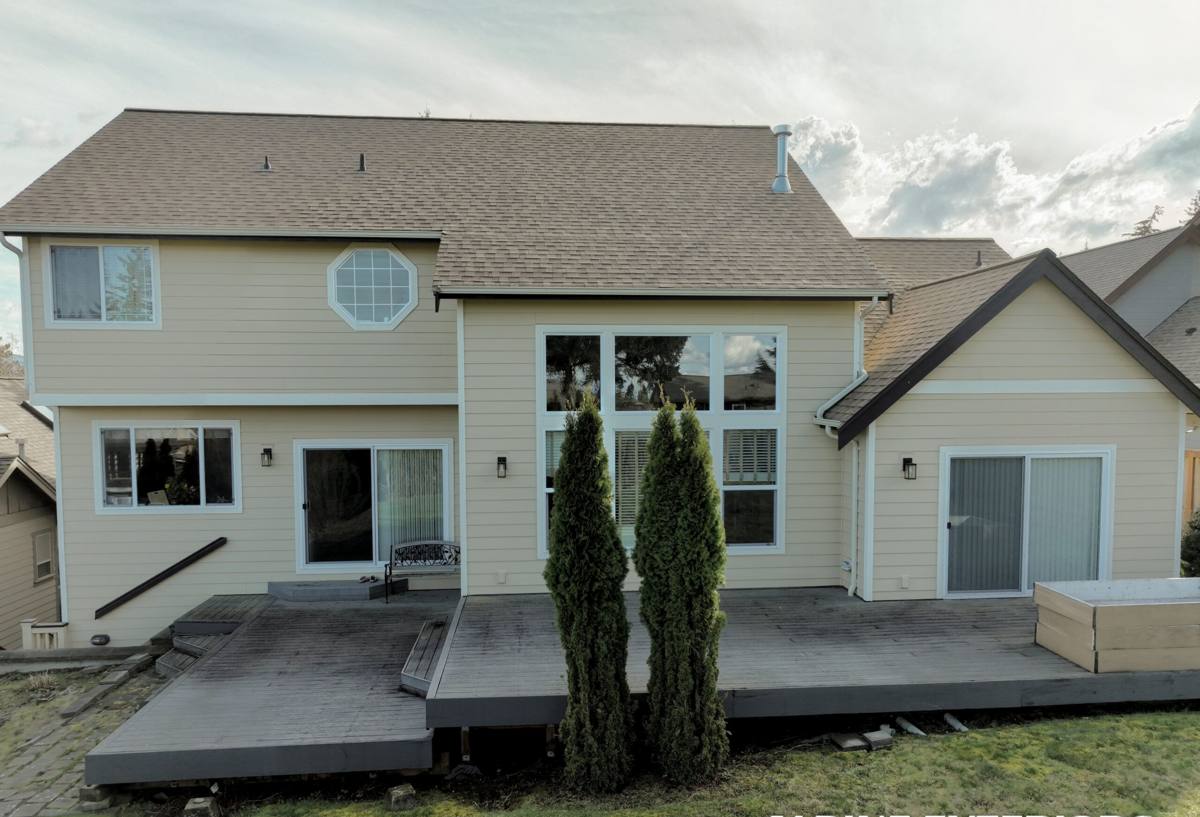
Why Sumas Decks Take a Particular Kind of Beating
Sumas sits in a part of Whatcom County that gets a long, wet stretch of the year with limited direct sun on north- and east-facing decks, which means moisture doesn't evaporate off the surface the way it would in a sunnier climate. Add the driving rain that comes with fall and winter storms — rain that hits decks at an angle and gets driven under railings, around post bases, and into end grain — and you get a deck that's rarely fully dry for months at a time.
That combination creates three specific problems homeowners run into again and again:
- Moss and algae growth that holds moisture against the wood surface and turns walking surfaces slippery, especially on shaded decks or ones tucked under overhangs.
- Fastener and hardware corrosion — screws, joist hangers, and bolts that were fine for years start rusting and losing grip once they're exposed to the region's damp, salt-influenced air for long enough.
- Hidden rot at connection points — ledger boards, post bases, and stair stringers — where water collects and sits instead of running off, often invisible from the surface until the wood is already soft.
None of this is a defect in a particular deck. It's what this climate does to any exterior wood structure over enough years, and it's exactly why deck repair here needs to focus as much on connections and hardware as it does on the boards you can see.
Signs a Deck Needs Repair — And Which Ones Mean "Now"
Some deck problems are cosmetic and can wait for a normal maintenance cycle. Others are structural and shouldn't wait at all. Here's a practical way to sort them:
- Soft or spongy decking boards — press a screwdriver into suspect spots; if it sinks in easily, that board (and possibly what's under it) needs attention soon.
- Rust streaks below fasteners — a sign the hardware is corroding and losing holding strength, even if the board around it looks fine.
- Persistent moss or dark staining that comes back within weeks of cleaning — usually means the deck isn't drying between rains, which points to a drainage or ventilation issue, not just a cleaning problem.
- Wobble or movement at the railing — railings should not flex noticeably when leaned on; movement usually means a loose post connection or rotted blocking.
- Gaps or separation where the deck meets the house (the ledger board) — this is one of the most serious signs, since a failing ledger connection is a structural safety issue, not a cosmetic one.
- Stair stringers that flex or creak under normal foot traffic.
The first three items on that list are things a homeowner can reasonably keep an eye on themselves. The last three — railing movement, ledger separation, and stringer flex — are structural and worth a professional look sooner rather than later, especially heading into the wetter months when the problem will only get worse under continued rain.
Repair vs. Replace: How We Actually Make That Call
| Factor | Leans Toward Repair | Leans Toward Replacement |
|---|---|---|
| Extent of rot | Isolated boards or a single connection point | Rot found at multiple structural points (ledger, joists, posts) |
| Age of structure | Framing is under 15-20 years old and sound | Framing is original to an older home and was never upgraded |
| Code compliance | Existing structure already meets current guardrail and connection standards | Older railing height, spacing, or ledger attachment doesn't meet current code |
| Cost relative to new build | Repair cost is a fraction of a full rebuild | Repair cost approaches 50-60% or more of rebuild cost |
| Homeowner's plans | Deck is the right size and layout already | Homeowner wants a different footprint, size, or material anyway |
We'll always tell you honestly when a deck is a better candidate for a rebuild than a repair. Patching a structure that's failing at multiple points doesn't save money in the long run — it just delays a bigger job and adds a false sense of security in the meantime.
What a Proper Deck Repair Actually Involves
A repair that's done right addresses the cause, not just the symptom. That generally breaks down into a few categories of work:
Structural Framing and Connections
This is the part that doesn't show but matters most: joists, beams, posts, and especially the ledger board where the deck attaches to the house. Ledger connections need proper flashing to keep water from tracking behind the siding and into the house framing — a detail that's frequently missing or degraded on older decks. Any repair that touches the ledger is also a chance to correct flashing that was never installed properly in the first place.
Fasteners and Hardware
Given how much corrosion plays a role in this climate, hardware gets replaced with corrosion-resistant fasteners and joist hangers rated for exterior, wet-service use — not just whatever matches what's already there. Reusing old fasteners in a repair is a shortcut that shows up again in a few years.
Decking Surface
Individual boards get replaced where they're soft, cupped, or split. We also look at board spacing and fastening pattern — boards installed too tight together don't drain or dry properly, which is part of why moss takes hold faster in some spots than others.
Railings and Guards
Railing posts get checked for solid attachment to the framing below, not just to the surface decking. A railing that's only screwed into a rim joist or fascia board without solid blocking behind it is a common failure point we find during repairs.
Stairs
Stringers are checked for rot at ground contact points and proper attachment at both the top and bottom. Stair stringers touching soil or sitting in standing water are a frequent source of hidden rot in this region.
Common Decking Materials We Work With — and How They Hold Up Here
| Material | Moisture Behavior | Maintenance Needed | Notes for This Climate |
|---|---|---|---|
| Pressure-treated fir/pine | Resists rot when properly rated and sealed; end cuts are the weak point | Periodic sealing/staining; re-seal cut ends | Budget-friendly, most common for structural framing |
| Cedar | Naturally rot- and insect-resistant, but softer surface | Regular sealing to maintain resistance; can gray without upkeep | Good moss resistance but still needs airflow underneath |
| Composite decking | Won't rot, but can trap moisture against framing if not vented properly | Low surface maintenance; occasional cleaning for algae film | Framing underneath still needs to be real wood, treated and vented correctly |
| Older/reclaimed lumber | Variable — depends entirely on prior treatment and exposure | Case-by-case | Common in older Sumas homes; usually needs full assessment before repair |
We don't push a single "best" material on every job. The right choice depends on your budget, how much upkeep you want to do, and what's already there. What we won't do is install decking surface without making sure the framing underneath is treated, fastened, and ventilated correctly — a nice composite surface over rotting joists just hides a bigger problem for a few more years.
Our Repair Process
- On-site inspection. We walk the full deck — surface, railings, stairs, and underneath where accessible — checking connection points, not just visible board condition.
- Written scope and honest recommendation. You get a clear explanation of what needs to happen, what's optional, and what we'd flag as urgent, along with a straightforward repair-vs-replace opinion if it's relevant.
- Permit check. If the repair involves structural changes — footings, ledger reattachment, or railing height changes — we handle checking what Whatcom County or the local jurisdiction requires before work starts.
- Repair work. Framing and connections first, then decking surface, then railings and stairs. We replace hardware with corrosion-resistant fasteners as part of the job, not as an upsell.
- Cleanup and walkthrough. We walk the finished repair with you so you know exactly what was done and what to watch for going forward.
Keeping a Repaired Deck From Needing the Same Repair Again
A repair is only as good as what happens after it. In a climate with this much moss season and driving rain, a little seasonal upkeep goes a long way toward not repeating the same repair in five years:
- Sweep debris out of gaps between boards regularly — trapped leaves and needles hold moisture against the wood.
- Treat visible moss growth early in the season before it spreads and holds water against the surface.
- Check that gutters or roof runoff near the house aren't draining directly onto the deck surface or ledger area.
- Re-seal or re-stain wood decking on the schedule the product calls for — skipping a cycle is when hidden damage tends to start.
- Keep vegetation trimmed back from the deck edges so airflow underneath and around the structure isn't blocked.
Why It Matters That We Already Work in Sumas
A deck repair crew that only occasionally works this far into Whatcom County is working from general knowledge. A crew that's already out here regularly knows how the local weather pattern actually plays out on decks in this specific area — which orientations tend to hold moss longest, which connection details tend to fail first on older homes, and how to time repair work around the wetter stretches of the year so the work isn't fighting the weather while it's being done. That local familiarity also means faster response when something needs a look, and less time spent re-explaining the basics of what your deck is dealing with.
We treat every deck repair as structural work first and cosmetic work second. That's the standard that holds up in this climate, and it's the one we hold ourselves to on every job in Sumas.
If you're not sure whether your deck needs a repair, a rebuild, or just a good cleaning and re-seal, we're happy to take a look and give you a straight answer. Reach out for a free, no-pressure estimate using the form below.