 Blaine Siding
 Windows Built for Birch Bay's Weather, Not Just the Catalog Photo
Birch Bay sits right on the water, and that changes what "good windows" means. A window that performs fine ten miles inland in Whatcom County can start failing early out here because of what it's actually up against: salt-laden air blowing off the bay, wind-driven rain that hits the glass sideways instead of straight down, and a wet season that stretches long enough for moss and algae to get a foothold on anything that stays damp. We've worked on homes up and down this stretch of coastline, and the pattern is consistent — window problems in Birch Bay are rarely about the glass itself. They're about seals, flashing, and frame materials that weren't chosen or installed with this specific exposure in mind.
This page is about one thing: energy-efficient window replacement and installation for Birch Bay homes, done by a crew that already understands the microclimate here. Not a general overview of window shopping — the specifics that matter when your house is a few hundred yards from saltwater.
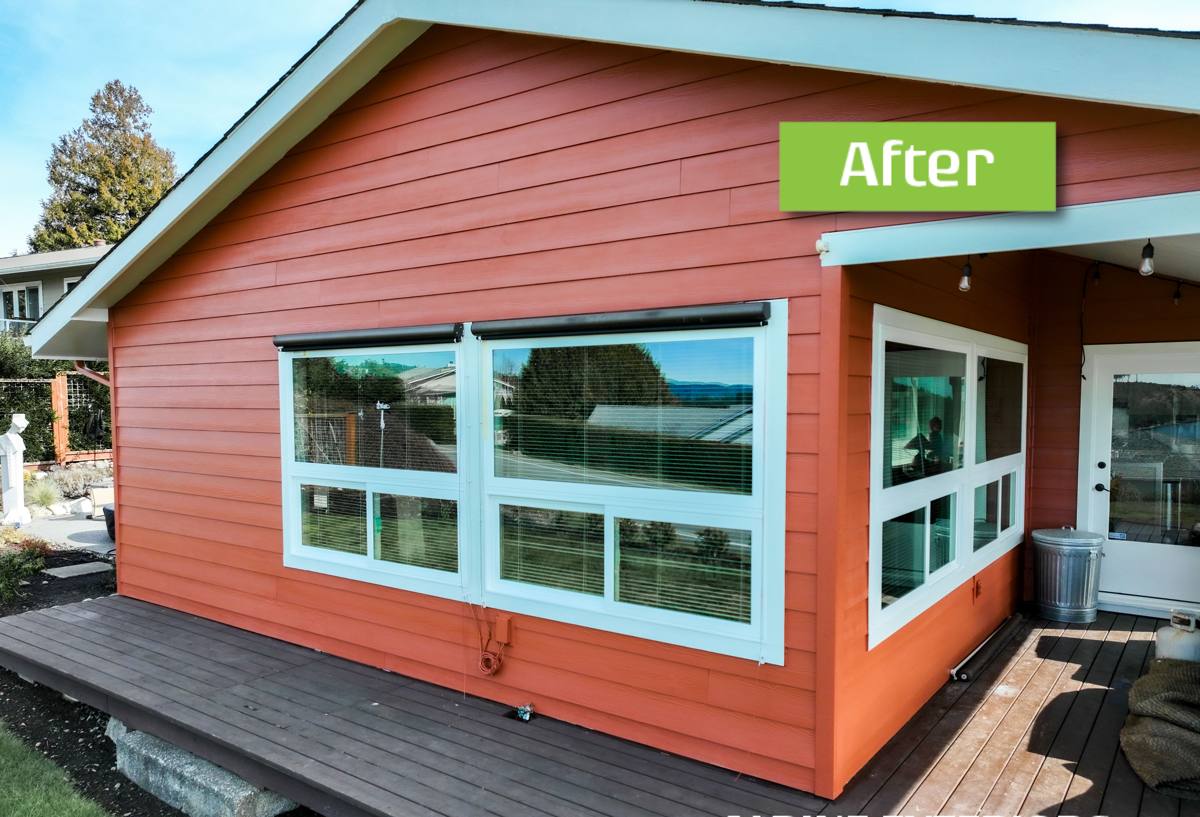
What the Marine Environment Actually Does to Windows
Salt Air
Airborne salt is corrosive to certain metals and hardware. Cheaper aluminum components, uncoated fasteners, and low-grade balance systems can start showing pitting or stiffness years before they should. It doesn't ruin a window outright, but it accelerates wear on the moving parts — locks, hinges, and balances — that keep a window sealing tightly.
Driving, Wind-Blown Rain
Rain that comes in at an angle off the bay puts pressure on seals and sills that vertical rain never does. A window that's a little loose in its rough opening, or caulked instead of properly flashed, will find that out the first time a real windstorm rolls through. Water intrusion at the sill or head is one of the most common issues we see on waterfront and near-waterfront homes here.
Moss and Algae Season
Whatcom County's long wet stretch means anything shaded or slow to dry — a north-facing sill, a window under an eave, a frame with poor drainage — can grow moss or green algae film. Beyond looking bad, trapped moisture behind that growth is what eventually rots wood trim or degrades sealant.
Temperature Swings and Condensation
Coastal humidity plus indoor heating in winter is a recipe for condensation on interior glass and, worse, inside the wall cavity if a window isn't sealed and insulated correctly. Fogging between panes on a double- or triple-pane unit means the seal has already failed — that's a repair issue, not a cleaning issue.
Signs Your Current Windows Are Underperforming
Before assuming you need full replacement, it's worth knowing what to actually check. Some of these point to a simple repair; others mean the window has reached the end of its useful life.
- Visible fog or moisture trapped between panes of glass
- Cold drafts you can feel by hand near the frame, even with the window latched
- Paint or wood trim that's soft, bubbling, or discolored around the window edges
- Windows that are hard to open, close, or lock — often a sign of a warped frame or worn balance
- Visible moss, algae, or black streaking on sills or lower frames
- A noticeable jump in heating costs without any other explanation
- Condensation forming on interior glass regularly, even in mild weather
- Noticeable outside noise that seems louder than it should be through a closed window
One or two of these on an older single-pane window might just mean it's time. Several of them on a newer window usually points to an installation problem rather than a product problem — worth having someone look at before you spend money on a full replacement.
What "Energy-Efficient" Should Actually Mean Here
Energy-efficient window marketing throws around a lot of numbers. For a Birch Bay home, three matter more than the rest:
- U-factor — how well the window resists heat transfer. Lower is better for our mild-but-damp winters where you're heating more days than you're cooling.
- Low-E glass coating — reflects radiant heat while still letting visible light through. This matters year-round here, not just in summer.
- Air infiltration rating — how tight the window seals against moving air. In a wind-exposed location like Birch Bay, this is arguably as important as the glass package, because a well-insulated window with a poor seal will still leak air and, eventually, water.
A window with excellent glass specs but a sloppy installation will underperform a mid-grade window installed correctly. We'd rather talk through both halves of that equation with you honestly than sell you on a spec sheet.
Frame Material Comparison for Coastal Exposure
| Frame Material | Salt Air / Moisture Resistance | Maintenance | Typical Lifespan |
|---|---|---|---|
| Vinyl | Good — won't rust or rot, some UV fading over decades | Low — occasional cleaning | 20–30+ years |
| Fiberglass | Very good — dimensionally stable, resists moisture and salt exposure well | Low | 30+ years |
| Wood / Wood-Clad | Fair — needs a sound exterior cladding and consistent upkeep near saltwater | Higher — periodic painting/sealing, more with coastal exposure | Varies widely with maintenance |
| Aluminum | Fair — prone to corrosion and poor insulation value unless thermally broken | Moderate | 20–30 years |
None of these are automatically wrong for Birch Bay — it depends on your home's style, your budget, and how much upkeep you want to sign up for. We'll walk through the honest trade-offs for your specific house rather than push one product line.
Why Installation Quality Matters More Than the Window Itself
This is the part that gets skipped in a lot of sales pitches, and it's the part that actually determines whether your new windows perform well in a place like Birch Bay. A correct installation includes:
- Removing the old window and inspecting the rough opening, sill, and surrounding framing for hidden water damage before anything new goes in
- Repairing or replacing any rotted framing or sheathing found during that inspection
- Installing proper flashing — not just caulk — at the sill and sides so any water that gets behind the siding is directed back out, not into the wall
- Setting the window level, plumb, and square, then shimming correctly so it isn't relying on fasteners alone to hold its shape
- Sealing with the right materials in the right locations — sealant that stays flexible in coastal humidity and temperature swings, not the cheapest tube on the shelf
- Insulating the gap between the frame and rough opening properly, without overpacking it, which can bow the frame
- Finishing exterior trim so water sheds away from the window rather than pooling against it
Skip or rush any one of those steps and you can end up with a good window performing like a bad one — drafts, water intrusion, and early wear, all despite paying for a quality product.
Our Process for Birch Bay Window Projects
We keep the process straightforward because most homeowners just want to know what's actually going to happen at their house.
1. On-Site Assessment
We look at your current windows, check for signs of water intrusion or rot around the openings, and talk through what you're trying to solve — energy bills, drafts, condensation, or windows that are simply past their service life.
2. Straight Talk on Options
We'll walk you through frame materials, glass packages, and what actually makes sense for your home's exposure, orientation, and budget — not just the highest-margin option.
3. Measurement and Ordering
Accurate measurements matter more than people expect. An ill-fitting replacement window creates the exact gaps and seal problems that cause trouble down the road.
4. Removal, Inspection, and Repair
Old windows come out, we inspect the opening, and any hidden moisture damage gets addressed before a new window ever goes in. This step is non-negotiable — installing over rot just hides a problem, it doesn't solve it.
5. Proper Installation
Flashing, shimming, sealing, and insulating done the right way, every time — the steps outlined above, not a shortcut version.
6. Final Check and Cleanup
We confirm the windows operate correctly, seal properly, and that the site is left clean.
Why a Crew That Already Works Birch Bay Matters
Window installation isn't identical everywhere, and a crew that mostly works inland jobs doesn't always think about wind exposure, salt air, and prolonged wet-season moss the way it needs to be thought about here. Working regularly in Blaine and Birch Bay means we're already familiar with:
- How wind off the bay affects flashing and sealant choices on exposed elevations
- Which framing and trim details tend to show moisture damage first on homes near the water
- Local permitting requirements for window replacement in Whatcom County
- Realistic scheduling around the wetter months, so installs aren't rushed during a rain window that closes fast
That familiarity shows up less in what we say and more in the details we don't miss — the kind of thing that's hard to appreciate until a house down the street has water damage from an install that skipped a step.
What Affects the Cost
Every home is different, so we won't quote a number without seeing the job, but these are the main factors that move the price up or down:
| Factor | Why It Matters |
|---|---|
| Number of windows and their sizes | More glass and larger openings mean more material and labor |
| Frame material selected | Vinyl, fiberglass, and wood-clad carry different material costs |
| Condition of the existing opening | Hidden rot or framing repair adds labor beyond a standard swap |
| Glass package | Low-E coatings, gas fills, and multi-pane options affect price and performance |
| Access and elevation | Second-story or hard-to-reach windows take more time and equipment |
| New construction vs. replacement | Full-frame replacement or new openings involve more work than a like-for-like swap |
Broadly, homeowners here are usually looking at a wide range depending on how many of these factors apply — which is exactly why an on-site look beats a phone estimate.
Keeping New Windows Performing Long-Term
Even a correctly installed window benefits from a little seasonal attention in a place like Birch Bay:
- Rinse salt residue off exterior frames and glass periodically, especially after storms
- Check weep holes on vinyl and fiberglass windows to make sure they're clear and draining
- Watch shaded or north-facing sills for early moss or algae growth and clean it off before it spreads
- Re-caulk exterior trim joints if you notice cracking or gaps developing over the years
- Test locks and operation once or twice a year — a stiff lock or hard-to-close sash is easier to fix early
None of this is heavy maintenance, but skipping it entirely is how small issues turn into bigger ones in a coastal climate.
If your Birch Bay home has drafty, foggy, or aging windows — or you're planning ahead for a remodel — we're happy to come take a look and give you a straight, no-pressure estimate. Use the form below to get started.