 Blaine Siding
 Why Everson Decks Take a Beating
Everson sits back from the water, but it doesn't sit outside the weather that defines this corner of Washington. The same marine air that rolls in off the Salish Sea past Blaine and Birch Bay pushes inland on a regular basis, carrying salt-laden moisture with it. Combine that with the driving rain that Whatcom County sees for a good chunk of the year, low winter sun angles, and heavy tree cover shading large sections of most yards, and you get a climate that is genuinely hard on exterior wood structures. A deck here isn't just exposed to rain — it's exposed to rain that doesn't dry off quickly, sitting under a canopy that keeps moisture trapped against the boards for days at a time.
That combination is why moss season in this part of the county isn't a two-week nuisance — it's closer to seven or eight months out of twelve. Moss holds water against wood, blocks airflow, and works its way into every seam and fastener hole it can find. Left alone, it turns a deck that looks fine from a distance into one with soft, punky boards and corroding hardware underneath.
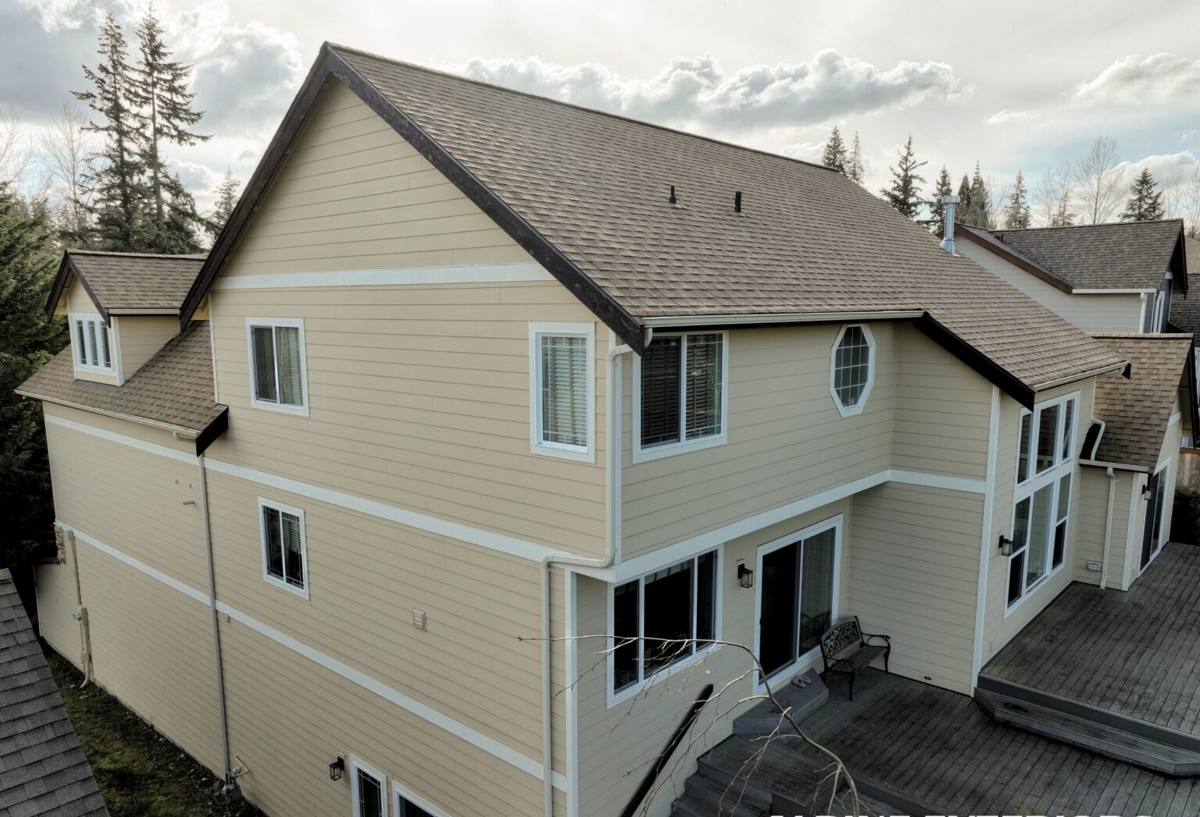
Common Signs Your Deck Needs Repair
Most deck problems don't show up as a dramatic collapse — they show up as small warning signs that get ignored until they aren't small anymore. If you're seeing any of the following, it's worth having someone look before the damage spreads further into the structure.
- Boards that feel spongy, bouncy, or give slightly underfoot
- Green or black staining that keeps coming back no matter how often you clean it
- Gaps opening up between boards, or boards that have cupped or crowned
- Rust streaks running from screw heads or nail holes
- A railing or post that wiggles more than it used to
- Visible daylight or soft wood where the deck ledger meets the house
- Stairs that feel less solid than the rest of the deck
- A musty smell coming from underneath the deck, especially after rain
Any one of these on its own might just be routine wear. Several together, especially near the house connection or stair stringers, usually means water has been getting into places it shouldn't for a while.
What a Correct Deck Repair Actually Involves
The Structure Underneath
The boards you walk on are the least important part of a deck repair. What matters more is what's underneath: the joists, the beams, and the posts that actually carry the load. Rot doesn't stay on the surface — it travels along wood grain and follows moisture into joints and connections you can't see from above. A repair that only replaces surface boards without checking the framing underneath is a repair that's going to fail again, just more slowly.
Flashing and the Ledger Connection
Where a deck attaches to the house — the ledger board — is the single most common failure point on decks in this region, and it's also the hardest to inspect without pulling boards or siding back. Flashing here is supposed to direct water away from the house framing. When it's missing, undersized, or was never properly integrated with the siding and house wrap in the first place, water tracks straight into the rim joist and wall framing behind it. This is exactly the kind of hidden damage that a quick visual once-over from the yard will miss.
Decking, Railings, and Fasteners
On the visible surface, a proper repair means replacing boards with matching material and spacing that allows for drainage and airflow, not just sistering in whatever's on hand. Fasteners matter more than people expect — the wrong screw or nail in wet, tannin-rich wood corrodes and stains within a couple of seasons. Railings and guard posts get checked for both cosmetic soundness and actual load-bearing strength, since a railing that looks fine but is loose at the post is a safety issue, not just an eyesore.
Repair or Replace? What We Look At
Not every deck problem calls for a full rebuild, and we're not going to tell you it does. The honest answer depends on how far the damage has spread and how sound the framing underneath still is.
| Factor | Usually a Repair | Usually a Replacement |
|---|---|---|
| Damage location | Isolated to a few boards or one section | Spread across multiple framing members |
| Ledger/house connection | Sound, flashing intact | Rotted, missing, or improperly flashed |
| Posts and footings | Solid, plumb, properly anchored | Undersized, shifting, or rot at grade |
| Age of structure | Newer, one problem area | Original deck is decades old with recurring issues |
| Cost pattern | Lower cost, targeted fix | Higher upfront cost, resets the clock |
As a general rule, a localized repair — a few joists, a section of boards, a railing rebuild — tends to run in the low hundreds to a few thousand dollars depending on scope. A full structural rebuild is a bigger investment, but it's the right call once rot has reached the framing in more than one area, because patching around failing structure just delays the same conversation a year or two down the road.
Decking Material Options for Whatcom County Weather
When boards need to be replaced, what you replace them with matters as much as the workmanship. Every material has a maintenance tradeoff, and given how much moisture this area sees, that tradeoff is worth understanding upfront rather than after a few winters.
| Material | Moisture Behavior | Maintenance |
|---|---|---|
| Pressure-treated lumber | Resists rot with proper sealing; can still cup or split if left unfinished | Needs cleaning and resealing every 1–2 years |
| Cedar | Naturally rot-resistant, ages to gray if unfinished | Periodic cleaning; staining extends life and color |
| Composite decking | Doesn't rot or splinter, but can hold surface moisture and grow moss/algae film if not cleaned | Low maintenance, but not zero — needs regular washing here |
We're upfront that composite isn't a set-it-and-forget-it fix for a mossy, shaded lot — it won't rot, but it will grow a slippery film if it never sees sun or a cleaning. Cedar and treated lumber need more regular attention but are more forgiving to spot-repair down the road, since you can replace a single board without it standing out against faded composite. Which one makes sense depends on how much sun the deck gets, how much maintenance you're willing to do, and what's already framing the deck now.
Our Deck Repair Process
- On-site assessment — we get underneath the deck, not just walk across the top, checking joists, the ledger connection, posts, and footings.
- Honest scope — you get a clear picture of what's actually failing versus what's cosmetic, and what repair or replacement options make sense.
- Structural work first — any compromised framing, flashing, or ledger issues get corrected before anything visible is addressed.
- Surface repair or rebuild — decking, railings, and stairs are repaired or replaced with materials matched to the rest of the structure.
- Final walkthrough — we check the deck is solid underfoot, railings are secure, and drainage is working the way it should.
Why Hire a Crew That Already Works in Everson
A deck repair done by someone unfamiliar with this specific climate often misses the parts that matter most here — the ledger flashing detail that keeps water out of the house framing, the fastener choice that won't streak and corrode under this much rain, the airflow gaps that keep moss from taking hold again in a few months. We work throughout Whatcom County, from Blaine down through the rest of the service area including Everson, and that means we're not guessing at how a deck behaves under this weather — we're seeing the same rot patterns, the same moss buildup, and the same flashing failures repeatedly, and building repairs that actually account for them instead of just replacing what's broken with the same setup that failed the first time.
Keeping Your Repaired Deck Solid Season After Season
A good repair buys you years, but a little seasonal attention buys you more. These are the habits that make the biggest difference in this climate:
- Sweep leaves and debris off the deck surface and out of board gaps regularly through fall
- Clean moss and algae off at least once a year, before it has a chance to establish
- Keep gutters and downspouts clear so runoff isn't dumping directly onto or under the deck
- Trim back overhanging branches to let more sun and air reach the surface
- Check railings and stair connections for looseness once a year
- Reseal or restain wood decking on the schedule the product calls for, not just when it looks faded
If you're noticing soft spots, staining that won't clean off, or a railing that's not as solid as it used to be, it's worth getting a real look at what's going on underneath before it turns into a bigger repair. We offer free, no-pressure estimates — use the form below to get a time on the calendar and an honest read on what your deck actually needs.