 Blaine Siding
 Storm Damage Roof Repair, Built for How Nooksack-Area Homes Actually Weather
If you live in the Nooksack area near Blaine, you already know your roof works harder than most. Whatcom County sits at the edge of the Strait of Georgia and the Salish Sea, which means salt-laden air, wind-driven rain off the water, and long stretches of gray, damp weather that never quite dries a roof out completely. Add in winter windstorms that come through the Nooksack valley and lowlands with real force, and you have a roofing environment that punishes shortcuts. A storm damage repair here isn't just about patching a leak — it's about restoring a roof system that has to keep doing this job, storm after storm, season after season.
This page is about one thing specifically: storm damage roof repair for homes in and around Nooksack. Not a general roofing overview, not a sales pitch — a straight explanation of what storm damage looks like locally, what a correct repair involves, and how we approach the work.
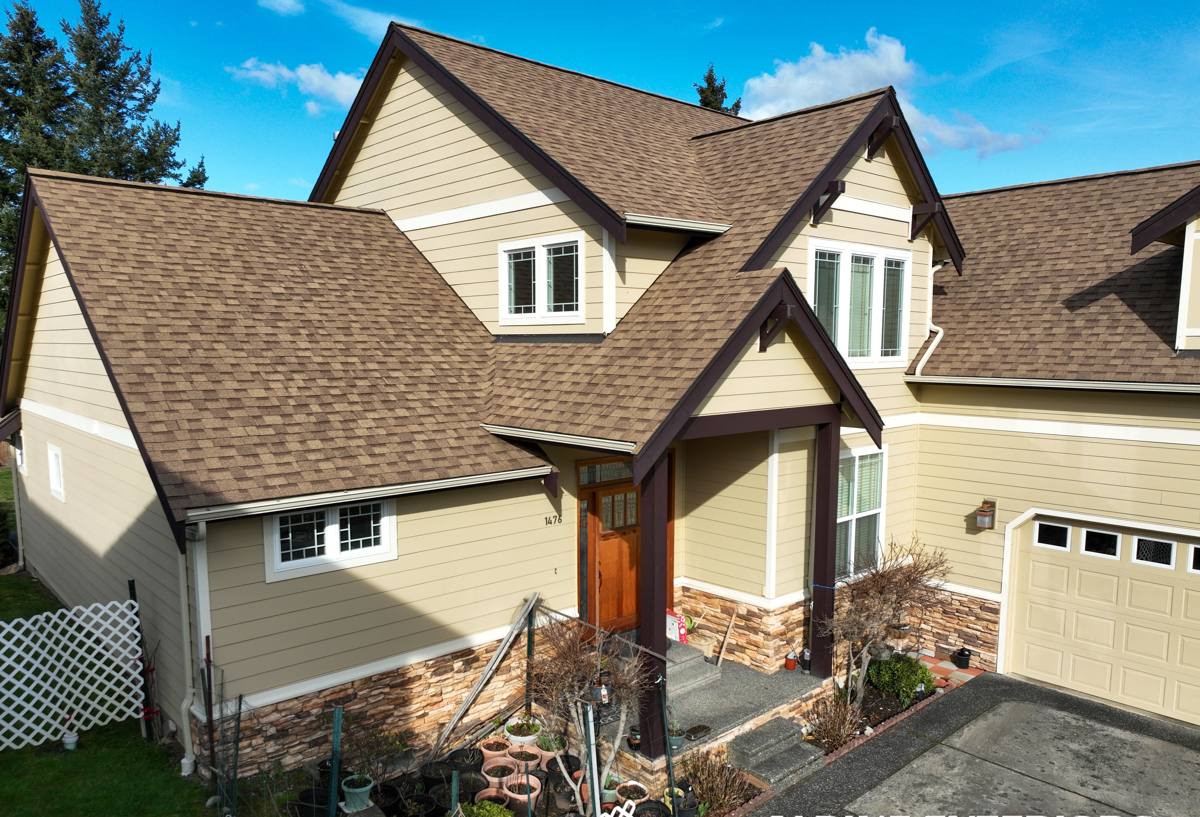
What Storm Damage Actually Looks Like on a Local Roof
Storm damage isn't always the dramatic kind. Some of it is obvious — a section of shingles peeled back after a windstorm, a branch strike that punches through the decking, a chimney flashing torn loose. But a lot of the storm damage we get called out for in this area is quieter, and it's often the quiet kind that causes the most expensive problems if it sits too long.
Wind-Driven Rain and Uplift
Wind off the water doesn't just blow — it drives rain sideways and up under roof edges, ridge caps, and shingle tabs that have lost their seal. Once wind lifts a shingle edge even slightly, rain gets pushed uphill under it, and that's how a small storm event turns into a slow leak that shows up as a stain on a ceiling weeks later.
Moss, Trapped Moisture, and Softened Decking
Whatcom County's moss season runs long — mild temperatures and near-constant moisture are exactly what moss needs to establish itself on north-facing slopes, shaded valleys, and anywhere debris collects. Moss holds water against the roofing material, keeps it from drying between rain events, and works its way under shingle edges. On its own it's a maintenance issue; combined with storm damage that's already compromised a seal or flashing, it accelerates rot in the decking underneath.
Salt Air and Metal Component Corrosion
Proximity to the water means salt air reaches roofs here more than it does further inland. Nails, flashing, gutter fasteners, and any exposed metal are more prone to corrosion over time. A storm that loosens flashing or exposes fasteners to more direct weather speeds up that corrosion, which is why storm repairs in this area often need to address more than just the visible damage point.
What a Correct Storm Damage Repair Actually Involves
A rushed repair covers the hole. A correct repair figures out why the hole let water in, whether anything underneath got wet, and whether the surrounding material is still sound enough to tie a repair into cleanly.
Inspection Before Any Work Starts
We look at more than the obvious damage point. Wind and rain rarely affect just one shingle or one section — we check the surrounding field, the flashing at penetrations (chimneys, vents, skylights), the ridge and hip lines, and the gutter system, because storm damage in one area often has a related weak point nearby that hasn't failed yet.
Checking for Hidden Moisture
If water has been getting in for any length of time, the decking underneath may be softened or starting to rot. Repairing the surface without checking what's underneath just hides the problem until it reappears, usually as a soft spot or a worse leak. Any area with signs of trapped moisture gets opened up and checked, not guessed at.
Matching Materials and Technique
Patchwork that doesn't match the surrounding roofing — different shingle profile, different flashing method, different fastening pattern — tends to fail faster than a repair that's properly integrated. We match materials to what's already on the roof where possible, and where an exact match isn't available, we choose a compatible product and explain the trade-off rather than installing something mismatched and hoping it holds.
Our Repair Process
- Assessment: We inspect the damage, the surrounding roof area, and check for hidden moisture or secondary wear.
- Honest scope: We tell you what actually needs repair versus what's cosmetic or can wait, and explain why.
- Written estimate: Clear pricing before any work starts — no verbal-only numbers.
- Repair: Damaged materials removed, decking checked and replaced if needed, new materials tied into the existing roof system correctly.
- Cleanup and check: Job site cleared of debris and fasteners, and the repair area reviewed with you before we consider the job done.
Repair or Replace? How We Help You Decide
Not every storm-damaged roof needs a full replacement, and not every roof is worth repairing indefinitely. The honest answer depends on the roof's age, how widespread the damage is, and what we find once we're actually up there. Here's how we generally think through it:
| Factor | Favors Repair | Favors Replacement |
|---|---|---|
| Roof age | Under 10-12 years, materials still in good condition overall | Nearing or past expected service life |
| Extent of damage | Localized to one section or a few isolated points | Spread across multiple slopes or repeated storm events |
| Decking condition | Solid, no rot found during inspection | Soft spots, rot, or repeated moisture intrusion found in multiple areas |
| Material availability | Matching shingle or roofing product still available | Product discontinued, forcing a visible mismatch |
| Repair history | First or second repair on this section | Same area has needed repeat repairs |
When a roof is on the edge, we'll say so and lay out both options with real numbers rather than pushing toward the bigger job by default.
Storm Damage and Insurance Claims
Many storm damage repairs in this area involve a homeowner's insurance claim, especially after a significant wind event. We're not an insurance company and we can't promise how any specific claim will be handled, but we can provide clear documentation of the damage, photos, and a written scope of the repair work, which is generally what an adjuster needs to evaluate a claim. If you're not sure whether your situation is claim-worthy, that's a conversation worth having with your insurer before or alongside getting an estimate from us.
Why a Crew That Already Works This Area Matters
A roofer who works Nooksack, Blaine, and the surrounding Whatcom County lowlands regularly has already seen how this specific mix of salt air, wind exposure, and moss cover behaves on local roofs over multiple seasons. That matters for a storm repair in a few practical ways: knowing which failure points tend to show up first after a windstorm in this area, understanding how moss and moisture interact with different roofing materials here specifically, and having a realistic sense of how a repair will hold up through the next wet season rather than just the next dry week. It also means a shorter response time when storm damage needs attention before the next system rolls in off the water.
What Homeowners Can Check After a Storm
Before calling anyone, there are a few things worth checking from the ground or a safe vantage point — never get on the roof yourself after storm damage:
- Granules collecting in gutters or downspouts, which can indicate shingle wear or impact damage
- Visible gaps, curling, or missing shingles from the ground or a second-story window
- Water stains or new discoloration on interior ceilings, especially near chimneys or vents
- Debris, branches, or heavy moss buildup on the roof surface
- Dented or displaced gutters, downspouts, or flashing
- Any sagging in the roofline that wasn't there before
If you notice any of these, it's worth having a professional look before the next storm makes it worse — a small area of exposed decking can go from a minor repair to a much larger one after one more heavy rain event.
Get an Honest Look Before the Next Storm
If your roof took a hit in a recent windstorm, or you're just not sure whether what you're seeing is normal wear or something that needs attention, we're happy to come take a look. We offer free, no-pressure estimates for storm damage roof repair in Nooksack and the surrounding Blaine area — you'll get a straight answer about what's actually going on and what it would take to fix it right. Use the form below to get started.