 Blaine Siding
 Why Bellingham Roofs Take a Different Kind of Beating
Roofs in the Bellingham area don't usually fail because of one dramatic storm. They fail because of what Whatcom County weather does month after month: wind off the water, driving rain that comes in sideways instead of straight down, and a moss season that runs longer here than almost anywhere else in the state. Add in the salt air drifting inland from the Strait of Georgia and Puget Sound, and you've got a slow, steady attack on fasteners, flashing, and shingle granules that a lot of homeowners don't notice until water is already inside the attic.
Storm damage repair in this climate isn't just about patching the spot where a branch came down. It's about recognizing that any storm event here is landing on a roof that's already dealing with chronic moisture exposure, so the repair has to account for both the acute damage and the conditions that made it worse.
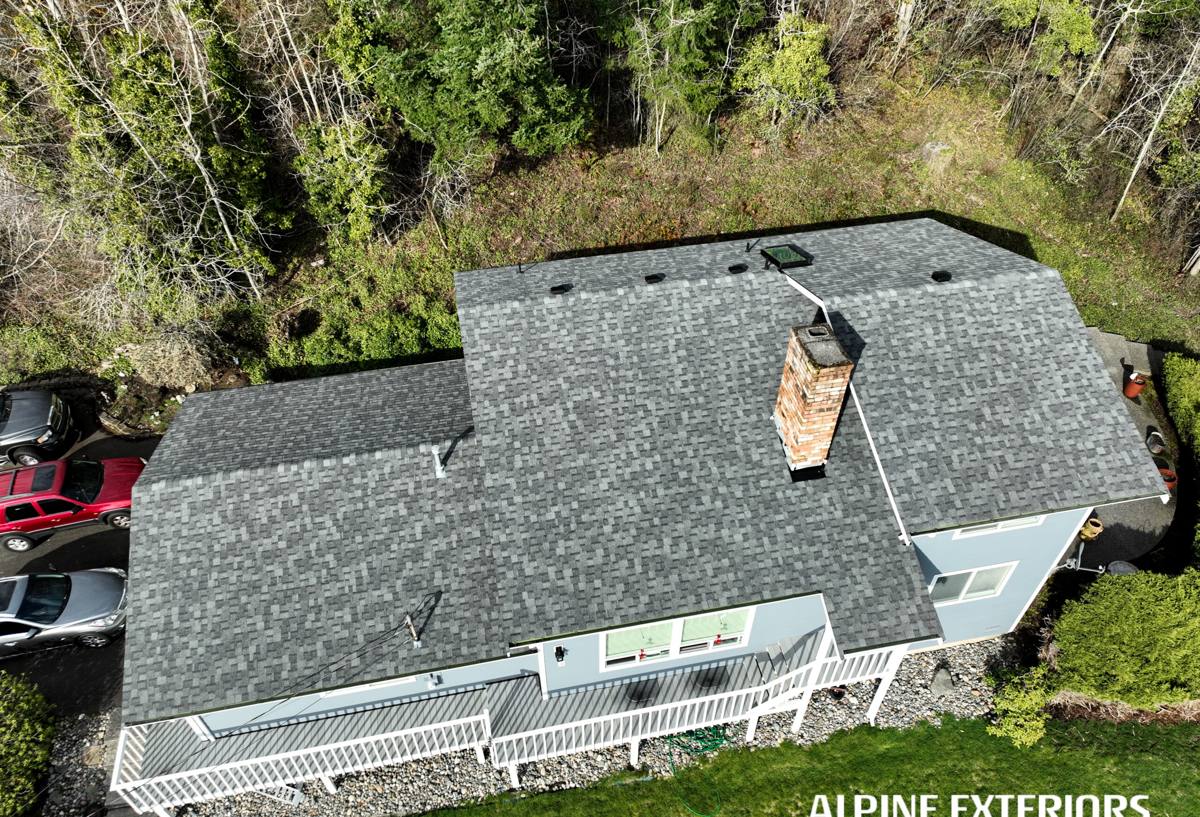
What Actually Counts as Storm Damage Around Here
People picture storm damage as missing shingles after a windstorm, and that's part of it. But in Bellingham and the surrounding Blaine and Whatcom County area, storm damage shows up in a handful of specific ways:
- Wind-lifted or creased shingles along ridges, hips, and roof edges — the areas that take the most uplift in a gusty system
- Wind-driven rain forced up under shingle tabs or through worn flashing, even when no shingles are visibly missing
- Fallen limbs or debris that crack shingles, dent metal flashing, or puncture underlayment
- Accelerated moss and moisture buildup after a storm, when debris traps water against the roof deck for days
- Loosened or torn flashing around chimneys, vents, and skylights after sustained wind
Hail is uncommon this close to the water, so most of what we deal with after a storm is wind, water intrusion, and debris — not impact damage. That changes what the repair actually needs to address.
The Damage You Can See vs. the Damage You Can't
A missing shingle is obvious. What's not obvious is whether water got underneath the surrounding shingles during the storm, whether the underlayment is still intact, or whether moss that was already established nearby used the disturbed area as an entry point. A roof can look mostly fine from the ground and still have a slow leak developing at the deck level.
Why a "Looks Fine" Roof Can Still Be Failing
This is the part of storm damage repair that gets skipped by anyone doing a quick patch job. In a marine climate like Bellingham's, moisture doesn't need a large opening to cause real damage — it needs time. A small gap in flashing or a lifted shingle tab left unaddressed after a storm can let water track down onto the decking, where it sits against wood that's already damp more often than not given our rainfall patterns.
Once decking starts to soften, the repair scope changes from "replace a few shingles" to "replace decking and shingles," which costs more and takes longer. Catching storm damage early — ideally within days of the event, not weeks — is the single biggest factor in keeping a repair small.
What a Correct Storm Repair Actually Involves
A repair that's done right doesn't stop at the visible damage. Here's what we check on every storm damage call in this area:
- Full roof inspection, not just the damaged area. Wind damage often has a pattern — if one section lifted, nearby sections may be compromised too, even if they haven't failed yet.
- Underlayment and decking check. We pull back shingles around the damage to look for wet or soft decking before we close anything up.
- Flashing inspection. Chimney, vent, skylight, and valley flashing take the brunt of wind-driven rain and are frequently the real source of a leak, even when the shingles nearby look intact.
- Matching materials. We match shingle type, color, and weight as closely as possible so the repair doesn't stand out or create a mismatched wear pattern down the road.
- Ventilation check. Poor attic ventilation traps moisture and accelerates moss growth and shingle deterioration — a storm repair is a good time to catch this before it becomes its own problem.
Skipping any of these steps is how a $400 repair turns into a $4,000 one within a year or two, because the underlying moisture issue never got addressed.
Our Process for Storm Damage Calls
1. Assessment
We inspect the roof in person — from the roof surface where it's safe to do so, and from the attic side where accessible — to document the full extent of the damage, not just what's visible from the ground or the driveway.
2. Documentation
If you're filing an insurance claim, we document the damage with enough detail to support that claim: what failed, how it likely failed, and what the repair scope needs to be. We're not adjusters and don't speak for your insurer, but clear documentation helps your claim move faster.
3. Temporary protection when needed
If there's active water intrusion, we'll get the area protected — tarping or temporary sealing — before scheduling the full repair, so you're not living with a leak while paperwork or material lead times get sorted out.
4. The repair itself
We complete the actual repair using matched materials, correct flashing detail, and proper shingle fastening for wind exposure — not just the minimum needed to stop the leak that's visible today.
Repair or Replace? What Actually Drives That Decision
Not every storm-damaged roof needs a full replacement, and not every roof is worth repairing indefinitely. The honest answer depends on a few factors:
| Factor | Repair Usually Makes Sense | Replacement Should Be Considered |
|---|---|---|
| Age of roof | Under roughly 12-15 years, in otherwise sound condition | Near or past its expected service life for the material |
| Extent of damage | Isolated to one section or a handful of shingles | Widespread wind lift, multiple leak points, or repeated storm events |
| Decking condition | Dry and structurally sound under the damaged area | Soft, delaminated, or water-stained decking found during inspection |
| Moss/moisture history | Managed with routine cleaning and treatment | Chronic moss buildup that's already degraded granules broadly |
| Material availability | Matching shingles readily available | Discontinued product, forcing a mismatched patch |
We'll tell you honestly which category your roof falls into. There's no reason to sell a full replacement when a proper repair will hold up, and no reason to keep patching a roof that's genuinely past its useful life.
Working With Insurance on Storm Claims
Most homeowners' policies cover sudden storm damage — wind, falling debris — but not gradual damage from long-term neglect or moss buildup that was left untreated for years. That distinction matters, because an adjuster looking at a roof after a storm will want to know whether the damage is storm-related or the result of an older, unaddressed problem. Good documentation at the time of inspection — photos, notes on what failed and why — makes that distinction clear and supports a smoother claim. We can provide that documentation; we recommend also getting your own photos as soon as it's safe to do so after a storm event.
Reducing the Chance of Repeat Damage
Once a storm repair is done, a few ongoing habits make a real difference in how long it lasts, especially given Whatcom County's rain and moss season:
- Keep gutters and downspouts clear so water isn't backing up under the roof edge during heavy rain
- Trim back tree limbs that overhang the roof — both for wind debris risk and for the shade that keeps moss thriving
- Have moss growth treated before it establishes under shingle tabs, not after
- Check attic ventilation periodically — poor airflow speeds up moisture damage from the inside out
- Do a visual roof check after any significant windstorm, even if nothing seems obviously wrong
Why It Matters to Hire a Crew That Already Works This Area
Storm damage repair isn't a generic skill you can apply the same way in every climate. A crew that mostly works drier inland regions may not think twice about a small flashing gap that, in a place like Bellingham with sustained wind-driven rain off the water, will let water in every time it storms. Working this area regularly means knowing which roof details fail first here, which materials hold up against salt air and moss, and what a genuinely storm-resistant repair looks like versus a patch that'll be back on the schedule next winter.
If a recent storm left you with missing shingles, a new leak, or just some uncertainty about whether your roof came through okay, we're happy to take a look. Reach out for a free, no-pressure estimate using the form below.