 Blaine Siding
 Blaine Harbor's Climate Is Harder on Siding Than People Expect
Homes around Blaine Harbor sit close enough to open water that salt-laden air is a daily fact of life, not an occasional event. Add Whatcom County's long wet season, wind-driven rain off the water, and a moss and algae season that can run most of the year in shaded, north-facing exposures, and you have a combination that wears out the wrong siding material faster than most homeowners realize. This isn't a generic Pacific Northwest siding page — it's about what a fiber cement installation needs to do specifically for a house within reach of Blaine's harbor air.
We install fiber cement siding for homes in this exact area, and the decisions that matter most — fastener choice, flashing detail, product line selection — are different here than they'd be for a house twenty miles inland in Whatcom County. Salt air accelerates corrosion of the wrong metals. Driving rain finds gaps that would never leak on a calmer site. Moss doesn't just grow on roofs; it takes hold on siding faces that stay damp and shaded for weeks at a stretch.
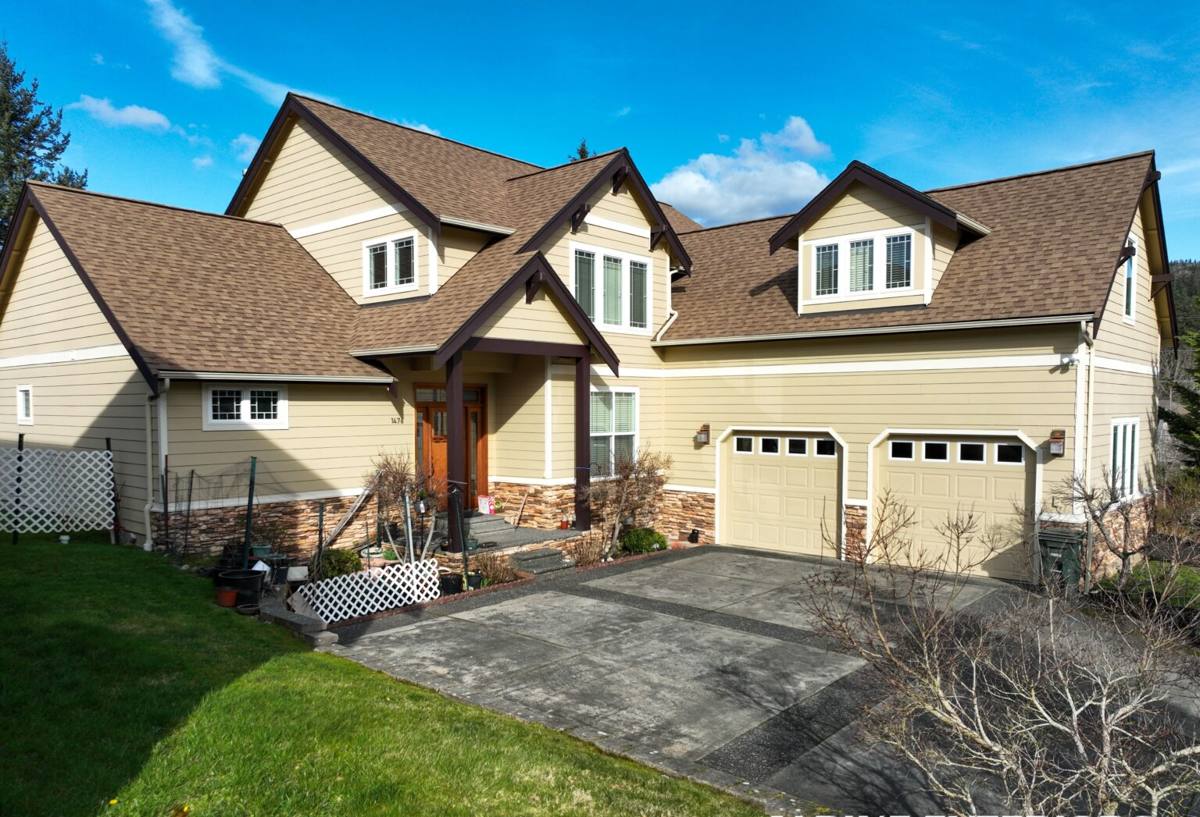
Why Fiber Cement Holds Up Where Other Materials Struggle
Salt Air and Corrosion
Salt air doesn't damage the fiber cement board itself — cement, sand, and cellulose fiber aren't vulnerable to salt corrosion the way metal is. Where salt air causes real problems is at the fasteners, flashing, and trim connections. Poor-quality or improperly coated fasteners near the water can corrode, streak the siding face, and eventually loosen boards. This is a job-quality issue more than a material issue, which is exactly why fastener spec and installation detail matter as much as the siding brand.
Driving Rain and Water Management
Blaine sees plenty of rain that arrives sideways off the water, not just straight down. Siding that relies on paint film alone to keep water out will eventually fail at seams, corners, and penetrations. Fiber cement is dimensionally stable and doesn't swell or rot when it gets wet, but the assembly behind it — the weather-resistive barrier, flashing, and drainage plane — is what actually keeps water from reaching the sheathing. A house near Blaine Harbor needs that assembly built correctly, every time, because there's less margin for error than on a sheltered inland lot.
Moss, Algae, and Long-Term Appearance
Shaded, damp siding faces near the water grow moss and algae faster than siding on a sunny, exposed wall. Fiber cement with a factory-applied finish resists this better than bare wood or field-painted material because the finish is baked on under controlled conditions rather than brushed on outdoors, and it doesn't provide the same food source that raw wood fiber does. It's not moss-proof — nothing permanently mounted on an exterior wall in this climate is — but it holds its color and finish integrity through repeated wet-dry cycles far longer than the alternatives.
The James Hardie HZ5 System — Engineered for This Climate
We install James Hardie fiber cement exclusively, and the reason is directly tied to climate engineering. Hardie manufactures its siding in climate-specific formulations under what it calls the HardieZone system. Homes in the Pacific Northwest, including Whatcom County and Blaine, fall into the HZ5 zone — the formulation built for wetter, cooler climates rather than the hot, dry HZ10 formulation used in the Southwest. That distinction affects how the board is engineered to handle moisture cycling over decades, not just how it looks on day one.
| Hardie Product | Typical Use on Blaine Harbor Homes |
|---|---|
| HardiePlank lap siding (HZ5) | Primary wall siding; engineered for wet, cool coastal climates |
| HardiePanel vertical siding | Accent walls, gables, garage faces, board-and-batten looks |
| HardieTrim boards | Corners, window and door surrounds, fascia — detail points most exposed to water intrusion |
| ColorPlus factory finish | Baked-on finish for color and moss/algae resistance without field painting |
The ColorPlus finish matters more here than in a drier climate. A field-applied paint job on siding near salt air and constant moisture tends to need attention sooner — chalking, fading, and touch-up work creep in faster. A factory finish cured under controlled heat and cross-linked into the substrate resists that degradation longer, which is part of why we don't offer primed-only board as a standard option for homes in this area.
What a Correct Installation Actually Involves
Weather-Resistive Barrier and Drainage Gap
Behind every board, there should be a continuous weather-resistive barrier, properly lapped shingle-style so water sheds downward and out rather than behind the barrier. On homes with meaningful wind-driven rain exposure — which describes most of the Blaine Harbor area — we also build in a drainage gap behind the siding so any water that does get past the cladding has somewhere to go besides the sheathing.
Flashing at Every Penetration
Windows, doors, hose bibs, light fixtures, and deck ledgers are the places siding jobs actually fail. Head flashing above windows, kick-out flashing where a roofline meets a wall, and properly lapped step flashing at roof-to-wall intersections aren't optional extras — they're the difference between a wall assembly that sheds water and one that slowly saturates from the inside out.
Fastening Standards for a Marine-Influenced Site
Hardie specifies corrosion-resistant fasteners, and on a site this close to salt air, we don't treat that as a minimum — we treat it as non-negotiable. The wrong fastener choice is the single most common reason siding near open water shows streaking or loosens prematurely, and it's an easy detail to get wrong if a crew doesn't regularly work sites like this one.
Joints, Caulking, and Gaps
Hardie's installation instructions specify gap sizes at butt joints and trim connections, along with which joints should be caulked with a high-quality, paintable sealant and which should be left as engineered gaps for drainage. Caulking every joint solid, which some crews do out of habit, can trap water instead of letting it escape — a mistake that shows up as bubbling or staining within a couple of wet seasons.
Our Process for a Blaine Harbor Siding Project
- On-site inspection of existing siding, sheathing condition, and trouble spots — with particular attention to north- and west-facing walls that see the most moss and wind-driven rain
- Tear-off of old siding and inspection of the sheathing underneath for hidden rot or moisture damage before anything new goes up
- Repair of any damaged sheathing and installation of a continuous weather-resistive barrier
- Flashing installation at every window, door, and roof-to-wall intersection
- Installation of HZ5 HardiePlank, HardiePanel, or HardieTrim per Hardie's fastening and clearance specifications
- Final detail work: caulking at specified joints only, touch-up of any factory finish scuffed during install, and a walk-through with the homeowner
Cost Factors for a Blaine Harbor Fiber Cement Project
Every home is different, but the factors that move a Blaine Harbor project up or down in scope are fairly consistent. We give firm numbers only after walking a specific house, but this is what typically drives cost:
| Factor | Why It Matters Here |
|---|---|
| Existing siding removal | Wood or vinyl often hides moisture damage from years of salt air and rain exposure |
| Wall exposure to wind and water | Water-facing and north walls typically need more flashing and drainage detail |
| Trim and detail complexity | Multiple windows, gables, and roof intersections mean more flashing labor |
| Home size and stories | Affects staging, scaffolding, and total board and labor volume |
| Finish and color selection | ColorPlus factory colors versus special-order or trim accent choices |
Why a Crew That Already Works This Area Is Worth Choosing
Fiber cement installation is detail work, and the details that matter shift with the site. A crew that mostly works inland Whatcom County jobs may not default to marine-grade fastener specs or think through drainage the same way on a harbor-adjacent home. A crew that regularly works Blaine and the harbor area already knows which walls take the worst of the wind-driven rain, where moss tends to establish first, and how to sequence a tear-off around this area's weather windows so sheathing isn't left exposed longer than it has to be. That familiarity shows up in fewer callbacks and a wall assembly that's built for the site it's actually on, not a generic one.
A Pre-Project Checklist for Blaine Harbor Homeowners
- Ask what weather-resistive barrier and drainage approach will be used behind the new siding
- Confirm the fastener type and that it meets Hardie's corrosion-resistance specification
- Ask how flashing will be handled at windows, doors, and any roof-to-wall intersections
- Confirm which Hardie product line (HZ5 HardiePlank, HardiePanel, HardieTrim) is being quoted and why
- Ask whether ColorPlus factory finish is included or whether field painting will be needed later
- Get the manufacturer's and installer's warranty terms in writing before work starts
What to Expect Moving Forward
A correctly installed fiber cement siding system on a Blaine Harbor home should hold its finish, resist moss establishment far longer than bare wood, and keep water out of the wall assembly through decades of the wet, salt-influenced weather this stretch of Whatcom County sees every year. The material choice matters, but the installation details — flashing, fastening, drainage, and finish — are what actually determine whether that holds true on your specific house.
If you're planning a siding project near Blaine Harbor, we're happy to walk the property, look at what's on the walls now, and give you a straight answer on what it would take to do it right. Reach out below for a free, no-pressure estimate.