 Blaine Siding
 Why Everson Siding Wears Out Faster Than the Brochure Says
Everson sits inland from the water compared to Blaine proper, but it's still squarely inside the same Whatcom County weather system — moist Salish Sea air, long wet stretches from fall through spring, and short, cool summers that never fully dry out a north-facing wall. That combination is hard on siding in three specific ways: salt-laden air corrodes fasteners and finishes over time, driving rain gets pushed sideways into laps and seams during winter storms, and a long moss season keeps shaded siding damp for weeks at a stretch. None of that is dramatic on its own. It's cumulative. A siding system that's rated for a dry climate, or installed with shortcuts that work fine in Arizona, starts showing problems here in years, not decades.
We bring this up first because it changes what "siding replacement" should actually mean for a home in this area. It's not just swapping old material for new material in the same color. It's an opportunity to fix whatever let moisture and rot get a foothold in the first place, and to put up a system that's actually built for this climate instead of one that's merely available at the lumber yard.
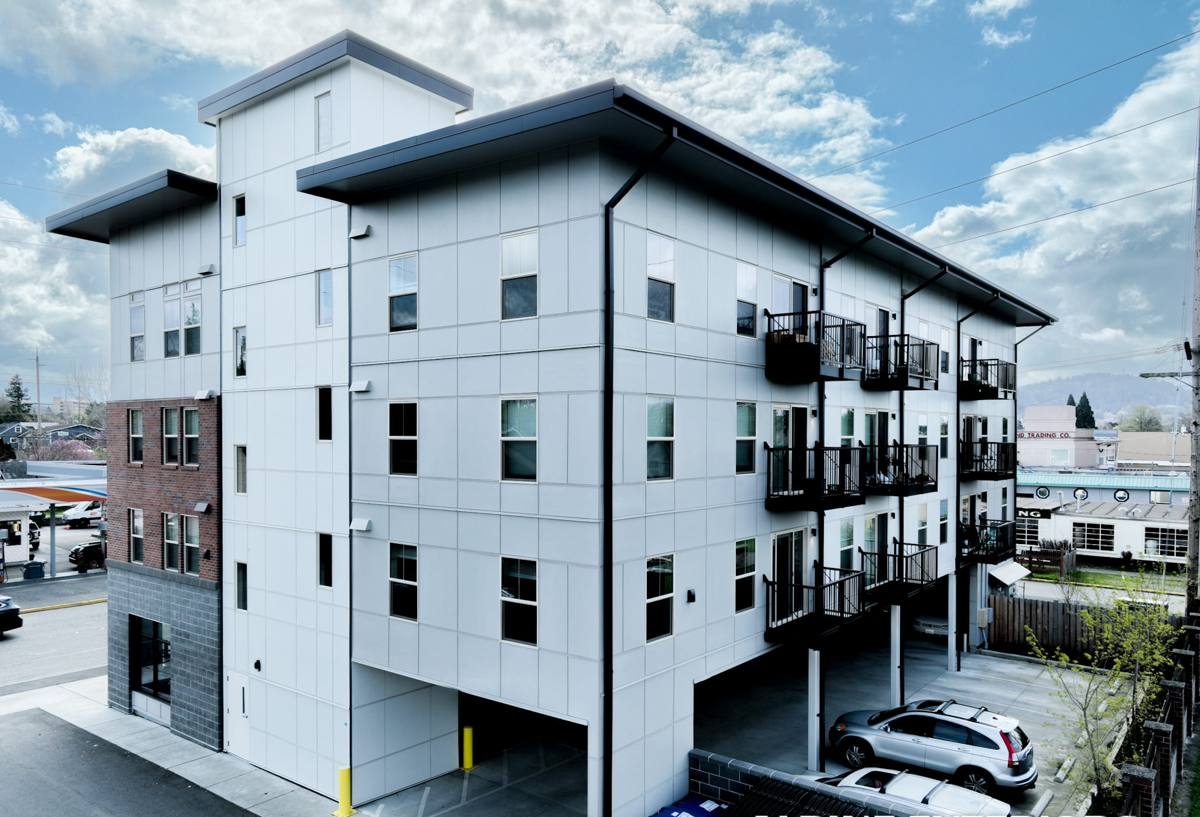
Signs an Everson Home Needs Siding Replaced, Not Patched
Homeowners often call us wanting a repair, and sometimes a repair is genuinely the right answer. But there's a point where patching individual boards stops making sense and full replacement becomes the more honest recommendation. Here's what we look for during a walk-around:
- Soft or spongy spots when you press on the siding, especially near the bottom courses and around window trim
- Paint that won't hold anymore — recurring peeling or bubbling within a year or two of repainting
- Persistent moss or black-green staining on north- and west-facing walls that comes back within a season of cleaning
- Visible warping, cupping, or gaps opening up between boards
- Siding that was installed directly over old material without a proper water-resistive barrier
- Consistently musty smell or damp drywall on interior walls that back up to exterior siding
Any one of these can sometimes be addressed locally. Several of them together, especially on a home more than 20-25 years old, usually mean the underlying weather barrier has failed and the siding itself has absorbed more moisture than it can shed. At that point, patching just buys a little time before the same failure shows up somewhere else on the wall.
What a Correct Siding Replacement Actually Involves
Full Tear-Off, Not Overlay
We remove the old siding down to the sheathing rather than installing new material over top of it. Siding-over-siding traps whatever moisture damage already exists behind a fresh face, which just delays the problem and makes it worse when it eventually resurfaces. Tear-off also lets us actually inspect the sheathing and framing underneath instead of guessing.
Inspect and Repair What's Behind the Wall
Once the old siding is off, we check the sheathing for soft spots, rot, or water staining, and we check the framing at window and door openings, since that's where leaks concentrate. Any compromised sheathing gets replaced before anything new goes up — installing new siding over rotten sheathing just wastes the new siding.
Water-Resistive Barrier and Flashing
A new weather-resistive barrier goes on correctly lapped, shingle-style, so water sheds downward and outward rather than working its way behind seams. Flashing at windows, doors, and any wall penetrations gets installed to direct water out and away from the sheathing, not just tucked in as an afterthought. Given how much driving rain this area sees off the Strait, this step matters more here than it does in drier climates — it's the difference between siding that's cosmetic and siding that's actually doing its job as a water management system.
Correct Fastening and Clearances
Fiber cement siding has manufacturer-specified fastener types, spacing, and clearances from grade, decks, and roof lines, and those specs exist for a reason — get them wrong and you create entry points for moisture no matter how good the material is. We hold to those specs rather than treating them as optional.
Material Comparison for This Climate
We only install James Hardie fiber cement siding, and we're upfront about why. Here's how the common options actually compare for a home dealing with salt air, sideways rain, and long damp stretches:
| Material | How it handles moisture here | Long-term maintenance | Fire performance |
|---|---|---|---|
| James Hardie fiber cement | Dimensionally stable, doesn't swell or rot when wet, ColorPlus finish resists fading and peeling | Low — occasional wash, repaint not required for years | Non-combustible |
| Vinyl siding | Sheds water on the face but seams and J-channels can trap moisture; warps and becomes brittle in temperature swings | Low labor but limited repair options if cracked or faded | Melts/deforms under heat |
| LP SmartSide (engineered wood) | Treated to resist moisture but still wood-based; edge and cut-end sealing is critical and easy to get wrong | Moderate — repainting on a cycle, careful caulk maintenance | Combustible |
| Cedar / primed spruce | Natural material, absorbs and releases moisture constantly, prone to cupping and checking in wet climates | High — regular refinishing, more vulnerable to moss and rot | Combustible |
Every one of those products has legitimate use cases somewhere. In a climate with this much sustained moisture exposure, though, fiber cement's dimensional stability and non-combustible composition are why we standardized on it rather than offering a menu of options we'd have to caveat differently for every job.
Cost Factors for an Everson Siding Replacement
We don't quote firm numbers without seeing the home, but the main variables that move the price on a project like this are consistent from job to job:
| Factor | Why it matters |
|---|---|
| Home size and wall complexity | More corners, gables, and dormers mean more cutting, flashing, and labor time |
| Condition of the sheathing underneath | Hidden rot found during tear-off adds repair scope that can't be priced sight-unseen |
| Siding profile chosen | Lap siding, panel systems, and shingle-style Hardie products differ in material and install time |
| Trim and accessory work | Window trim, corner boards, and soffit/fascia work are often bundled with a re-side for a clean finished look |
| Access and site conditions | Landscaping, fencing, decks, or tight lot lines can add setup and staging time |
Our Process, Start to Finish
1. On-Site Assessment
We walk the exterior with you, look at problem areas you've already noticed, and check things you might not have — moisture readings at suspect spots, condition of trim and flashing, and how the current siding was installed.
2. Written Scope and Estimate
You get a clear breakdown of what's being torn off, what's being repaired, and what's going up new, with the siding line and color spelled out — no vague "siding replacement" line item.
3. Tear-Off and Sheathing Repair
Old material comes off, sheathing gets inspected and repaired as needed, and we show you what we found before covering it back up.
4. Weather Barrier, Flashing, and Install
New water-resistive barrier, correct flashing details, and Hardie siding installed to manufacturer spec for fastening and clearances.
5. Final Walkthrough
We go around the finished home with you, caulk lines, trim, and paint lines included, before calling the job done.
Why It Matters to Hire a Crew That Already Works This Area
Siding installation isn't uniform across climates, and a crew that mostly works drier inland regions will make different — sometimes wrong — default decisions than one that installs against Whatcom County weather every season. Flashing details that are "good enough" in a dry climate aren't good enough here. Fastener spacing that looks fine on paper can fail faster once salt air and repeated wet-dry cycling get involved. A crew with local experience already knows which details actually matter for homes exposed to this specific combination of rain, humidity, and moss, and doesn't need to relearn that on your house.
There's also a practical scheduling reality: this region has a real wet season, and siding work has weather windows. A local crew plans installs around that instead of treating every week as equally workable.
Life After Replacement: What Ongoing Care Looks Like
Correctly installed Hardie siding is genuinely low-maintenance, but "low-maintenance" isn't "no-maintenance." A yearly rinse-down to knock back moss and pollen buildup, especially on shaded north-facing walls, keeps the ColorPlus finish looking like it should. Keep an eye on caulking at trim joints and touch it up if it starts to crack or pull away — caulk is a maintenance item on any siding system, Hardie included. Keep gutters clear and downspouts directed away from the foundation, since a lot of siding failures actually start as grading or drainage problems, not siding problems. None of this is heavy work, but skipping it entirely shortens the life of even the best material.
Getting Started
If your Everson home is showing any of the wear signs above, or you're just planning ahead before the next wet season sets in, we're happy to come take a look and give you an honest read on whether you're dealing with a repair situation or a full replacement. There's no pressure and no obligation — just a straightforward assessment and a written estimate you can use to plan. Fill out the form below to get on the schedule.