 Blaine Siding
 Siding Replacement for Custer Homes: What the Climate Demands
Custer sits in the stretch of Whatcom County between Blaine and Ferndale, close enough to the coast that salt-laden air is a daily fact of life for the homes here, not an occasional nuisance. Add in the driving rain that blows through the region most of the year and a moss season that can stretch from fall into late spring, and you have a combination that is genuinely hard on exterior siding. Salt air accelerates corrosion on fasteners and metal trim. Wind-driven rain finds every gap in flashing and caulk instead of just running off a wall. And moss and algae hold moisture against a wall system long after a storm has passed, which is exactly the condition that rots wood-based siding from the back side, where nobody can see it happening.
None of that means siding fails quickly here — it means siding that isn't matched to the climate, or wasn't installed correctly for it, fails faster and less predictably than homeowners expect. A siding replacement in Custer isn't just a cosmetic upgrade. It's an opportunity to correct whatever let moisture in the first time and to put a material on the wall that's actually built for this specific coastal-Whatcom exposure.
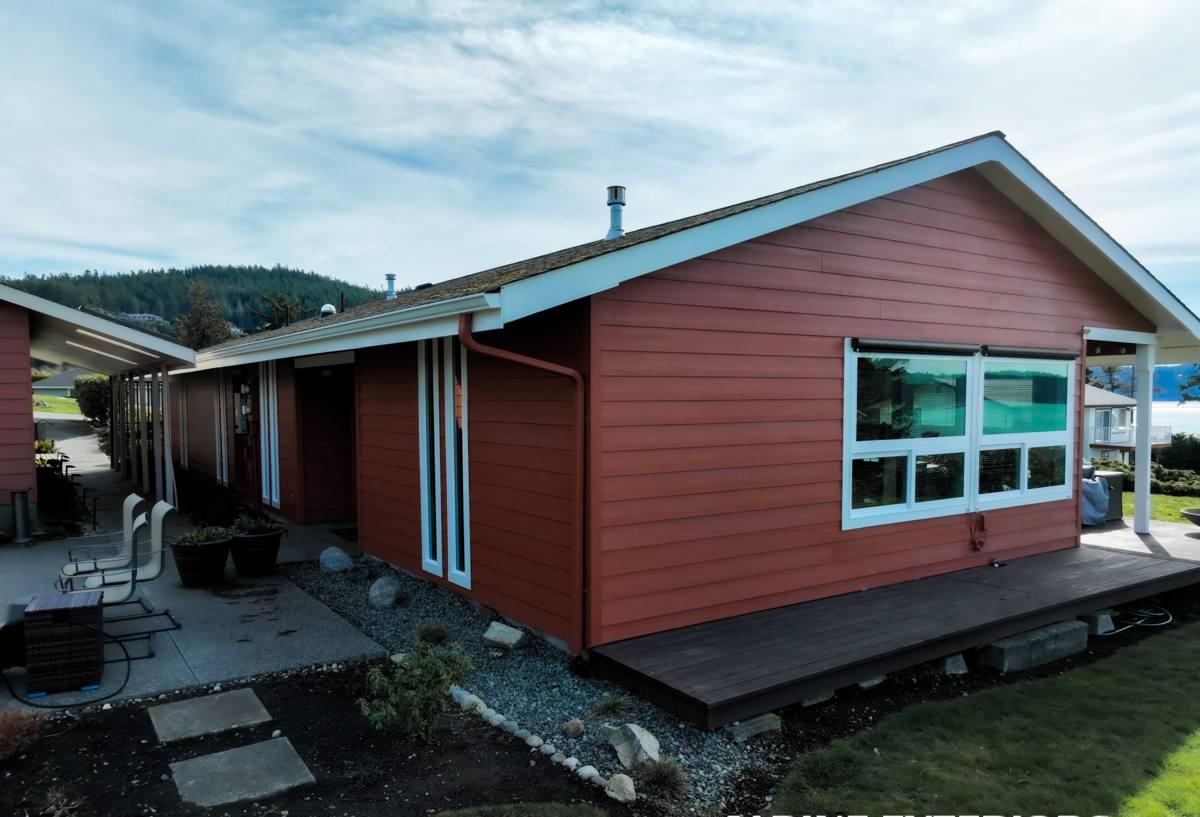
Signs a Custer Home Needs Siding Replacement, Not Another Repair
Homeowners often call us after patching the same spot two or three times. That's usually a sign the underlying problem is bigger than the visible damage. Look for:
- Soft or spongy siding when you press on it, especially near the bottom courses and around window trim
- Paint that won't hold no matter how often it's redone — a sign moisture is pushing out from behind the siding
- Visible cupping, buckling, or gaps between boards that weren't there a few years ago
- Persistent moss or dark streaking that comes back within a season of cleaning
- Soft trim or sheathing discovered once a section of siding is pulled back
- Rising energy bills with no other explanation, which can point to a compromised weather barrier
If more than one or two of these show up at once, patch repairs are usually just delaying a full replacement while the damage underneath keeps spreading.
What a Correct Siding Replacement Actually Involves
A siding replacement done right is mostly about what happens before the new siding ever goes up. In a climate like Custer's, the work under the surface matters more than the finish coat.
Tear-Off and Inspection
Full removal of the old siding lets us actually see the sheathing, framing, and existing weather barrier — not guess at their condition from the outside. Any soft sheathing or rotted framing gets addressed before anything new goes on. Skipping this step is the single most common reason a "new" siding job fails within a few years.
Weather-Resistant Barrier
A continuous, correctly lapped water-resistive barrier is what actually keeps wind-driven rain out of the wall assembly. Every seam, every penetration, every window and door opening needs to be integrated into that barrier in the right order — flashing over the barrier below it and under the barrier above it, so water is always directed outward and down.
Flashing and Fastening
Window heads, sills, and any horizontal trim need flashing that actually sheds water rather than just looking finished. Fasteners matter too: in a salt-air environment, corrosion-resistant fasteners installed at the correct depth and spacing are not optional extras, they're the difference between siding that holds for decades and one that loosens and lets moisture in within a handful of years.
Finish Installation
Only once the wall is properly protected does the visible siding go on — with correct clearances at grade and roof lines, proper caulking at joints, and painted or factory-finished surfaces that hold up to UV and moisture rather than just looking good on install day.
Why We Install Only James Hardie Fiber Cement
We standardized on James Hardie fiber cement siding and don't install vinyl, LP SmartSide, cedar, or other fiber cement brands. That's a deliberate call based on how materials perform in exactly the conditions Custer sees. Fiber cement doesn't absorb water the way wood-based products can, so it doesn't swell, rot, or feed moss growth the way engineered wood or cedar can when a wall stays damp for weeks at a time. It's also non-combustible, which matters as wildfire smoke and dry-season fire risk have become a bigger part of Pacific Northwest summers even in wetter coastal counties. Hardie's ColorPlus factory finish is baked on and warranted against fading and flaking, which matters in an area where UV exposure and salt air both work against paint film over time. Their HZ5 product line in particular is engineered for cold, wet, coastal climates like this one. We're not the only crew that can hang a board of siding — we just won't put a product on a Custer home that we don't think will hold up to what this specific climate does to a house year after year.
How Our Process Works
Every job starts with an in-person inspection of the existing siding, trim, and any visible trouble spots, not a drive-by estimate. From there:
- We walk the exterior with you and point out what we find — soft spots, failed caulk, moss buildup, drainage issues
- We give you a written scope and estimate that spells out tear-off, sheathing repair allowances, weather barrier, flashing details, and the specific Hardie product and color
- Once scheduled, we tear off old siding in manageable sections rather than exposing the whole house to weather at once
- Any rotted sheathing or framing is repaired and documented before it's covered back up
- New weather barrier, flashing, and Hardie siding go on to manufacturer spec
- We walk the finished job with you before calling it complete
Fiber Cement vs. Other Siding Options in a Coastal Whatcom Climate
| Material | Moisture Behavior | Salt Air / Corrosion | Maintenance |
|---|---|---|---|
| James Hardie Fiber Cement | Does not absorb and swell; resists moisture-driven rot | Non-combustible; holds factory finish well in salt exposure | Occasional washing; ColorPlus finish reduces repainting |
| Vinyl | Sheds water but can trap moisture behind panels if installed loose | Can become brittle and crack over time in cold, wind-driven conditions | Low, but color fades and panels can warp near heat sources |
| LP SmartSide (engineered wood) | Wood-based core is vulnerable if any moisture barrier fails | Fasteners and cut edges need careful sealing to resist rot | Regular caulk and paint upkeep, especially at seams |
| Cedar | Absorbs moisture readily; needs to dry out between wet periods | Prone to moss and mildew in prolonged damp, shaded conditions | Frequent refinishing and moss treatment |
Cost Factors for a Custer Siding Replacement
Every home is different, but the same handful of factors drive most of the cost variation we see on siding jobs in this area:
| Factor | Why It Matters |
|---|---|
| Condition of sheathing underneath | Hidden rot found during tear-off adds repair scope that can't be priced sight unseen |
| Home size and wall complexity | More corners, dormers, and trim details mean more labor and flashing work |
| Siding profile and accessories | Lap width, trim style, and accent details change material and labor cost |
| Access and site conditions | Tight lots, landscaping, or multi-story walls affect staging and time on site |
| Existing moisture damage | Moss- and rain-related rot found on older Custer homes often requires more sheathing replacement than a drier-climate home of the same age |
We give a firm written estimate after inspection, not a rough number over the phone, because so much of the real cost depends on what's actually happening behind the old siding.
What to Ask Before Hiring a Siding Contractor in Custer
- Do they remove old siding completely, or install over existing walls?
- What weather-resistive barrier and flashing method do they use, and can they explain it clearly?
- Are they a factory-trained or certified installer for the specific siding product they're proposing?
- Will sheathing or framing repairs be documented and shown to you, or just covered up?
- What does the manufacturer's warranty actually cover, and is it transferable if you sell the home?
- Do they have experience with homes specifically in this coastal Whatcom County area, not just general siding work?
Why Local Experience in Custer and the Blaine Area Matters
A crew that already works in and around Custer and Blaine has seen how this specific stretch of coastline treats a house — where moss builds up fastest, which wall orientations take the worst of the driving rain, and how quickly a small flashing gap turns into a real problem when it's exposed to this much salt air and moisture for years on end. That local pattern recognition shows up in the details: where we add extra flashing attention, which fastener spec we insist on, and how we sequence a tear-off around whatever the coastal weather is doing that week. It's the difference between a generic install and one that's actually built for the house it's going on.
If your Custer home's siding is showing its age, we'll come take a look, tell you honestly what we find, and put together a clear, no-pressure estimate for a James Hardie siding replacement built for this climate. Use the form below to get started.