 Blaine Siding
 Roofing in Grandview Comes With Its Own Set of Problems
Grandview homes sit close enough to the water and the border that the roof over your head is doing more work than it would almost anywhere else in Whatcom County. Salt-laden air off the Strait, driving rain that comes in sideways more often than straight down, and a moss season that can run from October through May all put steady pressure on a roof system. None of that means your roof fails faster on its own — it means small weaknesses in materials, ventilation, or installation get found out sooner here than they would inland. A roof replacement done right for a Grandview home has to account for all three of those things from the first shingle to the last piece of flashing.
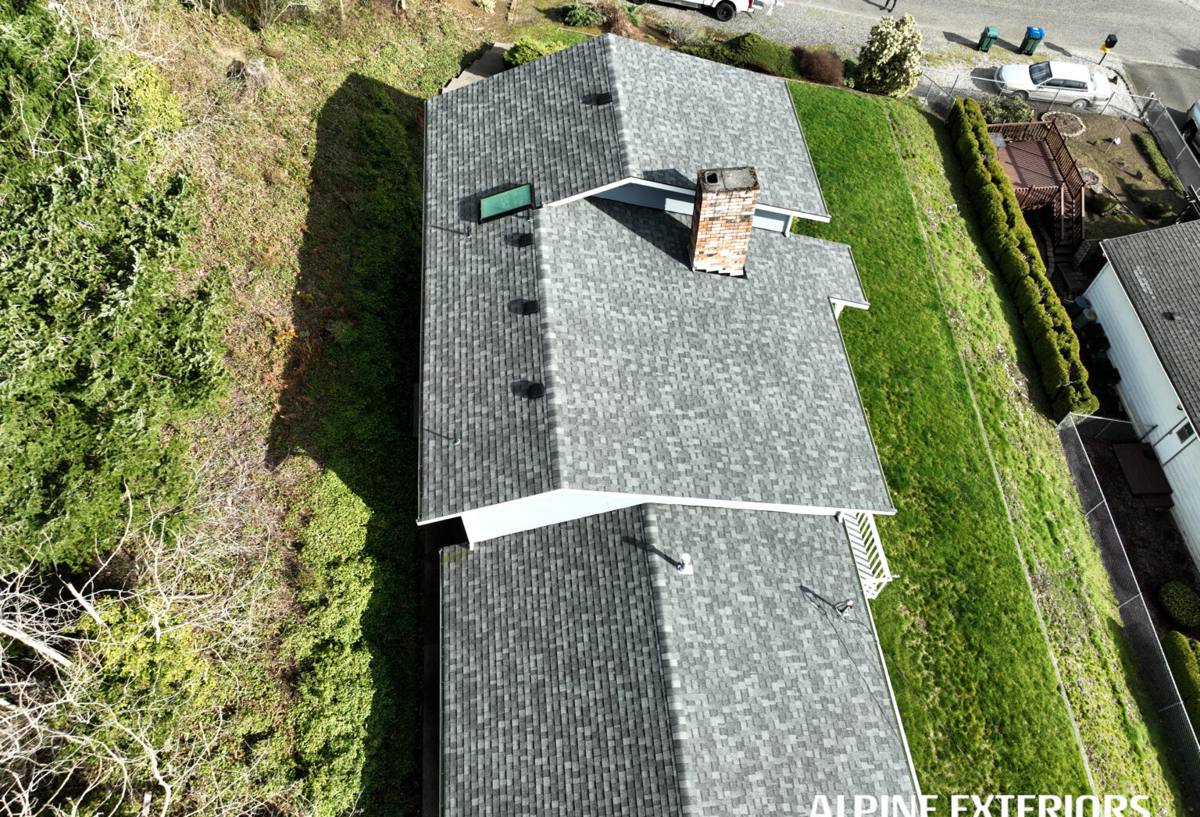
What Blaine's Climate Actually Does to a Roof
Salt Air and Metal Fatigue
Salt air accelerates corrosion on anything metal — nails, flashing, vent stacks, gutter hangers, even the fasteners holding shingles down. On a roof that's approaching 20 years old, this is often where failure actually starts: not the shingles themselves, but the metal components around them rusting, loosening, or losing their seal. A replacement is the right time to upgrade every metal component to a corrosion-resistant spec, not just match what was there before.
Driving Rain and Wind-Driven Moisture
Blaine gets rain that doesn't fall straight down. Wind off the water pushes water sideways and up under shingle edges, ridge caps, and anywhere two roof planes meet. A roof that would be fine in a calmer climate can leak here simply because the underlayment and flashing weren't built for wind-driven rain. This is a detail-level problem — it's solved by how the roof is built, not by which shingle brand is on top.
The Long Moss Season
Shade, moisture, and mild temperatures are exactly what moss wants, and Whatcom County gives it most of the year to grow. Moss holds moisture against the roof surface, works its way under shingle tabs, and lifts them just enough to let water in. It also breaks down the granule surface on asphalt shingles faster than sun exposure alone would. A roof replacement is the moment to correct whatever is feeding the moss problem — usually shade, poor airflow, or debris that never gets cleared — not just install new material into the same conditions that killed the old roof.
Signs a Grandview Roof Is Actually Due for Replacement
Not every roof problem means a full replacement. But in this climate, certain signs mean patching is a short-term fix at best.
- Granule loss heavy enough that you can see bare, shiny patches on shingles from the ground
- Shingles that are curling, cupping, or lifting at the edges, especially on the windward side of the roof
- Moss established in patches rather than just a thin surface film
- Soft spots or sag visible along the roofline, which usually points to deck damage underneath
- Staining on interior ceilings or in the attic, even if it's not actively dripping right now
- A roof that's 20-plus years old on asphalt, or showing its age visibly regardless of stated lifespan
- Flashing around chimneys, skylights, or vent stacks that's visibly rusted, cracked, or pulling away
If a roof is showing two or more of these, it's worth a real inspection before spending money on another round of patching.
What a Correct Roof Replacement Actually Involves
Full Tear-Off and Deck Inspection
We don't install new roofing over old. A full tear-off is the only way to see the actual deck condition underneath — and in a climate with this much moisture history, hidden rot or soft plywood is common enough that skipping this step is a real risk. Any damaged decking gets replaced before anything new goes down, not covered over.
Underlayment Built for Wind-Driven Rain
Given how often rain here comes in sideways, we install underlayment rated for wind-driven moisture, with ice-and-water shield at the eaves, valleys, and any roof-to-wall transitions — the spots where wind-blown water actually gets in.
Ventilation That Actually Works
Poor attic ventilation traps moisture, which feeds moss growth from underneath and shortens the life of whatever roofing material is on top, regardless of brand. Part of a correct replacement is checking intake and exhaust airflow and correcting it if it's inadequate — not just replacing the roof surface and leaving an underlying moisture problem in place.
Flashing and Penetration Details
Every chimney, vent stack, skylight, and roof-to-wall junction is a potential entry point for wind-driven rain. We use corrosion-resistant flashing at every one of these, properly stepped and sealed, because this is where the vast majority of roof leaks actually originate — not in the open field of the roof.
Choosing a Roofing Material for a Grandview Home
There's no single "best" roofing material for this area — the right choice depends on your home's structure, your budget, and how much long-term maintenance you're willing to take on. Here's how the common options actually compare for a coastal Whatcom County home.
| Material | Typical Lifespan Here | Moss Resistance | Maintenance |
|---|---|---|---|
| Standard asphalt composition shingle | 18–25 years | Moderate — benefits from copper/zinc strips | Low to moderate |
| Impact/algae-resistant asphalt shingle | 25–30 years | Good — treated granules resist growth longer | Low |
| Metal (standing seam) | 40–50+ years | Very good — little surface for moss to grip | Low |
| Cedar shake | 20–30 years with upkeep | Poor without regular treatment | High |
We're honest with clients about cedar shake: it can look excellent on the right home, but in a climate this wet and moss-prone, it demands regular cleaning and treatment to hold up, and skipping that maintenance shortens its life significantly. That's a real trade-off, not a knock on the material itself — it's a maintenance commitment homeowners should walk in with eyes open about.
What Actually Drives the Cost of a Grandview Roof Replacement
Every roof is priced on its own specifics, but the same handful of factors move the number up or down on almost every job in this area.
| Factor | Why It Matters Here |
|---|---|
| Roof pitch and complexity | Steeper, multi-plane roofs take longer to tear off and flash correctly |
| Deck condition | Rot found during tear-off adds material and labor to replace it properly |
| Material choice | Metal and upgraded asphalt cost more up front but need less upkeep against moss and salt corrosion |
| Ventilation corrections | Adding or fixing intake/exhaust venting is worth doing once, during the tear-off |
| Flashing and penetration count | More chimneys, skylights, and vents mean more detail work to weatherproof |
| Access and site conditions | Tight lots, mature trees, or difficult staging affect labor time |
We give homeowners a broad range up front and a firm number after we've actually seen the roof — not a lowball estimate that grows once the tear-off starts.
Our Roof Replacement Process
- On-site inspection. We get on the roof, check the deck where accessible, evaluate ventilation, and note every flashing and penetration point.
- Written estimate. A clear scope of work and price — material options, what's included, and what would trigger a change order (like discovering rot).
- Scheduling around the weather. We plan tear-off days around forecast windows rather than starting a job we can't get dried in the same day.
- Full tear-off and deck repair. Old roofing comes off completely; any damaged decking is replaced before moving forward.
- Underlayment, flashing, and ventilation correction. The parts of the job that don't show but determine whether the roof actually holds up here.
- New roofing installation. Installed to manufacturer spec, which protects your warranty coverage.
- Final walkthrough. We go over the finished roof and cleanup with you before calling the job done.
Why a Crew That Already Works Grandview Matters
A roofer who's worked this specific stretch of Blaine already knows how the salt air, wind direction, and shade patterns typically play out on homes in the area — where moss tends to build up first, which roof-to-wall details need extra attention, and what local permitting and inspection actually require. That's not something you get from a crew that mostly works inland and treats a coastal roof like any other. It also means we're not guessing at material performance in this climate — we've seen what holds up here and what doesn't, and we'll tell you plainly which is which.
After the Install: Keeping a Grandview Roof Healthy
A correct installation gets you most of the way to a long-lasting roof, but a little upkeep protects that investment.
- Clear debris from valleys and gutters at least twice a year — more often if you're under trees
- Have moss treated at the first sign of it, rather than waiting for visible patches
- Keep gutters and downspouts flowing freely so water doesn't back up under the roof edge
- Have the roof looked at after any major windstorm, since that's when flashing and shingle edges take the most abuse
- Schedule a periodic check-up rather than waiting for a leak to find a problem for you
If your Grandview home's roof is showing its age or you just want an honest opinion on where it stands, we're happy to take a look. Fill out the form below for a free, no-pressure estimate.