 Blaine Siding
 Roof Replacement Built for Dakota Creek's Coastal Climate
A roof in Dakota Creek does more work than a roof almost anywhere inland. It sits close enough to the water to take on salt-laden air, it sees long stretches of driving rain off the Strait of Georgia, and it spends a good chunk of the year shaded and damp enough to grow moss. Replacing a roof out here isn't just a matter of stripping old shingles and nailing down new ones — it's about building an assembly that can shed water fast, resist the slow creep of moss and algae, and hold up to salt exposure without the fasteners and flashing corroding out from under a roof that otherwise still looks fine.
This page covers what a proper roof replacement looks like for homes in Dakota Creek and the surrounding Blaine area, what we actually do on a job, and why local experience matters more here than in drier, inland parts of Whatcom County.
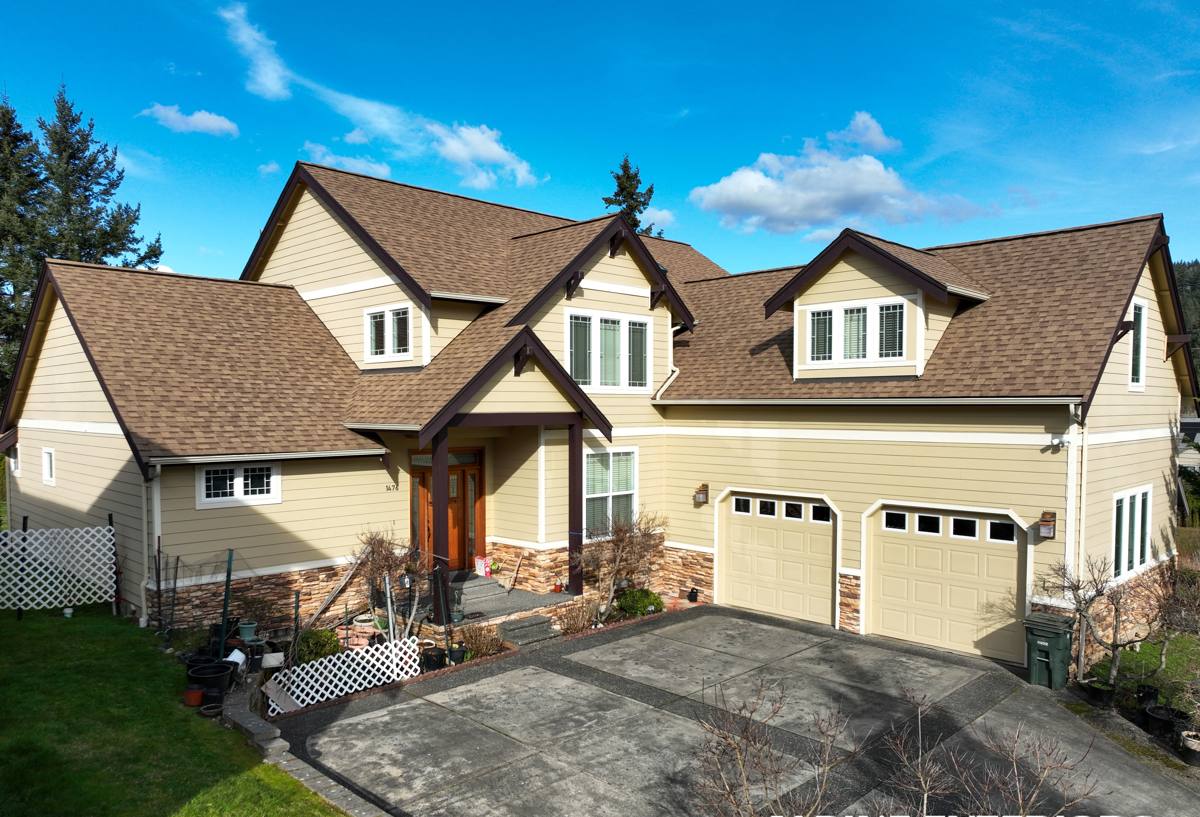
What Dakota Creek Homes Are Up Against
Three things drive almost every roofing problem we see in this part of Whatcom County:
Salt Air
Proximity to Semiahmoo Bay and Drayton Harbor means the air carries salt further inland than most homeowners expect. Salt speeds up corrosion on exposed metal — nail heads, flashing, gutter hardware, and vent caps — long before the shingles themselves wear out. A roof that looks structurally sound can still be failing at its metal components.
Driving Rain
Storms coming off the water don't just fall straight down — wind-driven rain gets pushed sideways and upward under shingle edges, around chimneys, and into any flashing detail that isn't sealed correctly. A roof built for a calmer climate, with minimal underlayment overlap or undersized flashing, will leak here even when it wouldn't leak somewhere with less wind exposure.
A Long Moss Season
Shade from mature trees, persistent moisture, and cool temperatures for much of the year add up to a moss season that runs far longer than most homeowners realize. Moss isn't just cosmetic — it holds water against the roofing material, lifts shingle edges as it grows, and works its way into the joints between shakes and shingles. Left alone, it shortens the life of almost any roofing material.
None of this means a roof in Dakota Creek needs to be exotic. It means the details — underlayment, flashing, fastener choice, ventilation — have to be done right, every time, because this climate finds every shortcut.
Signs Your Roof Needs Replacing, Not Just Repair
Not every roof problem calls for a full replacement. But there's a point where patching becomes a losing bet — you're spending money to delay the inevitable instead of solving it. Here's what tells us a roof is past the point of repair:
- Shingles are curling, cupping, or losing granules across large sections, not just one isolated spot
- Moss has established itself under the shingle tabs, not just on the surface — lifting them as it grows
- You've had two or more separate leaks in different areas within the last couple of years
- The roof is original to a home built more than 20-25 years ago and has never been replaced
- Decking feels spongy or shows staining/sagging when viewed from the attic
- Flashing around chimneys, vents, or valleys is rusted, cracked, or was never properly step-flashed
- Multiple roofing layers already exist, ruling out another overlay
If only one or two of these apply and the roof is otherwise young, a targeted repair may be the honest answer. We'll tell you that. But once decking, flashing, and shingle life are all compromised together, replacement is usually the more cost-effective path over the next decade.
What a Correct Roof Replacement Involves
Tear-Off and Deck Inspection
We remove the old roofing down to the deck rather than roofing over it. This is the only way to actually see the plywood or plank decking underneath — and in a climate this wet, hidden rot at eaves, valleys, and around old flashing is common enough that skipping this step is a gamble. Any soft or delaminated decking gets replaced before anything new goes down.
Underlayment and Moisture Barrier
Given the amount of wind-driven rain this area sees, we use a synthetic underlayment across the full roof and an ice-and-water shield membrane at the eaves, valleys, and around penetrations — the spots where wind can push water uphill under the shingles. This is one of the most overlooked details in a budget roof job, and it's exactly where Dakota Creek homes tend to leak first.
Flashing and Ventilation
Chimneys, skylights, sidewalls, and valleys all get new step and counter-flashing rather than reused or caulked-over old flashing. We also check attic ventilation — intake at the eaves, exhaust at the ridge — because poor airflow traps moisture in the attic, which accelerates rot from the inside and feeds moss growth from underneath the deck's edge.
Material Installation
Shingles, panels, or shakes go down to manufacturer spec for nailing pattern and exposure, with special attention to fastener corrosion resistance given the salt air. Ridge caps, starter strips, and drip edge are installed as a system, not an afterthought.
Choosing Roofing Materials for a Moss-Prone, Marine Climate
There's no single "best" roofing material for every home — it depends on budget, roof pitch, tree cover, and how much maintenance you want to take on. Here's how the common options actually perform in this climate:
| Material | Moss/Moisture Resistance | Maintenance Needs | Typical Lifespan Here | Relative Cost |
|---|---|---|---|---|
| 3-Tab Asphalt Shingle | Fair — flat profile sheds moss less easily | Periodic moss treatment | 15-20 years | $ |
| Architectural/Laminate Shingle | Good — thicker profile, better granule adhesion | Periodic moss treatment | 20-30 years | $$ |
| Metal Roofing (standing seam or panel) | Very good — moss struggles to hold on smooth metal | Low; occasional fastener check | 40-50+ years | $$$ |
| Cedar Shake | Poor without diligent upkeep — moisture-prone by nature | High; regular cleaning/treatment required | 20-30 years with upkeep | $$$ |
We install architectural shingles and metal roofing most often in Dakota Creek because they handle the moss-and-moisture combination with the least ongoing maintenance. Cedar shake has real curb appeal, but it demands a maintenance commitment — regular cleaning and moisture treatment — that not every homeowner wants to keep up with in a climate this wet, and we'll walk you through that trade-off honestly rather than talk you into or out of it.
Our Process
1. Inspection and Estimate
We walk the roof and the attic, not just look at it from the ground. You get a written estimate that spells out material, scope, and what we found — including anything we'd recommend repairing versus replacing.
2. Material Selection
We go over the options above in plain terms — what fits your budget, your roof's exposure to trees and shade, and how much upkeep you're willing to do.
3. Installation
Tear-off, deck repair as needed, underlayment, flashing, and material installation, typically completed in a matter of days for most residential roofs depending on size and weather windows.
4. Cleanup and Walkthrough
Full site cleanup including magnetic nail sweeps, followed by a walkthrough so you can see the finished work before we consider the job done.
5. Warranty Paperwork
You get manufacturer warranty registration and our workmanship warranty documentation in writing, not just a verbal promise.
Why Hire a Crew That Already Works Dakota Creek
Roofing crews that mostly work drier, inland areas tend to under-build for what this stretch of Whatcom County actually throws at a roof — lighter underlayment, standard flashing details, and no real plan for moss. A crew that's worked Dakota Creek and the greater Blaine area repeatedly knows which valleys and eaves take the worst of the wind-driven rain, how much moss pressure a given tree canopy creates, and which fastener and flashing upgrades are worth the modest extra cost versus which are unnecessary. That local pattern recognition is the difference between a roof that needs attention again in five years and one that quietly does its job for two or three decades.
We also work around this area's weather windows rather than fighting them — scheduling tear-offs when the forecast gives us a real shot at getting the deck dried in and covered before the next system rolls through, which matters a lot more here than in a drier climate where a surprise shower is a minor inconvenience instead of a real risk to exposed decking.
Maintenance After Replacement
A new roof still needs some upkeep in this climate to reach its full lifespan:
- Have moss growth treated at the first sign of it rather than waiting for it to spread
- Keep gutters clear so water isn't backing up under the shingle edge, especially near overhanging trees
- Trim back branches that keep sections of the roof shaded and damp
- Have the roof looked at after any major windstorm to check flashing and ridge caps
- Schedule a general inspection every few years even without a known problem
None of this is complicated, but skipping it is how a well-installed roof ends up needing early attention anyway.
If you're weighing repair versus replacement, or just want an honest read on where your roof stands, we're happy to take a look. The estimate is free, there's no pressure to move forward, and you'll get a straight answer either way — use the form below to get started.