 Blaine Siding
 Storm Damage Roof Repair for Peace Arch Homes
Peace Arch sits right up against the US-Canada border in Blaine, close enough to Semiahmoo Bay and the Strait of Georgia that the weather off the water shapes almost everything about how a roof ages here. Homes in this part of Whatcom County take a different kind of beating than roofs even a few miles inland: salt-laden air, wind-driven rain that comes in sideways off the water, and a moss season that runs longer than most homeowners expect. When a storm rolls through and does damage, the fix needs to account for all of that — not just patch the obvious hole and move on.
This page covers what storm damage roof repair actually looks like for a Peace Arch home: what the local climate does to roofing, how to tell if a storm left damage behind, what a correct repair involves, and why it matters to hire a crew that already works this specific corner of Blaine.
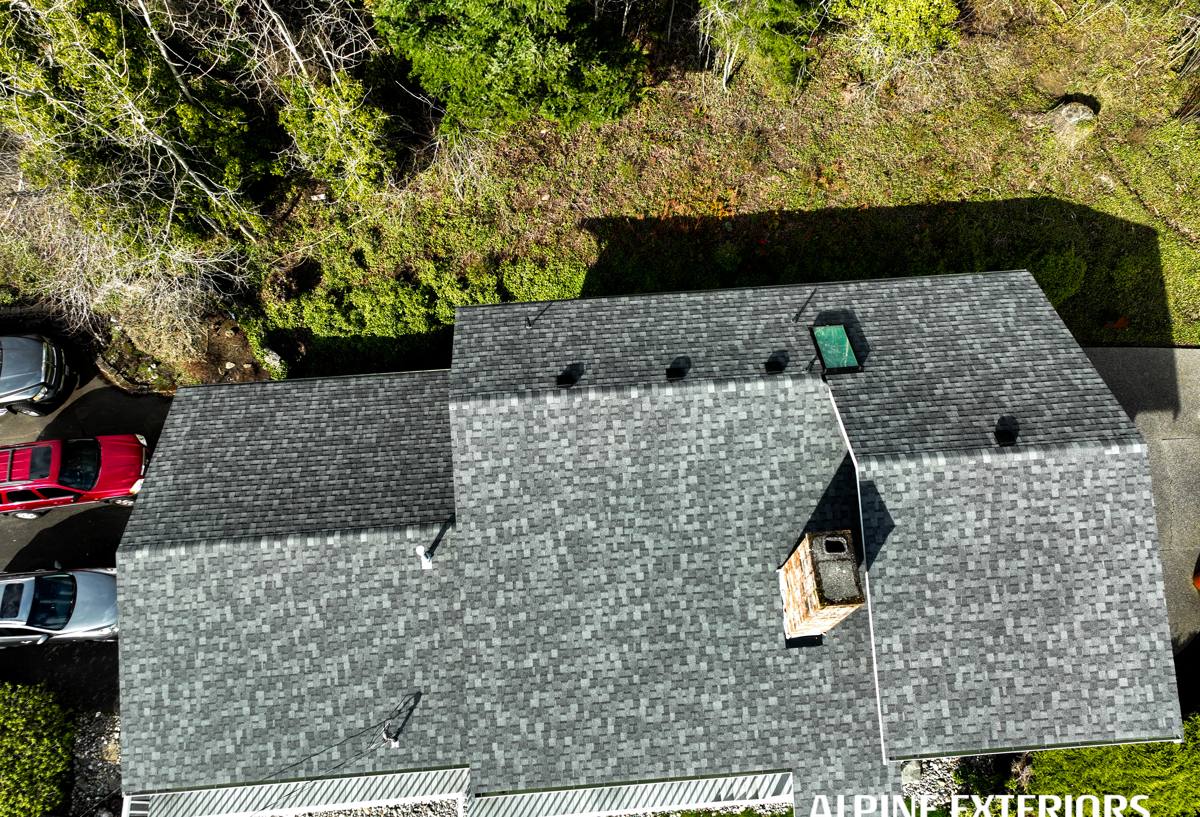
What Blaine's Climate Does to a Peace Arch Roof
Salt Air and Corrosion
Being this close to saltwater means metal components on a roof — flashing, fasteners, gutter hardware, vent caps — corrode faster than they would twenty or thirty miles inland. A fastener that would last a decade in a drier, saltier-free environment can start weeping rust streaks or losing grip years earlier here. Corroded flashing is one of the most common hidden causes of a "storm leak" that actually started before the storm ever hit — the wind and rain just found the weak point.
Driving Rain and Wind Direction
Storms coming off the water tend to push rain at an angle rather than straight down, which means water gets forced up under shingle edges, around ridge caps, and into any gap in flashing that would stay dry in a calmer rain. Roofs here need laps, seals, and flashing details that are built for wind-driven moisture, not just gravity-fed runoff.
A Long Moss Season
Whatcom County's mild, wet winters and shaded lots in and around Peace Arch give moss a long window to establish itself — often nine months of the year or more. Moss holds moisture against the roofing material, works its way under shingle tabs, and lifts edges just enough for wind and rain to get underneath during a storm. A roof with an active moss problem is more vulnerable to storm damage than a clean one, and storm repairs on a mossy roof often need to include moss removal to actually hold.
Signs a Storm Has Damaged Your Roof
Not all storm damage is obvious from the ground. Some of it only shows up as a stain on a ceiling weeks later. Here's what we tell Peace Arch homeowners to look for after a windstorm or heavy rain event:
- Shingles that are visibly lifted, curled, cracked, or missing entirely
- Granules collecting in gutters or at downspout outlets (a sign of impact or wind abrasion)
- Bent, lifted, or missing flashing around chimneys, vents, skylights, or roof-to-wall joints
- Water stains or discoloration on interior ceilings or in the attic after a storm
- Debris — branches, needles, or larger material — that hit the roof during high wind
- Sagging or soft spots when the roof is walked, which can indicate deck damage underneath
- Gutters pulled loose or downspouts detached, which changes how water drains off the roof
If you see any of these after a storm, it's worth having a roof looked at before the next rain event, even if there's no active leak yet. A small gap that isn't leaking today can become an active leak the next time wind pushes rain into it.
What a Correct Storm Damage Repair Involves
Start With a Real Assessment
A proper storm repair starts on the roof, not just from the ground with binoculars. That means checking the deck for soft spots, inspecting flashing at every penetration, checking shingle or panel condition beyond just the area that looks damaged, and looking in the attic for moisture, staining, or daylight where there shouldn't be any. Storm damage often extends past the spot where the leak showed up inside — wind lifts a wider area than water finds its way through.
Match the Existing Material
Whether the roof is asphalt shingle, metal, or another material, a repair should match the existing roofing as closely as possible in profile, color, and installation method. A patch that doesn't match the surrounding material weathers differently and stands out, and if it's not tied in correctly it can become its own future leak point.
Address the Cause, Not Just the Symptom
If moss lifted the shingle that then let wind get underneath, removing the moss and treating the area is part of the repair — not a separate job. If corroded flashing let water in, the flashing gets replaced with new material, not just re-sealed. A repair that only covers the visible hole without addressing why it happened tends to fail again in the next storm.
Check the Deck
If water has been getting in for a while before it was noticed, the roof deck underneath may be soft, delaminated, or rotted. Any damaged decking needs to be replaced before new roofing goes back down — covering rotten decking with new shingles just hides the problem for a little while longer.
Our Storm Damage Repair Process
- Inspection: We get on the roof (not just look from the driveway) and document the actual extent of damage, inside and out.
- Written scope and estimate: You get a clear explanation of what's damaged, what needs to be done, and an honest price range before any work starts.
- Temporary protection if needed: If there's active leaking or an open area, we'll get it covered to stop further damage while repair materials are sourced.
- Repair: Deck repair where needed, correct flashing, matched roofing material, and proper sealing at every transition and penetration.
- Cleanup and walk-through: Debris is cleared, gutters checked, and we walk the finished repair with you so you know exactly what was done.
Repair vs. Replace: What Drives the Decision
Not every storm-damaged roof needs to be replaced, and not every roof can be reasonably patched. Here's how we think through it:
| Factor | Leans Toward Repair | Leans Toward Replacement |
|---|---|---|
| Age of roof | Roof is well within its expected lifespan | Roof is already near or past typical service life |
| Extent of damage | Localized area (one slope, one section) | Widespread across multiple slopes or the whole roof |
| Deck condition | Deck is sound under the damaged area | Deck shows rot or repeated soft spots in multiple places |
| Material availability | Matching material is available and repair will blend in | Material is discontinued or too different to match well |
| History of moss/leaks | First storm event, no ongoing moss or leak history | Repeated moss buildup or prior leaks in other areas |
Cost is naturally part of this conversation too. A small, localized repair after a storm — a section of lifted or damaged shingles, a flashing fix — is often in the range of a few hundred to a couple thousand dollars depending on access and material. Larger damage involving deck repair or a bigger section of roof runs higher. We'll always give you the honest range for your specific situation before starting, not a guess.
Insurance and Storm Claims
Many storm-related roof repairs are covered by homeowners insurance, particularly when the damage traces back to a specific wind or storm event. We can document damage with photos and a written scope that you can submit to your insurer, and we're glad to walk an adjuster through what we found on the roof. We don't handle the claims process itself or promise a specific outcome — that's between you and your insurance company — but we make sure the roof-side documentation is thorough and accurate.
Why Hire a Crew That Already Works Peace Arch
A roofer who works Blaine and the surrounding Whatcom County coastline regularly knows what to check for that a crew unfamiliar with the area might miss: where moss tends to build up fastest given the tree cover and shade patterns common here, how far salt-air corrosion typically progresses on flashing and fasteners by a given roof age, and how wind off the water tends to hit roofs from a particular direction depending on the lot's orientation. That local pattern recognition means a faster, more accurate inspection and a repair that's built for the next storm, not just the last one.
It also means someone who's easy to reach if a repair needs a follow-up look, and who isn't driving in from out of the area to handle a callback.
Preventing Repeat Storm Damage
A few habits go a long way toward keeping a Peace Arch roof from taking repeat storm damage:
- Have moss removed and treated before it has a chance to lift shingle edges — ideally before the wettest months set in
- Keep gutters and downspouts clear so storm runoff actually drains instead of backing up under the roof edge
- Trim back branches that overhang the roof, since falling limbs are a common source of impact damage in wind events
- Have flashing checked periodically, especially on an older roof, since salt-air corrosion is gradual and easy to miss until it fails
- After any significant windstorm, do a visual check from the ground and call for an inspection if anything looks off
If a storm has left your Peace Arch roof with missing shingles, a new leak, or damage you're not sure how to assess, we're happy to take a look. Reach out for a free, no-pressure estimate using the form below.