 Blaine Siding
 Roofing Near the Peace Arch Border Crossing Takes a Different Kind of Beating
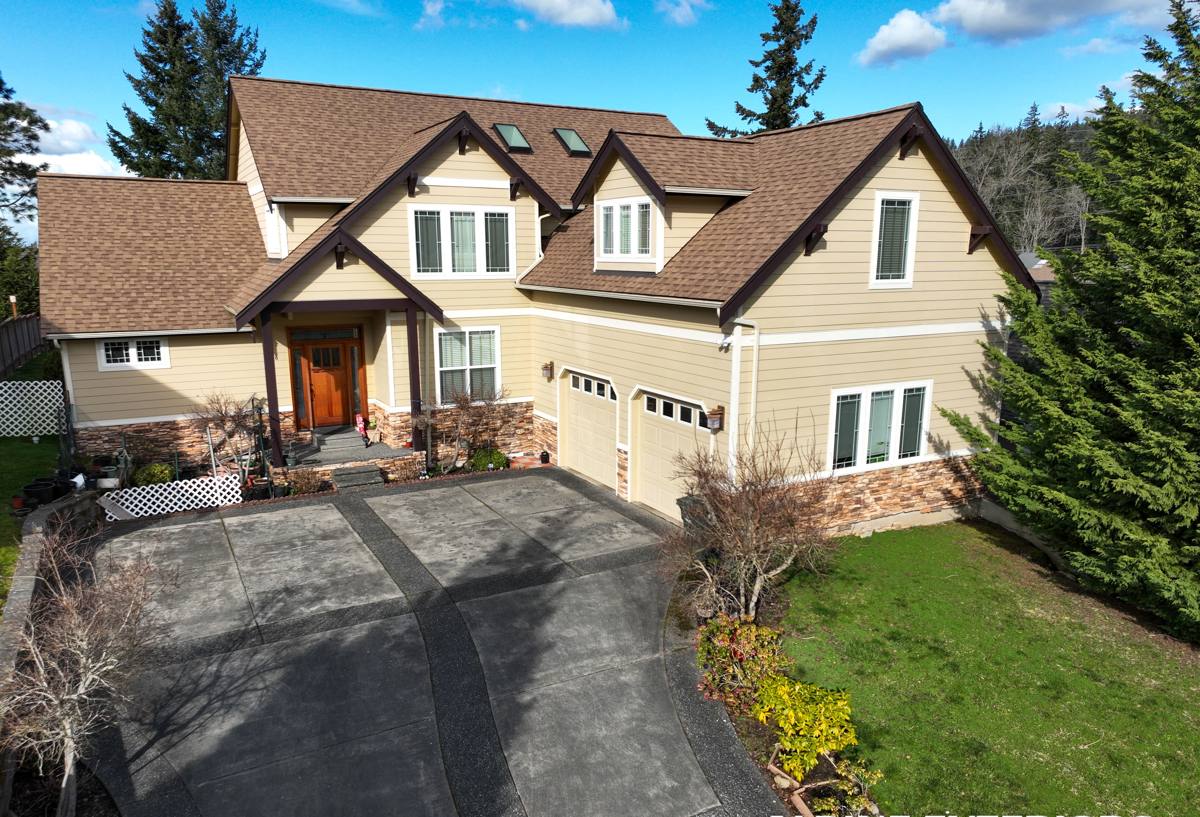
Homes in the Peace Arch area of Blaine sit about as close to the water and the weather as you can get in Whatcom County. That location is part of what makes the neighborhood desirable, but it's also exactly why roofs here fail faster than roofs ten or fifteen miles inland. Salt-laden air off the water accelerates corrosion on fasteners, flashing, and metal components. Wind-driven rain finds every gap in flashing and underlayment that a calmer climate would never expose. And the tree cover and marine humidity that keep this area green also keep roofs damp long enough, long enough of the year, for moss and algae to take hold and spread.
A roof replacement done right in this neighborhood isn't the same job as a roof replacement in a dry inland subdivision. The materials, the detailing, and the sequence of work all need to account for what this specific stretch of coastline does to a roof over twenty or thirty years. This page is about that job specifically — not roofing in general.
What Salt Air, Driving Rain, and Moss Actually Do to a Roof
Salt Air and Corrosion
Airborne salt from Semiahmoo Bay and the Strait of Georgia settles on everything, including roofing metal. Cheap or under-coated flashing, drip edge, and fasteners corrode faster here than the manufacturer's warranty literature assumes, because that literature is usually written for an average national climate, not a marine one. Corrosion at a nail head or a flashing seam doesn't stay small — it opens a path for water, and water is what actually ends a roof's life.
Driving Rain and Wind
Storms coming off the water tend to push rain sideways, not straight down. That matters because a lot of roofing details are designed assuming water runs downhill in a predictable sheet. Wind-driven rain gets up under shingle tabs, into open valleys, and behind poorly lapped underlayment. A roof that would perform fine in a calm rain event can leak in a wind-driven one if the underlayment laps, valley treatment, and shingle nailing pattern weren't built for wind exposure in the first place.
The Long Moss Season
Shade from mature trees plus persistent marine moisture gives moss and algae a long growing window here — realistically most of the year, not just the wet months. Moss isn't just cosmetic. It holds moisture directly against the shingle surface, works its root structure under shingle tabs and granules, and lifts edges enough for wind and rain to get underneath. A roof that looks "fine" from the ground can already have moss compromising its water-shedding ability from above.
Signs a Peace Arch Roof Needs Replacement, Not Another Repair
Repairs make sense when the damage is isolated. Replacement makes sense when the roof's overall ability to shed water is failing. In this climate, that line gets crossed earlier than homeowners expect, because moss and salt exposure age a roof faster than its printed lifespan suggests.
- Heavy moss coverage across north-facing or shaded slopes, not just a light green tint
- Granules collecting in gutters or at downspout outlets in noticeable amounts
- Shingle edges curling, cupping, or lifting, especially on wind-exposed slopes
- Rust staining or visible corrosion at flashing, vents, or exposed fasteners
- Interior ceiling stains, especially after wind-driven storms rather than steady rain
- Daylight visible through the roof deck from inside the attic
- A roof approaching or past 20-25 years old, regardless of appearance
- Rising heating bills that track with visible attic moisture or insulation that's damp to the touch
What a Correct Roof Replacement Looks Like Here
Tear-Off and Deck Inspection
Full tear-off, not a layover, is the standard for this area. Layering new shingles over old traps moisture and hides deck damage that's common on homes with a history of moss and slow leaks. Once the deck is exposed, any soft, delaminated, or water-stained sheathing gets identified and replaced before anything new goes down. Skipping this step is the single most common reason a "new" roof still leaks within a few years.
Underlayment Built for Wind-Driven Rain
We use synthetic underlayment with proper overlap and, in vulnerable areas like eaves and valleys, self-adhering ice-and-water membrane. In a climate with sideways rain, lap direction and overlap width aren't a formality — they're the difference between water running off and water finding a seam.
Flashing and Fasteners Rated for Salt Exposure
Every flashing point — valleys, chimneys, sidewalls, vents — gets detailed with corrosion-resistant materials, and fasteners are chosen for this environment rather than the cheapest option that meets code minimums. This is where a lot of roofs near the water quietly fail first, because the shingles look fine while the metal underneath is rusting through.
Ventilation That Controls Moisture From Both Sides
A roof holds up better when it's drying from underneath as well as shedding water from above. Balanced intake and exhaust ventilation reduces the attic moisture that feeds mold, rots decking from the inside, and shortens shingle life regardless of how good the shingles themselves are. On homes with a history of moss and interior humidity, we treat ventilation as part of the roofing system, not an add-on.
Moss-Resistant Detailing Going Forward
Where the roof design allows it, zinc or copper strips near the ridge let rainwater carry trace metal ions down the slope, which suppresses new moss and algae growth over time. This isn't a substitute for proper materials, but on shaded, moisture-prone slopes it meaningfully extends the time between moss treatments.
Choosing a Roofing Material for This Climate
There's no single "right" material for every home, but in a salt-air, high-moss environment some options hold up with less maintenance than others. The table below reflects general trade-offs, not a sales pitch for any one product.
| Material | Moss Resistance | Salt-Air Durability | Typical Lifespan Here | Maintenance Burden |
|---|---|---|---|---|
| Standard asphalt shingle | Low without treatment | Moderate; hardware is the weak point | 15-20 years | Moderate to high |
| Algae-resistant (AR) asphalt shingle | Improved, not immune | Moderate; hardware still matters | 18-25 years | Moderate |
| Standing-seam metal | High on steep slopes | High, if coatings and fasteners are marine-rated | 40-50+ years | Low |
| Cedar shake | Low; moss-prone in shade | Moderate | 20-30 years | High |
We don't install every option on this list on every roof we quote. If a homeowner asks about a product that doesn't suit their roof's exposure or pitch, we'll say so plainly and explain the trade-off — usually moisture retention, hardware corrosion risk, or a maintenance schedule that doesn't match how the roof will actually be used. That's a judgment call based on installation experience in this specific climate, not a knock on any manufacturer.
What Drives the Cost of a Peace Arch Roof Replacement
Every roof is priced on its own specifics, but the same handful of factors move the number up or down on nearly every job we quote in this area.
| Factor | Why It Matters Here |
|---|---|
| Roof size and pitch | Steeper, larger roofs take more material and labor time, and steep pitches need different fall protection |
| Deck condition | Moisture and moss history often mean hidden sheathing damage isn't known until tear-off |
| Number of existing layers | Multiple layers mean more tear-off labor and disposal cost |
| Material choice | Metal and upgraded shingle lines cost more up front but less in maintenance over time |
| Flashing and valley complexity | Homes with dormers, multiple valleys, or chimneys need more detailed, slower work |
| Ventilation upgrades | Adding proper intake/exhaust venting where none exists adds cost but protects the new roof |
| Access and site conditions | Tree cover, tight lots, and staging space affect labor time and equipment needs |
Full roof replacements on homes in this area typically land in the range of several thousand to the low tens of thousands of dollars depending on those factors, with metal roofing at the higher end of that range and standard shingle systems at the lower end. We won't give a firm number without seeing the roof — anyone who quotes a full replacement over the phone without an inspection is guessing.
Our Process for a Peace Arch Roof Replacement
- On-site inspection. We walk the roof, check the attic for ventilation and moisture issues, and assess moss coverage, flashing condition, and deck condition where visible.
- Written estimate. A clear scope of work and price, including what material we recommend for the roof's specific exposure and why.
- Tear-off and deck repair. Full removal of old roofing, with any compromised decking replaced before new material goes down.
- Underlayment and flashing installation. Ice-and-water membrane at vulnerable areas, synthetic underlayment across the field, and corrosion-resistant flashing at every penetration.
- Roofing material installation. Installed to manufacturer specification and adjusted for wind exposure specific to this site.
- Ventilation check and correction. Intake and exhaust balanced to reduce attic moisture buildup.
- Cleanup and final walkthrough. Site cleared of debris and nails, roof reviewed with the homeowner before we consider the job finished.
Why It Matters That We Already Work This Neighborhood
A crew that only occasionally works this close to the water can underestimate how much salt exposure and moss actually shorten a roof's real-world life compared to its rated lifespan. Working regularly in Blaine and the Peace Arch area means we've already seen which flashing details hold up here and which ones fail early, which slopes hold moss no matter what shingle is used, and how wind off the water behaves differently than wind a few miles inland. It also means we understand Whatcom County permitting and inspection requirements for roofing work, and we're not learning the local wind and moisture patterns on your roof for the first time.
That local experience shows up in small decisions — where we add an extra course of ice-and-water membrane, which valleys get extra attention, how we detail a chimney flashing against driving rain — that don't show up on an estimate line item but do show up in how long the roof lasts.
Caring for Your New Roof in This Climate
A correctly installed roof still benefits from basic upkeep in a moss-prone, salt-air environment. A short annual routine goes a long way toward protecting the investment.
- Keep gutters and downspouts clear so water isn't backing up under the roof edge
- Have moss growth addressed early, before it works under shingle tabs
- Trim back tree limbs that keep sections of the roof shaded and damp
- Check attic ventilation isn't blocked by insulation or storage
- Have flashing and fasteners inspected periodically for early corrosion, especially after major windstorms
If your roof is showing moss, granule loss, or age, or you just want an honest read on where it stands, we're happy to take a look. Fill out the form below for a free, no-pressure estimate on your Peace Arch home.