 Blaine Siding
 Roofing in Peace Arch Has Its Own Set of Problems
Peace Arch sits right up against the water and the border, which means homes here take a different kind of weather beating than roofs even a few miles inland in Whatcom County. Salt-laden air drifts in off the Salish Sea and works on exposed metal and shingle granules year-round. Driving rain comes in sideways more often than straight down, which finds every weak lap, nail pop, and short flashing run a roof has. And because so many lots are shaded by mature evergreens and sit under a marine layer for months at a stretch, moss and moisture have all the time they need to take hold. An asphalt shingle roof built for a drier, more sheltered climate simply doesn't hold up the same way out here.
None of this means asphalt shingles are the wrong choice for a Peace Arch home — they're still one of the most practical, cost-effective roofing systems available, and the right installation makes a real difference in how long that roof performs. It just means the details matter more here than they would somewhere less exposed.
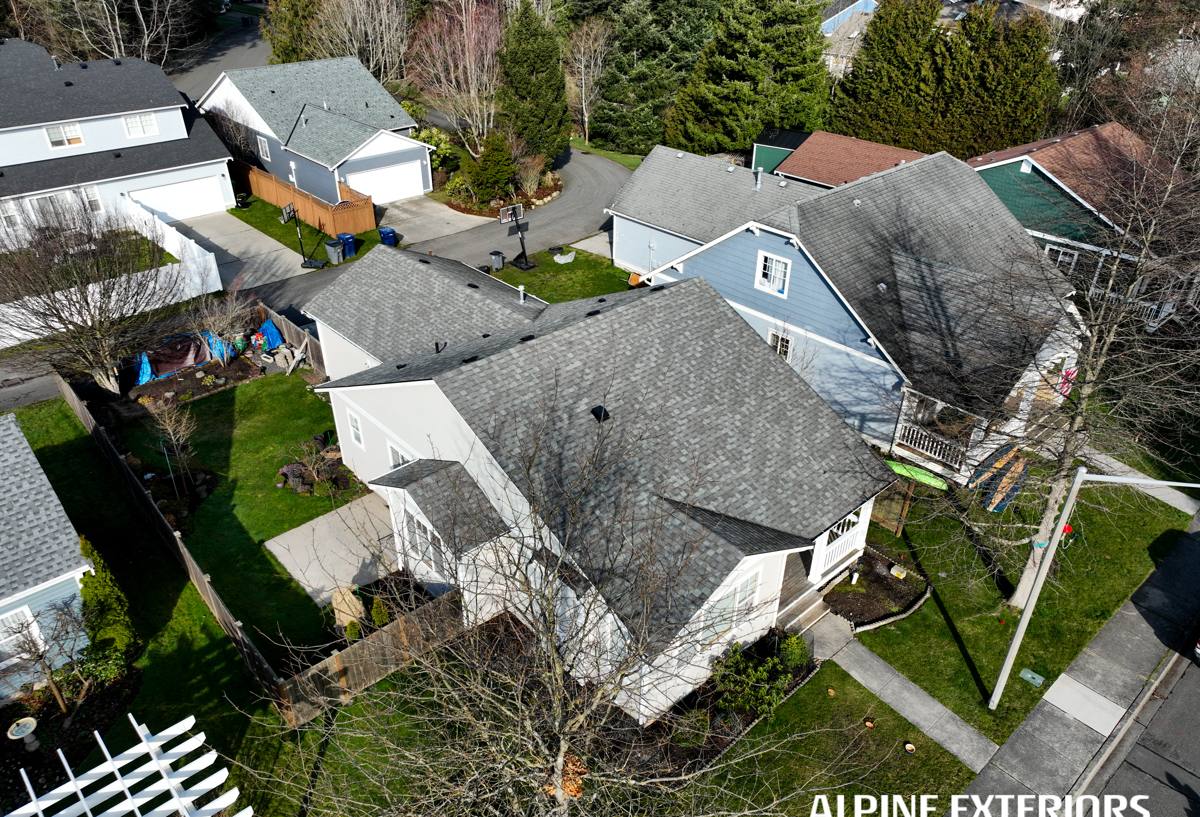
What Blaine's Coastal Climate Actually Does to a Shingle Roof
Salt Air and Corrosion
Salt air doesn't just affect boats and railings. It accelerates corrosion on exposed fasteners, drip edge, flashing, and any metal roof vents. Once corrosion starts on a fastener head or flashing seam, water finds a path underneath the shingle mat, and the damage spreads long before it shows up as a visible leak inside the house.
Wind-Driven and Sideways Rain
Open water exposure near the border means wind and rain frequently arrive together, and at an angle. Roofs built to a minimum nailing pattern or with shortcuts on flashing detail tend to reveal those weaknesses first at valleys, chimney saddles, and anywhere two roof planes meet.
The Long Moss Season
Cool temperatures, shade, and near-constant moisture from fall through spring give moss and algae a long runway to establish themselves on north-facing slopes and anywhere debris collects. Moss doesn't just look bad — it holds water against the shingle surface, lifts shingle edges as it grows, and shortens the life of the roofing underneath it.
What a Correctly Installed Asphalt Shingle Roof Needs Out Here
A roof built for Peace Arch's conditions isn't a different product so much as a different level of attention to the details most installers treat as optional. That includes:
- Ice-and-water shield membrane at eaves, valleys, and around every roof penetration — not just the code minimum
- Corrosion-resistant flashing and fasteners suited to a coastal, high-moisture environment
- A wind-rated nailing pattern appropriate for open, exposed lots, not the loosest pattern the shingle warranty allows
- Properly balanced intake and exhaust ventilation so moisture doesn't get trapped in the attic and condense against the roof deck
- Algae-resistant shingle granules on any slope with shade exposure
- Tight, correctly lapped underlayment as a real second layer of protection, not just a nailing surface
Skip any one of these and the roof may still look fine for a season or two — the problems that show up in this climate are usually slow ones, which is exactly why they're easy for the wrong contractor to miss.
Signs a Peace Arch Roof Needs Attention
Because damage here tends to build quietly, it helps to know what to actually look for from the ground:
| What You See | What It Usually Means |
|---|---|
| Dark streaking or green-black patches | Algae growth, typically cosmetic early on but a sign the surface is holding moisture |
| Moss clumps, especially on shaded or north-facing slopes | Moisture retention that can lift shingle edges and shorten shingle life if left untreated |
| Granules collecting in gutters | Accelerated wear, often worse near the coast due to salt exposure |
| Curling or cupping shingle edges | Age, heat cycling, or ventilation problems — worth a closer look regardless of roof age |
| Rust streaks below flashing or vents | Corroding metal components that need replacement before they leak |
| Soft spots or sagging in the roof plane | Possible deck damage underneath — this one shouldn't wait |
Choosing the Right Shingle for This Location
Not every asphalt shingle product is worth putting on a home this close to the water. The differences that matter here are wind rating, algae resistance, and how the shingle is built to shed water at the laps.
| Shingle Type | Typical Wind Rating | Best Fit for Peace Arch |
|---|---|---|
| Standard 3-tab | Lower | Budget option; less margin for exposed, windy lots near the water |
| Architectural / dimensional | Higher | Our standard recommendation for most Peace Arch homes — better wind performance and a heavier mat |
| Impact-resistant architectural | Higher, with added durability | Worth discussing for homes with heavy tree cover or a history of storm damage |
We also pay attention to algae-resistant (often labeled "AR") granule treatments as close to standard, not an upgrade, for any home in this area — the long wet season here makes that feature earn its keep quickly.
How We Approach a Peace Arch Roofing Job
1. Inspection Before Anything Else
We start by getting on the roof, not just looking at it from the driveway. That means checking the deck for soft spots, looking at existing flashing and ventilation, and being honest with you about what's actually needed versus what can wait.
2. Full Tear-Off and Deck Check
We don't install new shingles over old ones. A full tear-off lets us inspect the deck itself, replace any damaged sheathing, and start the new system on a sound, dry base — which matters even more in a climate where trapped moisture does slow, hidden damage.
3. Underlayment and Water-Barrier Detail
Ice-and-water membrane goes down at every eave, valley, and penetration, with synthetic underlayment across the rest of the field, properly lapped to shed water downhill at every seam.
4. Flashing and Ventilation
New corrosion-resistant flashing at chimneys, walls, and valleys, plus a ventilation check to make sure intake and exhaust are balanced — this is one of the most commonly skipped steps on re-roofs, and one of the most consequential in a wet climate.
5. Shingle Installation
Shingles go down with a nailing pattern matched to the wind exposure of your specific lot, not just the shingle manufacturer's minimum spec.
6. Cleanup and Walkthrough
Magnetic sweep for stray fasteners, full site cleanup, and a walkthrough so you know what was done and what to watch for going forward.
Living With an Asphalt Shingle Roof Here: Ongoing Care
A well-installed roof still needs a bit of seasonal attention in this climate. A simple maintenance rhythm goes a long way:
- Keep gutters and downspouts clear, especially heading into the wet season, so water isn't backing up under the eaves
- Have moss treated before it spreads rather than after it's established across a whole slope
- Trim back overhanging branches to cut down on shade, debris, and the moisture that comes with both
- Have flashing and vent boots checked periodically for corrosion or cracking, since these fail before the shingles usually do
- Get a roof looked at after any significant windstorm, even if nothing looks obviously wrong from the ground
What Affects the Cost of a Peace Arch Roofing Job
Every roof is different, but the same handful of factors tend to move the price up or down on jobs in this area:
| Factor | Why It Matters Here |
|---|---|
| Roof size and pitch | Steeper pitches and larger roof planes take more material and labor time |
| Deck condition | Moisture-related deck repair is more common near the coast and adds material and time if discovered during tear-off |
| Shingle class chosen | Architectural and impact-resistant products cost more up front but perform better against wind and wet exposure |
| Flashing and ventilation scope | Homes with multiple valleys, chimneys, or poor existing ventilation need more detail work |
| Access and site conditions | Tree cover, tight lots, or steep sites near the water can affect setup and disposal logistics |
We'd rather walk a roof and give you real numbers than quote a range that doesn't mean much for your specific home.
Why It Matters That We Already Work This Area
A roofing crew that mainly works drier, more sheltered parts of Whatcom County can do fine work and still miss the details that matter specifically in Peace Arch — how much ice-and-water membrane a given roof actually needs, which slopes will fight moss no matter what you do, or how a lot's water exposure should change the nailing pattern. Working this part of Blaine regularly means we're not guessing at how a roof will hold up against salt air and driving rain — we've seen how these systems age here and build accordingly.
If you're weighing a repair against a full replacement, or just want an honest look at where your current roof stands, we're happy to take a look. Fill out the form below for a free, no-pressure estimate.