 Blaine Siding
 Siding Replacement for the Nooksack Area
Homes in and around Nooksack sit in a part of Whatcom County that asks a lot of an exterior wall. You're close enough to the water to pick up salt-laden air moving in off Semiahmoo Bay and the Strait of Georgia, but you're also inland enough to sit under low clouds and steady rain for long stretches of the fall and winter. Add a shaded lot with mature conifers or a north-facing wall that never quite dries out, and you've got the exact combination that wears out the wrong siding material years ahead of schedule. We replace siding here regularly, and the patterns repeat: paint failing early on the weather side, soft spots at butt joints and corner trim, and moss creeping up from the ground line on shaded walls that stay damp into June.
This page is about one job, done right, in this one area: full siding replacement using James Hardie fiber cement, installed to the standard this climate actually requires — not the minimum a manufacturer's install guide allows.
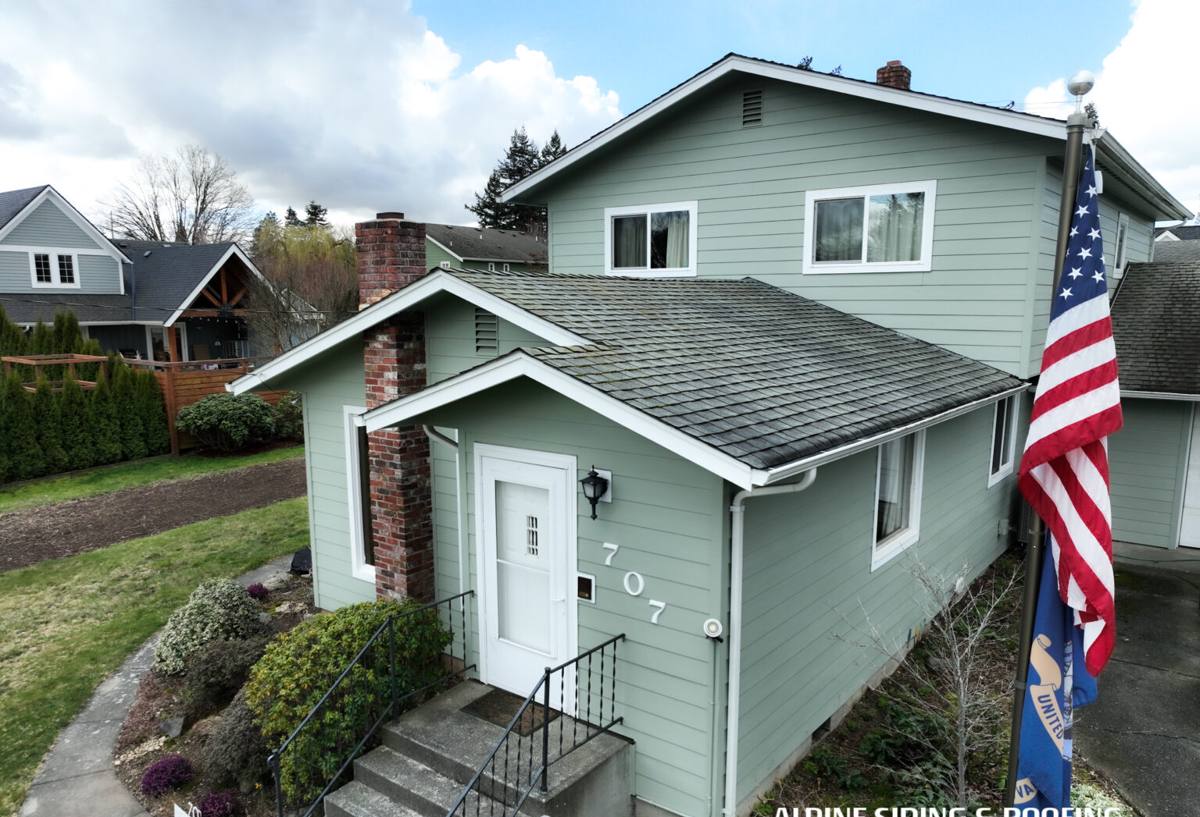
What This Climate Does to Siding
Salt Air
Even a few miles inland, moisture carried off the Salish Sea contains dissolved salts that accelerate corrosion on fasteners, flashing, and any exposed metal trim. Over a decade or two, that corrosion works from the inside out — a fastener head can look fine on the surface while it's failing where it's driven into the substrate. Siding systems that rely heavily on caulked seams or lightweight trim are more exposed to this than a product engineered with corrosion-resistant fastening and factory-sealed edges.
Driving Rain
Whatcom County doesn't just get rain — it gets wind-driven rain that hits walls at an angle, working its way behind loose boards, under curling caulk lines, and into any gap at a butt joint that wasn't properly flashed. A siding system's real test isn't how it looks on a dry day; it's whether water that reaches the wall assembly can get back out before it does damage.
Moss and Prolonged Dampness
Long moss season is the local shorthand for something specific: extended periods where relative humidity stays high and surfaces don't fully dry between rain events. Moss and algae don't just look bad — they hold moisture against the siding surface, which is exactly the condition that causes rot in wood-based products and premature paint failure on anything without a durable factory finish.
Why This Matters for Material Choice
We install James Hardie fiber cement exclusively, and jobs in the Nooksack area are a good example of why. Fiber cement is non-combustible and dimensionally stable, meaning it doesn't swell and shrink with moisture cycling the way wood-based sidings can. Hardie's ColorPlus factory finish is baked on under controlled conditions and holds color and adhesion far longer than field-applied paint on wood or engineered wood products — which matters directly here, because repainting a shaded, damp-prone wall every 5-7 years is not a job most homeowners want to repeat. We don't install vinyl, LP SmartSide, or engineered wood siding on these jobs, not because those products can't be installed correctly, but because we've seen how this specific combination of salt air, driving rain, and moss exposure shortens their real-world service life compared to fiber cement — and we'd rather stand behind one system we trust fully than hedge across several.
What a Correct Siding Replacement Actually Involves
Replacing siding is not a cosmetic swap. The siding is the last line of defense over a wall assembly that needs to manage water, air, and vapor correctly. A rushed tear-off and re-nail job can look identical to a correct one for the first year or two — the difference shows up five to ten years later, usually as rot behind the new siding.
Tear-Off and Inspection
- Full removal of existing siding, not overlay installation over failing material
- Inspection of sheathing for soft spots, delamination, or hidden rot, especially at wall penetrations and lower courses near grade
- Documentation of any structural repair needed before new siding goes on — this is discussed with the homeowner before work proceeds, not discovered as a surprise change order
Weather-Resistive Barrier
A new, continuous weather-resistive barrier is installed over the sheathing, lapped correctly at every seam so water is shed downward and outward, never trapped behind the plane. Given the volume of driving rain this area sees, this layer is doing real work, not just satisfying code minimums.
Flashing at Every Penetration
Windows, doors, hose bibs, vents, and any other wall penetration get proper flashing integrated with the weather-resistive barrier — flashing tape or metal flashing installed in the correct shingle-lap order so water moving down the wall never has a chance to get behind it. This is one of the most common places we find corner-cutting on older installs, and it's almost always the origin point of hidden rot.
Rainscreen or Drainage Gap
On walls with heavy sun/shade contrast or persistent dampness — common on the north and west exposures typical of shaded Nooksack-area lots — a drainage gap behind the siding gives incidental moisture a path to escape and lets the wall assembly dry rather than staying damp against the back of the siding.
Fastening and Joint Treatment
Corrosion-resistant fasteners, driven to Hardie's specified depth and pattern — not overdriven, which crushes the fiber cement and creates a water entry point. Butt joints are treated per Hardie's installation instructions, using approved sealants or flashed joints rather than caulk alone, since caulk-only joints are one of the first things to fail under sustained wind-driven rain.
Trim, Caulking, and Paint Touch-Up
Corner boards, trim, and any factory-cut edges get sealed and touched up with matching ColorPlus touch-up product so the factory finish stays continuous and there's no exposed, unprotected substrate for moisture to enter.
Our Process for a Nooksack-Area Job
- On-site assessment — we walk the exterior, note which walls take the worst weather exposure, check for existing moisture damage, and talk through what we're seeing with the homeowner.
- Written scope and estimate — a clear breakdown of tear-off, any sheathing repair, the Hardie product line and profile, and the labor involved. No vague allowances.
- Material order and scheduling — Hardie products are ordered to the job's exact specs (profile, color, exposure) and scheduled around a realistic weather window, since tear-off exposes the wall and shouldn't sit open during a rain system.
- Tear-off, inspection, and repair — old siding comes off, sheathing is inspected, and any rot or damage is repaired and documented before we move forward.
- Weather barrier, flashing, and siding install — installed in the sequence and detail level described above, not skipped for speed.
- Final walkthrough — we go over the finished job with the homeowner, point out anything worth knowing for long-term maintenance, and address any questions before calling it complete.
Why a Crew That Already Works This Area Matters
Whatcom County's microclimates vary more than people expect over a short distance. A crew that regularly works Blaine, Nooksack, and the surrounding communities already knows which exposures need extra flashing attention, which lots hold moisture longer into the season, and how local moss and algae growth actually behaves on different siding profiles. That's not something you get from a general install manual — it's pattern recognition built from doing the work here repeatedly. It also means realistic scheduling around this area's rain patterns, and a crew that isn't guessing at how the coastal-to-inland transition affects a given wall.
Cost Factors for This Job
Every job is priced from an on-site walkthrough, but the factors that move the number are consistent. Broad ranges below are for orientation only — your estimate will reflect your home's specifics.
| Factor | Why It Matters |
|---|---|
| Home size and wall complexity | More corners, gables, and penetrations mean more flashing detail and labor time |
| Existing sheathing condition | Rot found during tear-off adds repair scope before new siding can go on |
| Siding profile and accessories | Lap width, trim style, and accent details affect material cost |
| Drainage gap / rainscreen | Recommended on heavily shaded or damp-prone walls; adds material and labor |
| Access and site conditions | Steep lots, tight setbacks, or limited staging area affect labor time |
| Color and finish | Factory ColorPlus finish vs. field-painted trim affects long-term maintenance cost, not just upfront price |
Signs Your Nooksack-Area Home May Need Siding Replacement Soon
- Paint peeling, bubbling, or chalking, especially on north or west-facing walls
- Soft or spongy siding when pressed near the bottom courses or around penetrations
- Persistent moss or algae growth that returns quickly after cleaning
- Visible gaps opening at butt joints or corner trim
- Warping, cupping, or delamination on wood-based or engineered wood siding
- Rising energy bills that suggest air and moisture are moving through the wall assembly
- Siding that's original to a home built more than 20-25 years ago, especially wood or vinyl
Maintenance After Replacement
Correctly installed James Hardie siding is low-maintenance, not zero-maintenance. A yearly rinse to knock off accumulated moss and grime, a look at caulked joints for cracking, and prompt attention to any impact damage (from a ladder, a dropped branch, equipment) keeps the system performing as designed. Because ColorPlus finish is factory-applied, you're not on a repainting cycle the way you would be with field-finished siding — but this area's moss season means periodic cleaning is still worth doing to keep the finish looking its best and to prevent organic growth from holding moisture against the surface long-term.
If your home in the Nooksack area is showing signs of wear, or you're planning ahead of a repaint you'd rather not repeat in five years, we're happy to walk the exterior with you and give a straight, no-pressure estimate — fill out the form below to get started.