 Blaine Siding
 Why Siding Repair in Nooksack Isn't a One-Size-Fits-All Job
Nooksack sits inland from Blaine's waterfront, but it's still squarely inside the same Whatcom County weather pattern: long wet winters, a marine-influenced climate that pushes moisture into every seam and joint, and a moss and algae season that can stretch from October well into spring. Homes here don't get the direct salt spray that houses right on Semiahmoo Bay or Drayton Harbor deal with, but salt-tinged air still moves inland on stronger weather systems, and driving rain off the Pacific hits north-facing and west-facing walls just as hard whether you're a mile from the water or fifteen.
What that means in practice: siding damage in Nooksack tends to show up in predictable places — behind gutters that overflow during heavy rain events, along ground-level trim where splashback keeps wood or fiber cement wet longer than it should be, and on shaded north walls where moss gets a foothold and never fully dries out. A repair that ignores those patterns just buys a homeowner a year or two before the same spot fails again.
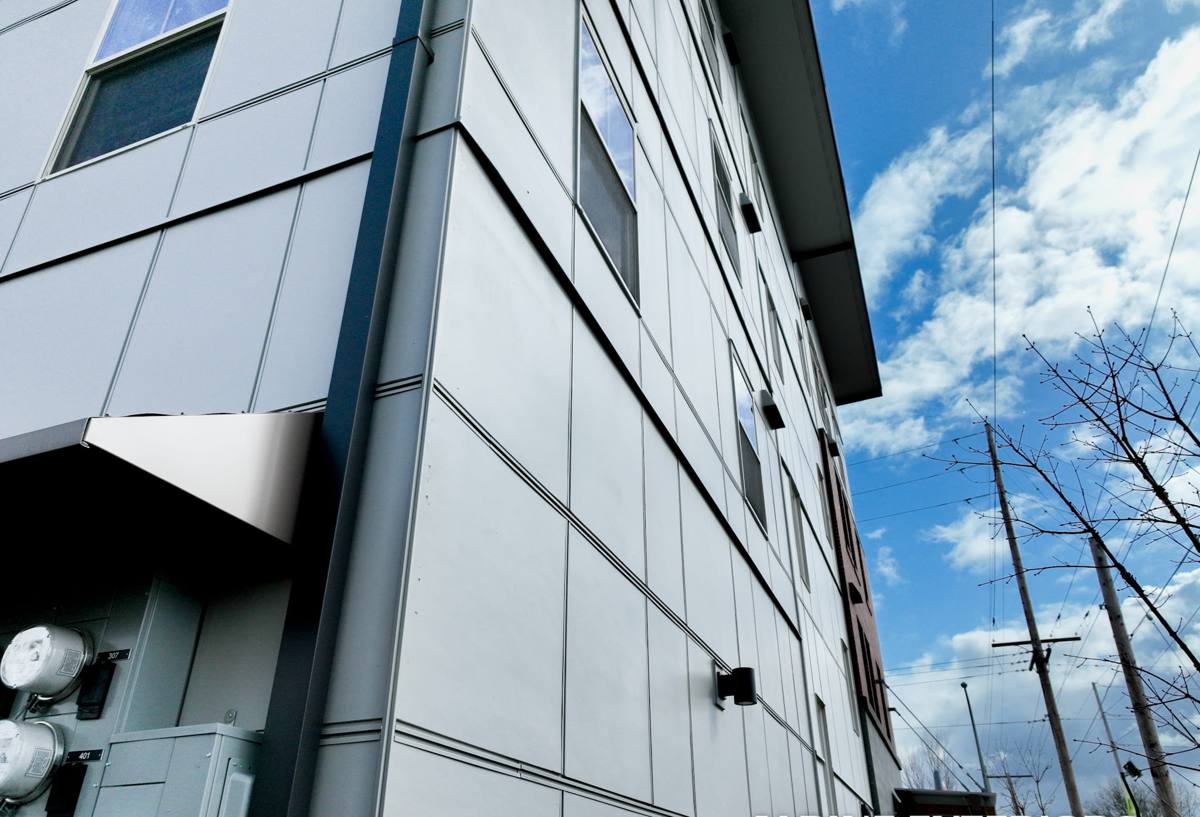
Common Siding Damage We See on Nooksack Homes
Moisture-Driven Failures
Trapped moisture is the root cause behind most of the repair calls we get in this part of Whatcom County. It shows up as soft or swollen siding panels, dark staining that won't scrub off, paint that's bubbling or peeling in sheets rather than flaking evenly, and in older wood or engineered wood siding, actual delamination where the layers of the board separate.
Moss and Algae Buildup
A long moss season doesn't just look bad — moss holds water against the siding surface for weeks at a time, which accelerates whatever moisture damage is already happening underneath. On lap siding, moss tends to build up along the bottom edge of each course and in the shadow lines, exactly where water is already slow to shed.
Physical and Mechanical Damage
Nail pops, cracked corners, impact damage from storm debris or yard equipment, and caulk that's dried out and pulled away from trim are all common and usually straightforward to repair on their own — the complication comes when they've been left unaddressed long enough for water to get behind the siding.
Repair or Replace: How to Tell the Difference
Not every damaged section needs a full re-side, and not every "small" repair is actually small once you look behind the siding. Here's the general breakdown we use when we're on-site in Nooksack:
| What We Find | Usually a Repair | Usually Points to Replacement |
|---|---|---|
| Isolated cracked or impact-damaged panel | Yes, if surrounding material is sound | No, unless it's widespread |
| Moss/algae staining on the surface only | Yes — clean, treat, repaint or refinish as needed | No |
| Soft or spongy panels in multiple areas | Sometimes, if damage is contained | Often — usually signals moisture behind the wall |
| Delamination or swelling at seams and butt joints | Spot repair possible if limited | Yes, if it's showing up on several walls |
| Siding is 20+ years old and failing in more than one spot | Rarely worth it long-term | Yes — repeated repairs cost more over time |
| Underlying sheathing or framing shows rot | No — this is a rebuild issue | Yes, siding removal is required regardless |
The honest answer is that we won't know for certain which category a house falls into until we get a panel or two off and look at what's underneath. Surface staining can hide a sound wall, and a single crack can hide months of water intrusion. That's why we don't quote repair work sight unseen.
What a Correct Siding Repair Actually Involves
Diagnosis Before Demo
We start by identifying why the damage happened, not just what the damage looks like. A cracked board that failed because of a one-time impact gets treated differently than the same crack caused by chronic moisture from a clogged gutter — fix the second one without addressing the gutter and you'll be back out repairing the same wall in two winters.
Checking the Water Management Behind the Siding
Siding is the visible layer of a system that includes house wrap, flashing, and properly lapped joints. A repair that just swaps a damaged board without checking the flashing and drainage plane behind it is a cosmetic fix, not a real one. This step matters more in Whatcom County than in drier climates, because any gap in the water-resistive barrier gets tested by rain far more often here.
Matching Material and Finish
This is where repair work gets harder than new installation. Finding a replacement panel that matches the existing siding's profile, exposure, and color is straightforward when the home is sided in James Hardie fiber cement with a factory ColorPlus finish, since those color and plank specs are consistent and can be matched precisely. It's a much bigger problem on homes sided in older cedar, primed spruce, or discontinued vinyl profiles, where an exact match may not exist anymore and the repaired section can end up visibly different from the rest of the wall.
Our Process for Nooksack Siding Repair Calls
- On-site inspection, including checking a sample area behind the siding rather than just assessing the surface
- Honest assessment of repair vs. replacement scope, explained in plain terms
- A written estimate before any work begins — no surprise change orders once we've opened up a wall
- Correcting the underlying cause (flashing, gutter, grading, or ventilation issue) alongside the visible repair
- Matching material and finish as closely as the existing siding allows
- Final walkthrough so you can see exactly what was done and why
Why the Siding Material Itself Affects How Repairable a House Is
We only install James Hardie fiber cement siding, and one reason is how it behaves over the life of a repair, not just the day it goes up. Fiber cement doesn't swell, rot, or delaminate the way wood-based products can when they take on moisture, and it holds its factory finish for a long time, which means a repaired section blends in rather than standing out. That's a real advantage for a homeowner ten or fifteen years down the road who needs one section fixed and doesn't want a patchwork wall.
If your Nooksack home currently has vinyl, LP SmartSide, cedar, or another engineered wood product, we can still assess and, in many cases, repair it — but we'll be straightforward with you about the limits. Vinyl repairs are usually limited to swapping whole panels since discontinued colors can't be color-matched. Wood-based products that have started to delaminate in one area are often already compromised in adjacent areas that haven't shown it yet. In those cases, we'll tell you honestly whether a patch repair is a real fix or just a delay, and if a section is due for replacement, James Hardie is what we'll recommend and install.
Signs Your Nooksack Home Needs a Siding Repair Now
- Dark streaking or moss that returns within weeks of being cleaned off
- Paint or finish that's bubbling, cracking, or peeling in patches rather than evenly
- Any section of siding that feels soft, spongy, or gives slightly under hand pressure
- Visible gaps at seams, corners, or where siding meets window and door trim
- Nail heads popping through the surface or fasteners that have backed out
- A musty smell or visible staining on interior walls that back up to exterior siding
- Gutters that overflow onto the wall below during heavy rain
Why It Matters That We Already Work This Area
Whatcom County's weather isn't uniform from one town to the next, and a crew that mostly works drier inland regions can miss the specific failure patterns that show up here — the moss behavior on shaded north walls, how long panels stay wet after a multi-day rain event, and which trim details tend to fail first in this climate. Working repair and replacement jobs throughout the Blaine and Nooksack area means we've already seen how different siding materials hold up locally, which is part of why we standardized on one product system instead of installing whatever a homeowner happened to have.
If you're dealing with a section of damaged siding, a recurring moss problem, or you just want a second opinion on whether a patch will actually hold up, we're glad to take a look. Reach out for a free, no-pressure estimate using the form below — we'll tell you plainly what we find and what it would take to fix it right.