 Blaine Siding
 Roofing in Nooksack: A Climate That Doesn't Forgive Shortcuts
Nooksack sits in the river valley of northern Whatcom County, tucked between farmland and the foothills that climb toward Mt. Baker. It's a different setting than the shoreline towns closer to the water, but the roofs here take a similar beating. Whatcom County as a whole sees long stretches of low, wet weather, and the marine air that moves in off the coast reaches inland communities like Nooksack too, carrying moisture that settles into shaded, tree-lined properties and just doesn't leave. Add driving rain that comes in sideways during winter storms, tree cover that keeps roofs shaded and damp for days after a storm passes, and a moss season that can run from fall through spring, and you've got a climate that will find every weak point in a roof system within a few years.
A roof in Nooksack isn't just shedding water off a slope. It's dealing with constant freeze-thaw cycling in the colder months, organic growth from nearby trees, and long soak times where shingles or metal panels stay wet far longer than they would in a drier climate. That's the backdrop for everything below — what a correct installation looks like here, and why cutting corners on materials or workmanship shows up as leaks and rot faster than it would somewhere drier.
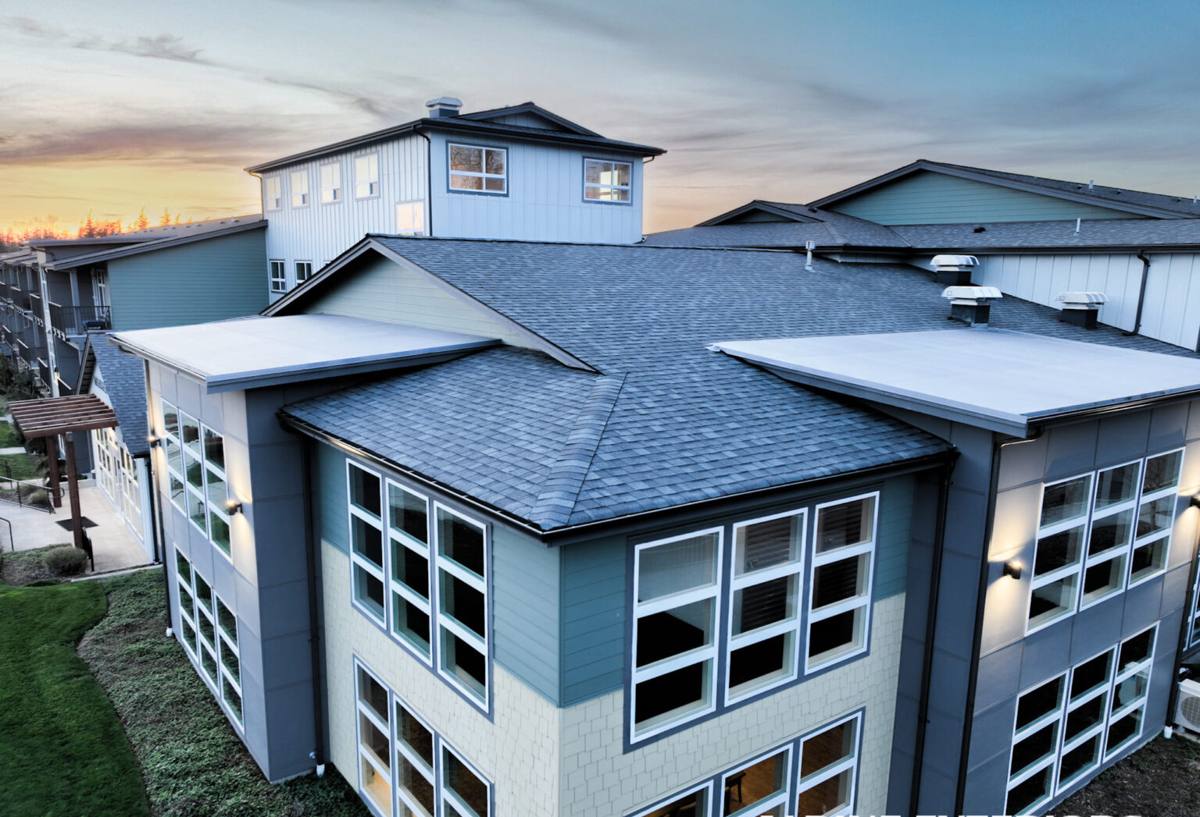
Signs a Nooksack Roof Needs Replacement, Not Another Repair
Not every roof problem calls for a full tear-off. But there's a point where patching becomes a waste of money, and in this climate that point often arrives earlier than homeowners expect. Some of the clearest signs it's time to talk replacement instead of another repair:
- Granules collecting in gutters or at downspout outlets, especially after every rain
- Shingles that are cupping, curling at the edges, or visibly bald in patches
- Moss established at the ridge line or in valleys, not just on the north-facing slope
- Soft spots, sagging, or a spongy feel when walking the roof deck
- Daylight visible through the attic sheathing, or damp insulation below the roof plane
- A roof that's had three or more patch repairs in the last five years
- Interior staining on ceilings that reappears after every heavy storm
If a roof is under 10-12 years old and the damage is isolated, repair is usually the right call. Past that age, with widespread wear, a full replacement is almost always the better long-term value — you stop paying to chase the same leak in a new spot every winter.
Why Age Alone Isn't the Whole Story
Two roofs of the same age can be in very different condition depending on how much shade and moss exposure they've had. A roof under heavy tree cover in Nooksack can wear out noticeably faster than the same material on an open, sun-exposed roof elsewhere in the county. That's why we look at actual condition — deck integrity, ventilation, flashing, moss penetration — rather than just counting years.
Roofing Materials That Actually Hold Up Here
Material choice matters more in a wet, shaded climate than it does in drier parts of the state. Some options handle constant moisture and moss pressure better than others, and some require more upkeep to stay ahead of it.
| Material | Moisture & Moss Performance | Typical Lifespan | Maintenance Needs |
|---|---|---|---|
| Architectural asphalt shingle | Good with proper ventilation; algae-resistant granules help slow moss/moss-related staining | 25-30 years | Periodic moss removal, gutter clearing |
| Standing seam metal | Excellent — sheds water and moss fast, little surface for growth to grab onto | 40-50+ years | Low; occasional fastener and sealant checks |
| Cedar shake | Poor in constant shade/moisture without diligent upkeep; absorbs water and holds moss | 20-30 years with heavy maintenance | High — regular treatment and moss control |
| Composite/synthetic shake | Good — mimics cedar look without the moisture absorption | 30-50 years | Low to moderate |
We don't install cedar shake on shaded, moss-prone properties as a matter of professional standard — not because the material is bad on paper, but because in this specific climate it demands a level of ongoing maintenance most homeowners don't want to keep up with, and the moisture retention shortens its real-world life. For most Nooksack homes, a quality architectural shingle with proper ventilation, or standing seam metal for homeowners wanting the lowest long-term maintenance, are the two options we recommend most often.
What a Correct Installation Actually Involves
A new roof is only as good as what's underneath the visible surface. In a climate like this, the components most homeowners never see are what determine whether the roof lasts 10 years or 30.
Deck Inspection and Repair
Every tear-off starts with the plywood or OSB deck exposed. Soft, delaminated, or water-stained sections get replaced before anything new goes down — installing new roofing over a compromised deck just hides a problem that will resurface as a leak.
Ice and Water Shield
Self-adhering waterproof membrane goes down at eaves, valleys, and around penetrations — the spots most likely to see wind-driven rain force its way under the roofing material. In a climate with regular sideways rain, this isn't optional extra protection; it's a baseline requirement.
Underlayment
A synthetic underlayment covers the rest of the deck as a secondary water barrier. It matters more here than in drier climates because it's the backup layer that keeps the deck dry if wind or ice ever gets past the primary roofing.
Ventilation
Balanced intake and exhaust ventilation keeps the attic space dry and temperature-regulated. Poor ventilation traps moisture inside the roof system, which accelerates deck rot and shortens shingle life from underneath — a slow failure that's invisible until it's expensive.
Flashing
Chimneys, skylights, vent pipes, and roof-to-wall transitions all need properly formed and sealed flashing. These are the most common failure points on any roof, and they're where a rushed installation shows up as a leak within the first year or two.
Our Installation Process
We run the same process on every Nooksack roof, whether it's a straightforward gable roof or something with more complex valleys and transitions:
- On-site inspection and estimate — we walk the roof, check the attic and deck condition where accessible, and put together a written scope and estimate with no pressure to sign on the spot
- Material selection — we go over the tradeoffs for your roof's exposure, shade, and budget so you understand why we're recommending what we're recommending
- Tear-off and deck inspection — old roofing comes off completely, deck gets inspected and any damaged sections are replaced
- Waterproofing layers — ice and water shield at vulnerable areas, underlayment across the field
- Ventilation check — intake and exhaust venting confirmed or corrected as part of the job, not left as an afterthought
- Installation — roofing material installed to manufacturer spec, with attention to nailing pattern, exposure, and fastening — the details that determine wind and warranty performance
- Flashing and detail work — all penetrations, valleys, and transitions properly flashed and sealed
- Cleanup and final walkthrough — magnetic sweep for debris, gutters checked, and a walkthrough so you can see the finished work before we consider the job done
What Drives the Cost of a New Roof in Nooksack
Every roof is priced individually, but the same handful of factors drive most of the variation from one job to the next.
| Factor | Why It Matters |
|---|---|
| Roof size and pitch | More surface area and steeper pitches mean more material and labor time |
| Number of layers to remove | Tear-off of multiple existing layers adds labor and disposal cost |
| Deck condition | Rot or soft sheathing found during tear-off requires repair before installation continues |
| Roof complexity | Valleys, dormers, skylights, and chimneys all add flashing detail and time |
| Material choice | Standard asphalt shingle, premium shingle, and metal roofing carry different material costs |
| Access and tree clearance | Heavily treed lots common in Nooksack can require extra care and staging |
As a very general range, most full asphalt shingle replacements on homes this size run somewhere in the neighborhood of $9,000 to $18,000, with metal roofing typically running higher. The only way to get an accurate number is a roof-specific estimate — anything quoted without seeing the roof is a guess.
Moss and Long-Term Roof Care
Moss isn't just cosmetic. As it establishes on a roof, its root structure lifts shingle edges and holds moisture directly against the roofing surface, which accelerates granule loss and, eventually, deck moisture intrusion. In a tree-shaded, damp valley setting like Nooksack, moss pressure is one of the biggest long-term threats to a new roof's lifespan.
The best defense starts at installation — algae-resistant shingles, zinc or copper strips at the ridge where appropriate, and correct ventilation all slow moss establishment. After that, periodic soft washing (never pressure washing, which can strip granules and shorten shingle life) and keeping overhanging branches trimmed back go a long way toward protecting the investment.
Why Hire a Crew That Already Works Nooksack
Roofing crews that mostly work drier, more open parts of the state don't always build in the extra waterproofing detail this area calls for — because where they normally work, it isn't necessary. A crew that regularly works Whatcom County's river valley and coastal communities already knows to treat ice and water shield, ventilation, and flashing as non-negotiable rather than upsells, because they've seen what happens to roofs that skip them here. That local pattern recognition — knowing which roofs in this area fail first and why — is the difference between a roof that's installed to code and one that's actually built for where it sits.
If your roof in Nooksack is showing wear, or you just want an honest read on whether repair or replacement makes more sense, we're glad to come take a look. The estimate is free, there's no pressure to commit, and you'll get a straight answer about what your roof actually needs.