 Blaine Siding
 Asphalt Shingle Roofing Built for Custer's Climate
Custer sits close enough to the water and far enough into farm country that its roofs take a specific kind of beating. You get salt-laden air rolling in off the Strait and Boundary Bay, driving rain that comes in sideways more often than straight down, and a moss season that can run eight or nine months out of the year in shaded, north-facing sections of a roof. None of that is unusual for Whatcom County, but it does mean an asphalt shingle roof here has to be installed with more attention to ventilation, underlayment, and edge detailing than the same roof would need in a drier inland climate.
We install and repair asphalt shingle roofs throughout Custer and the surrounding Blaine area, and most of what we do differently up here comes down to respecting how much moisture this region actually deals with over a shingle's lifespan.
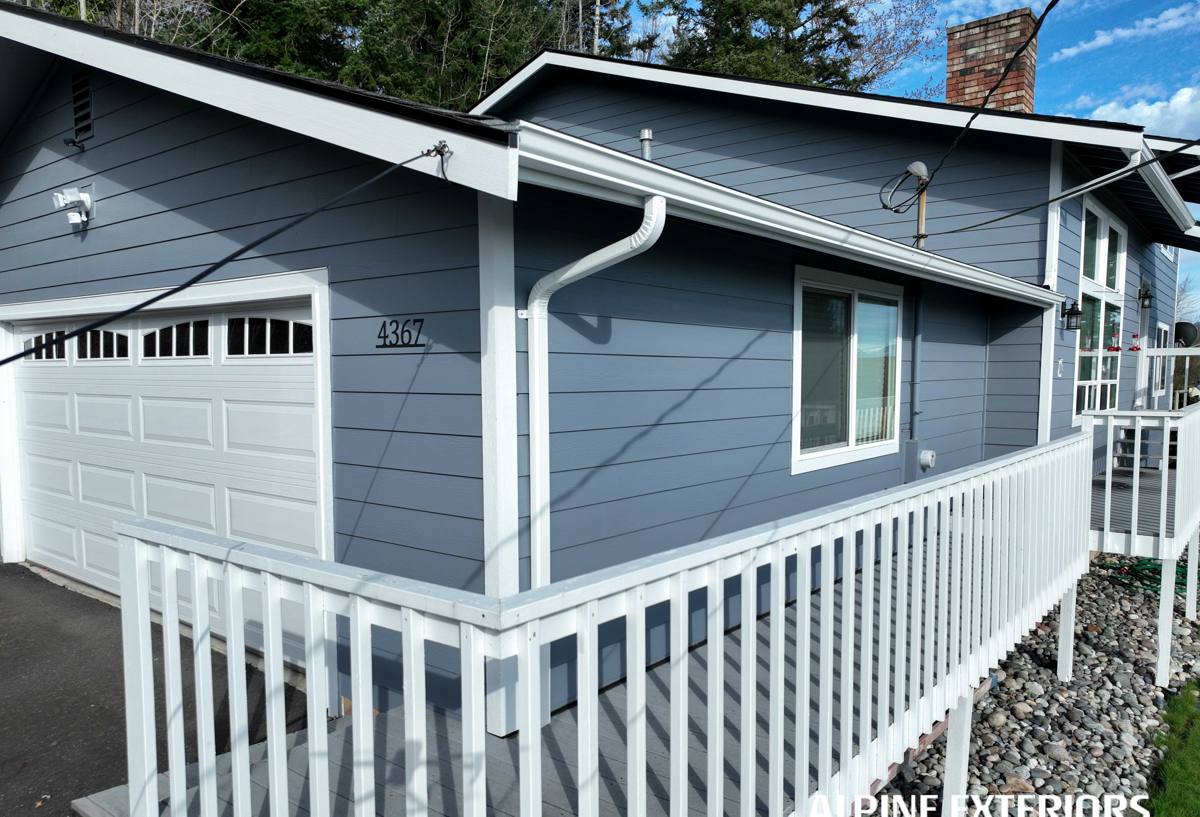
What Local Homes Actually Need From a Shingle Roof
Moisture Is the Real Adversary
Asphalt shingles are a good, cost-effective roofing choice almost everywhere in the country, including here. The catch is that their long-term performance depends heavily on details that are easy to shortcut: how well the roof deck breathes, how the underlayment handles wind-driven rain, and how well valleys, flashing, and eaves shed water instead of letting it sit. In a climate that gets sustained damp stretches rather than quick storms and dry-outs, those details matter more than the shingle brand printed on the wrapper.
Moss and Algae Pressure
Any roof with shade from trees, or a north-facing slope that doesn't get much direct sun, is going to see moss and algae growth here. Left alone, moss holds moisture against the shingle surface and can work its way under shingle tabs, which shortens the roof's life and can lead to leaks well before the shingles themselves would otherwise wear out. This isn't a defect in the shingle — it's a maintenance reality of this climate, and it's one of the biggest differences between roofing Custer versus roofing a drier region.
Wind-Driven Rain at the Edges
Straight-down rain is easy for any roof to shed. The rain that causes problems here comes in at an angle during coastal storms, which puts stress on eaves, rakes, and any horizontal seam. A roof that looks fine in a light rain can still leak in a driving one if the underlayment and edge metal weren't installed with that in mind.
What a Correct Asphalt Shingle Job Involves
A roof that's going to hold up under Custer's conditions isn't just shingles nailed to a deck. Every layer underneath the visible shingle does part of the job of keeping water out, and skipping or shorting any of them is where premature leaks come from.
- Deck inspection and repair — any soft, delaminated, or water-damaged sheathing gets replaced before anything else goes down. Roofing over a bad deck just hides the problem.
- Ice-and-water shield at vulnerable areas — eaves, valleys, and areas around penetrations get a self-adhered waterproof membrane, not just felt, since these are the spots where wind-driven rain finds its way in.
- Synthetic underlayment across the field — a modern synthetic underlayment sheds water more reliably than old-style felt and holds up better to the on-and-off wet weather during install.
- Proper attic and roof ventilation — balanced intake and exhaust venting lets the roof deck dry out between wet spells, which matters a lot in a climate that doesn't give a roof many fully dry weeks in a row.
- New flashing at all penetrations and walls — step flashing, counterflashing, and pipe boots should be replaced during a re-roof, not reused, since old flashing is a common hidden leak source.
- Correct shingle nailing pattern and exposure — proper nail placement and shingle exposure directly affect wind resistance, which matters given how exposed this area can get during winter storms.
- Ridge venting and cap detail — a clean ridge cap installation finishes the ventilation system and is one of the first places a rushed job shows.
Our Process for a Custer Re-Roof or Repair
1. On-Site Assessment
We start with a walk of the roof (and the attic, when accessible) to look at deck condition, existing ventilation, moss and algae growth patterns, flashing condition, and how the current roof has actually been performing — not just its age.
2. Straight Answer on Repair vs. Replace
Plenty of roofs in Custer just need targeted repair: a section of moss removed and treated, flashing resealed or replaced, a handful of damaged shingles swapped out. We'll tell you honestly when a repair is the right call and when the roof's underlying condition means repair is just delaying a full replacement.
3. Written Scope and Estimate
You get a clear, itemized estimate before any work starts — what's being torn off, what underlayment and flashing package is going on, ventilation changes if needed, and the shingle product being used. No surprise add-ons mid-job.
4. Tear-Off and Deck Inspection
Full tear-off to the deck so we can actually see what's underneath. This is where hidden moisture damage from a previous roof gets found and dealt with before it's covered up again.
5. Installation
Underlayment, flashing, ventilation, and shingles installed in that order, with attention to the edge and valley details that matter most in this climate.
6. Final Walkthrough
We walk the finished roof with you, and the job site gets cleaned up — magnetic sweep for nails included.
Choosing the Right Shingle for This Climate
Not every asphalt shingle product is a good fit for a coastal, moss-prone climate. We lean toward algae-resistant shingle lines (shingles with copper or zinc granules blended in to slow algae growth) for roofs with shade exposure, and we'll talk through wind ratings for homes with more open exposure to coastal storms. Heavier, higher-wind-rated shingles cost more up front but are worth it on a roof that's going to take the brunt of winter weather off the water.
| Shingle Type | Typical Lifespan | Best Fit | Trade-Offs |
|---|---|---|---|
| 3-Tab (standard) | 15-20 years | Budget-conscious re-roofs | Lower wind rating, less algae resistance unless upgraded |
| Architectural / Dimensional | 25-30 years | Most Custer homes | Higher upfront cost, better wind and weather performance |
| Algae-Resistant (AR) upgrade | Same as base shingle | Shaded roofs, north-facing slopes | Small cost premium, meaningfully slows moss/algae staining |
| High-Wind Rated | Same as base shingle | Open, exposed lots near the water | Slightly higher material and labor cost for enhanced nailing/sealing |
Cost Factors for a Custer Roofing Project
Every roof is different, but the price of a shingle roof project here is driven by a fairly consistent set of factors:
| Factor | How It Affects Cost |
|---|---|
| Roof size and pitch | More square footage and steeper pitches mean more material and labor time |
| Number of layers to remove | Tear-off of multiple old layers adds disposal and labor cost |
| Deck condition | Rotted or delaminated sheathing found during tear-off adds repair cost |
| Shingle product chosen | Architectural and high-wind shingles cost more than standard 3-tab |
| Ventilation upgrades | Adding or correcting ridge/soffit venting adds material and labor |
| Access and roof complexity | Steep, high, or heavily cut-up roofs (many valleys, dormers) take longer |
We don't quote a job without seeing it — anyone offering a firm number over the phone for a roof they haven't walked is guessing.
Signs a Custer Roof Needs Attention
- Granules collecting in gutters or at downspout outlets
- Moss visibly bridging across shingle tabs, not just growing in a thin line
- Dark streaking that doesn't wash off with light rinsing
- Curling, cupping, or cracked shingles, especially on south- and west-facing slopes
- Soft spots underfoot if you're up there, or sagging visible from the ground
- Daylight or water staining visible in the attic near the roof deck
- Flashing that's visibly rusted, lifted, or gapped at chimneys and walls
Why a Crew That Already Works Custer Matters
Roofing crews that work all over Western Washington know general best practice. A crew that regularly works Custer and the rest of the Blaine area knows the specific stuff: which streets and lots sit in enough tree shade that moss resistance should be a default recommendation, how exposed a given property is to weather coming off the water, and what building department expectations look like for this part of Whatcom County. That local familiarity shows up in fewer surprises during the job and a roof spec that actually matches the site instead of a one-size-fits-all package.
It also means we're not far away if something needs a follow-up look after a big storm — which matters more here than in a lot of places, given how much weather this stretch of coastline actually sees.
Maintenance That Extends Your Roof's Life
A well-installed shingle roof in this climate still benefits from some basic upkeep. Keeping gutters clear so water isn't backing up under the eaves, having moss treated (not power-washed, which can strip granules) before it spreads across a slope, and getting flashing checked every few years all go a long way toward getting the full expected lifespan out of the roof. We're happy to point out what to watch for even on roofs we didn't originally install.
If your roof in Custer is showing its age, dealing with moss, or you're planning ahead for a replacement, we're glad to take a look and give you a straight, no-pressure estimate using the form below.