 Blaine Siding
 Roofing Built for Blaine Harbor's Conditions
Blaine Harbor sits right where the Strait of Georgia meets Semiahmoo Bay, and that location shapes everything about how a roof ages here. Homes in this part of Blaine take on salt-laden air off the water, long stretches of driving rain that comes in sideways during winter storms, and a moss and lichen season that can run eight months out of the year in the shaded, damp lots common to this stretch of Whatcom County. A roof that would hold up fine forty miles inland can fail early here if it wasn't chosen and installed with these specific conditions in mind.
When we install a new roof for a Blaine Harbor home, we're not just matching what's on the house next door. We're accounting for wind exposure off the water, how much shade the roof sits under, how close the property is to the shoreline, and what that combination has already done to the roof coming off.
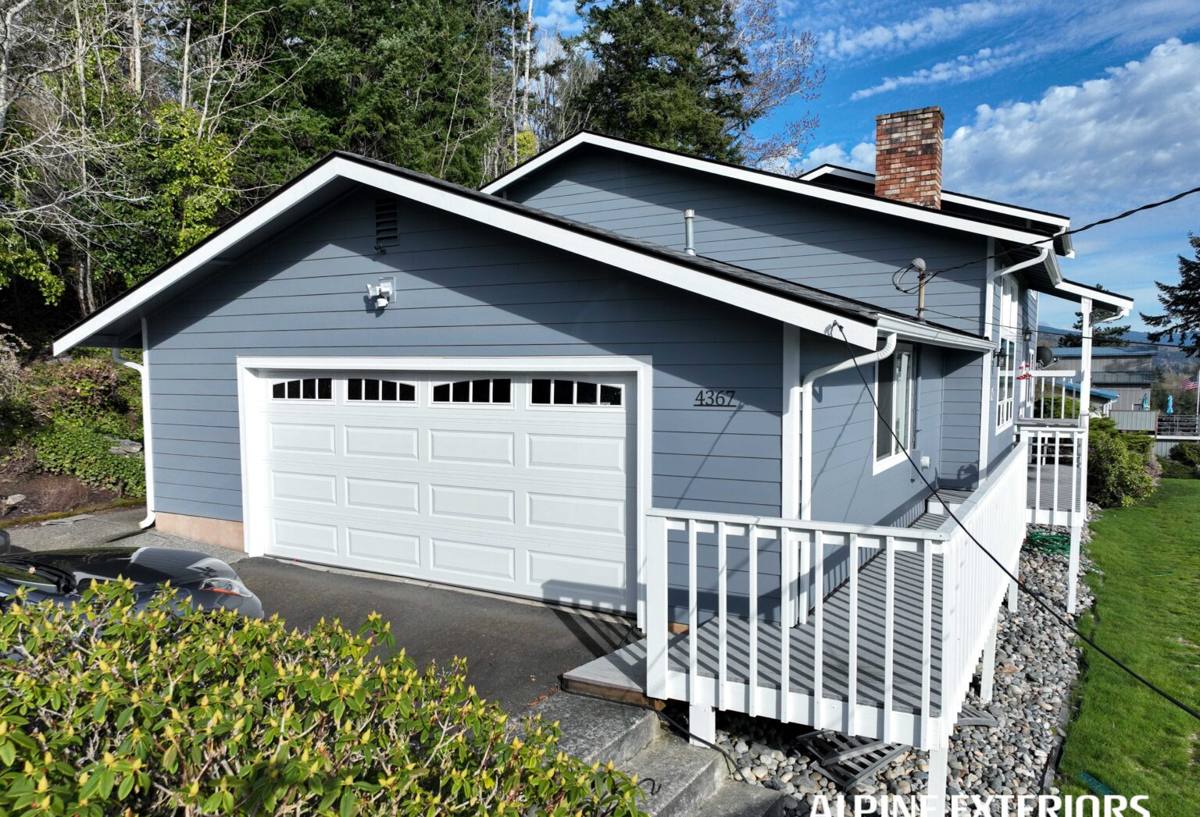
What Salt Air and Moisture Do to a Roof Over Time
Salt air is corrosive to exposed metal — flashing, fasteners, vents, and gutters all take the hit faster near the water than they would a few miles inland. On an older roof, this often shows up as rust streaking at penetrations, deteriorating drip edge, or fasteners that have backed out because the metal around them has weakened. It's one of the first things we check during an inspection, because failing metal at flashing points is a leak waiting to happen even when the shingles or panels above look fine.
Constant moisture is the other half of the equation. Blaine gets a lot of soft, steady rain rather than short, hard downpours, and that kind of weather is exactly what moss thrives on. Moss holds water against the roofing material, works its way under shingle edges, and lifts tabs enough for wind-driven rain to get underneath. Left unaddressed over a few seasons, moss growth can shorten the effective life of a roof by years — not because the shingles themselves failed, but because the moss created a path for water where there shouldn't have been one.
Common Signs a Blaine Harbor Roof Needs Replacement, Not Repair
- Moss or algae growth that comes back within a season or two of cleaning
- Granule loss heavy enough that you can see it collecting in gutters
- Rusted or pitted flashing around chimneys, vents, and skylights
- Curling, cupping, or cracked shingles, especially on shaded slopes
- Soft spots or sagging in the roof deck when walked
- Interior staining on ceilings or in the attic near exterior walls
- A roof approaching or past its manufacturer-rated lifespan combined with any of the above
What a Correct Roof Installation Involves Here
A new roof is only as good as what's underneath it and how the details are handled at the edges, valleys, and penetrations. For Blaine Harbor homes, we treat a few elements as non-negotiable.
Tear-Off and Deck Inspection
We remove the old roofing down to the deck rather than layering over it. This lets us actually see the plywood or OSB underneath, which matters a lot in a climate where hidden moisture damage is common. Any soft, delaminated, or water-stained decking gets replaced before anything new goes down — installing new roofing over a compromised deck just hides the problem for a year or two.
Underlayment and Moisture Barrier
Given the volume of driving rain this area sees, we use a synthetic underlayment across the full roof and self-adhered ice-and-water membrane at the vulnerable spots: eaves, valleys, around chimneys and skylights, and low-slope transitions. This is the layer that protects the deck if wind-driven rain ever gets past the primary roofing material, and on a waterfront-adjacent property it's not a place to cut corners.
Flashing and Metal Components
Because salt air accelerates corrosion, we pay close attention to the grade and finish of metal used at flashing points, and we make sure every seam and fastener is sealed correctly the first time. Flashing that's improperly lapped or under-sealed is one of the most common causes of roof leaks we find on homes near the water, and it's almost always a workmanship issue rather than a product issue.
Ventilation
Proper intake and exhaust ventilation keeps moisture from building up in the attic, which matters in a climate this damp. Poor ventilation traps humid air against the underside of the deck, which can lead to premature rot and, ironically, more moss and algae growth on the roof surface above it because the roof never fully dries out.
Roofing Material Options for Coastal Whatcom County Conditions
There's no single "best" roofing material for every home — the right choice depends on your roof's pitch, sun and shade exposure, budget, and how the home is used. Here's how the common options stack up for a Blaine Harbor property specifically.
| Material | Moss Resistance | Salt Air Durability | Typical Lifespan |
|---|---|---|---|
| Architectural asphalt shingle | Moderate — algae-resistant granules help but need periodic cleaning | Good, with corrosion-resistant flashing and fasteners | 25–30 years |
| Standing seam metal | High — smooth surface sheds moss and debris well | Very good with marine-grade coatings | 40–50+ years |
| Synthetic composite (shake/slate look) | Moderate to high | Good | 30–50 years |
| Cedar shake | Low without regular maintenance — a moisture magnet in this climate | Fair; needs frequent treatment near the water | 20–30 years with upkeep |
We steer most Blaine Harbor homeowners toward algae-resistant architectural shingles or standing seam metal, simply because both hold up well against the moss-and-moisture cycle without demanding constant maintenance. Cedar shake can still be the right look for the right homeowner, but we're upfront that it requires more ongoing care in this specific climate — that's a maintenance trade-off, not a knock on the material itself.
Our Installation Process
- On-site inspection and estimate — we look at your current roof, deck condition, ventilation, and any problem areas, and walk you through what we find in plain language.
- Material selection — we talk through options based on your home's exposure, budget, and how long you want the next roof to last.
- Tear-off and deck check — full removal of old roofing, with any damaged decking replaced before we move forward.
- Underlayment and flashing — moisture barrier and ice-and-water membrane installed at all vulnerable points, followed by properly sealed flashing.
- Roofing installation — new material installed to manufacturer specification, with attention to nailing pattern, exposure, and ventilation components.
- Final walkthrough and cleanup — we inspect the finished roof with you and clear the site of debris and old materials.
Why Local Experience with Blaine Harbor Homes Matters
A crew that regularly works this specific area already knows which flashing details tend to fail near the water, which slopes hold moss longest given the tree cover and shade patterns common to Blaine Harbor lots, and how the wind off the Strait behaves during winter storms. That's not something you get from a general roofing crew working from a standard checklist — it comes from having actually replaced roofs on homes in this exact microclimate and having gone back to see how those choices held up years later.
It also means knowing what permitting and inspection process applies in Whatcom County and the City of Blaine, so the job goes smoothly from estimate to final sign-off without surprises.
Maintaining Your New Roof in This Climate
- Have gutters and downspouts cleared at least twice a year, more often under overhanging trees
- Schedule moss treatment or gentle roof cleaning before it becomes heavy growth, not after
- Trim back tree limbs that shade the roof and keep it from drying out between rains
- Have flashing and sealant points checked every few years, especially after major storms
- Address any granule loss, lifted shingles, or minor leaks promptly rather than waiting
A new roof installed correctly for Blaine Harbor's conditions shouldn't need much beyond this kind of routine upkeep — the goal is a roof that earns out its full rated lifespan instead of failing early because the environment wasn't accounted for at installation.
Get a Free, No-Pressure Estimate
If your roof is showing its age, holding onto moss it never used to have, or you just want an honest read on where it stands, we're glad to come take a look. There's no obligation and no pressure — just a straight assessment of your roof and what it would take to get you a new one built for Blaine Harbor's salt air, rain, and moss season. Use the form below to request your free estimate.