 Blaine Siding
 Building New in Lynden Means Getting the Windows Right the First Time
Lynden is still growing, and a good share of that growth is new houses going up on fresh lots rather than remodels of old ones. New-construction window work is a different job than swapping out a tired window in a finished wall. The windows go in while the house is still open — before the siding, before the trim, sometimes before the interior drywall — and every flashing detail gets buried the moment the crew moves on to the next trade. If it's done right, nobody ever thinks about it again. If it's done wrong, the house won't show it for a year or two, and by then the fix means tearing back finished work to get at the problem.
We work new-construction jobs in Lynden alongside our regular siding work throughout Whatcom County, and the two are tied together more closely than most homeowners realize. A window opening is only as good as the flashing and drainage plane around it, and that's the same system the siding ties into. Treating the window install and the siding install as one continuous job — rather than two separate trades that happen to meet at the same wall — is a big part of why these builds hold up.
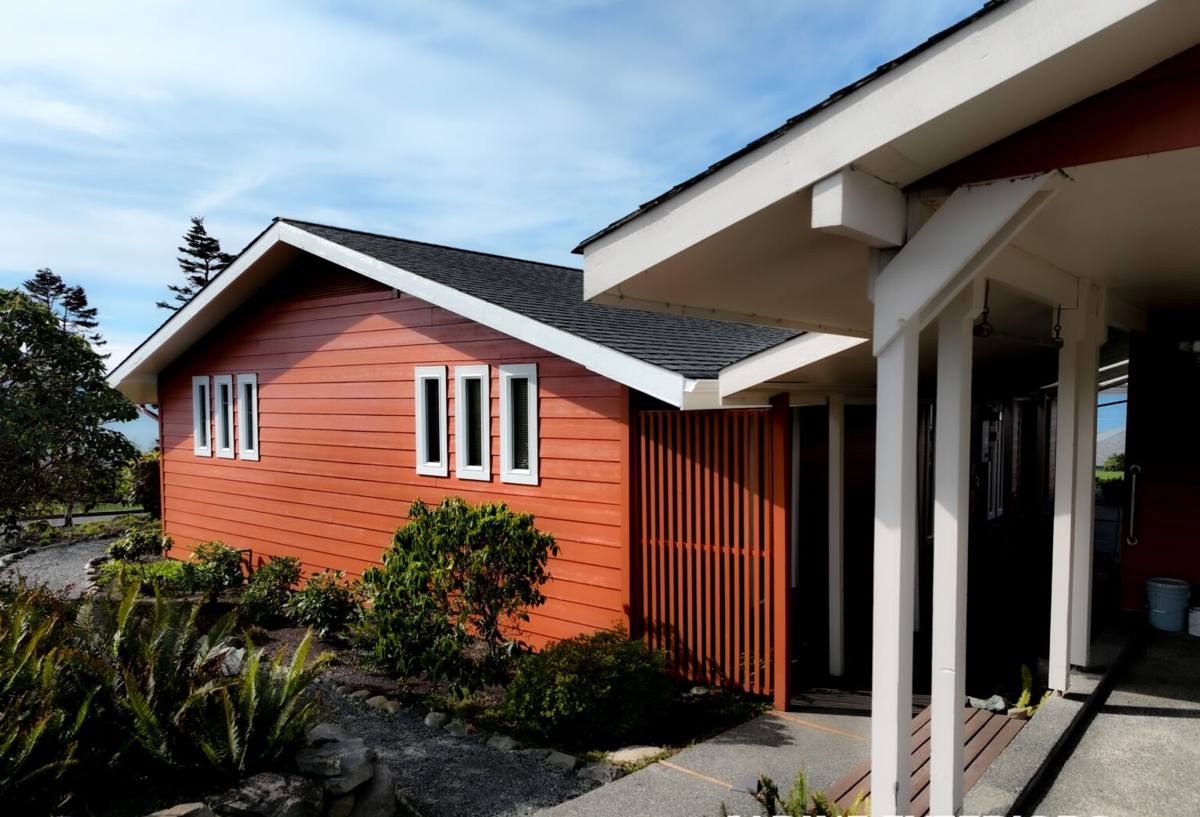
The Climate Lynden Windows Have to Survive
Lynden sits inland from the water, up along the Nooksack River rather than on Semiahmoo Bay or Drayton Harbor the way Blaine does, so it doesn't take the same direct salt spray off the coastline. That's worth being straight about — it isn't a waterfront exposure. But it's still Whatcom County, and it still sits under the same weather systems that roll in off the Pacific and the Strait of Georgia, which means the same three things a window install has to plan for anywhere in this corner of the state.
Driving, Wind-Blown Rain
Northwest storms don't just drop rain straight down — they push it sideways into the wall. A window that relies on caulk alone to keep water out will eventually let some through; a window built on a proper sill pan and lapped flashing sheds that water before it ever reaches the framing, storm after storm, for the life of the house.
Salt Air Reaches Inland Too, in a Smaller Way
Even a few miles inland, fasteners, flashing, and hardware exposed to Whatcom County's damp marine air corrode faster than they would in a dry inland climate. It's a lighter version of what we see fighting corrosion on jobs right on Blaine's waterfront, but the same habit of choosing corrosion-resistant fasteners and flashing carries over — cheap insurance against streaking and failure years down the road.
Moss Season and Persistent Dampness
Whatcom County's moss season isn't really a season here — it's most of the year on shaded, north-facing walls. Constant dampness around a window opening feeds rot in any wood that stays wet, and it's exactly why the drainage path behind the siding and around the window has to actually work, not just look finished from the outside.
New-Construction Windows Are a Different Job Than Replacement Windows
A replacement window gets fit into an existing, already-flashed opening — the job is mostly about a clean fit and a tight seal against wood or vinyl that's already there. A new-construction window is a different animal entirely.
Nailing Fin and Flashing Flange
New-construction windows have a flange or nailing fin around the perimeter that gets integrated directly into the wall's water-resistive barrier before any siding goes on. That flange only works if it's flashed in the right order — get the sequence backward and you've built a shingle that sheds water into the wall instead of away from it.
Working Inside the Building Sequence
Timing matters as much as technique. Windows go in after the weather-resistive barrier is up and before siding starts, which means the window crew is working around framers, and the siding crew is picking up right where the window install left off. On a lot of new builds we're doing both halves of that handoff ourselves, which removes a common point where details get missed between two separate contractors.
The Install Sequence We Follow on a Lynden Build
There's a correct order for this work, and skipping a step or doing it out of sequence is how leaks get built into a brand-new house. This is the sequence that actually keeps water moving out and down instead of in and behind the wall:
- Rough opening is checked for square, level, and correct sizing before anything else happens.
- A sloped sill pan flashing goes in first, so any water that ever reaches the sill drains back out over the exterior face, not into the framing.
- The weather-resistive barrier is cut and lapped at the opening so it will shed onto the sill pan and the flashing that follows — everything above always laps over everything below.
- The window is set plumb, level, and square, and fastened per the manufacturer's schedule — not just where it's convenient.
- Jamb flashing tape is applied over the nailing fin at the sides.
- Head flashing goes on last, lapped over the jamb flashing and up under the barrier above the opening, often with a drip cap to kick water clear of the wall.
- Sealant is used only where the manufacturer's instructions call for it — not smeared everywhere as a substitute for flashing that was skipped.
- Siding is then installed to work with the drainage plane already built at the opening, not to trap moisture against it.
Choosing a Frame Material for a Whatcom County New Build
Frame material affects how a window handles years of damp Northwest weather and how much upkeep it asks of you. There's no single right answer — it depends on budget, the look of the house, and how much maintenance you want to take on.
| Frame Material | Upfront Cost | Handling Rain & Damp Marine Air | Maintenance | Best Fit |
|---|---|---|---|---|
| Vinyl | Lowest | Won't rot; seams and corner welds are the long-term watch point | Low — occasional cleaning | Budget-conscious new builds, rental or spec homes |
| Fiberglass | Mid to higher | Very stable in wet, temperature-swinging weather; holds paint well | Low | Owners who want durability without wood upkeep |
| Wood-clad | Highest | Good if the cladding and sealant details are correct; the wood core is the risk if water ever gets behind the clad exterior | Moderate to high — sealant and finish need attention over time | Homeowners prioritizing interior wood appearance who accept the upkeep |
On a new build, the frame material decision also affects the flashing detail — clad-wood units in particular need extra care where the cladding meets the flashing, since that's the seam most likely to let water find the wood underneath.
How We Work With Your Builder or GC
Most new-construction jobs in Lynden involve a general contractor or a builder who's already scheduled framing, plumbing, electrical, and everything else. We slot into that schedule at the point where the shell is weathered in and ready for windows, and we coordinate directly with whoever is running the job so the sequence isn't held up waiting on us or anyone else.
When we're also doing the siding, that coordination gets simpler — there's one crew accountable for the whole exterior envelope from the window opening out through the finished wall, instead of a window contractor and a siding contractor each pointing at the other if something doesn't line up later. That's worth asking about no matter who you hire: who is responsible if a problem shows up at the boundary between the window and the siding?
Where New-Construction Window Installs Go Wrong
Most of the problems we get called out to look at on newer Whatcom County homes trace back to a handful of repeated mistakes, not exotic ones:
- Weather-resistive barrier lapped in the wrong direction at the head of the window, so water runs behind it instead of over it.
- No sill pan flashing — just caulk at the bottom of the opening, which fails quietly over years, not immediately.
- Sealant used to compensate for missing flashing instead of as a secondary detail on top of correct flashing.
- Siding installed tight against the window trim with no gap or drainage path, trapping moisture right where moss and mildew take hold fastest.
- Fasteners that aren't rated for exterior, damp-climate use, leading to corrosion staining and loosened trim within a few years.
What a Correct Install Should Include
If you're comparing bids or just want to know what to expect, a properly done new-construction window install on a Lynden home should check every one of these boxes:
- Rough opening verified for square and correct size before the window arrives on site.
- Sloped sill pan flashing installed under every window, without exception.
- Weather-resistive barrier and flashing layers lapped shingle-style, top over bottom, at every opening.
- Window shimmed, set plumb and level, and fastened per the manufacturer's schedule.
- Head flashing with a drip cap detail, not sealant alone, above the opening.
- Corrosion-resistant fasteners and flashing appropriate for a damp marine climate.
- A clear drainage gap between the window trim and the siding, not a sealed-tight joint.
- Manufacturer installation instructions followed to keep the warranty intact.
Why a Local Lynden and Blaine Crew Makes a Difference
A crew that already works Whatcom County new construction knows what county building inspectors are looking for at the window and rough-in stages, knows how local suppliers stock the flashing tapes and sill pans that actually perform in this climate, and has already seen how a given frame material and installation detail holds up through a few Northwest winters — not just on paper. New builds almost always turn up a short punch list once the house is fully closed in, and being local means we can get back out to a Lynden lot quickly to close it out instead of a homeowner waiting weeks for a crew based somewhere else in the state.
If you're building new in Lynden and want the window installation handled by a crew that treats it as part of the whole exterior envelope — not an isolated task — we're happy to walk the plans or the framed shell with you and put together a straightforward estimate. There's no pressure and no obligation; just a clear look at what your home needs and what it will take to do it right the first time.