 Blaine Siding
 Window Installation Built for Lynden's Weather, Not Just the Showroom
Lynden homes deal with a specific kind of wear that a lot of window sales reps never mention. Whatcom County gets long stretches of driving rain, humid marine air off the Salish Sea, and a moss season that seems to start earlier every year. None of that shows up on a spec sheet, but it shows up on your windows — in soft trim, foggy glass, drafts you can feel from across the room, and paint that won't hold. A window installed correctly for this climate looks the same as one installed carelessly, right up until the first hard winter storm finds the gap.
This page covers what window installation actually involves for a home in Lynden specifically — not a national franchise script, but the details that matter for houses sitting in Whatcom County's lowland climate, whether your place is an older farmhouse near the valley or a newer build closer to town.
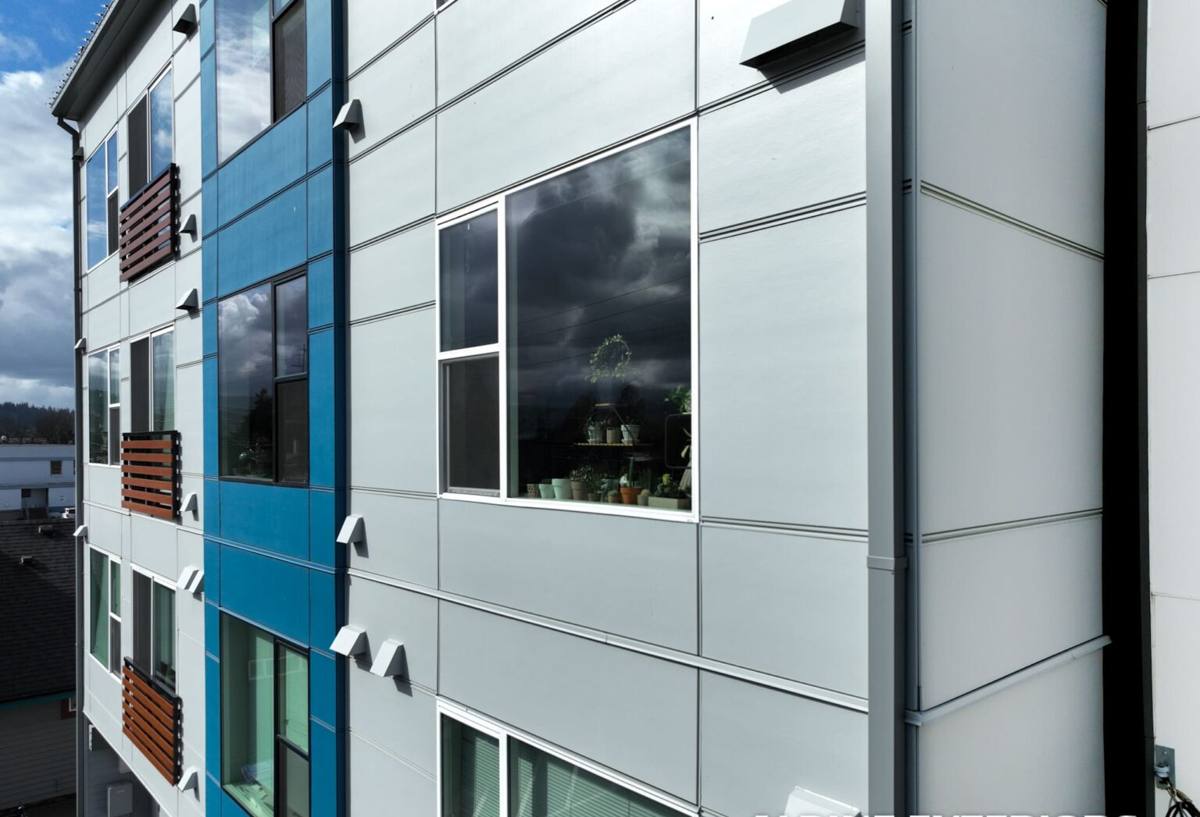
What Whatcom County Weather Actually Does to Windows Over Time
It helps to understand the mechanism, not just the symptom. Three things drive most of the window failures we see out this way:
Driving Rain and Wind-Driven Moisture
Rain here doesn't just fall straight down — wind pushes it sideways against the wall, which means it finds every gap in flashing, caulking, or trim that a calmer climate would never expose. Over years, that wind-driven moisture works its way behind poorly sealed frames and into the wall cavity, where you can't see it until the damage is already done.
Long Moss and Mildew Season
The same humidity that's good for the local farmland keeps wood trim, sills, and caulk lines damp for extended stretches. Moss and mildew take hold on anything that stays wet too long, and once they're established on window trim, they hold moisture against the wood instead of letting it dry — accelerating rot from the outside in.
Temperature Swings and Condensation
Whatcom County winters bring cold, damp air right up against warm interior air, which is exactly the recipe for condensation on glass and inside frame cavities. Older windows, or new windows installed with poor air sealing, will fog and sweat far more than a properly installed unit — and that trapped moisture is often what rots a sill from the inside before you ever see a problem on the surface.
Signs a Lynden Home Actually Needs New Windows or a Reinstall
Not every drafty window needs full replacement — sometimes it's a sealing or flashing problem that a competent installer can correct without tearing out the whole unit. Here's what we look for when we assess a home:
- Visible fog or moisture trapped between double-pane glass (a failed seal, not a cleaning issue)
- Soft, spongy, or discolored wood at the sill or bottom corners of the frame
- Noticeable draft when standing near a closed window on a windy day
- Difficulty opening, closing, or locking — often a sign the frame has shifted or swollen
- Moss, algae, or black mildew staining building up on exterior trim year after year
- Condensation forming on the inside of the glass regularly through fall and winter
- Paint or caulk that keeps failing within a year or two of being redone
If you're seeing two or more of these, it's worth having someone look at the actual installation, not just the glass itself. A lot of "bad windows" are really bad installations wearing a window-shaped disguise.
What a Correct Window Installation Actually Involves
The window unit itself is only part of the job. The installation — flashing, sealing, insulation, and fastening — is what determines whether that window holds up through a Whatcom County winter or starts failing in three years. Here's the difference between doing it right and doing it fast:
| Step | Done Right | Common Shortcut |
|---|---|---|
| Rough opening prep | Checked for level, square, and rot before the new unit goes in | New window forced into an existing opening without inspection |
| Flashing | Weather-resistant barrier and flashing tape integrated with the wall's drainage plane, lapped correctly for water to shed outward | Caulk used alone to "seal" gaps, with no real drainage path |
| Insulation | Low-expansion foam or backer rod fills the gap around the frame evenly | Gaps left empty, or overfilled with foam that bows the frame |
| Fastening | Shimmed and fastened per manufacturer spec to keep the frame square under load | Fastened wherever convenient, leaving the frame slightly out of square |
| Exterior finish | Trim and caulk applied to shed water away from the opening | Caulk smeared over gaps as a cosmetic fix |
The shortcuts on the right rarely fail in year one. They fail in year three or four, after enough rain seasons have worked past the surface — which is exactly why an installer's reputation in a specific area matters more than a warranty pamphlet.
Choosing a Frame Material for Lynden's Climate
Every frame material has real trade-offs. We'll walk through what fits your house and budget, but here's the honest rundown:
| Frame Type | Moisture Behavior | Maintenance | Typical Fit |
|---|---|---|---|
| Vinyl | Won't rot; seams and welds need to be quality-checked at install | Low — occasional cleaning | Most Lynden homes, best value for the climate |
| Fiberglass | Very stable in humidity and temperature swings, minimal expansion/contraction | Low | Homes wanting a longer-term, higher-upfront-cost option |
| Wood or wood-clad | Attractive but vulnerable where cladding is compromised; needs vigilant sealing | High — regular inspection and refinishing | Historic-style homes where appearance is the priority |
| Aluminum | Conducts cold and encourages interior condensation in this climate | Moderate | Rarely our first recommendation here for that reason |
We're upfront that we lean toward vinyl and fiberglass for most Lynden homes — not because wood windows are bad products, but because the maintenance schedule they need to perform well in this much sustained moisture is a real, ongoing commitment. If you want wood-clad windows for a specific look, we'll install them correctly and tell you exactly what upkeep to expect.
Our Window Installation Process
- On-site assessment — we look at existing windows, framing condition, and any moisture or rot already present before quoting anything.
- Honest scope and estimate — you get a clear breakdown of what's replacement versus repair, with no upsell pressure.
- Opening prep — old units removed, rough openings checked and repaired if we find rot or damage behind the old frame.
- Flashing and weather barrier — integrated properly with your home's existing wall system so water sheds outward, not into the wall.
- Installation and sealing — new units shimmed, squared, insulated, and sealed to manufacturer spec.
- Exterior and interior finish — trim, caulking, and touch-up work done to match the rest of the home.
- Walkthrough — we show you the finished work and explain anything you should keep an eye on going forward.
What Window Installation Costs Depend On
We won't quote a number without seeing the home, but these are the real factors that move the price up or down:
| Factor | Why It Matters |
|---|---|
| Number of windows | Per-unit cost drops somewhat with larger projects, but each opening still needs full prep |
| Frame material and glass package | Vinyl, fiberglass, and wood-clad carry different material costs; double vs. triple-pane glass changes price and performance |
| Condition of existing openings | Rot or framing damage found during removal adds repair time before the new window can go in |
| Window size and style | Standard double-hung units cost less to install than large picture windows or custom shapes |
| Access and story height | Second-story or hard-to-access windows take longer and may need additional safety setup |
Broadly, homeowners in this area should expect standard window replacement to run from a few hundred to over a thousand dollars per opening depending on size and material, with full-home projects scaling from there. We'll give you real numbers after we've actually looked at your windows — not a phone estimate.
Why a Crew That Already Works in Lynden Makes a Difference
Window installation done to spec in a dry climate and window installation done to spec here are not the same job. A crew that regularly works Whatcom County homes already knows how to detail flashing for wind-driven rain, how to spot moisture damage hiding behind old trim before it becomes a bigger repair, and which frame materials actually hold up through repeated wet-dry cycles instead of just performing well in a showroom. That local pattern recognition is the difference between an installation that's technically correct and one that's actually built for what this specific area throws at a house year after year.
We're not a national crew passing through — we work this region, and we stand behind the installations we do here specifically because we know what has to be right for them to last.
If your windows are drafty, fogging, or just overdue, we're glad to take a look and give you a straight answer about what your home actually needs. Fill out the form below for a free, no-pressure estimate — no obligation, just an honest assessment.